
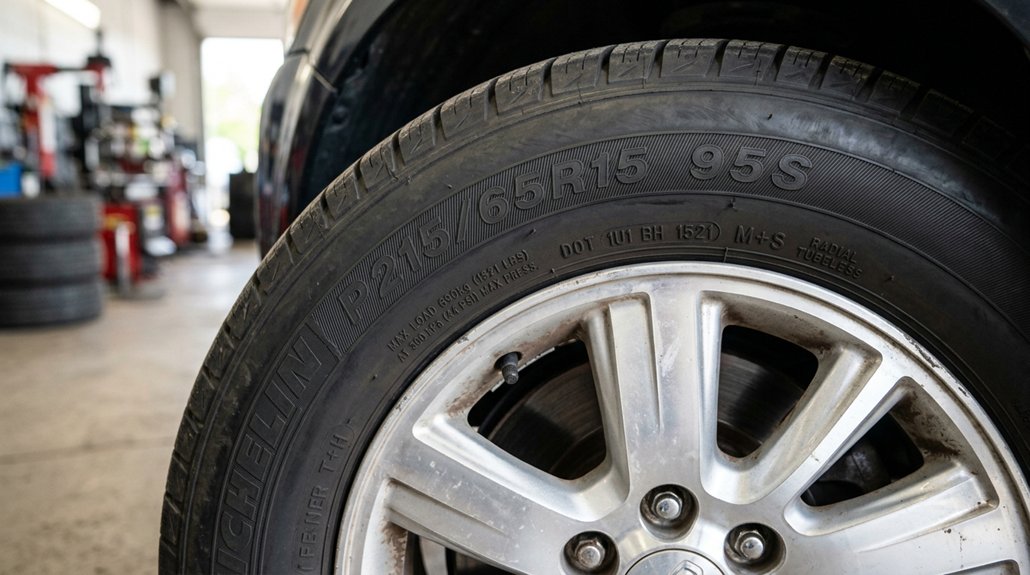
Locating your tire size isn’t always as straightforward as one might hope, and I’ve seen plenty of drivers struggle with this apparently simple task. I’ll walk you through exactly where to look, what those cryptic numbers mean, and why getting this wrong could cost you more than money.
Find Your Tire Size on the Sidewall
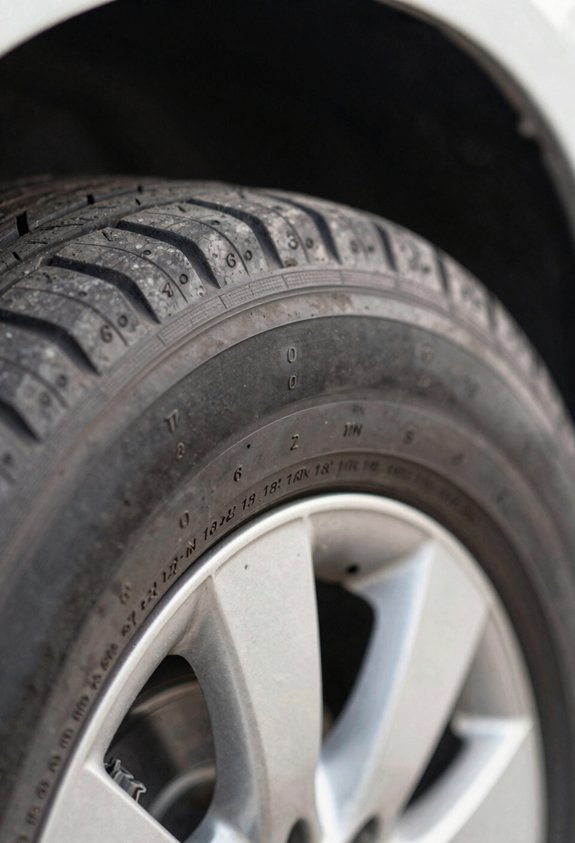
Where exactly should you look when you need to identify your tire’s specifications? I always check the sidewall, where manufacturers emboss every critical dimension in raised black lettering.
Understanding the tire size format
Your tire size appears as a sequence like 225/70R16. Here’s what each element means:
- Width: 225 millimeters (the tire’s cross-section from sidewall to sidewall)
- Aspect ratio: 70 (the sidewall height equals 70% of the width)
- Construction: R (radial)
- Rim diameter: 16 inches (the wheel opening this tire fits)
Additional markings to note
Beyond these fundamentals, you’ll find load index and speed rating (e.g., 92V), plus possible XL (extra load) or temporary spare designations. For light trucks, LT-metric tires display dual-load indexes.
I recommend cross-referencing these sidewall specifications against manufacturer placards, since incorrect width or rim diameter selections compromise handling, fuel economy, and structural integrity under load-bearing conditions.
Check the Door Jamb Sticker for OEM Size
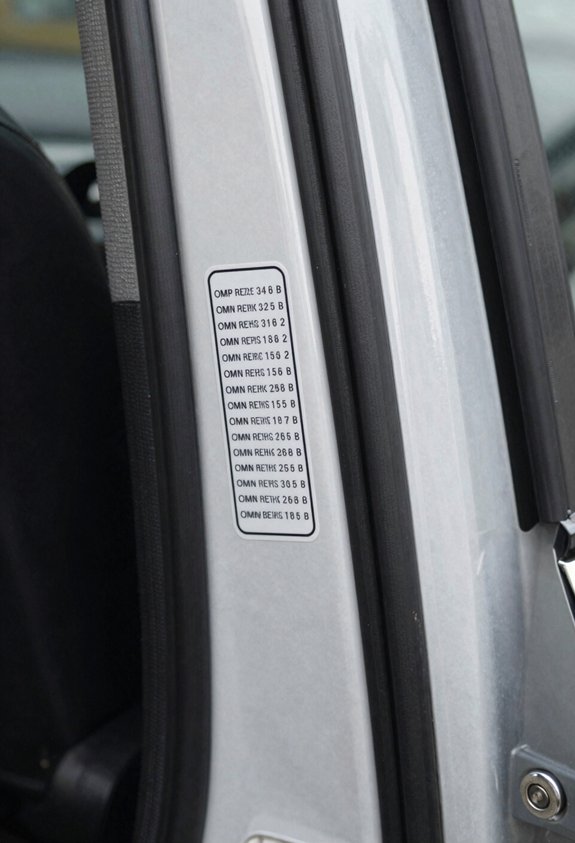
When you open your driver’s side door, I’ll point you toward a small but critical label, typically affixed to the doorjamb or the door’s edge itself, that contains your vehicle’s OEM tire specifications, including the manufacturer-recommended size in P-Metric (P225/60R16) or Euro-Metric (225/60R16) format, which serves as your authoritative baseline when selecting replacement tires.
This placard, which you’ll also find referenced in your owner’s manual, lists not only the precise tire dimensions engineered for your vehicle’s suspension geometry and load requirements but also the correct cold inflation pressures for front, rear, and spare applications. These are critical data points that prevent uneven wear, degraded handling characteristics, and potential safety compromises.
If the tires currently mounted on your wheels deviate from these OEM specifications, I strongly advise against using the sidewall markings as your replacement guide. Instead, treat the door jamb placard as the definitive reference, since keeping the manufacturer’s intended size maintains optimal speedometer accuracy, brake performance, and adherence to your vehicle’s original safety certifications.
Placard Location Details
Because vehicle manufacturers design each model with specific tire requirements in mind, I always start my search for proper sizing information by locating the tire and loading information placard, which is most commonly affixed to the driver-side door jamb, that vertical section of the door frame between the front and rear doors, or occasionally on the edge of the door itself, depending on make and model year.
| Verification Method | What It Confirms | When to Use It |
|---|---|---|
| door jamb placard | OEM tire size | before purchasing replacement tires |
| vehicle manual | manufacturer specifications | when placard is damaged or missing |
| driver’s side door | physical location of data | during routine maintenance checks |
| sidewall markings | current tire dimensions | when comparing installed vs. recommended tires |
| cross-reference all sources | data consistency | when placard and current tires differ |
When the placard shows different information than your current tires, trust the placard; it represents the engineered standard. I always double-check against my vehicle manual to eliminate any ambiguity before making decisions.
OEM Specifications Listed
- Exact tire dimensions and load ratings
- Inflation pressures for front and rear positions (often differing)
- Speed ratings and alternative sizes, if applicable
I always cross-reference current tires against this placard. If mismatch exists, I follow the sticker’s specifications exclusively, never the installed rubber. Mismatched sizes compromise handling, ABS calibration, and speedometer accuracy.
Verification Protocol:
- Locate driver’s side door jamb
- Photograph the tire size reference
- Confirm OEM size before purchasing replacements
This sticker eliminates guesswork, helping you match your vehicle’s engineering parameters.
Match Your Tire Size to the Vehicle Placard
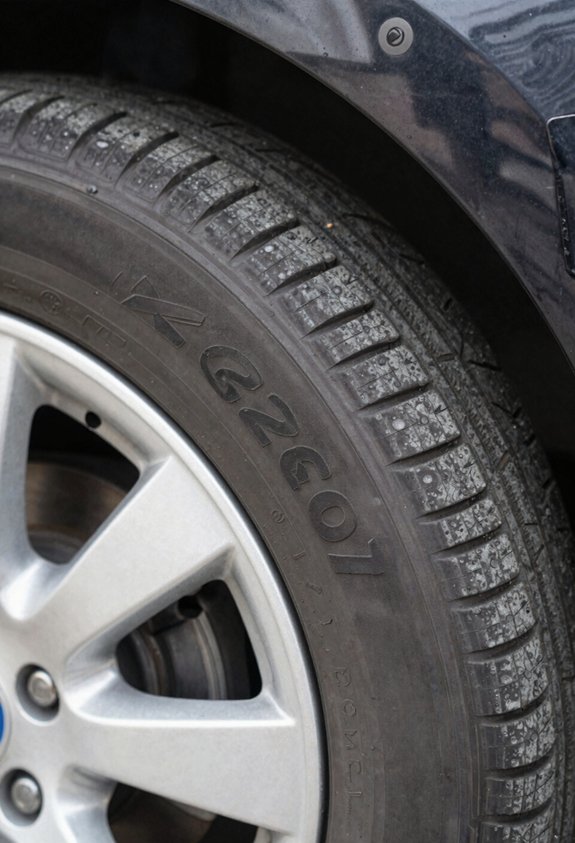
I start by locating the placard on the driver’s side door jamb, checking for the manufacturer-recommended tire size and inflation pressure specifications that serve as the authoritative baseline for replacements. I then compare these placard values against the sidewall markings on my current tires, noting any discrepancies that might indicate previous owner modifications or sizing errors requiring correction.
I verify that the placard information aligns with my vehicle’s wheel specifications and system requirements, particularly when staggered sizing applies, before proceeding with any tire purchase or installation.
Verify Door Placard Location
Where exactly does your vehicle specify its ideal tire specifications? I’ve learned that the door placard, which contains this critical data, resides on the driver’s side door or door jamb, a location that’s easily accessible when you swing the door open. This placard displays the manufacturer-recommended tire size and inflation pressures, serving as the definitive reference for your specific vehicle configuration. Should you encounter difficulty locating this placard, I recommend consulting your vehicle owners manual, which provides detailed diagrams indicating the precise placement.
Why Finding the Placard Matters
- It establishes the authoritative tire size, regardless of what’s currently mounted
- It reveals inflation specifications important for safety performance
- It prevents costly mismatches during replacement selections
- It protects vehicle systems dependent on correct sizing
Once located, you’ll possess the foundational data necessary for informed tire decisions.
Confirm Placard Information Match
How critically important is it that your current rubber actually corresponds to what’s prescribed on that door placard? It is absolutely essential. I always cross-reference my current tires against the tire size placard mounted on my driver-side door jamb, which serves as the manufacturer’s authoritative specification for dimensions, load ratings, and inflation pressures.
When my existing tires don’t align with the door placard, I consult a qualified tire professional before proceeding with any purchase. Replacement must be an in-kind replacement, meaning every parameter, from section width to aspect ratio to load index, matches the placard exactly.
I pay special attention when the door placard indicates staggered sizes for front/rear-specific setups, ensuring matching specifications across position-specific wheels. Deviation risks compromised handling, accelerated wear, and potential safety failures I cannot afford.
What Your Tire Size Numbers Actually Mean
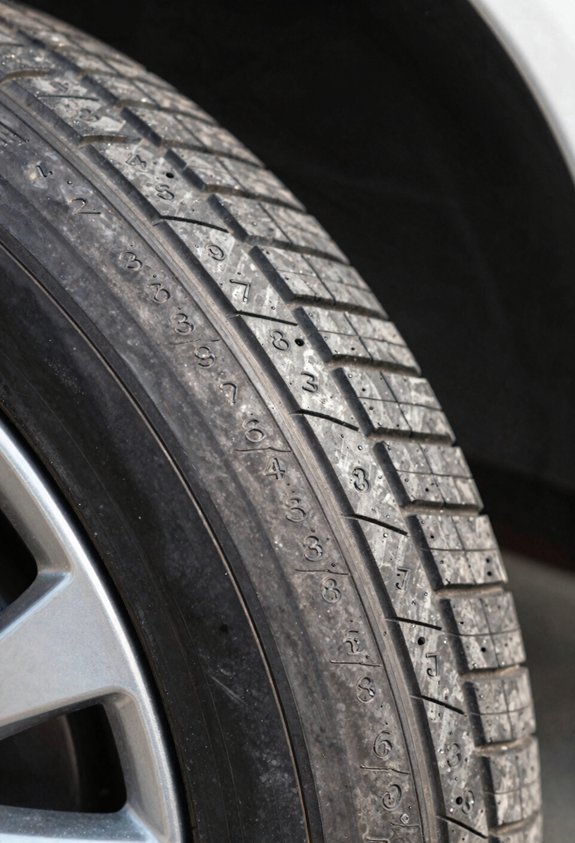
When you look at the sidewall of any tire, you’ll find a sequence of numbers and letters, such as 225/60R16, that may initially appear cryptic. Yet this code contains precise specifications governing fitment, handling characteristics, and safety parameters. I’m here to break down what this tire size information actually tells you about your rubber.
- Width in millimeters (the first three digits) measures cross-section from sidewall to sidewall
- Aspect ratio (the number after the slash) expresses sidewall height as a percentage of width
- Construction type, indicated by a letter; R for Radial dominates modern applications
- Rim diameter, the final number in inches, must precisely match your wheel size
Misreading any element risks dangerous incompatibility when replacement becomes necessary.
Understand Width, Aspect Ratio, and Rim Diameter
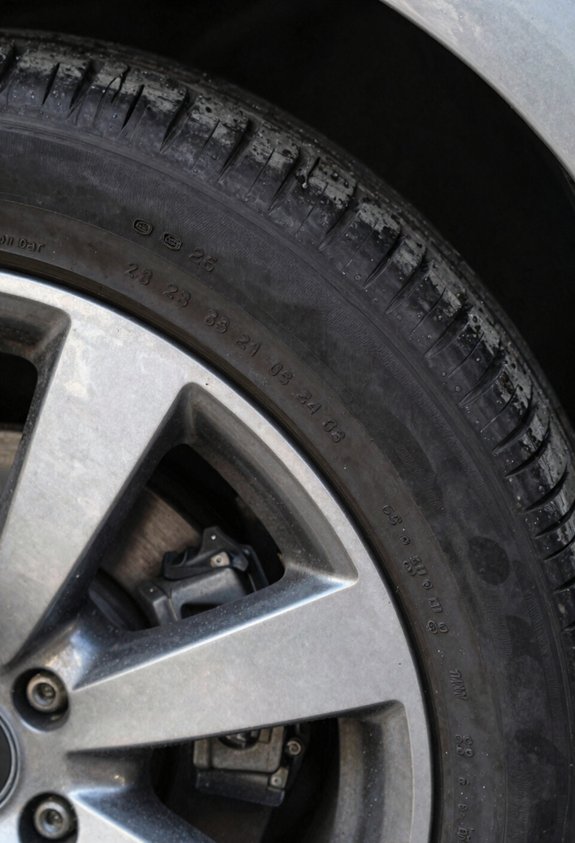
Why does the sequence 225/60R16 matter so profoundly when you’re staring at your tire sidewall searching for replacements? This code reveals three critical dimensions that determine whether your tire fits properly, performs safely, and belongs to your vehicle’s engineered specifications.
Width comes first, measuring 225 millimeters across the tire’s cross-section from sidewall to sidewall. This dimension affects your contact patch, handling, and fuel efficiency.
Aspect ratio follows the slash, expressing sidewall height as a percentage of width. At 60, your sidewall stands 60% of 225mm, approximately 135mm, directly impacting ride comfort and road responsiveness.
Rim diameter appears last, measured in inches (16, in this example). This must match your wheel exactly, as even slight mismatches create dangerous mounting failures.
Together, these three values guarantee your replacement tire works properly with your vehicle’s suspension geometry and safety systems.
Read Your Load Index and Speed Rating
Once you’ve deciphered the tire’s dimensional code, your attention must shift to the two final specifications that govern operational limits: the load index and speed rating, which appear immediately after the construction letter in the tire size marking.
I examine the tire sidewall and locate the numeric code, perhaps 82 or 91, which represents the load index, indicating maximum weight capacity at proper inflation. Immediately following this digit sits a single letter, the speed rating (S, V, or similar), denoting the highest safe sustained velocity.
Match or exceed your vehicle’s required load index to avoid structural failure. Never downgrade your speed rating, as heat buildup risks catastrophic separation. Check your door placard or manual for manufacturer-mandated minimums.
These values work together with width, aspect ratio, and construction within the complete tire size marking.
Spot Extra Load and Run-Flat Markings
How specialized tire markings affect your selection? I want you to feel confident when scanning the tire sidewall, so let’s decode extra load markings and run-flat markings together. These symbols sit right after the load index, and they change what your tire can handle.
| Marking | Location | Meaning |
|---|---|---|
| XL | After speed rating | Higher load capacity |
| RF | After size code | Run-flat capability |
| ZR | Before size | High-speed rating |
| 98 | Before XL | Load index value |
| Verify | Always check | Capacity matches vehicle |
I scan for XL when my SUV carries heavy cargo, and I watch for RF if I want puncture protection without stopping immediately. The basic size code stays unchanged. XL and RF simply add capability layers you must check against your load index requirements.
Tell Metric From Flotation Sizing (Trucks/SUVs)
- P-Metric (P225/70R16) serves passenger vehicles, while LT-Metric (LT245/75R17) handles heavier loads with dual load indexes
- Flotation sizing (33X12.50R17LT) displays diameter and width in inches, not millimeters
- Flotation tires carry single load ratings, no UTQG ratings, and typically won’t work in dual applications
- The “LT” suffix in flotation sizing distinguishes light truck use from Euro-Metric Commercial designs
This deserves emphasis because the wrong system creates dangerous mismatches between capability and application.
When to Call a Pro About Tire Size Changes
Before I swap to a different tire size or construction type, I’ll pick up the phone and call a qualified tire professional, because even seemingly minor deviations from Original Equipment specifications can cascade into serious safety and performance compromises I might not anticipate.
Before swapping tire sizes, I always call a qualified professional—seemingly minor deviations cascade into serious safety compromises I might not anticipate.
Critical Scenarios Requiring Professional Guidance
I always seek professional guidance when contemplating tire size changes, particularly those affecting overall diameter, which directly alters speedometer accuracy and may disrupt ABS, traction control, and stability systems.
I verify that any substitute maintains proper load index and speed rating, parameters essential to safe vehicle operation under maximum weight and velocity conditions.
Additional Complexity Indicators
I consult experts for staggered front/rear fitments, LT-metric, Euro-metric, or C-type commercial constructions, where load-carrying calculations differ substantially.
I cross-reference manufacturer placards and owner?s manuals, guaranteeing rim diameter compatibility and OE alignment, because my safety, and that of my fellow drivers, depends on precision I cannot achieve through estimation alone.