
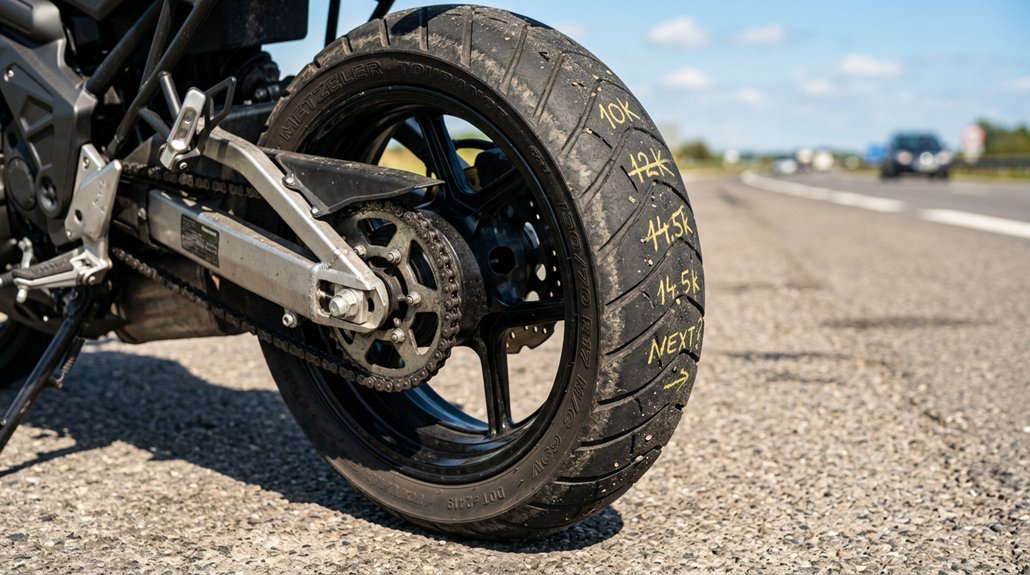
I’ve replaced tires with full tread that were unsafe, and I’ve worn others to the cords in under 4,000 miles; your tire’s lifespan depends on far more than mileage alone. Sport compounds (3,000–7,000 miles), touring rubber (8,000–15,000+ miles), and cruiser bias-plies occupy different wear spectrums, yet all share one hard limit: the DOT date code molded into the sidewall, which reveals manufacture week and year.
Rubber oxidizes, plasticizers evaporate, and sidewalls develop micro-cracks regardless of garage storage or climate-controlled conditions. This means a six-year-old tire with 4/32″ tread demands replacement while a two-year-old tire at 2/32″ may still be legally serviceable depending on jurisdiction. I’m not willing to gamble on degraded Shore hardness, and neither should you; the specific failure modes, inspection protocols, and cost-benefit calculations deserve closer examination, particularly when counterfeit dating and improper storage accelerate aging beyond the manufacturer’s conservative estimates.
Typical Motorcycle Tire Lifespan: From 3,000 to 15,000 Miles
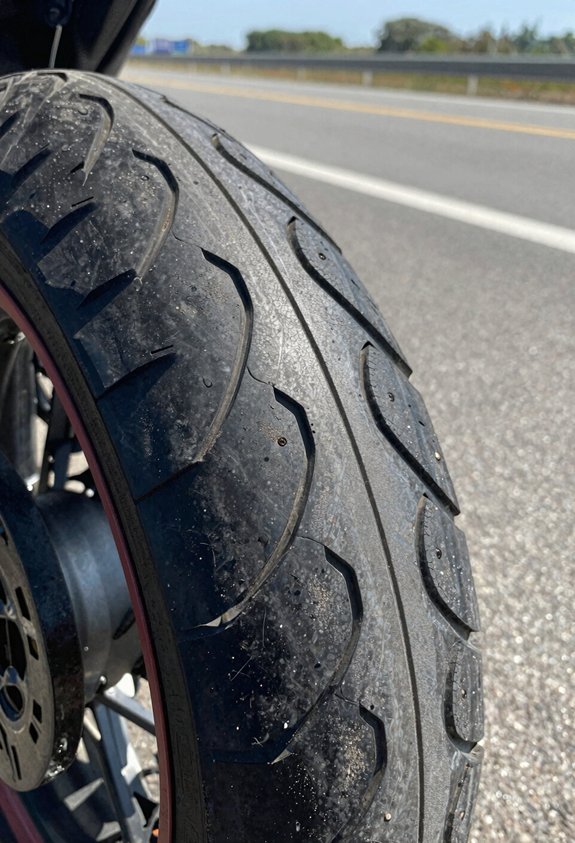
- Tire design: Sportier, high-speed-rated compounds sacrifice longevity for grip, pushing you toward the lower end
- Riding habits: Aggressive cornering, hard braking, and rapid accelerate how quickly tires wear
- Tire age: Even with adequate tread, rubber degrades; inspect regularly for cracking or hardening
I replace mine when tread depth hits approximately 1/32 inch, or immediately upon discovering visible damage. Regular inspections, checking for uneven wear patterns, embedded objects, and sidewall deterioration, keep you within our community’s safety standards. Don’t gamble with degradation.
Motorcycle Tire Mileage by Type: Sport, Touring, and Cruiser Benchmarks
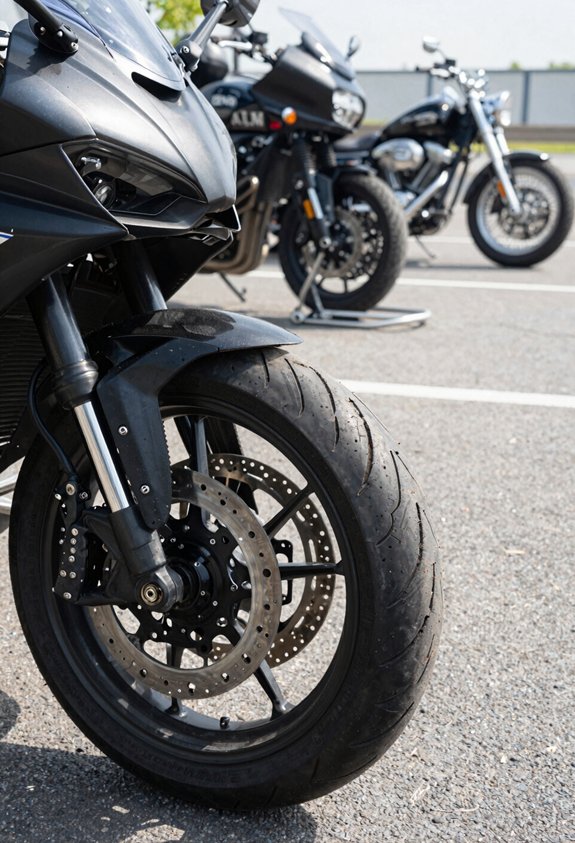
- Sport tires sacrifice longevity for grip, delivering roughly 3,000–5,000 miles before tread wear demands replacement
- Touring tires balance durability with performance, typically achieving 8,000–12,000 miles through harder compounds engineered for distance
- Cruiser tires often exceed 10,000 miles, built for stability and extended service under heavier loads
- All types require vigilant monitoring, as tires age and degrade regardless of remaining tread depth
Remember: no category escapes physics; inspect regularly, and replace when tread approaches 1/32 inch to maintain your place in the riding community safely.
How to Read Your Motorcycle Tire’s DOT Date Code
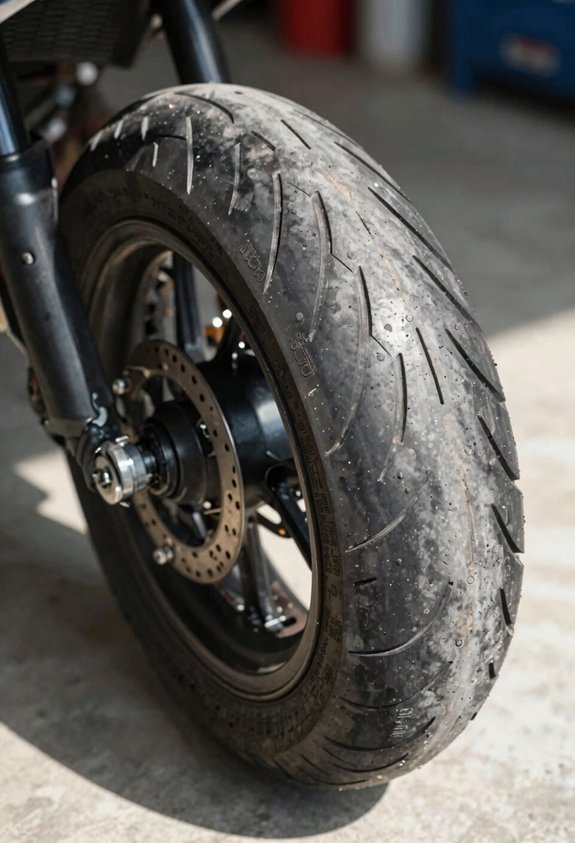
Where exactly does your tire’s birth certificate hide, and why should you bother decoding it? I’ll show you where to find the DOT date code, the four-digit number stamped on your tire’s sidewall that reveals its manufacture week and year.
Reading the Code
- Locate the “DOT” marking, then find the final four digits
- Example: 1016 = 10th week of 2016
Age vs. Tread Wear
Your tire’s age (time since manufacture) and tread wear (remaining depth) are separate metrics. A tire with deep tread can still age out, just as worn tread demands replacement regardless of age.
I inspect both: check the DOT date code, measure tread depth, and scan for cracks, bulges, or uneven patterns. Generally, I replace at six years, though proper storage—cool, shaded, away from UV—can extend usability.
Are 7-Year-Old Motorcycle Tires Safe to Ride On?
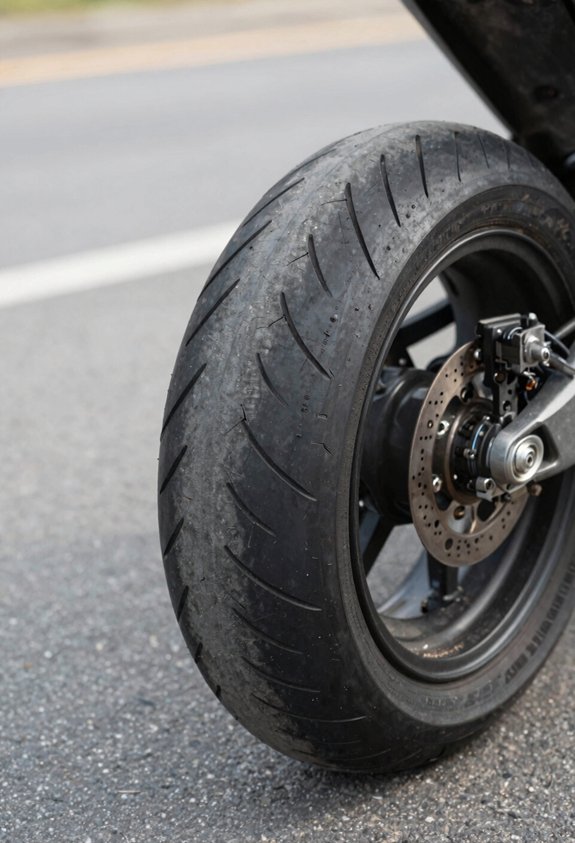
Now that I’ve shown you how to decode the DOT date code and understand why age matters as much as tread depth, I’ll tackle a question I hear often from riders holding onto older rubber: whether seven years pushes past the safety threshold.
I’ve seen DOT date codes stamped 2016 or 2017 on garage-kept bikes, and I’ll tell you straight, not all seven-year-old tires are equal. Tire age and aging risk depend heavily on storage conditions, usage patterns, and environmental exposure.
- Inspect sidewalls for cracking, dry rot, or discoloration
- Check for hardened rubber that loses grip in wet conditions
- Verify you’ve ridden enough to prevent flat spots from prolonged storage
- Consult your manufacturer, as some brands extend service life beyond six years with proper care
When I spot significant degradation, I replace immediately, no exceptions.
Tire Age vs. Tread Depth: Which Actually Determines Replacement?
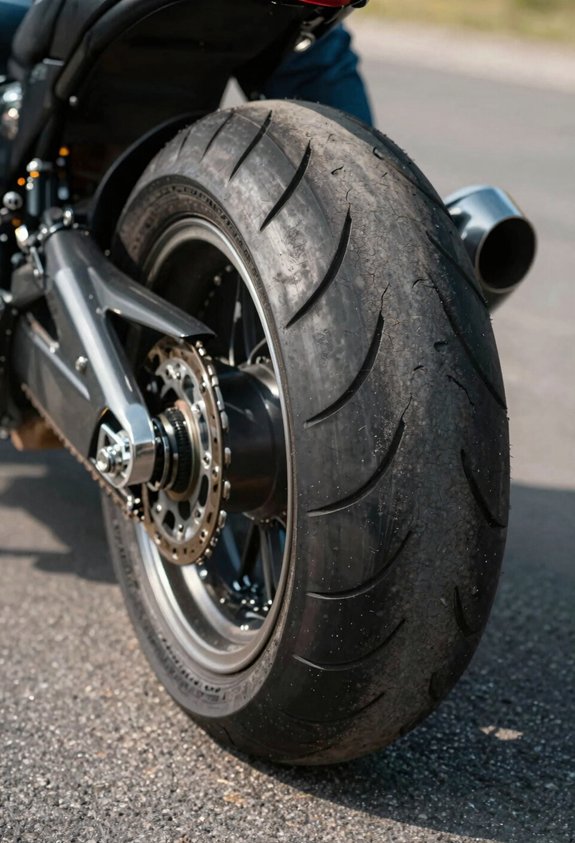
When riders ask me whether to replace a tire based on age or tread depth, I’ll tell them upfront that neither factor alone tells the complete story. While the two questions might seem straightforward, I’ve learned through years of inspection and roadside assistance calls that tire age and tread depth operate as independent failure modes, each capable of rendering a tire unsafe regardless of the other’s condition.
Tire Aging: The Hidden Threat
I check the DOT date first; those four digits reveal manufacture week and year. Beyond six years, tire aging hardens rubber even with ample tread depth remaining. UV exposure, ozone, and heat accelerate this degradation.
Storage vs. Road Conditions
Stored tires degrade differently than ridden ones. Cool, dark conditions slow tire aging, but I’ve seen garage-kept tires fail despite pristine appearances. Cracking sidewalls signal replacement regardless of remaining depth.
My Replacement Protocol
I combine DOT date verification, tread depth measurement (wear bars indicate minimum), and visual inspection. A tire passes only when age, depth, and condition align. No single metric suffices for our safety.
Aggressive Riding Habits That Destroy Motorcycle Tire Life
- Snapping the throttle wide open generates instantaneous heat spikes that degrade internal structure
- Hard braking transfers massive loads that scrub rubber and deform casings
- Rapid directional changes create shear forces between belts and tread
- Running improper pressures makes aggressive riding damage worse through uneven contact patch loading
Respect your rubber, or replace it frequently.
How Rough Roads and Weather Weather Your Tires
How exactly do rough roads and weather conditions conspire to degrade your motorcycle tires?
Tire Wear from Road Conditions
Rough surfaces accelerate tire wear through increased tread abrasion and edge wear, cutting lifespan dramatically versus smooth pavement. Potholes, gravel, and high-speed impacts induce sidewall cuts and bulges, forcing premature replacement.
Poor road conditions also elevate heat buildup, which hastens vulcanization and compounds aging tires.
Environmental Factors
Heat and UV exposure degrade rubber compounds rapidly; tires on sun-baked roads age faster than garage-kept equivalents. Wet and icy conditions wear tread less aggressively than dry rough roads, though reduced grip masks underlying damage until replacement becomes critical.
I monitor my tires closely after harsh routes, knowing road conditions and climate conspire silently against rubber integrity.
Why Tire Pressure Matters for Both Mileage and Safety
Where exactly does tire longevity intersect with rider survival on every mile you cover? It begins with tire pressure, the single variable I’ve learned simultaneously governs tread wear patterns and your safety margin on every ride.
Critical Pressure Effects on Performance
- Underinflation accelerates shoulder tread wear through excessive flexing and heat buildup, compromising structural integrity
- Overinflation shrinks the contact patch, concentrating wear in the center and reducing available grip
- Cold-pressure checks yield accurate baseline readings, preventing uneven degradation that shortens service life
- Load and speed variations demand precise adjustments per manufacturer specifications, especially under aggressive riding
Maintaining recommended tire pressure preserves tread wear uniformity while sustaining optimal traction. I check mine before every significant ride, because pressure deviations don’t merely cost mileage, they erode the safety buffer between controlled cornering and catastrophic loss of traction.
How Your Garage Is Secretly Ruining Your Unused Tires
I want you to examine how your garage environment threatens tires you’ve left sitting on the shelf, because UV rays streaming through windows, ozone emitted by electric motors and shop equipment, and temperature swings between sweltering summer afternoons and frigid winter nights collectively accelerate rubber degradation. I’ll break down these mechanisms through UV Damage Acceleration, Ozone Exposure Dangers, and Temperature Fluctuation Impact so you can protect your investment.
UV Damage Acceleration
While many riders assume that tires sitting idle in a garage remain factory-fresh, I’ve learned that ultraviolet radiation poses a silent, accelerating threat to rubber compounds even when a motorcycle never leaves the storage space.
UV light attacks polymer chains directly, accelerating aging and turning supple sidewalls brittle before you’ve even mounted them. Here’s what I’ve found matters most:
- Window-filtered sunlight still delivers damaging UV wavelengths that degrade rubber over months or years
- Storage in dark, climate-controlled spaces dramatically slows this photochemical breakdown
- Tires with UV stabilizers and antiozonants resist degradation better, though they’re not invincible
- The 4-digit DOT code reveals manufacturing date, but visible UV damage, surface cracking, discoloration, often appears before tread wear becomes relevant
Even pristine-looking tires can harbor UV-induced weakness. When I’m evaluating age versus condition, I don’t rely on appearances; I inspect closely, because sunlight exposure in storage compromises the same structural integrity that protects us at lean angles.
Ozone Exposure Dangers
Common Ozone Sources in Garages
- Electric motors (compressors, fans, pumps)
- Ozone-generating appliances
- UV light interacting with air
Your storage conditions directly determine whether your spare tires remain ride-ready or become hazardous. I check DOT date codes, yet I’ve seen newer tires ruined by poor environments. Proper storage, cool, ventilated, away from ozone sources, wrapped opaquely, preserves integrity.
Look for surface cracking, brittle tread, and sidewall microcracks: signs demanding replacement before mounting, regardless of casual appearance.
Temperature Fluctuation Impact
When temperature spikes accelerate oxidation, your unused rubber suffers accelerated aging that mimics hard miles. I’ve watched too many riders learn this costly lesson.
Extended storage above 77°F (25°C) doubles oxidation rates, exhausting protective antioxidants within 12-18 months. Garages exceeding 100°F (38°C) trigger premature vulcanization, creating surface hardness before your first ride.
Cool, ventilated storage at 50-70°F (10-21°C) preserves antiozonant effectiveness, maintaining critical tread flexibility. Temperature variability exceeding 30°F daily causes uneven sidewall stress, producing micro-cracking invisible until failure.
Monitor your storage environment religiously; your safety depends on defeating this hidden threat.
Seven Signs Your Motorcycle Tire Needs Immediate Replacement
I want you to inspect your tires with a critical eye, because visible damage indicators and tread wear limits are the first lines of defense against catastrophic failure. You’ll need to recognize deep tread wear approaching that critical 1/32-inch minimum, along with cracks, bulges, or exposed cords that demand immediate removal from service.
These physical warning signs, which develop through mechanical stress, environmental exposure, or simple accumulated mileage, provide clear evidence that your tire’s structural integrity has been compromised past safe operational limits.
Visible Damage Indicators
A motorcycle tire’s structural integrity can deteriorate long before its tread reaches minimum depth, and recognizing early warning signs requires deliberate, routine inspection of both tread and sidewall surfaces.
I inspect my tires weekly because we’re all part of a community that values riding safety above convenience.
Sidewall cracks or blisters signal internal structural failure and demand immediate replacement. Aging/cracking rubber with dry rot or chalky surfaces indicates hardened compound prone to sudden blowout. Visible tread wear showing exposed cords or tread separation creates catastrophic traction loss. Cuts, penetrations, or rapid damage development after mounting require prompt replacement to prevent loss of control.
Uneven wear patterns, cupping, feathering, or one-sided wear, reveal alignment or inflation issues we cannot ignore. When I spot these indicators, I replace immediately; our shared commitment to safe riding means never gambling on compromised rubber.
Tread Wear Limits
Structural degradation tells only part of the story, and measurable tread depth defines the hard boundary where legal compliance meets survival.
Legal Tread Wear Thresholds
Most jurisdictions establish 1/32 inch (0.8 mm) as the minimum legal tread depth, though I consider this an absolute floor, not a target. Motorcycle tires demand more conservative margins than automotive equivalents because our contact patches are smaller, our lean angles steeper, and our hydroplaning risks compound exponentially with diminished groove capacity.
Age-Related Degradation Overrides Depth
Tread wear indicators become irrelevant when age compromises rubber integrity. I replace tires showing visible cracks, cuts, bulges, or significant uneven wear regardless of remaining depth; environmental factors, including heat and UV exposure, accelerate chemical breakdown. Aggressive riding compounds these effects through elevated contact patch stresses.
Inspection Protocols
Regular examination for unusual wear patterns reveals alignment, suspension, or loading deficiencies requiring immediate correction.
Maintenance Habits That Add Thousands of Miles to Your Tires
How much can your daily habits influence the total lifespan of a motorcycle tire? Your maintenance habits directly determine whether you’ll replace rubber at 5,000 or 15,000 miles, and I’ve learned that small adjustments compound into substantial gains.
Your daily maintenance habits determine whether motorcycle tires last 5,000 or 15,000 miles—small adjustments compound into substantial gains.
Monitor pressures weekly: Running manufacturer-specified PSI prevents uneven tire wear that destroys tread prematurely.
Smooth your inputs: Gradual acceleration and controlled braking reduce shear forces that abrade contact patches.
Inspect before every ride: Catching cuts, cracks, or bulges early prevents catastrophic failures and extends usable life.
Store properly between rides: Cool, ventilated spaces away from UV exposure slow storage and aging, preserving compound integrity.
These practices demand discipline, yet they reward riders who commit to them with extended service intervals, improved safety margins, and reduced long-term operating costs.
Should You Buy Old Motorcycle Tires to Save Money?
I get this question a lot, and the short answer is: it’s rarely worth the risk. When you’re weighing age versus savings, you need to understand that motorcycle tires degrade from the inside out through oxidation, heat cycles, and UV exposure, damage you can’t always see until it’s too late.
I’ll walk you through how storage conditions dramatically affect tire lifespan, and why the DOT date code matters more than tread depth after five to six years. Putting safety first will save you far more than any upfront discount ever could.
Age Versus Savings
- Date code verification identifies true tire age before purchase, exposing inventory that languished unsold
- Tire aging accelerates through heat cycles, UV exposure, and ozone contact, degrading grip unpredictably
- Storage and use history dramatically alters deterioration rates, making chronological age merely one variable
- Fresh manufacturing dates command premium pricing, yet deliver assured performance margins worth every dollar
Prioritize newer rubber; your safety deserves no compromise.
Storage Impact Examined
The bargain hunter’s dilemma crystallizes when confronting deeply discounted tires bearing birthdays from years past, and this is where we must examine whether proper warehousing can arrest the decay I’ve just described.
Storage Conditions and Aging Arrest
Proper storage slows tires aging dramatically. I keep mine cool, ventilated, and shielded from UV and ozone; indoor storage with opaque covering preserves compounds that sunlight would destroy. Under these conditions, some older inventory performs comparably to fresh stock, though this varies by manufacturer.
Date Code / Freshness Realities
Even ideal storage cannot halt molecular changes entirely. Vulcanization continues, so date code / freshness remains relevant.
Some brands acknowledge usable life beyond rigid age limits when warehousing is exemplary, but I weigh savings against uncertainty. Storage quality helps, yet it doesn’t erase time’s signature on rubber chemistry.
Safety First Priority
- Aging compounds degrade through oxidation, UV exposure, and heat, hardening rubber well before visible tread wear appears
- The DOT code reveals manufacture date; most manufacturers recommend replacement around 6 years regardless of remaining tread
- Tire inspection must include sidewall checks for dry rot, cracks, and bulges that compromise structural integrity
- Newer tires with recent date codes outperform aged ones under identical conditions, making tire age a critical purchase factor
I check my tires’ birth date, not just their mileage, because our riding community deserves members who make it home.
The 30-Second Pre-Ride Tire Check That Prevents Blowouts
This isn’t paranoia, it’s our shared responsibility. Undetected damage causes overheating, premature wear, and catastrophic failure. We prevent blowouts by catching problems early: uneven wear patterns signal alignment issues, while pressure deviations accelerate degradation.
Make this check non-negotiable. Our riding community depends on mutual vigilance. This thirty-second investment protects everyone we ride alongside.