
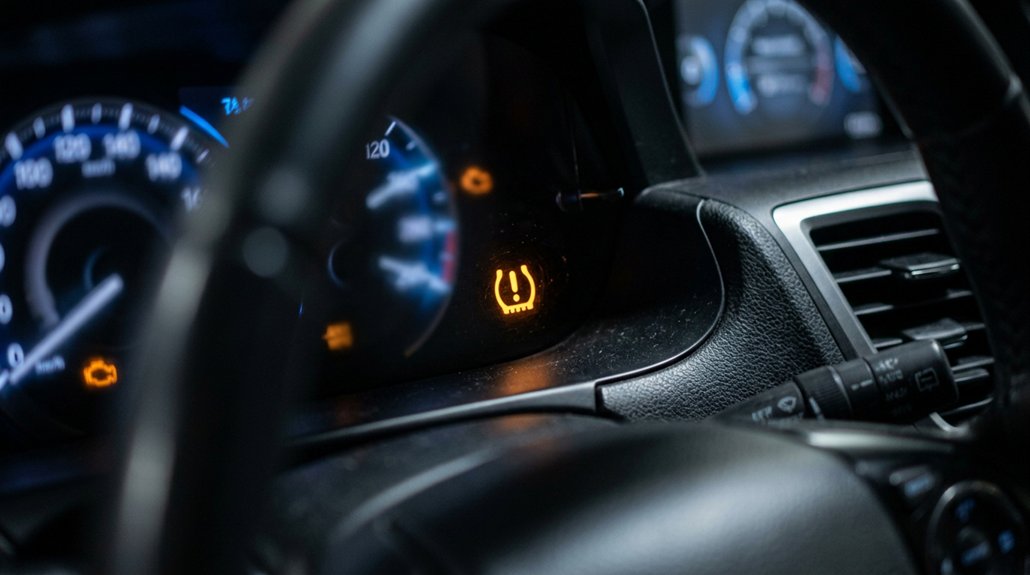
The dashboard illuminates, yet its message remains cryptic: what exactly demands your attention when “Service Tire Monitor System” appears? I’ll guide you through interpreting this warning, which signals either underinflation (typically 25% below your vehicle’s specified PSI, often 30-35 psi for passenger cars) or a system fault requiring diagnostic inspection.
You’ll learn to distinguish between temporary triggers, like seasonal temperature swings that contract air molecules, and persistent sensor malfunctions that demand professional intervention. Your safety depends on understanding which scenario you’re facing.
What “Service Tire Pressure Monitor” Means on Your Dashboard
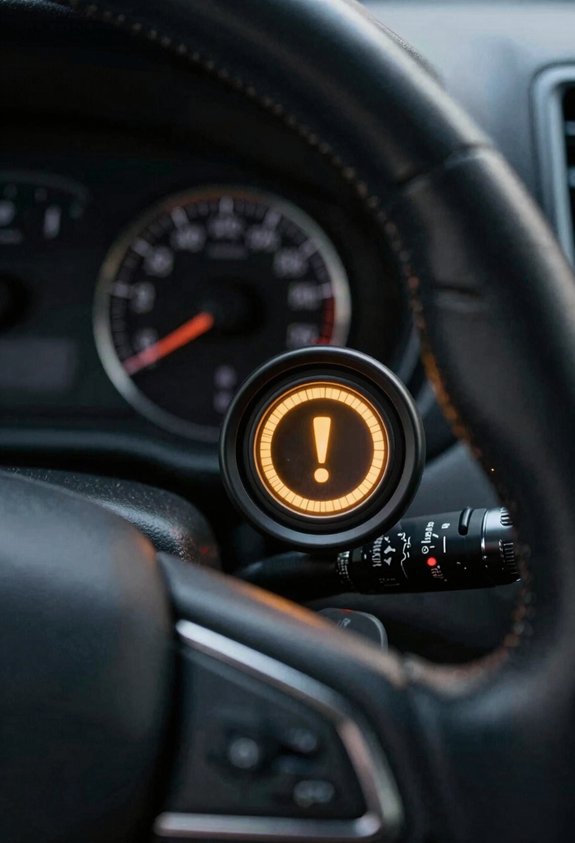
When you see “Service Tire Pressure Monitor” illuminate your dashboard, you’re receiving a critical alert that demands immediate attention, not merely a suggestion for routine maintenance. I’m here to walk you through exactly what this means, because understanding your TPMS keeps you safe and connected to every driver who’s faced this same uncertainty.
This warning signals two potential issues: your tire pressure has dropped below safe thresholds, or the TPMS itself has developed a fault requiring professional inspection.
Your sensors, which monitor each wheel’s pressure in real-time, rely on internal batteries that degrade over time, typically lasting 5-10 years. They can also malfunction due to temperature fluctuations, physical damage, or simple calibration drift after maintenance procedures.
How to Check Your Tire Pressure Correctly
Where exactly should you begin when that warning has already put you on edge? Let me walk you through checking tire pressure properly, so you’re back in control.
Using Your Tire Pressure Gauge
I grab a reliable gauge and remove each valve cap, pressing the gauge firmly until I get a stable PSI reading. I compare this against the vehicle’s specified range, found on the driver door jamb or in the owner manual, not the maximum pressure molded on the tire sidewall, which is merely a structural limit, not your target.
Use a reliable gauge on cold tires, checking driver door jamb specs—not the sidewall maximum—for your proper PSI target.
Critical Timing and Consistency
I check all four tires when they’re cold, meaning before driving or after several hours parked, since temperature swings distort readings. I check that pressures remain consistent across tires, avoiding significant underinflation or overinflation that compromises handling and safety.
When TPMS Persists
If tire pressure reads at correct pressure yet the TPMS warning stays illuminated, I suspect a faulty sensor or needed system reset, addressed per manufacturer guidelines.
Why Your TPMS Light Might Stay On After Filling Tires
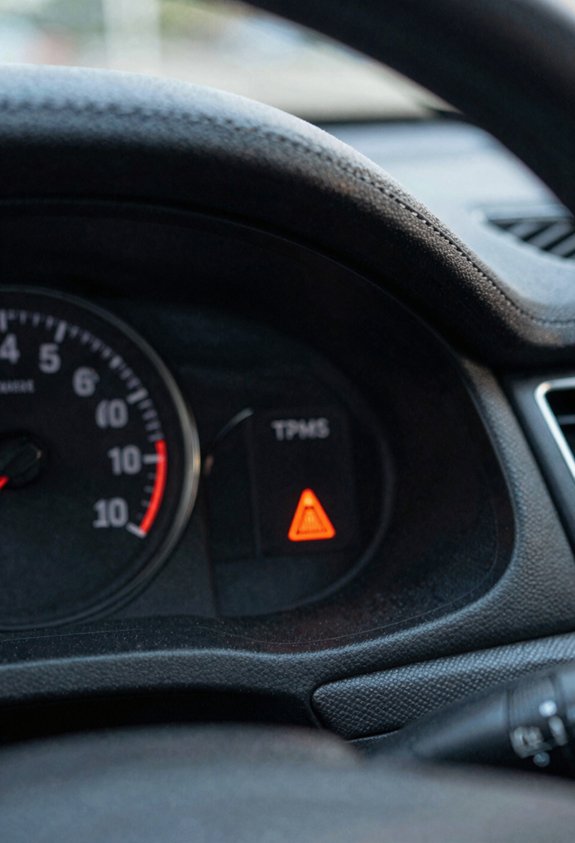
Why does that warning light keep staring back at me even after I’ve carefully topped off every tire? I’ve been there, and I know how frustrating it feels when you’ve done everything right.
TPMS Reset Requirements
Some vehicles demand a manual TPMS reset after inflation or rotation. Without it, the ECU won’t register the new pressures, keeping that light illuminated.
Pressure Fluctuations from Temperature
Cold mornings cause pressure fluctuations that drop PSI markedly, sometimes enough to retrigger warnings moments after filling, especially in seasonal shifts.
Sensor Calibration Needs
New or replaced sensors require several miles of driving for proper sensor calibration. The system needs real-time data to verify readings.
If the light persists after correct pressures, reset completion, and short drive cycles, I recommend professional diagnosis for battery, communication, or ECU issues.
TPMS Sensor Problems That Trigger False Warnings
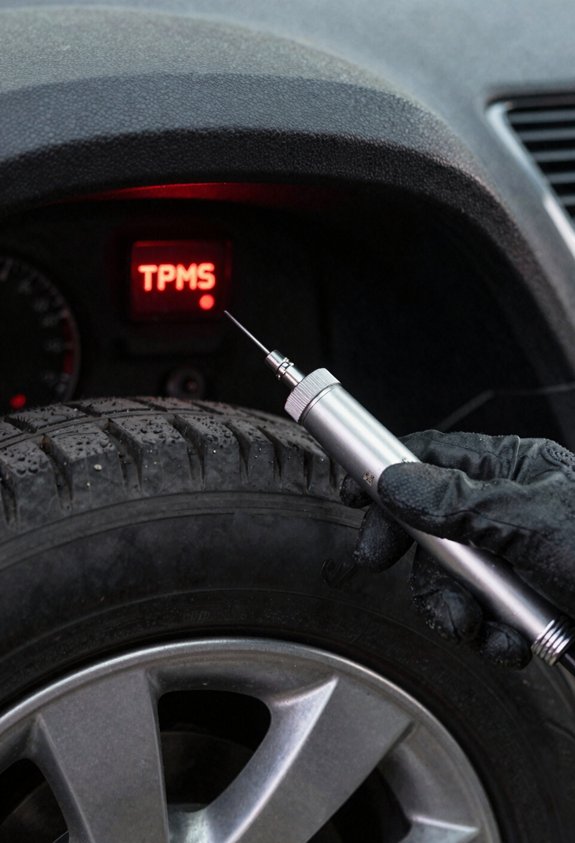
I’ll examine how Common Sensor Failures, Battery and Communication Issues trigger false TPMS warnings that persist even when your tires hold proper pressure. A dying sensor battery, typically lasting 5-10 years, often produces intermittent readings before total failure. Malfunctioning transmitters or damaged ECU receivers create signal disruptions that the system interprets as pressure loss.
Understanding these failure modes helps distinguish between actual tire problems and electronic malfunctions requiring sensor replacement, reprogramming, or receiver diagnosis.
Common Sensor Failures
How often have you checked your tire pressure, found it perfectly within spec, yet that stubborn warning light keeps glaring from your dashboard? I’ve been there too, and it usually points right to TPMS sensor failures hiding in plain sight.
Corroded or loose valve stems disrupt that essential connection, creating intermittent sensor communication you can’t predict. Wireless signal interference scrambles data before it ever reaches your vehicle’s ECU. Damaged sensor wiring breaks the chain of accurate reporting entirely.
Post-service reprogramming gaps after tire or wheel changes leave sensors unrecognized. Missed seasonal recalibration lets temperature swings trigger false TPMS alerts.
Bottom line: when your pressures read normal but warnings persist, your sensors need attention, fast. I’ve learned catching these failures early keeps you, and everyone riding with you, protected on every drive.
Battery and Communication Issues
Sensor Battery Failure
Your TPMS sensor contains a non-replaceable lithium battery, typically lasting 5-10 years. As voltage drops, signal strength weakens, causing false warnings despite accurate tire pressure. I recommend monitoring warnings that appear seasonally; temperature swings accelerate battery drain.
Signal Interruption
- Physical damage to sensor antennas
- Electromagnetic interference from aftermarket electronics
- Distance limitations between sensors and your vehicle’s ECU
Post-Service Complications
After tire rotations or replacements, I’ve noticed communication issues persist until proper relearning procedures complete.
Diagnostic Approach
When warnings contradict gauge readings, I prioritize scanning for battery status codes and verifying signal reception, rather than assuming sensor replacement.
How Cold Weather Affects Tire Pressure Readings
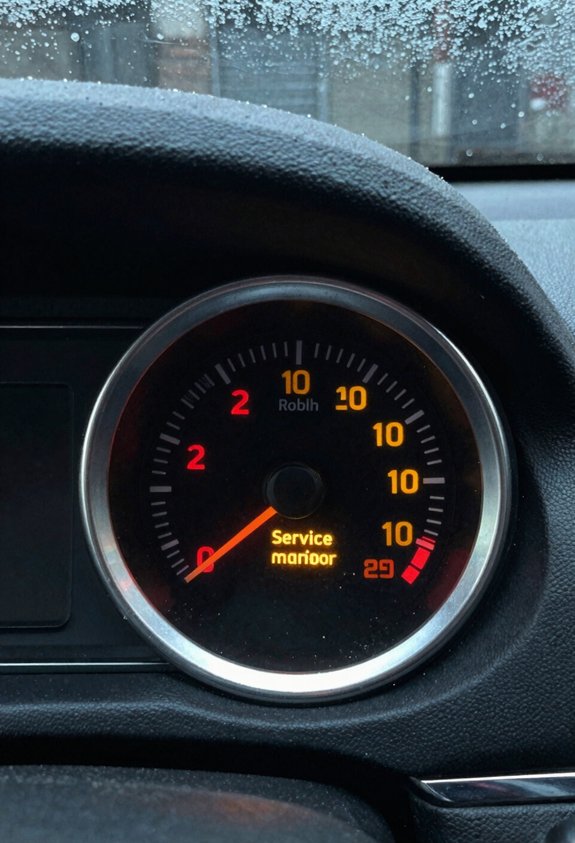
Why does your tire pressure suddenly drop when temperatures plummet? I’ve dealt with this countless times, and the cold weather impact is more predictable than you’d think.
For every 10°F the mercury falls, tire pressure drops roughly 1 PSI, which frequently triggers those early-morning TPMS alerts when you’re already running late. The air inside your tires contracts in cold conditions, reducing pressure before you even turn the key. These readings often normalize after a few miles of driving, once friction warms the rubber.
Here’s what I’ve learned about winter pressure fluctuations:
- Overnights drop temperatures dramatically, causing morning pressure losses that trigger warnings
- Daytime driving restores heat, sometimes clearing alerts without intervention
- Vehicle specifications, not tire maximums, determine your target pressure threshold
- Cold-induced underinflation can persist below recommended PSI even after warming
- Recheck pressures when tires are cold for accurate baseline measurements
How to Reset Your TPMS After Maintenance
You’ll need to reset your TPMS whenever you’ve had tires serviced, rotated, or replaced, or when a sensor has been changed, since most vehicles won’t automatically recognize these alterations without intervention. The exact procedure varies considerably across manufacturers, model years, and even trim levels; some require pressing a dedicated reset button (often located under the steering column or in the glove box), others demand navigating through instrument cluster menus using steering-wheel controls, and certain makes specify ignition cycling combined with specific accelerator or brake pedal sequences.
Because these variations are substantial and improper attempts can complicate diagnostics, I’ll outline when resets become necessary and how procedures differ across common vehicle categories.
When Reset Is Needed
When, exactly, does your TPMS demand a reset? You’ll need a TPMS reset after tire service disrupts the system’s baseline calibration, making sure accurate pressure monitoring resumes. The relearn process becomes essential whenever sensor positions change or new hardware enters the equation.
Here’s when that reset matters most:
- After tire rotation, which relocates sensors to different wheel positions
- Following sensor replacement, requiring fresh calibration
- Post-tire service involving pressure adjustments or valve work
- When seasonal tire swaps introduce different sensor sets
- After battery disconnects that clear stored TPMS data
I typically drive several miles post-reset, allowing the system to finalize its relearn process. Your warning light should stabilize, not flash. If it persists, I’ve learned that professional diagnostics, checking sensor batteries, wiring integrity, or valve stem condition, prevents ongoing monitoring failures.
Reset Procedure Variations
How exactly you reset your TPMS depends entirely on what you’re driving, as no single method works across all vehicles.
TPMS Reset Methods
After sensor replacement, you’ll typically complete the relearn procedure through one of three approaches: a dedicated reset button (often located beneath the steering column or in the glovebox), a sequence of ignition cycles combined with pedal presses, or menu navigation through your infotainment or instrument cluster display.
Many vehicles require you to drive 10–30 minutes at speeds above 15 mph, allowing the system to recognize new sensor IDs and establish baseline pressures. Some models need stationary initialization first, while others relearn automatically during normal driving.
Verification Steps
Confirm your TPMS reset succeeded by checking that the warning light extinguishes and displayed pressures match your manual’s specifications. Persistent warnings indicate incomplete calibration or additional system faults requiring professional diagnosis.
When It’s Safe to Drive With the TPMS Light On
I can continue driving with the TPMS light illuminated only after I’ve verified my tire pressures with a manual gauge and confirmed they fall within the manufacturer’s specified range, typically found on the driver’s door jamb placard or in the owner’s manual.
When my TPMS warning persists despite correct tire pressures, I’ve learned this signals a calibration issue or sensor fault, not imminent danger, provided I stay vigilant.
- I check all four tires with a reliable gauge before assuming it’s safe
- I compare readings to the specified PSI, never the tire sidewall maximum
- I recognize steady illumination differs from flashing alerts (60–90 seconds indicates system malfunction)
- I account for cold weather effects, rechecking after warm-up
- I monitor for recurring warnings that suggest underlying problems requiring attention
Remaining alert belongs to responsible ownership.
When Your TPMS Needs Professional Diagnosis
- Sensor replacement: Persistent warnings after pressure correction indicate failing sensors, typically 5-10 year lifespan.
- Calibration reset: Some vehicles require model-specific procedures, road tests, or scan tools for TPMS learning processes varying by year, make, and model.
Warning remains post-reset? I’ve learned certified technicians must inspect damaged sensors, faulty wiring, or ECU communication problems; safety-critical failures you shouldn’t ignore.
How to Prevent Future TPMS Warnings
The most effective approach to avoiding recurring TPMS warnings involves establishing consistent maintenance habits that address pressure, calibration, and environmental factors before they trigger alerts. I want you to feel confident managing your tire pressure monitoring system, so here’s what I do to stay ahead of problems.
- Check pressures monthly using a reliable gauge, matching the manufacturer’s spec (driver’s door jamb or manual), because your tire pressure monitoring system isn’t a substitute for hands-on pressure maintenance.
- Recalibrate after any service, including tire rotations, replacements, or temperature swings, then drive 10-15 miles to let the system relearn.
- Watch for cold-weather drops, as temperatures below 40°F can trigger false TPMS warnings even with adequate inflation.
- Inspect sensors when warnings persist; weak batteries or communication faults need professional diagnosis.
- Verify before heavy loads, since extra cargo demands precise pressure maintenance for safety.