
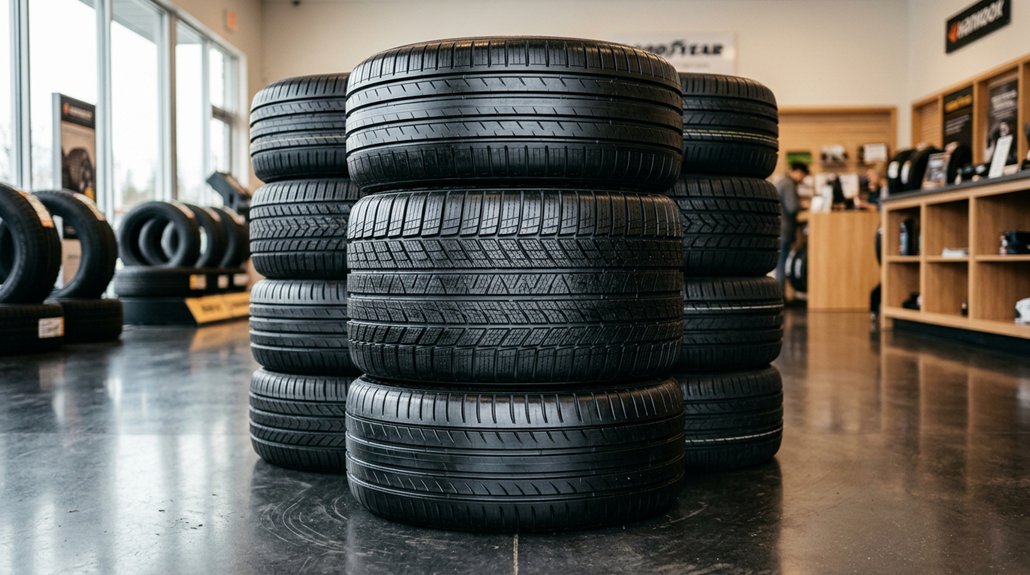
You probably don’t think about your tires until you’re sliding on wet pavement or staring at a blowout on the shoulder. I’ve learned that choosing the wrong compound, or trusting a brand’s marketing over its engineering, can cost you thousands in fuel inefficiency, premature wear, or worse.
Tire selection isn’t about loyalty; it’s about matching tread patterns, silica content, and speed ratings to your actual driving conditions. Let’s break down ten manufacturers whose technologies consistently outperform their competitors, starting with the ones that’ll keep you safest when the weather turns.
How to Choose the Right Tire Brand for Your Vehicle and Budget
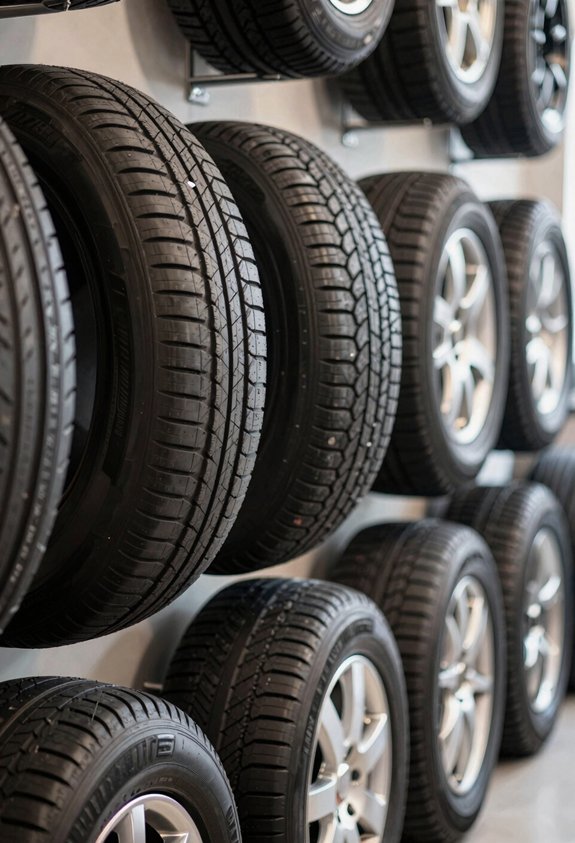
Where exactly should you begin when every tire brand claims superiority? I start by matching your vehicle and driving habits to proven strengths; Michelin delivers exceptional tread life and wet grip, while others specialize in different arenas.
The best tire for you isn’t the one with the loudest marketing—it’s the one engineered for how you actually drive.
Understanding Tire Categories and Certifications
You’ll need to distinguish all-season reliability from true snow/3PMSF capability; all-weather options like the CrossClimate2 bridge this gap but sacrifice extreme-condition performance.
Check UTQG ratings; traction grades (AA, A, B, C) directly indicate wet grip potential, while temperature ratings (A-C) reveal highway heat resistance.
Balancing Price Against Long-Term Value
Don’t fixate on initial price point alone. Calculate total cost of ownership: longer-lasting compounds offset higher upfront costs through extended replacement intervals and improved fuel efficiency.
Verify model versatility; make sure your size (typically 15–22 inches) remains available across your shortlisted brands before committing.
Michelin: French Tire Engineering for All-Weather Durability
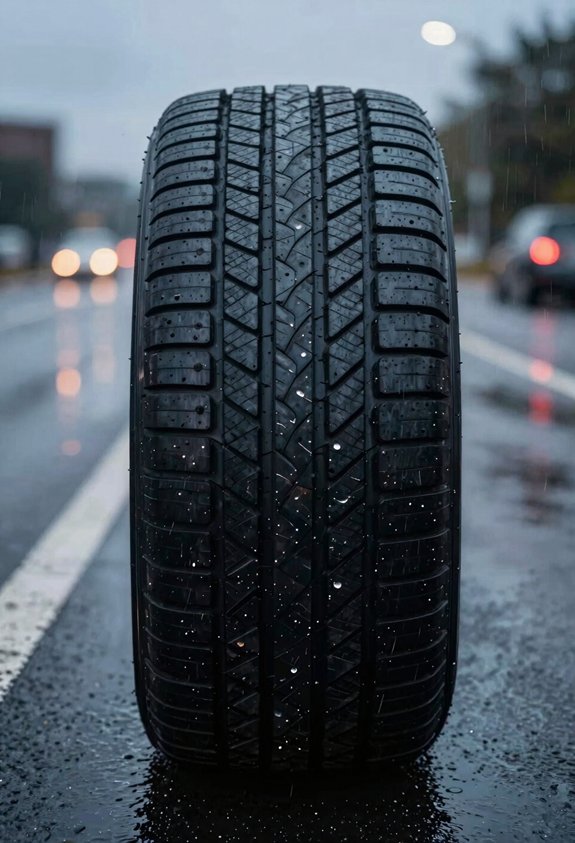
Now that I’ve outlined how to evaluate tire categories and balance cost against longevity, I’ll examine the first brand on my list, starting with the manufacturer that has largely defined what drivers expect from premium all-weather capability.
Michelin: A Century of Engineering Excellence
I’ve relied on Michelin for decades because this French manufacturer delivers all-weather durability that keeps our community safe through demanding road conditions. The CrossClimate 2 exemplifies this commitment, earning top marks for wet performance while maintaining secure terrain grip across dry, wet, and snow scenarios. You’ll appreciate its exceptional weather adaptability, though I must caution: expect slight understeer in dry handling and elevated noise on smooth pavement.
For those prioritizing extended tread life and reduced cabin noise, I direct you toward the Defender2, which sacrifices some winter capability for quiet longevity. Ultimately, Michelin’s unwavering focus on safety makes it a cornerstone of trustworthy tire selection.
Goodyear: American Tire Innovation for Every Vehicle Type
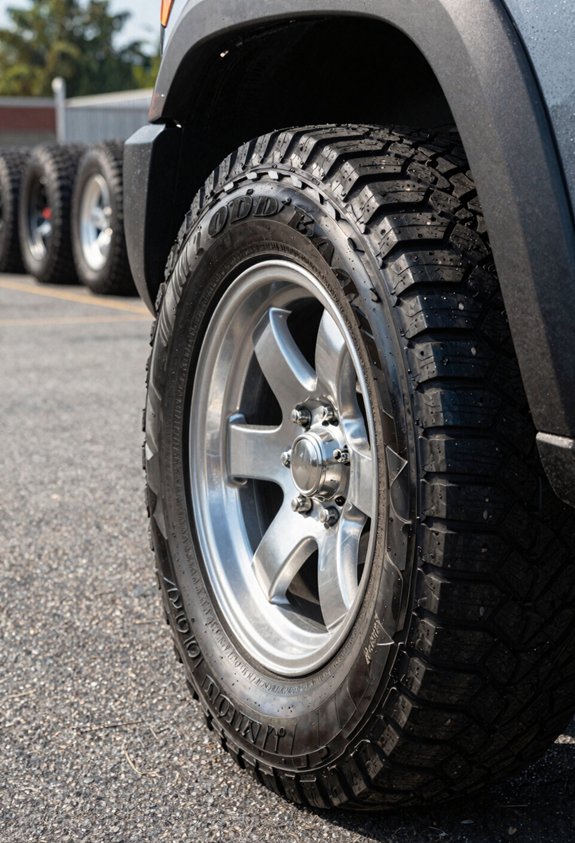
The American tire landscape owes much to Goodyear’s 120-plus years of manufacturing expertise, and I’ve consistently directed drivers toward this Ohio-based manufacturer when they need versatile performance across passenger cars, light trucks, and commercial vehicles.
| Goodyear Tire Family | Primary Performance Focus |
|---|---|
| Assurance WeatherReady | Multi-weather reliability, light snow/ice capability |
| Assurance MaxLife2 | Extended treadwear, all-season longevity |
| Eagle Sport | Responsive handling, sporty grip |
| WeatherReady Line | Severe snow-rated all-season tires |
| Assurance All-Season | Balanced comfort, year-round dependability |
Goodyear’s American tire innovation delivers all-season tires engineered for superior grip, precise handling, and remarkable longevity. I’ve found their WeatherReady technology particularly valuable for drivers facing unpredictable conditions, while the Assurance MaxLife2 suits high-mileage commuters prioritizing durability.
The Eagle series satisfies enthusiasts seeking athletic road manners without sacrificing daily usability.
Continental: German Tire Safety for Wet-Weather Control
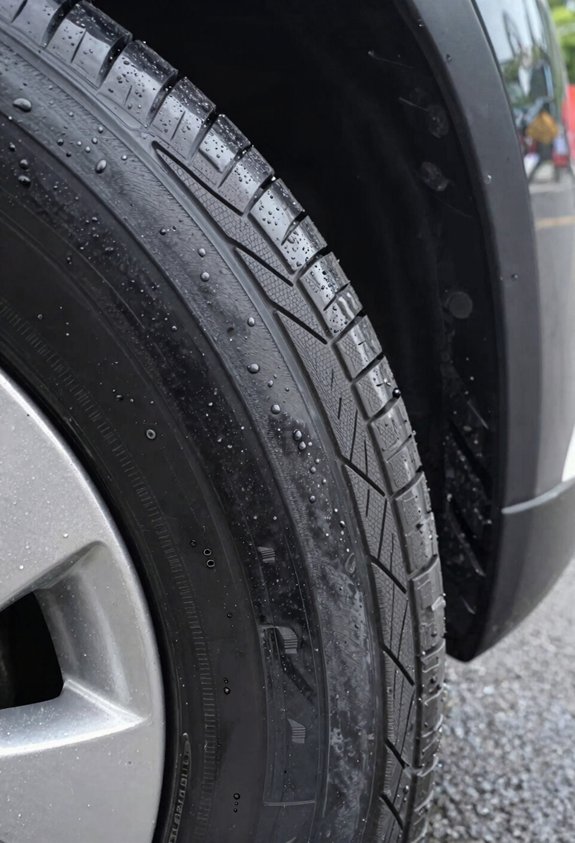
I want to walk you through why Continental stands out when rain starts falling and roads get slick. Their German engineering tradition prioritizes braking efficiency and innovative safety technology, giving you the confidence that your tires will maintain traction when you need it most.
Whether you’re considering the TrueContact Tour for its all-season reliability or the ExtremeContact Sport for sharper handling, you’re investing in a brand that treats wet-weather mastery as a non-negotiable engineering requirement, not an afterthought.
German Engineering Excellence
Because Continental has built its reputation on precision engineering rooted in German automotive tradition, I find it essential to examine how this manufacturer translates rigorous safety standards into tangible wet-weather performance.
German Engineering Excellence
Continental embodies German engineering through uncompromising safety technology and measurable braking performance. I’ve analyzed their TrueContact Tour, which delivers exceptional all-season touring capability with shortened stopping distances across temperature ranges (45°F–85°F). For enthusiasts seeking high-performance tires, the ExtremeContact Sport demonstrates track-derived handling without sacrificing daily drivability.
What distinguishes Continental is their systematic approach to precision and reliability: every compound formulation undergoes rigorous testing for hydroplaning resistance and tread wear uniformity (typically 60,000–80,000 mile warranties). Whether you’re equipping a family sedan or luxury vehicle, you’re joining drivers who prioritize engineered safety over marketing claims.
Wet Weather Mastery
Precipitation presents one of road travel’s most hazardous conditions, which is why I’ve scrutinized Continental’s wet-weather architecture across their product spectrum.
Continental’s wet-weather mastery stems from deliberate engineering prioritizing braking performance and hydroplaning resistance. Their all-season tires, particularly the TrueContact Tour, deliver reliable wet grip and safe stopping distances for daily commuters.
The ExtremeContact Sport elevates responsive handling for enthusiasts demanding controlled performance.
Consider these attributes:
- Braking performance optimized through advanced tread compounds and siping patterns that evacuate water efficiently
- TrueContact Tour providing consistent wet grip for family vehicles prioritizing security over spirited driving
- ExtremeContact Sport delivering class-leading responsive handling without sacrificing rain confidence
- German-engineered safe stopping technology applicable across touring and performance segments
Continental keeps you connected when storms arrive, regardless of your driving priorities.
Safety-Focused Innovation
How does a tire manufacturer translate German engineering philosophy into measurable safety outcomes on rain-slicked highways? I believe Continental answers this through uncompromising braking performance and wet-weather safety systems that protect what matters most.
German Engineering Meets Real-World Protection
Continental’s tire technology prioritizes braking efficiency across all-season conditions, delivering shorter stopping distances when roads turn treacherous. Their TrueContact Tour and ExtremeContact series demonstrate how precision manufacturing creates measurable safety advantages for family vehicles and luxury cars alike.
Why This Matters for Your Drive
I recommend examining these critical attributes:
- Wet-weather control: Advanced tread compounds channel water efficiently, maintaining grip where competitors falter
- Crossover compatibility: SUV-optimized models extend safety innovations beyond sedans
- Predictable handling: German engineering provides consistent braking performance across temperature ranges
When you’re transporting loved ones, Continental’s safety-focused design provides the confidence that engineering rigor, not marketing promises, guards your journey.
Pirelli: Italian Performance Tires for Speed and Precision
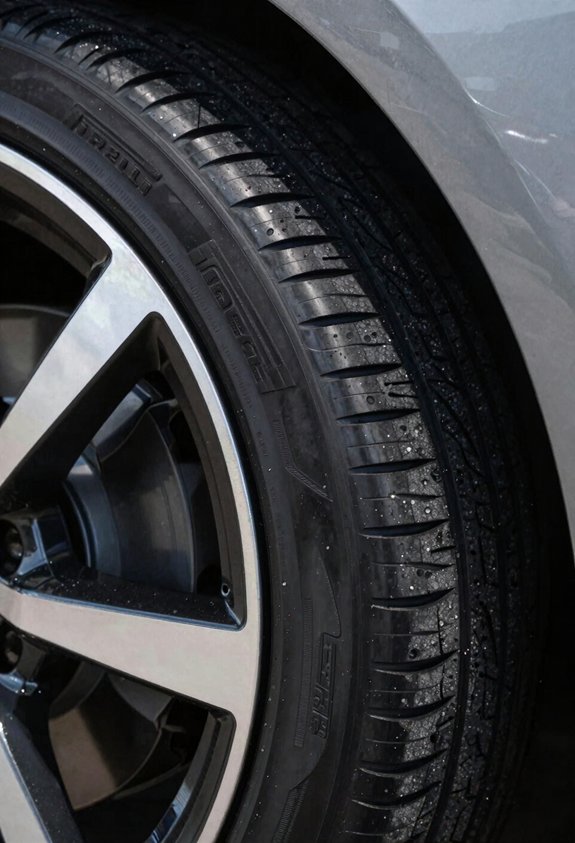
- The P Zero line uses asymmetrical tread patterns that maximize dry grip on one shoulder while maintaining wet grip channels on the opposite side
- High-speed handling capabilities exceeding 186 mph on premium vehicles, from Porsche to Ferrari factory specifications
- Steering response precision that transmits road feedback directly to your palms without harshness
- Specialized compounds balancing track-day aggression with all-season treadwear practicality
Pirelli outfits more prestigious sports cars than any competitor, cementing its status among enthusiasts who demand belonging in performance circles.
Bridgestone: Japanese Tire Technology for Fuel Efficiency
Why does one of the world’s largest tire manufacturers invest so heavily in compounds that minimize rolling resistance? I find Bridgestone’s approach compelling because their rubber compounds directly translate to real savings at the pump without sacrificing what matters most: grip and safety.
Their tire technology spans every driving condition you’ll encounter. The Turanza delivers whisper-quiet touring comfort for your daily commute, while Blizzak dominates winter performance when temperatures plummet. For enthusiasts demanding precision, Potenza channels race-bred engineering into street-legal packages.
What unites these lines is Bridgestone’s obsessive refinement of polymer structures; each compound is engineered to reduce energy loss while maintaining contact patch integrity. This isn’t marketing; it’s physics applied through decades of Japanese manufacturing discipline. You’ll feel the difference in reduced fuel consumption and confident handling across diverse road surfaces.
Dunlop: British Tire Handling at a Tier-2 Price
A century of British engineering heritage positions Dunlop as a compelling middle-ground option when you’re weighing performance against budget constraints. As a British tire brand operating in the Tier-2 segment, I’ve found Dunlop consistently delivers strong handling without demanding premium-tier investment, making it accessible for drivers who refuse to compromise entirely on road feel.
- Softer rubber compound enhances road feedback and responsiveness
- Superior wet grip and dry grip inspire confidence during aggressive maneuvers
- The Dunlop Sport Maxx RT 2 exemplifies this balance for passenger vehicles
- Affordable price points democratize performance-oriented driving
However, I’d caution that this softer construction may accelerate tread wear compared to harder compounds, particularly under sustained high-temperature conditions. For enthusiasts seeking predictable cornering dynamics without flagship expenditures, Dunlop occupies a defensible position, though I’d recommend monitoring wear patterns closely if you frequently push limits.
Yokohama: Japanese Tires for Eco-Conscious Performance
Yokohama represents Japanese engineering precision where environmental responsibility doesn’t necessitate surrendering engaging driving characteristics, positioning itself as a compelling alternative for drivers who demand both efficiency and engagement.
I recommend examining the AVID Ascend GT, Yokohama’s standout model, which merges high-performance handling with an eco-friendly design that reduces environmental impact without compromise. This tire delivers exceptional wet and light snow traction, a critical safety consideration for year-round reliability in variable climates. I’d caution against assuming all-seasons handle severe winter identically.
Yokohama’s advanced tire technology produces durable tires that maintain structural integrity across extensive mileage ranges (typically 60,000-85,000 miles), while preserving a notably quiet ride that enhances cabin comfort during highway cruising. For those prioritizing eco-conscious performance, Yokohama’s tread compounds and construction methods demonstrate how sustainability and driver engagement coexist. I’d emphasize verifying specific ratings match your regional conditions and driving demands before committing.
Toyo: Japanese Tire Durability for On- and Off-Road Use
Whether you’re navigating daily commutes or tackling rugged terrain, Toyo delivers Japanese-engineered durability that doesn’t force you to choose between on-road precision and off-road capability. As a Japanese tire brand with decades of proven performance, I’ve found Toyo consistently builds tires that withstand demanding conditions without sacrificing driver confidence.
Consider these standout options for your vehicle:
- Open Country A/T III: Balanced on-road comfort with aggressive off-road traction
- M 143: Commercial-grade durability for heavy-duty applications
- Extensa HP II: Ultra-high-performance handling with extended tread life
- Celsius: All-weather versatility maintaining grip across temperature extremes
Toyo’s engineering prioritizes strong steering response and versatile traction, keeping you equipped for diverse driving conditions. Their commitment to tread life longevity means fewer replacements, protecting your investment while keeping you securely connected to whatever road, or trail, lies ahead.
Hankook: Korean Tire Brand Balancing Safety and Value
Korean engineering has earned Hankook its reputation as a tire manufacturer that doesn’t force drivers to compromise between protective safety features and budget-conscious value. I respect how this Korean brand, established in 1941, builds its tire lineup with inventive radial designs that prioritize both performance and your wallet.
When I’m recommending all-season options to fellow drivers who want belonging in the smart-spending community, I point them toward the Ventus S1 Noble 2. Its superior wet handling delivers confidence when conditions turn hazardous. For those hauling campers or light trucks, the AH35 proves Hankook’s versatility extends well beyond passenger vehicles.
What draws me to this rapidly growing maker is its deliberate balance: advanced materials and rigorous safety standards coexist with competitive pricing. Hankook doesn’t sacrifice durability for affordability, and that matters when you’re trusting rubber to road at highway speeds.