
I’ll locate your recommended cold PSI on the driver’s door jamb placard or in your owner’s manual, not the tire sidewall, since that number only indicates maximum pressure. I’m watching for differing front and rear values. Also, I’ll warn you about the spare: it’s often overlooked until you need it.
Start With Your Vehicle’s Tire Pressure Sticker (Not the Sidewall)
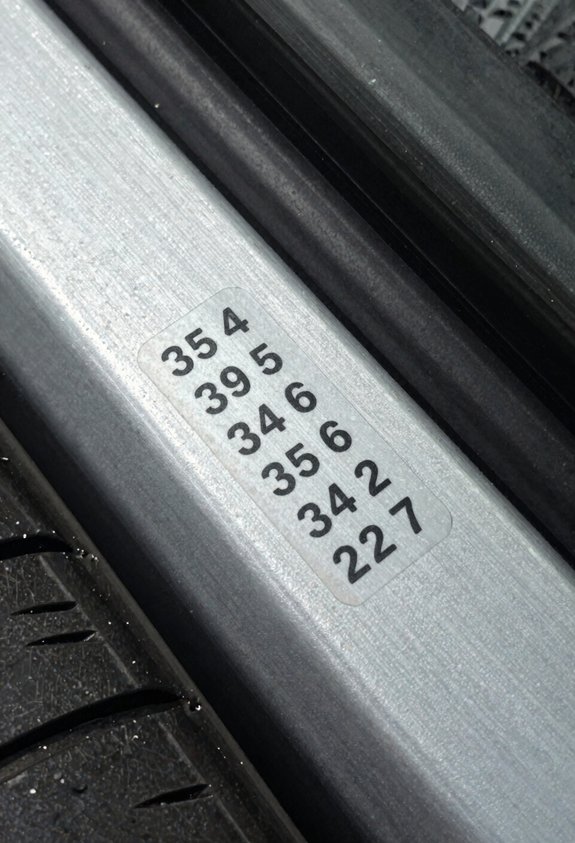
I treat my tire pressure guidance as my baseline, adjusting only when actual load and driving conditions deviate markedly from normal. If your sticker’s worn or missing, verify through your owner’s manual. I’ve done this myself, and the values match precisely.
Check “Cold”: Why Driving Skews Your Tire Pressure Reading
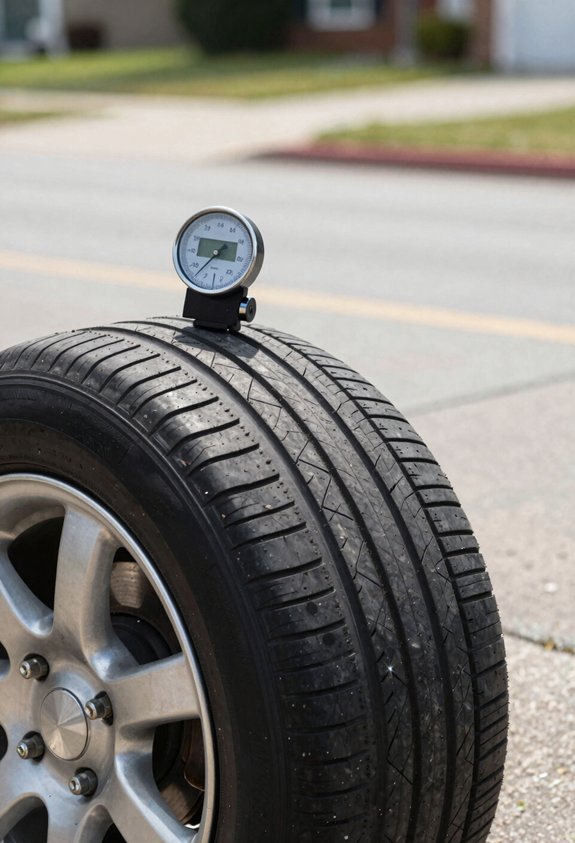
When I check my tire pressure, I make sure the tires are cold, meaning the car hasn’t been driven for at least three hours or moved more than a mile. That’s because driving generates heat that causes the air inside to expand, raising the measured PSI by approximately 1 PSI for every 10°F of temperature increase. This heat expansion effect means hot tires can read falsely high, leading me to underinflate them if I rely on those numbers without correcting for the temperature difference once they’ve cooled.
I always check in the morning or after extended parking, especially during seasonal transitions. Both TPMS sensors and manual gauges require that cold baseline to deliver readings I can actually use for proper inflation adjustments.
Heat Expansion Effects
Three distinct thermal factors, ambient temperature swings, road friction, and sidewall flexing, work together to shift your tire pressure throughout any given day. This is why I emphasize understanding heat expansion before touching a pressure gauge.
Temperature fluctuations directly alter PSI readings, with cold temps dropping tire pressure roughly 1 PSI per 10°F decrease, while driving generates heat expansion that elevates readings markedly. Your TPMS may not compensate for these variations, leaving you miscalibrated. I recommend using the manufacturer’s cold-spot PSI as your reliable baseline, then adjusting expectations after driving.
| Condition | Pressure Impact |
|---|---|
| Cold morning | Lower reading |
| Ambient rise | +1 PSI per 10°F |
| Road friction | Moderate increase |
| Sidewall flexing | Additional buildup |
| Highway driving | Several PSI gained |
Proper Timing Matters
The heat expansion effects I’ve just outlined create a clear problem: any reading taken after driving won’t reflect your tire’s true baseline pressure. That’s why I always check my tires cold, meaning they’ve sat undriven for three hours minimum, before I ever touch my tire gauge.
Here’s what I’ve learned: every 10°F shift nudges pressure about 1 PSI, and a warm tire can read 3–5 PSI higher than its cold PSI, which easily masks underinflated tires. I don’t rely on my TPMS alone for precision; I measure cold pressure first, then inflate to cold readings matching my manufacturer’s recommended tire pressure.
I make it a habit to check tire pressure after temperature changes or long trips, since ambient conditions keep shifting. Timing isn’t optional; it’s what keeps my readings honest.
How to Check and Adjust Tire Pressure in 5 Minutes
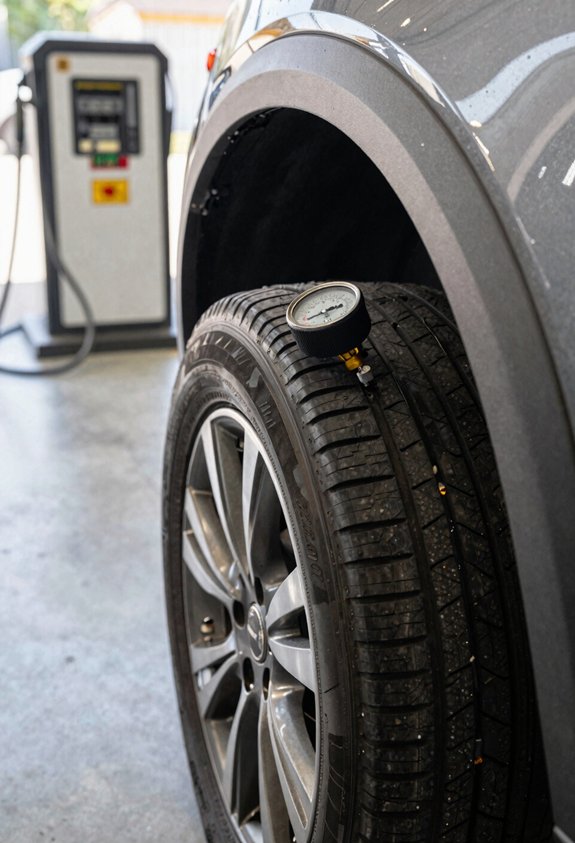
I’ll walk you through a complete tire pressure check and adjustment in about five minutes, covering the three critical phases: preparing your tools and conditions, executing the measurement sequence, and making precise inflation corrections.
We’ll start with pre-check preparation, where I’ll explain why cold tires matter and what you’ll need before touching a valve stem. Then I’ll move through the step-by-step reading process that gets you accurate PSI data from each wheel position. Finally, I’ll break down inflation adjustment techniques, including how to handle overinflation, when to recheck, and why your spare tire deserves equal attention.
Pre-Check Preparation
Before you ever touch a gauge or compressor, your timing and positioning matter profoundly. Checking tires while they’re still warm from driving will yield readings inflated by 3–5 PSI above true cold pressure, a discrepancy that could lead you to dangerously underinflate.
Gathering Your Equipment
I grab my tire pressure gauge, making sure it’s accurate and easy to read. I note where I’ll find my vehicle’s recommended PSI (usually on the driver’s door jamb, fuel door, or manual). I don’t rely solely on TPMS; it warns only when pressure drops drastically, so I’ll verify everything manually. I check that my air compressor (home unit or station pump) works before starting. I also check my spare tire’s pressure; neglected spares fail when needed most.
Final Positioning
I’ve waited three hours since driving, confirming cold tires. I remove valve stem caps, keeping them safe for reinstallation.
Pressure Reading Steps
Now that my tires have cooled and my gauge is ready, I’ll walk through the exact sequence I follow every time I check pressure. It’s a five-minute routine that prevents uneven wear, blowouts, and the fuel-wasting drag of underinflation.
Remove Valve Cap and Measure
I unscrew the valve cap, press my gauge squarely onto the valve stem until I hear no hissing, then read the PSI displayed.
Compare to Recommended PSI
I check my gauge reading against the vehicle’s recommended PSI (found on the door placard or manual), noting any front/rear variations.
Adjust Accordingly
If underinflated, I add air; if overinflated, I release it gradually, rechecking until I hit target pressure.
Final Steps
I reinstall all valve caps, then reset the TPMS if equipped, verifying tire pressure stability after a brief drive.
Inflation Adjustment Techniques
Within five minutes of retrieving my gauge, I can verify and correct the pressure in all four tires, provided I work methodically and respect the cold-temperature requirement that underpins every accurate reading. I remove each valve cap, press my gauge firmly onto the valve stem, and read the PSI without leaking air. Then I compare that figure to the vehicle manual or door placard, noting discrepancies that demand inflation or release.
I inflate slowly with a compressor until I reach correct pressure, rechecking frequently; if I overshoot, I bleed air in small increments, because precision matters more than speed. I remember my TPMS only warns of significant deviation, so I don’t rely on it for fine adjustments. I finish by reseating every valve cap, including my spare’s, making all four (or five) tires match their specified tire pressure thresholds.
Too High or Too Low? Fix Your Reading Fast
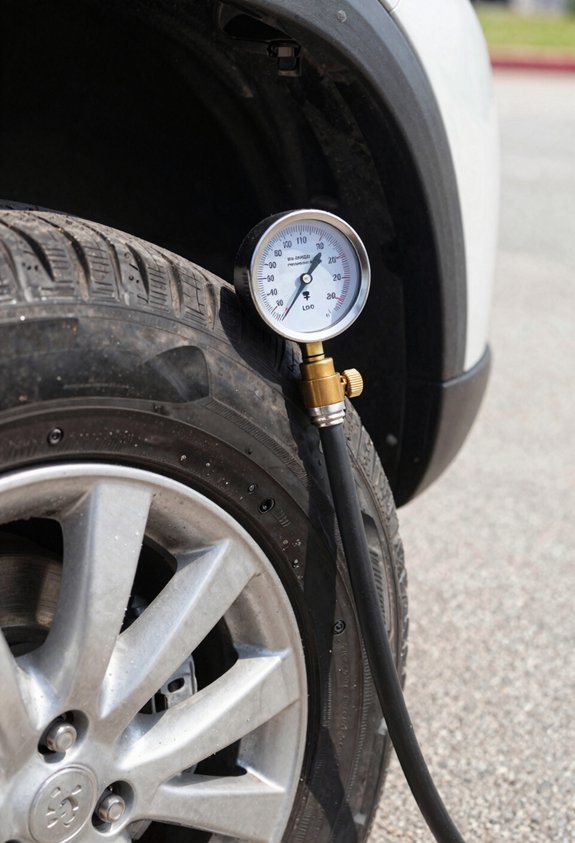
I check my tire pressure monthly with a reliable gauge, because I’ve learned that underinflation and overinflation both punish your tires and your safety. Underinflation increases road contact, worsens braking and handling, raises fuel consumption, and accelerates tread wear. Overinflation reduces the contact patch, hurts traction, and speeds up center-tread wear.
I’ve noticed my PSI drops about 1 for every 10°F temperature decrease, so winter mornings demand extra attention. My TPMS alerts around 25% below proper levels, but I don’t rely on it alone; I verify with a gauge. I inflate to my door jamb’s specified PSI (usually 30–35), recheck cold, and reseal valve caps.
Front and Back Tires: When They Need Different Pressure
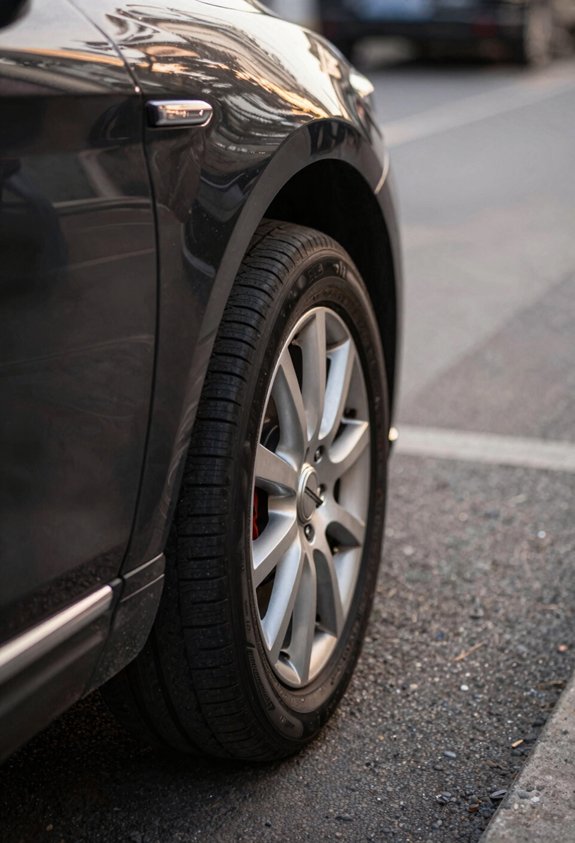
Why should front and rear tires sometimes hold different pressures? Your vehicle manufacturer specifies distinct values because load distribution, steering demands, and handling characteristics vary between axles. This means your front tires might need higher PSI than your rear ones, or vice versa.
Key Considerations for Staggered Pressures
I’ve learned that getting this right keeps us safe and connected to every road. Here’s what matters:
- Consult your owner’s manual for exact front and rear PSI values; never guess or apply generic ranges
- Monitor your TPMS alerts closely, since uneven pressure triggers warnings that demand immediate correction
- Adjust seasonal pressures when towing or hauling heavy loads, as weight shifts alter optimal distribution
Check recommended pressure monthly, adjusting front and rear tires independently to preserve handling precision and prevent premature wear.
Don’t Ignore Your Spare Tire’s Pressure
How often does a spare tire cross your mind when you’re checking your vehicle’s health? I’ve learned the hard way that neglecting spare tire pressure leaves us stranded when we need it most.
Finding Your Specification
Your door jamb sticker or owner’s manual lists the proper spare tire pressure, which typically runs near 60 psi for a temporary/compact spare, significantly higher than your standard tires. Full-size spares match your regular tire inflation, so I always verify which type I’m carrying.
Building the Habit
My TPMS won’t monitor most spares, so I set a maintenance reminder for monthly checks. After adjusting my other tires, I recheck the spare immediately; consistency keeps our whole community safer on the road.
Don’t let a flat spare betray you in a crisis.
How Temperature Swings Change Your Tire Pressure
When did you last check your tires after a cold snap? I’ve learned that tire pressure drops about 1 PSI for every 10°F of temperature change, which means we’re all in this together when winter hits. A plunge from 60°F to 0°F can steal 6–7 PSI without any leak at all.
Cold weather demands vigilance: I always perform my inflation check before driving, since driving heat rise skews readings. That morning TPMS warning? It’s often legitimate, not a sensor fault.
Here’s what our community of drivers should remember:
- Check monthly and after major temperature changes, consistency protects us all.
- Measure when tires are cold, before friction warms them, for accurate PSI readings.
- Don’t ignore gradual losses; even “small” drops compound handling risks we share on every road.
What Your TPMS Light Says About Tire Pressure
Within the cluster of warning indicators on your dashboard, the TPMS (Tire Pressure Monitoring System) light serves as a critical, though often misunderstood, sentinel for your tires’ inflation status. I’ll help you decode what your TPMS light communicates about tire pressure.
Interpreting Your TPMS Light
| TPMS Light Behavior | Meaning | Required Action |
|---|---|---|
| Solid illumination | Low tire pressure confirmed | Check and inflate to manufacturer-recommended PSI |
| Blinking at startup, then solid | System self-test passing | Monitor; verify pressure promptly |
| Blinking continuously | TPMS system malfunction | Schedule diagnostic service |
| Off after inflation | Pressure restored | Reset TPMS per vehicle procedure |
I’ve learned that relying solely on your TPMS light risks delayed response, since activation typically occurs at 25% underinflation, well past the 5% threshold where fuel economy degrades and uneven wear accelerates. After correcting low tire pressure, I always reset TPMS when specified, guaranteeing accurate future monitoring of your tire pressure. We’re protecting our investment, together.
How Often to Check and Make It a Habit
Knowing exactly how often to check tire pressure isn’t merely a matter of convenience, it’s a fundamental requirement for maintaining vehicle safety, optimizing fuel efficiency, and preventing premature tire degradation. I check my tire pressure monthly, using a reliable gauge alongside my TPMS readings for verification, because consistent vigilance protects us all on the road together.
- Measure cold tires, check in the morning before driving, since heat from motion artificially elevates pressure readings and masks true inflation levels.
- Account for temperature drops, anticipate roughly 1 PSI decrease per 10°F reduction, rechecking after ambient warming occurs.
- Verify every tire, including your spare tire, maintain each at the vehicle-specific recommended pressure (typically 30-35 PSI), adjusting immediately after inflation.
Make this routine yours; our shared commitment to safety builds the responsible driving community we all belong to.