
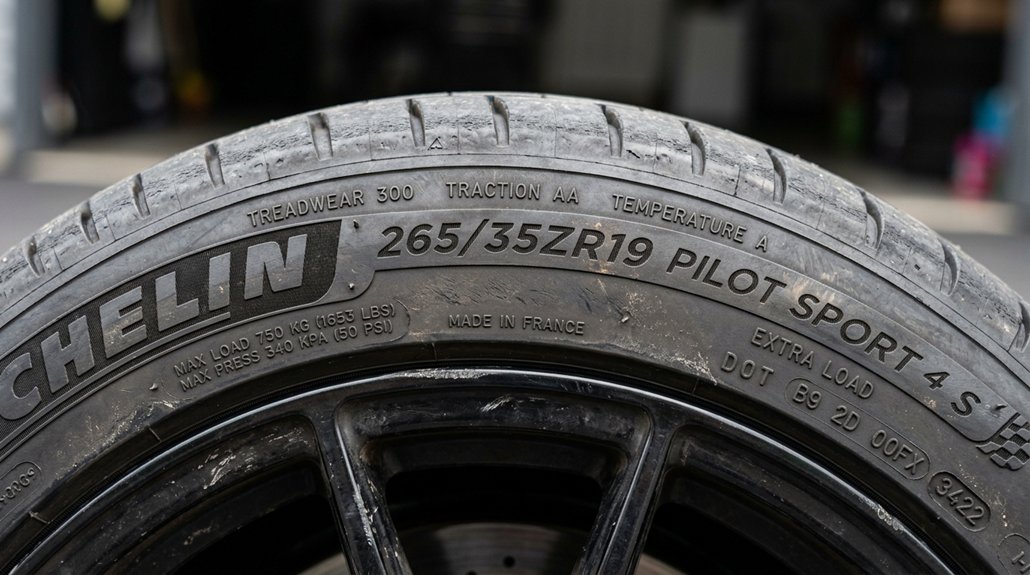
You might think a tire sidewall is just meaningless rubber, but I’ve seen it make the difference between a controlled stop and a catastrophic blowout at highway speeds. This vertical band, spanning roughly 30–60% of your tire’s total height depending on aspect ratio, houses the structural plies, bead bundles, and flex zones that let your tire absorb pothole impacts while maintaining air pressure integrity.
When sidewalls fail through unnoticed cracking, impact bulges, or cord exposure, you’re not looking at a repairable puncture; you’re looking at immediate replacement. This zone flexes thousands of times per mile and cannot be patched safely. Understanding what your sidewall actually does, and how to spot when it’s compromised, could prevent the kind of failure that doesn’t give you warning at 70 mph.
Is Your Sidewall Damaged? Here’s How to Tell Fast
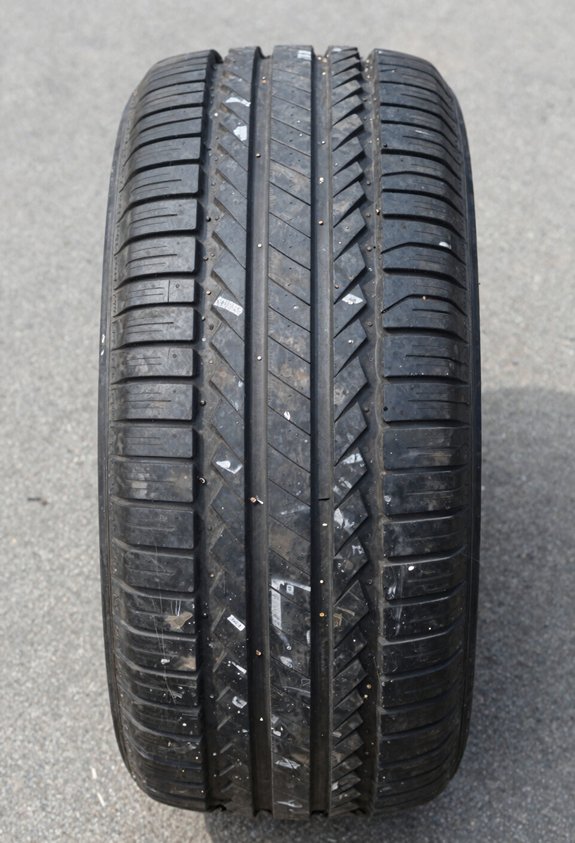
I perform systematic risk evaluation: monitoring pressure loss over 24-48 hours, applying soapy water to detect bubble-forming leaks. These methods, combined with structural inspection, reveal whether my front passenger tire, or yours, belongs on the road or in recycling.
Where the Sidewall Lives (And Where It Ends)
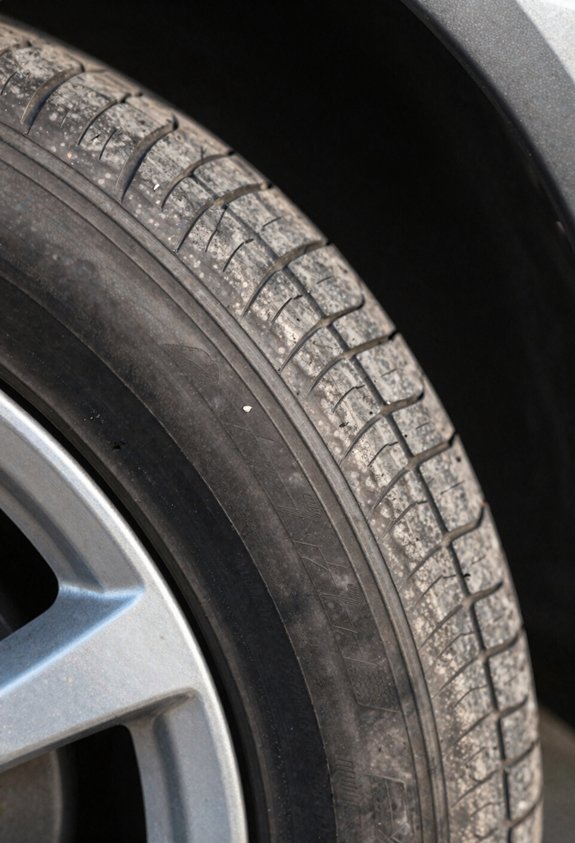
Where exactly does the sidewall begin and end when I’m examining my tire? I’ve learned that this matters for understanding my tire dimensions and recognizing damage before it becomes dangerous. The sidewall occupies that smooth, vertical stretch between where my tread ends, the tread boundary, and where the bead seals against my wheel rim. It’s simple to locate once I know what I’m seeking.
The sidewall spans from your tread boundary down to where the bead seals against your wheel rim—that smooth, vertical stretch is what protects your tire’s structure.
My sidewall identification checklist:
- Locate the smooth vertical surface devoid of tread grooves, which sits distinctly below any shoulder blocks or water channels
- Trace the tread boundary where molded rubber transitions from horizontal contact surface to vertical sidewall geometry
- Exclude grooved areas entirely; if I see siping or channels, I’ve strayed past my sidewall into shoulder or crown territory
Any damage on this smooth vertical face? That’s sidewall damage, requiring immediate professional inspection.
Sidewall vs. Tread vs. Shoulder: Three Zones, Different Risks
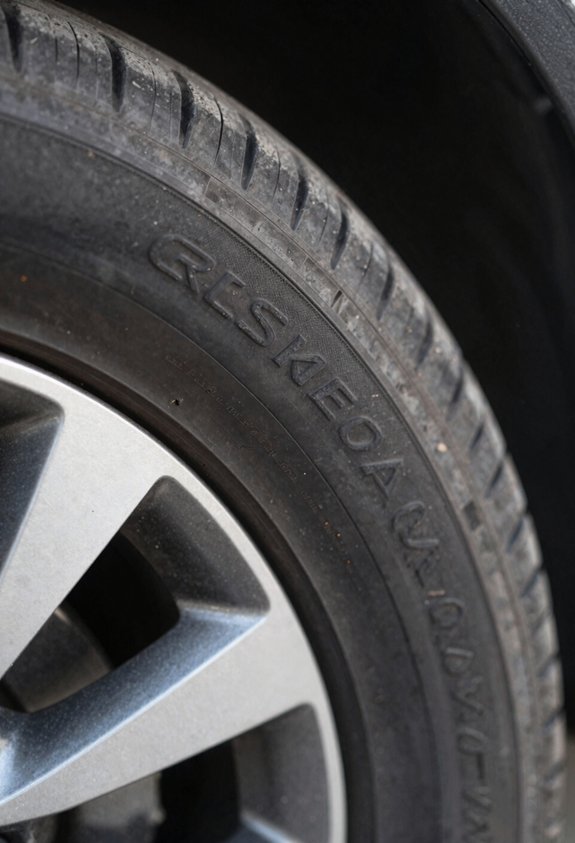
Sidewall flex determines my ride quality and handling stability, yet this same flexibility exposes the zone to damage the tread resists. I check all three zones, but I watch my sidewall closest.
What Your Sidewall Is Actually Made Of
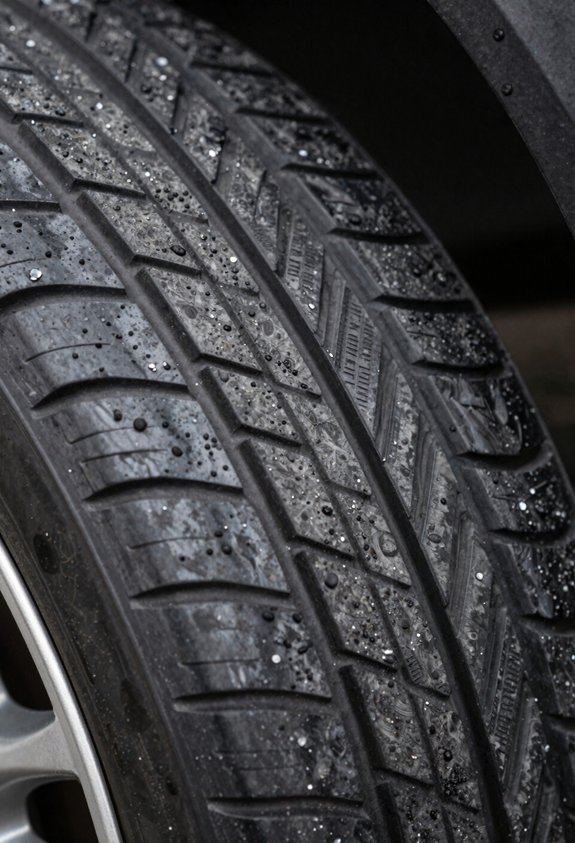
Your tire’s sidewall isn’t just a simple rubber casing: it’s a layered assembly of tire construction layers, specialized rubber compound makeup, and critical reinforcement materials used to balance flexibility with structural integrity. I want you to understand how these components work together, since compromised sidewalls can lead to sudden air loss or catastrophic failure at highway speeds.
Let me break down exactly what you’re riding on, and why reducing quality on sidewalls puts your entire vehicle at risk.
Tire Construction Layers
How exactly does a tire sidewall maintain its shape while flexing thousands of times per mile?
The answer lies in its construction layers, a sophisticated tread/ply structure that balances durability with compliance. Your sidewall isn’t merely rubber; it’s an engineered composite.
- Inner plies: Fabric or steel cords that provide tensile strength and resist deformation under load
- Belt layers: Reinforcement bands stabilizing the transition between tread and sidewall during cornering
- Outer rubber compound: A protective, flexible skin that seals internal components while permitting controlled flex
I want you to understand that damage penetrating these layers compromises everything. A cut reaching the plies isn’t cosmetic; it’s structural failure waiting to happen. Technologies in performance lines like Champiro UHP AS demonstrate how refined construction layers directly influence sidewall behavior, ride quality, and your safety margin.
Rubber Compound Makeup
| Component | Function | Benefit to You |
|---|---|---|
| Natural rubber | Base elasticity | Superior flexibility, reduced heat buildup |
| Synthetic SBR | Abrasion resistance | Extended service life, consistent performance |
| Carbon black | Reinforcement, UV shielding | Prevents sun degradation, maintains structural integrity |
| Silica compounds | Wet grip enhancement | Improved safety in adverse weather conditions |
| Antiozonants | Chemical protection | Critical puncture resistance against ozone cracking |
These formulations work collectively to defend against curb strikes and debris penetration.
Reinforcement Materials Used
While rubber compounds form the chemical foundation I described previously, the structural integrity of your sidewall depends on an entirely different engineering achievement: the reinforcement materials woven throughout that rubber matrix.
Your sidewall isn’t merely rubber, it’s a sophisticated composite where carcass materials (typically polyester or nylon cords) layer with elastomer compounds to create controlled flexibility, absorbing road impacts while maintaining structural stability. This sidewall reinforcement prevents excessive deformation during cornering, directly influencing how your vehicle responds to steering inputs and how confident you’ll feel behind the wheel.
Consider these critical reinforcement functions:
- Polyester/nylon carcass plies provide tensile strength and ride comfort through calculated flexibility
- Additional belt layers in performance tires enhance steering precision and handling characteristics
- Protective compounds and rim guards deliver puncture resistance and curb-impact protection
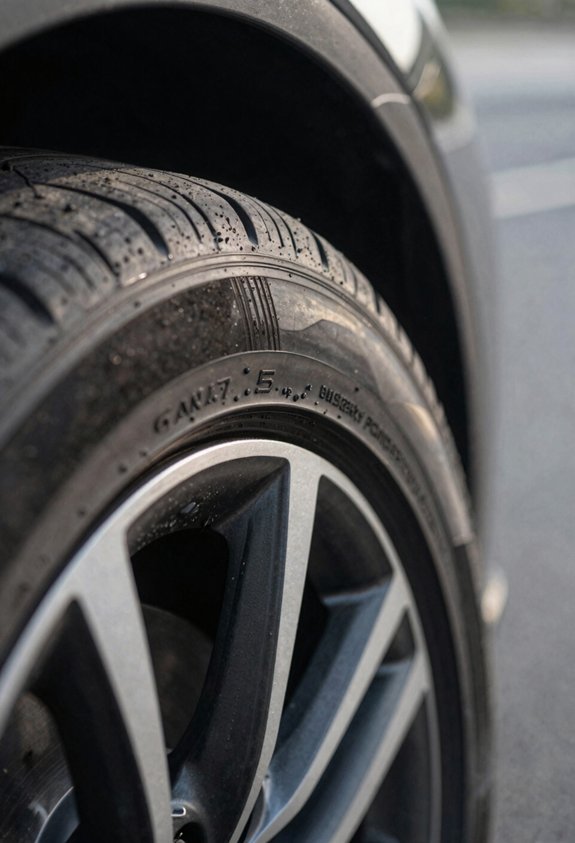
How Flex Absorbs Bumps (And Why Stiffness Grips Corners)
| Flex Level | Best For | Trade-off |
|---|---|---|
| High | Daily commuting, rough roads | Slower steering response |
| Medium | Balanced driving | Moderate compromise |
| Low | Performance, tight corners | Firmer ride feel |
| Variable | All-season adaptability | Complex engineering |
| Optimized | UHP designs (e.g., Champiro) | Premium cost |
I balance these forces every time I choose tires, knowing the sidewall’s character shapes every mile I drive.
Why Your Sidewall Doesn’t Collapse Under Thousands of Pounds
I’ve stood beside a loaded truck and watched its tires flatten slightly under thousands of pounds, yet never buckle, and that resilience comes down to three interdependent systems working invisibly beneath the rubber. Structural reinforcement layers, typically steel or fabric belts embedded in radial arrangements, create a skeletal framework that resists deformation while permitting controlled flex, a design choice that separates catastrophic failure from regulated compression.
Understanding how radial ply design channels force outward to the tread, and how load distribution mechanics spread weight across the contact patch, explains why your daily commute doesn’t end in rim-to-pavement contact.
Structural Reinforcement Layers
These reinforcement layers perform critical functions:
- Load-bearing support: Fabric and steel cords arranged in precise patterns resist radial and lateral stresses during acceleration, cornering, and braking
- Integrity maintenance: Sidewall plies coordinate with tread and bead components to absorb road impacts, manage flexing cycles, and preserve air pressure under varied loads and speeds
- Damage prevention: The rubber-cord bond prevents bubble formation, bulges, or cord separation, though tire cord exposure from cuts or impacts compromises this reinforcement and demands immediate replacement for your safety
Radial Ply Design
| Component | Function |
|---|---|
| Sidewall | Flexes to absorb road irregularities |
| Belt package | Maintains tread shape under load |
| Cord angle (90°) | Distributes forces vertically and laterally |
This combination prevents collapse even when thousands of pounds press downward, reducing heat buildup and improving efficiency compared to obsolete bias-ply alternatives.
Load Distribution Mechanics
How does a tire sidewall bear thousands of pounds without buckling?
The answer lies in sophisticated load distribution mechanics engineered into every sidewall. When I’m hauling cargo or carrying passengers, my tire’s sidewall stiffness prevents excessive deformation while channeling weight downward through the tire’s structure. This isn’t magic, it’s calculated engineering.
Consider how sidewall integrity maintains performance under stress:
- Reinforced ply layers distribute compressive forces across the tire’s circumference, preventing localized failure points that would compromise structural stability.
- Variable stiffness zones balance vertical support with lateral flexibility, ensuring my tires respond predictably during emergency maneuvers without transmitting excessive vibration.
- Damage indicators (bulges, cuts, or ply separation) signal immediate replacement needs, as compromised sidewalls catastrophically lose load-bearing capacity.
I’ve learned that heavier loads reduce sidewall flex, this trade-off sacrifices some comfort but preserves handling precision. Tires like the Champiro UHP AS demonstrate this balance through rigid shoulder blocks and advanced compounds, optimizing performance across diverse driving demands.
Reading Your Sidewall: Size, Load, and Speed Ratings
Why does a tire’s sidewall carry so much critical information in such compact form? Because when you’re selecting the right tire for your vehicle, every digit matters, and I’m here to decode what those markings actually mean for your safety and performance.
Every sidewall digit matters—decoding tire markings is essential for your safety and performance on the road.
Understanding Your Tire Size
The size code, something like 225/50R17, breaks down into critical measurements: 225 is your section width in millimeters, 50 is your aspect ratio (the sidewall height as a percentage of width), R confirms radial construction, and 17 indicates rim diameter in inches. Misreading any of these compromises fitment and handling.
Load Capacity and Speed Limits
You’ll also find your load index and speed symbol paired together, such as 97V. That 97 translates to 1,609 pounds maximum load per tire, while V certifies safe operation up to 149 mph. Exceed either rating risks catastrophic failure.
How to Read Your Tire’s Birth Certificate (DOT Code)
I’ll find the DOT code stamped on the tire’s sidewall, usually near the rim, then break down its segments: the manufacturer’s identification code, the tire specifications, and finally the four-digit date code that reveals when your tire was actually made.
The last four digits are critical: the first pair indicates the week of production (01-52), while the last pair shows the year, meaning a code ending in “2320” signals manufacture in the 23rd week of 2020. Don’t ignore this information, because even unused tires degrade over time, and most safety experts recommend replacement after six to ten years regardless of tread depth.
Locate DOT Code
Where exactly should you look to find the critical manufacturing information embedded in every tire? I’ll help you locate the DOT code, that essential identifier containing your tire size, manufacture date, and manufacturer details.
- Inspect the outer sidewall, where raised lettering appears; the DOT code is molded here, though you may need to rotate the tire to spot it.
- Check multiple positions around the circumference, as manufacturers often imprint these identifying marks in several locations for accessibility.
- Search near the wheel rim edge, where the sidewall meets the rubber, as this is where the Department of Transportation requires permanent, legible marking.
Once located, you’ll see letters beginning with “DOT,” followed by alphanumeric characters. That final four-digit sequence, critical for determining age, is your manufacture date, while earlier segments confirm tire size and origin for recall purposes.
Decode TIN Segments
Now that you’ve located the DOT markings on your tire’s sidewall, I’ll break down how to interpret each segment of this Tire Identification Number (TIN), the standardized coding system that functions as your tire’s permanent record of origin and specifications.
Breaking Down the DOT Code
The DOT code contains multiple segments, typically separated by spaces or slashes:
- First segment: Identifies the manufacturer and plant location (essential for traceability during safety recalls)
- Second segment: Specifies tire size and type design characteristics used internally by the manufacturer
- Third segment: Provides additional product classification details
- Final four digits: Represent the manufacture date (week and year)
This Tire Identification Number (TIN) allows for complete traceability, enabling manufacturers to identify production batches quickly when defects emerge.
Read Manufacture Date
The final four digits of your tire’s DOT code serve as its definitive manufacture date, functioning much like a birth certificate that records exactly when the tire was produced.
Here’s how you decode this important information:
- First two digits reveal the production week (01–52).
- Last two digits disclose the production year (for example, 19 = 2019).
- Combined result: 2319 means your tire rolled off the line during the 23rd week of 2019.
Understanding your manufacture date matters immensely because tire aging progresses regardless of mileage accumulated, with rubber compounds degrading through oxidation and environmental exposure. Most manufacturers recommend replacement after six years, maximum ten, even if tread depth appears adequate.
Locate this DOT code on both sidewalls; regulations mandate legibility. Never purchase tires exceeding two years old, as shelf stability diminishes significantly over time.
Sidewall Damage That Means Stop Driving Now
How soon can sidewall damage escalate from concerning to catastrophic? Faster than you’d think, and I’ve seen it happen. When sidewall damage penetrates beyond cosmetic scuffs, think a one-inch tear cutting a quarter-inch deep, especially on low-profile tires with those protective rubber ridges, you’re looking at compromised structural integrity.
Stop driving immediately if you spot visible bulging, air loss, or flaps of rubber pulled back exposing plies beneath. These aren’t warning signs; they’re final alerts. Tire safety demands we recognize when damage reaches the corded structural wall, because once those internal layers fail, blowout becomes imminent. Regional regulations often mandate replacement at this threshold, not suggestion, requirement. Your safety, and that of everyone sharing the road with you, depends on heeding these boundaries without hesitation.
Can You Patch a Sidewall? (The Short Answer: No)
Why do so many drivers ask about patching a sidewall? I understand the temptation, tires are expensive, and a quick repair feels practical. But I can’t recommend it, and neither can any reputable manufacturer.
Why Patching Fails the Sidewall
The sidewall isn’t just rubber; it contains structural plies and cord materials that flex constantly during operation. Unlike the crown, where patching works safely, the sidewall endures repeated deformation that compromises any repair.
Structural Integrity: Sidewall plies lose strength when damaged, and patching cannot restore this internal architecture.
Heat Buildup: Flexing generates friction; repairs detach, risking rapid air loss.
Load Failure: Even minor breaches propagate under stress, causing blowouts.
For true safety, I replace sidewall-damaged tires immediately. No patch protects your vehicle, passengers, or legal compliance adequately.
How to Inspect Your Sidewalls for Hidden Damage
I’ll scan your sidewalls for Visual Damage Indicators like tears roughly 1 inch long with ¼-inch inward penetration, particularly along rim-protection ridges on low-profile tires. I’ll also check for Structural Weakness Signs including bulges, exposed cords, or ply damage that threaten the tire’s integrity between the tread edge and bead, where no grooves run.
I’ll show you how to distinguish sidewall damage from crown or shoulder issues, use soapy water to trace slow leaks through continuous bubbling, and recognize when deflation signs mean replacement is your only safe option. Watch for damage that reaches the plies, because that’s where structural failure begins.
I’ll walk you through exactly what demands immediate action versus careful monitoring.
Visual Damage Indicators
Where precisely should your attention fall when examining a tire’s most vulnerable structural zone? I focus on the smooth, vertical rubber surface between the tread edge and the bead, where sidewall damage often hides in plain sight. Understanding tire construction helps me spot trouble early.
I watch for these three critical indicators:
- Surface tears approximately 1 inch long with 1/4 inch inward extensions, particularly that protective rubber ridge found on low-profile tires near the rim
- Bulges or deformities signaling potential sidewall plies damage that compromises structural integrity and demands immediate replacement
- Location-specific damage distinguishing true sidewall issues from crown or shoulder concerns; remember, damage on the smooth side area defines sidewall trouble, while tread-edge wear indicates different problems
When I suspect any breach, leaks testing with soapy water reveals slow escapes through bubbling action.
Structural Weakness Signs
How precisely can we distinguish between a surface blemish and genuine structural compromise when the stakes involve catastrophic failure at highway speeds?
Critical Inspection Criteria
I examine every sidewall for damage that penetrates beyond superficial rubber, knowing that even a 1-inch surface tear with 1/4-inch inward extension threatens integrity if it reaches underlying plies or cords. I watch for the bulge, that telltale protrusion signaling broken belts or separated plies, which, alongside deflation or flattening at the damage site, demands immediate replacement.
I distinguish carefully between crown damage and sidewall damage, recognizing that the latter requires more conservative handling due to flex stress concentrations. Superficial abrasions may suffice temporarily if no bulge appears, pressure holds steady, and progression halts, but I never gamble when structural uncertainty persists.
What Causes Premature Cracking and Bulging
Why do some tires develop cracks or bulges long before their tread wears out? I’ve seen this frustration firsthand, and it usually traces back to three interconnected culprits.
- Impact damage from potholes, curbs, or road debris that ruptures internal plies, causing visible bulging as separation occurs beneath the rubber surface
- Underinflation, which overflexes the sidewall during every rotation, generating excessive heat that accelerates sidewall cracking and structural fatigue
- Thermal degradation from prolonged sun exposure, where UV radiation and ozone attack break down the rubber compounds, creating shallow splits that deepen with continued driving stress
When I spot these warning signs, I don’t hesitate. Replacement becomes non-negotiable, since compromised sidewalls dramatically elevate blowout risk regardless of remaining tread depth.
Why Low-Profile Tires Ride Rougher (And Handle Sharper)
Ever wonder why your car suddenly feels every pebble in the road after switching to low-profile tires? The answer lies in sidewall height, or rather, the dramatic reduction of it.
The Cushion Problem
Less sidewall means less rubber to absorb impacts. When you hit a pothole or expansion joint, there’s minimal flex to cushion the blow, so ride harshness increases noticeably.
Less rubber, less cushion—every pothole hits harder when sidewalls shrink.
I felt this myself: the chassis transmits every crack and ripple directly into your seat.
The Performance Payoff
However, that same stiffness delivers exceptional handling precision. With reduced sidewall flex, steering response becomes immediate, and cornering feels razor-sharp. The tire doesn’t squirm; it follows your commands exactly.
The Trade-off
You’re choosing between comfort and control. Low-profile tires sacrifice isolation for feedback, making them ideal for enthusiasts who prioritize road feel over a plush ride.
Matching Sidewall Design to How You Actually Drive
Where exactly does your tire’s sidewall fit into your daily driving equation? I think about sidewall stiffness as the bridge between what you feel and how your car responds, because that single characteristic determines whether you’re floating over potholes or feeling every crack in the pavement.
Here’s how I match design to reality:
- Prioritize ride comfort with flexible sidewalls when rough roads dominate your commute, absorbing impacts before they reach your seat
- Demand handling feedback through stiffer construction if you take corners with intent, translating steering input into immediate directional change
- Balance both using advanced compounds, like nanometer silica blends, that control rigidity without sacrificing daily drivability
Your load matters too. Heavier cargo needs less flex to stay stable. Choose wrong, and you’re either disconnected from the road or exhausted by it.
When to Replace vs. When to Keep Watching
Surface scuffs under an inch deep, with no bulging or air loss, warrant watchful waiting. I inspect these with soapy water, reject cosmetic fixes like superglue, and track changes in ride behavior.
Conversely, I replace immediately when damage penetrates toward inner plies, cords, or causes visible deformation. Deflation, bulges, or cuts exceeding surface depth signal compromised structure that warranties and safety regulations universally condemn.
My decision matrix prioritizes structural integrity over appearance: leaks, shape changes, or depth progression demand replacement; stable, superficial marks permit continued use with vigilance.