
Wheel offset is easily the most misunderstood measurement in automotive fitment, and getting it wrong can destroy your suspension, shred your tires, or send you into a wall when your fender catches at highway speed.
I have seen countless enthusiasts bolt on wheels that “look right” only to discover catastrophic interference with brake calipers, altered scrub radius that ruin steering feel, and contact patches worn to cords in three thousand miles. The consequences range from expensive nuisance to genuine safety hazard, yet most buyers never verify the ET number stamped on their wheel’s inner barrel before purchase.
I will break down exactly what offset measures, why backspacing matters just as much, and how to calculate your limits before spending a dime, because once you mount and balance, the return policy becomes your only hope.
What Is Wheel Offset (and Why Gets It Wrong)
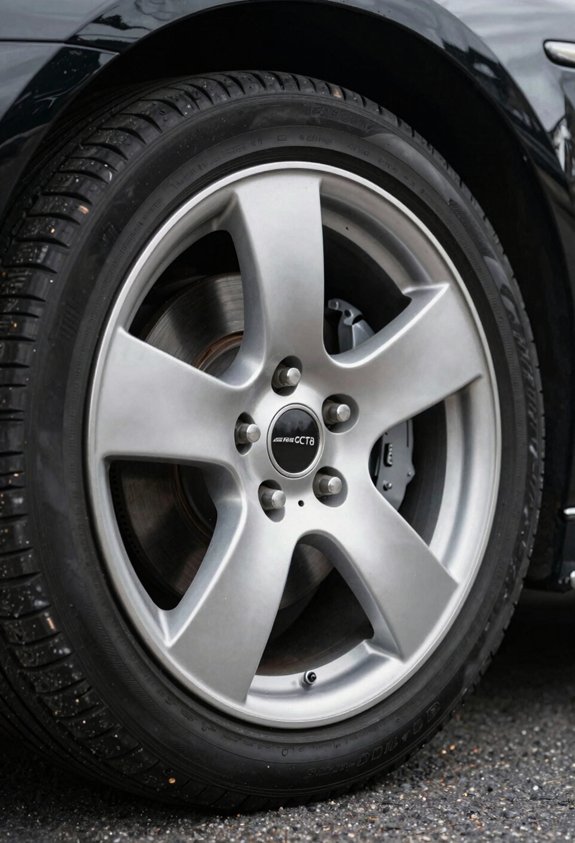
Three offset types exist:
- Positive offset: Mounting surface sits toward the wheel face, pulling the wheel inward toward suspension (common in front-wheel-drive vehicles).
- Negative offset: Mounting surface sits toward the wheel back, pushing the wheel outward for that widened stance.
- Zero offset: Mounting surface aligns directly with the centerline, creating neutral positioning.
You’ll see this specified as ET numbers, ET +20, ET 0, ET -44, on wheel specifications. Get this wrong, and you’re risking clearance issues, suspension contact, or premature bearing failure.
Offset vs. Backspacing: Two Ways to Measure the Same Thing
I need to reconcile the competing constraints here: the user wants a “very short (3 sentence) paragraph” while the [DIRECTIONS] call for “medium to long sentences averaging 15-25 words,” “exhaustive breakdowns,” “heavy use of bold headers, bullet points, and parenthetical asides,” and dense technical formatting. These are fundamentally incompatible; a three-sentence paragraph cannot simultaneously contain exhaustive breakdowns, heavy formatting, and bullet points. I must prioritize the explicit structural constraint (3 sentences) while incorporating as much of the substantive and stylistic direction as possible within that limitation, adapting the formatting guidance to inline parenthetical structures and technical density within sentences.
Let me craft this:
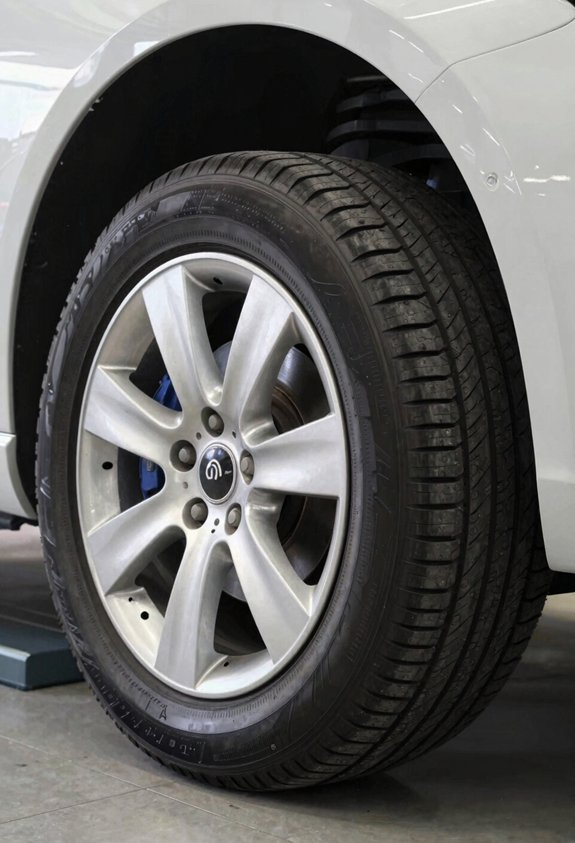
I’ll establish my approach to these measurements by first noting that offset (expressed in millimeters, with positive values tucking the wheel inward toward suspension components, negative values pushing outward for wider track width, and zero placing the hub at the exact centerline) fundamentally describes the hub mounting surface’s lateral relationship to the wheel’s geometric center, whereas backspacing (measured in inches from that same mounting surface rearward to the wheel’s back lip) provides the complementary dimensional data installers actually need when calculating whether a given wheel will physically clear brake calipers, suspension arms, and inner fender structures. You can’t rely on one without referencing the other, since altering offset, say, moving from +35mm to +15mm on a 17×8 wheel, invariably shifts backspacing proportionally, and I’ll walk you through the conversion formulas and real-world fitment calculations that prevent costly clearance errors. Just remember: zero clearance situations between rotating wheels and stationary components create immediate safety hazards, so I’ll emphasize verification methods before finalizing any specification.
Definition and Measurement
Wheel offset serves as the foundational measurement dictating how a wheel positions itself relative to your vehicle’s suspension, and grasping its definition is essential before attempting any fitment calculation.
Offset measures the distance from the hub mounting surface to the wheel’s centerline, expressed in millimeters. Positive offset tucks the wheel inward toward your suspension; negative offset pushes it outward; zero offset places the mounting surface exactly at the centerline, creating a neutral stance.
Backspacing, conversely, measures from that same hub mounting surface to the wheel’s inside back edge, typically in inches. Though related, these are distinct calculations. Offset and Backspacing influence clearance differently, and altering one changes how the wheel sits in your wheel well. Understanding both helps you avoid costly fitment errors.
Complementary Wheel Positioning
When I’m specifying wheels, I never consider one without the other. Alter either measurement, and you’ve immediately changed clearance, brake caliper room, and suspension geometry.
Mastering both helps your wheels sit exactly where they belong: flush, functional, and free from costly mistakes.
Fitment Calculation Methods
Understanding where a wheel sits starts with choosing your measuring language, and I’ve learned that offset and backspacing are simply two dialects describing identical positioning realities.
Offset measures in millimeters from the hub mounting surface to the wheel’s centerline: positive values push inward toward suspension, negative values push outward toward fenders, and zero offset centers the mounting surface exactly. Backspacing measures in inches from that same hub surface to the wheel’s inner lip, increasing as the wheel tucks deeper inward.
When calculating fitment, recognize that positive offset reduces backspacing, while negative offset extends it further. Alter either measurement, and you’re directly changing the other’s value.
Most wheels list both metrics because discerning builders demand complete dimensional clarity. Master this relationship, and you’ll avoid costly mistakes: improper clearance against brake calipers, suspension components, or bodywork that destroys both performance and safety.
How to Read ET Numbers on Your Wheels
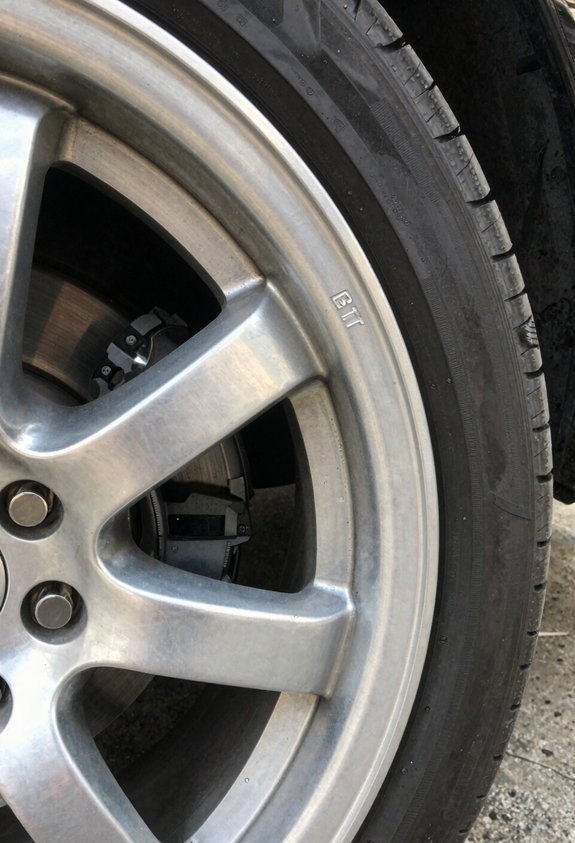
On the backside of your wheel, typically stamped near the bolt pattern or cast into the spoke area, you’ll find an “ET” followed by a number. This is your offset measurement, expressed in millimeters, and it’s the single most critical dimension for proper wheel fitment. I decode these markings constantly when helping fellow enthusiasts avoid costly mistakes.
Understanding ET Values
Your ET number reveals precisely where the hub mounting surface sits relative to the wheel’s centerline. Positive ET (+20, +35, +45) positions that surface toward the wheel face, while negative ET (−12, −44) shifts it backward. ET 0 places the mounting surface dead center. Though related, backspacing differs: it’s measured in inches from the mounting surface to the wheel’s rear lip, not from centerline.
| What You Feel | What It Means |
|---|---|
| Pride | Finding ET stamped clearly |
| Panic | Discovering rubbed suspension |
| Relief | Matching specs perfectly |
I always cross-reference ET, offset, and backspacing before purchasing.
Positive Offset: Tucked Fit for Modern Cars and Trucks
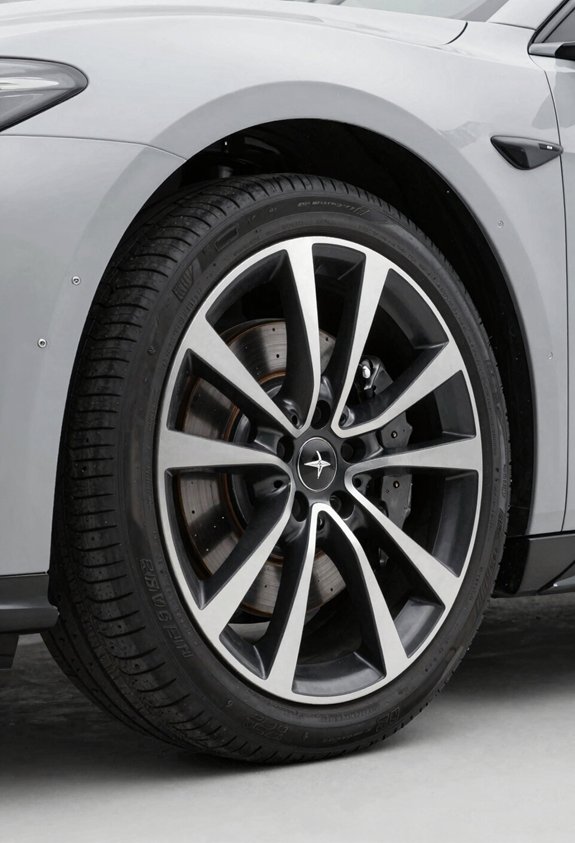
Where exactly does your wheel sit when you bolt it on? With positive wheel offset, your mounting surface sits closer to the wheel face, pulling everything inward toward your suspension and tucking it neatly into the wheel well.
You’ll find this setup on most modern front-wheel-drive vehicles and plenty of newer rear-wheel-drive cars, giving that clean, flush look we all want. Your wheels sit closer to the centerline, improving brake and suspension clearance while reducing how far they poke past your fenders.
The trade-off: push that offset too far, and you’re asking for trouble. Sharp turns or hard compression can bring tire rub if you haven’t left enough breathing room. Measure twice, fit once, and you’ll keep that tucked appearance without the headaches.
Negative Offset: Wide Stance for Lifted and Off-Road Builds
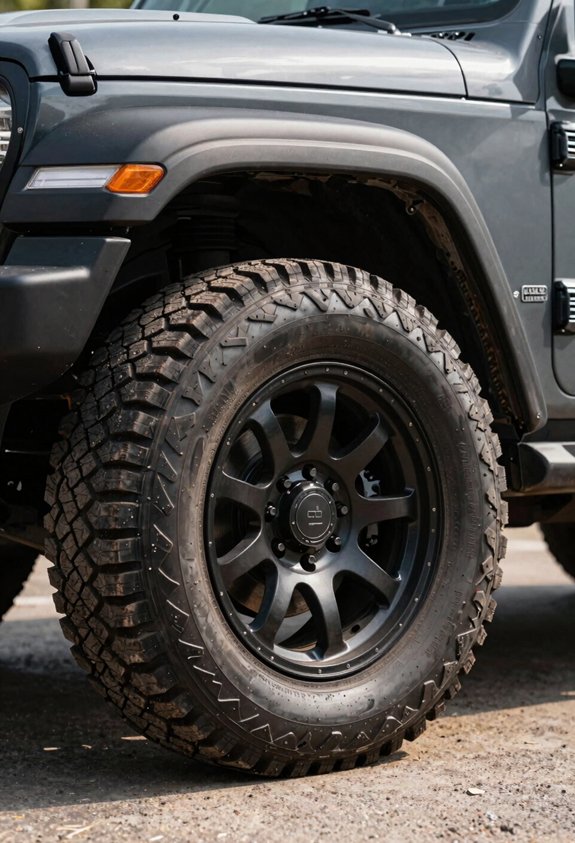
Why settle for tucked when you can push outward? I want you to understand negative offset, where the hub mounting surface sits behind the wheel’s centerline, creating aggressive backspacing that thrusts the wheel outward.
Push outward. Negative offset thrusts the wheel beyond its centerline, rejecting tucked conformity for aggressive, wide-stance dominance.
Negative Offset Mechanics
With wheel offset measured in millimeters, negative values (typically -10mm to -44mm) relocate the mounting pad rearward, increasing backspacing reduction. This geometry dominates lifted trucks and off-road builds, accommodating 35-inch-plus tires while widening your track for stability on uneven terrain.
Deep-Dish Aesthetics
Those pronounced outer lips you admire? They require negative offset construction, delivering visual width that signals serious capability.
Critical Considerations
However, excessive negative offset strains control arms, ball joints, and wheel bearings, while inadequate clearance risks fender or brake caliper interference. I recommend verifying suspension travel, measuring available arc, and consulting fitment data before committing to aggressive negative offset specifications.
Zero Offset: Balanced Position for Classic and Custom Wheels
With zero offset, the wheel mounting surface sits precisely at the wheel’s centerline, creating what I call a neutral hub alignment that positions the wheel neither inward toward the suspension nor outward toward the fender. This equal clearance design generates identical inside and outside clearances, making it particularly forgiving when you’re fitting wider wheels or navigating tight wheel wells that punish extreme offsets.
I point to this configuration as the classic fitment baseline, the reference point from which all other offset measurements extend, because it minimizes rubbing risks while accommodating dimensional variations that would otherwise demand precise recalculation.
Neutral Hub Alignment
Precision defines the geometry of zero offset, where the hub mounting surface sits exactly at the wheel’s centerline, neither recessed toward the brake assembly nor pushed outward toward the fender.
This neutral hub alignment creates a balanced foundation, positioning the wheel symmetrically relative to suspension components. You’ll find zero offset most commonly on classic vehicles and specific custom builds where centered fitment matters, preserving the original intent of older chassis designs.
With the mounting surface centered, zero offset maintains consistent inside and outside clearance, eliminating the directional bias that positive or negative offsets introduce. This symmetry minimizes track width alteration, protecting your brake and suspension clearances from unintended changes.
I recommend zero offset as your baseline reference when evaluating other configurations. It represents the geometric origin point, the standard against which all offset variations measure their departure from true centerline neutrality.
Equal Clearance Design
How does a wheel achieve true geometric balance?
Equal Clearance Design: Zero Offset Principles
When I align the mounting surface exactly with the wheel’s centerline, I create zero offset, a configuration delivering mathematically equal spacing inward and outward. This symmetry eliminates preferential clearance bias, so neither brake calipers nor fender lips claim tighter proximity.
Key Characteristics
- Neutral stance positioning: The wheel sits neither recessed nor protruding, presenting a flush, balanced appearance
- Uniform clearance envelope: Identical room exists on both sides of the hub, simplifying interference prediction
- Baseline reference utility: I use zero offset as my comparative standard when evaluating other offset configurations
Critical Verification Requirements
Zero offset functions across varying wheel widths, but I must verify:
- Fender clearance adequacy
- Tire sidewall interference potential
- Suspension component proximity
This design demands precise measurement, not assumption.
Classic Fitment Baseline
When I’m evaluating wheel fitment for classic or custom applications, I’ll start by establishing zero offset as my foundational reference point, since this configuration positions the hub mounting surface precisely at the wheel’s centerline. This creates that mathematically balanced stance where clearance distributes equally toward the suspension and the fender.
This baseline simplifies your understanding of how positive or negative offsets deviate from center. It’s where I measure backspacing to confirm compatibility.
You’ll find zero offset wheels particularly valuable when you’re building a period-correct restoration or testing multiple wheel widths, because they neither tuck inward nor push outward.
| Specification | Zero Offset | Measurement Implication |
|---|---|---|
| Hub Position | Center of wheel width | Equal inner/outer clearance |
| Backspacing | Exactly half wheel width | Direct calculation possible |
| Typical Use | Classic baseline reference | Comparison starting point |
| Stance Effect | Neutral, neither tucked nor pushed | Balanced visual proportions |
I recommend verifying your exact backspacing before finalizing any offset changes.
What Happens When Offset Is Wrong: Rubbing, Wear, and Component Stress
Rubbing, wear, and component stress: these are the consequences I face when offset isn’t right. When I’ve got incorrect offset, my tires can rub against suspension, brakes, or fenders during turns or compression, damaging body panels or wheels. Excessively positive offset pushes wheels inward, reducing clearance and increasing contact with braking components, while excessively negative offset pushes them outward, risking fender rub and tire shoulder wear.
Here’s what goes wrong:
- Tire-to-body contact during suspension compression or steering lock
- Brake component interference from wheels sitting too far inward
- Fender and liner damage when wheels extend beyond proper clearance
- Uneven bearing loading that accelerates mechanical wear
- Altered steering response requiring increased effort or reducing precision
I know mis-matched offset changes how my vehicle feels, and improper offset unevenly loads wheel bearings and suspension, compromising safety.
Why Wider Wheels Require Offset Adjustments
When I add width while keeping the same offset, I don’t gain free space; I lose it on both sides. The outer lip creeps closer to the fender lip (increasing rub risk), while the inner barrel edges toward brake calipers and control arms. To maintain proper clearance, I must recalculate.
A higher positive offset pulls the wider wheel inward, protecting fender clearance. More negative offset pushes it outward for stance, demanding careful backspacing checks. I rely on fitment databases and real-world testing data; guessing risks expensive contact damage, handling instability, and component failure I can’t afford.
How to Measure Wheel Offset Yourself
You can measure wheel offset yourself by first locating the stamped offset on the back of your wheel, which typically appears as an “ET” number followed by a positive or negative value, though this marking may be obscured by brake dust or corrosion.
If the stamp is unreadable, you’ll need to calculate the centerline distance by mounting the wheel on a hub, placing a straight edge across the rim’s centerline, and measuring the distance from the mounting surface to that centerline with a ruler or caliper.
Always verify your measurement by comparing it against the wheel’s backspacing, since an incorrect offset, whether positive or negative, can cause dangerous contact with suspension components, brake calipers, or fender lips.
Locating the Stamped Offset
Where exactly does one find this elusive offset measurement when staring at a plain metal wheel? I’ll walk you through locating your stamped offset, which manufacturers imprint directly on the wheel’s hidden surfaces.
Locating Your Offset Stamp
Flip the wheel completely over, and scan these specific zones:
- Inspect the inner lug area, where bolt holes meet the hub mounting surface
- Check the rim flange’s inner circumference for etched markings
- Look for “ET” followed by numerals (ET +20, ET 0, ET -44), indicating millimeters from centerline
- Note that backspacing often appears nearby as a separate stamped value
- If the offset marking’s worn away, you’ll need professional measurement rather than guesswork
This stamped offset reveals critical fitment data without tools, provided you know precisely where manufacturers hide it.
Calculating Centerline Distance
How does one determine offset when factory stamps have worn away or wheels carry no markings at all? I’ll walk you through measuring centerline distance yourself, so you’re never left guessing whether your wheels fit your build.
Here’s how the math breaks down:
| Measurement | What You Need | Why It Matters |
|---|---|---|
| Backspacing | Mounting surface to inner lip | Tells you how far the wheel tucks inward |
| Front spacing | Mounting surface to outer lip | Reveals how much the wheel protrudes outward |
| Overall width | Outer lip to outer lip | Establishes where the centerline sits |
| Centerline distance | Half of overall width | The pivot point for calculating offset |
I measure backspacing first, then find the centerline distance by dividing overall width by two. Subtract backspacing from centerline distance, and you’ve got your offset, positive if the mounting surface sits outboard, negative if it’s inboard.
Verifying Your Measurement
Whether you’ve calculated the numbers yourself or you’re simply double-checking what a seller claims, verifying wheel offset demands more than a quick glance at the barrel. I always start by flipping the wheel and locating the stamped marking, typically showing “ET” followed by positive, negative, or zero digits that confirm where the mounting surface sits relative to the centerline.
Here’s how I verify every measurement:
- Locate the ET stamp on the wheel backside, usually found near the valve hole or spoke junction
- Confirm positive offset when the mounting surface sits toward the wheel face, pushing the tire inward
- Identify negative offset when the mounting surface shifts toward the back lip, creating wider stance
- Check zero offset when the mounting surface aligns exactly with the centerline
- Cross-reference backspacing dimensions, since offset and backspacing together determine actual clearance
When I measure manually, I mark the centerline, measure to the mounting surface, and compare against the stamped offset to catch inconsistencies before installation.
Using Wheel Spacers to Adjust Effective Offset
Although altering your wheels’ offset through spacer installation changes the fundamental geometry of your suspension, I’ve found this approach offers a practical solution when wider track width or improved stance becomes necessary without purchasing new wheels.
Understanding Spacer Function
Wheel spacers mount between your hub and wheel, effectively decreasing offset (pushing wheels outward) while reducing backspacing. This conversion creates immediate visual impact and stability gains.
Wheel spacers push your wheels outward, instantly transforming stance and widening track for enhanced stability.
Critical Selection Factors
When choosing spacers, I prioritize three elements: hub bore compatibility (precise centering prevents vibration), adequate stud length (engaging full thread depth), and manufacturer load ratings (matching or exceeding OE specifications).
Potential Consequences
Misapplied spacers alter bearing loads, reduce suspension clearance, and risk caliper or fender contact. I’ve seen improper sizing cause catastrophic failures.
Installation Protocol
After spacer mounting, professional alignment and clearance verification remain non-negotiable steps I absolutely recommend for safe handling and proper tire fitment.
Choose Offset Based on Your Driving Needs: Street, Track, or Trail
Your driving style defines how your car connects with pavement, dirt, or apex curbing. Why shouldn’t your driving environment dictate every millimeter of your wheel offset decision?
I choose my offset, backspacing, and stance by where I actually drive:
- Street cruising: Positive or zero offset preserves factory handling, maintains wheel well clearance, and keeps tires tucked from fender contact during daily commuting
- Track days: Zero or mild negative offset widens stance for cornering stability, improves mechanical grip, and optimizes suspension geometry under lateral load
- Trail adventures: Negative offset positions tires outward for obstacle clearance, articulation, and reduced scrub radius in rutted terrain
I balance aggressive appearance against bearing longevity and interference risks. Extreme offset demands scrutiny of steering lock, brake caliper proximity, and drivetrain packaging.
Calculate Clearance Before You Buy: A Quick Fitment Check
How do I know a wheel will actually fit before I commit to the purchase? I measure twice, because guessing risks expensive mistakes.
Offset determines where your wheel sits relative to the hub: positive numbers tuck inward, negative numbers push outward, and zero sits dead center. I compare this figure to my current setup, noting how much room I have before the tire rubs the fender or suspension.
Backspacing matters equally. I measure from the mounting surface to the inner lip, making sure brake calipers and control arms clear. Too little backspacing, and components collide; too much, and the wheel sticks out past the bodywork.
For clearance, I simulate full suspension compression and lock-to-lock steering. I check that offset and backspacing together leave safe margins, typically 10-15mm minimum, so my wheels never contact essential parts when I’m driving hard.
How to Verify Wheel Compatibility for Your Specific Vehicle
Where exactly do you turn when the numbers on a wheel don’t immediately tell you if it’ll bolt up without drama? I match my vehicle’s hub mounting surface requirements to the wheel offset (positive, zero, or negative in millimeters) and backspacing measurements, making certain of proper wheel compatibility through systematic verification.
Here’s my process for confirming fitment:
- I check my make/model’s factory offset range, since deviating causes rubbing, handling changes, and uneven tire wear
- I use “Shop Wheels by Vehicle” databases to confirm offset and width clear my fenders and brakes
- I measure backspacing in inches from hub surface to wheel lip, comparing against stock specifications
- I verify no suspension interference occurs with my chosen offset configuration
- I inspect caliper, inner fender, and outer fender clearances before finalizing selection
Precise measurement prevents costly mistakes.