
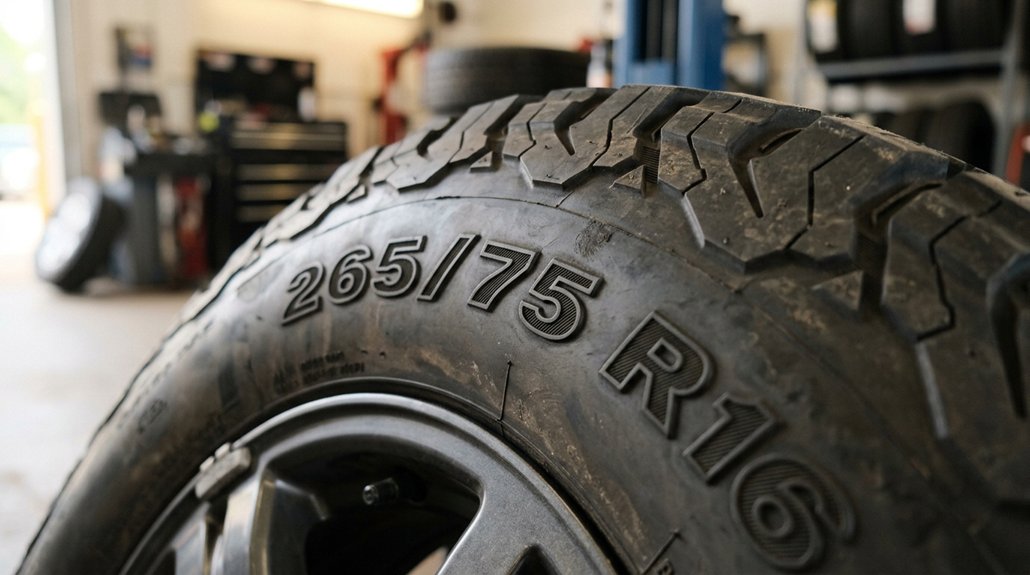
I want you to picture your tire’s sidewall, where you’ll find a sequence like 225/50R17, and notice that 50 isn’t just random; it’s the aspect ratio, calculated as sidewall height divided by section width and expressed as a percentage. This single value, typically ranging from 25 to 70 on passenger vehicles, fundamentally alters how your car behaves on the road, yet most drivers glance past it entirely.
Once you grasp how this percentage governs everything from impact absorption to steering response, you’ll face some critical decisions about comfort versus control.
What Is Tire Aspect Ratio? (Find It on Your Sidewall)
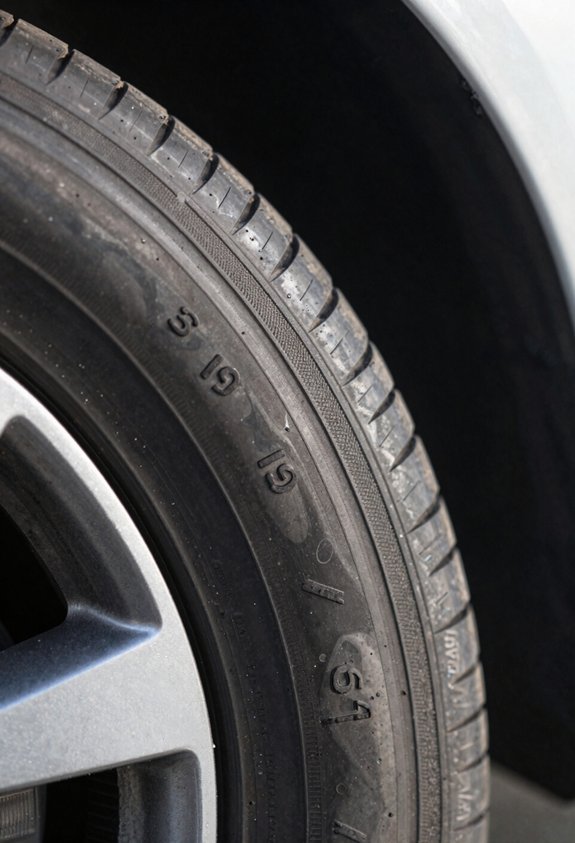
Where exactly do you find the tire aspect ratio when you’re staring at your sidewall? I’m looking at the tire size markings, and I’ll show you where it hides. The tire aspect ratio appears as the second number in that sequence stamped on your sidewall, positioned right after the width measurement and before the construction letter.
Here’s what this percentage actually means: the aspect ratio expresses your sidewall height as a percentage of the tire’s width. When I’m reading sidewall markings like 225/50R17, that 50 tells me my sidewall height equals 50% of the 225 mm width. A higher number means a taller sidewall; a lower number means a shorter, low-profile sidewall.
This figure, combined with width and construction type, directly shapes your ride quality, handling characteristics, and wheel compatibility, so I don’t recommend ignoring it when selecting replacements.
How to Read Aspect Ratio on Your Tire’s Sidewall
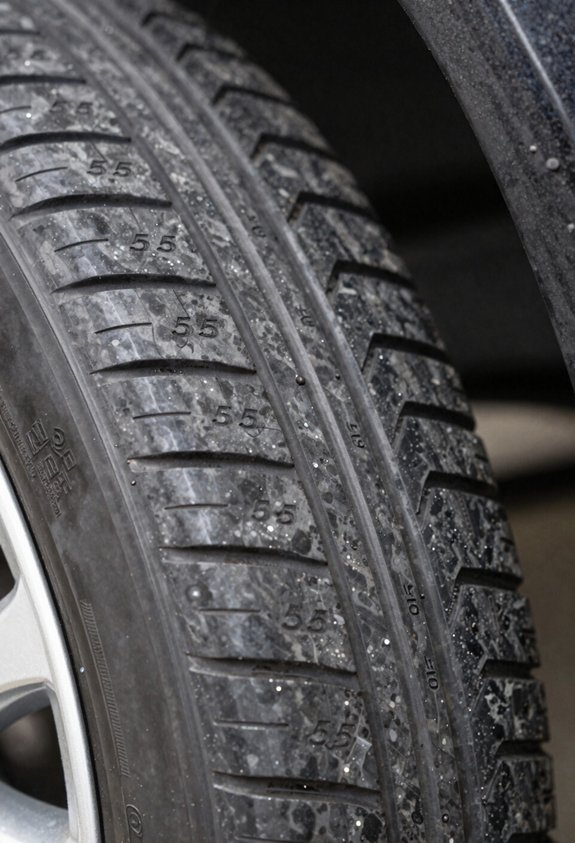
How do you decode that middle number on your sidewall to understand what you’re actually riding on? Let me walk you through reading aspect ratio in your tire markings, so you’ll never feel lost in the shop again.
Locating Your Aspect Ratio
When you examine your tire sidewall, you’ll spot a sequence like 225/50R17. That middle number, 50, is your aspect ratio, expressed as a percentage. It tells you the sidewall height equals 50% of the 225 mm width. To calculate actual sidewall height, I multiply width by the decimal: 225 × 0.50 = 112.5 mm.
Interpreting the Numbers
Higher aspect ratios (60-70) mean taller sidewalls; lower ones (30-45) mean shorter profiles. Once you can read aspect ratio confidently, you’ll grasp your tire size completely, making informed choices that keep you connected to the driving community you belong to.
Why Aspect Ratio Makes Your Ride Soffer or Stiffer
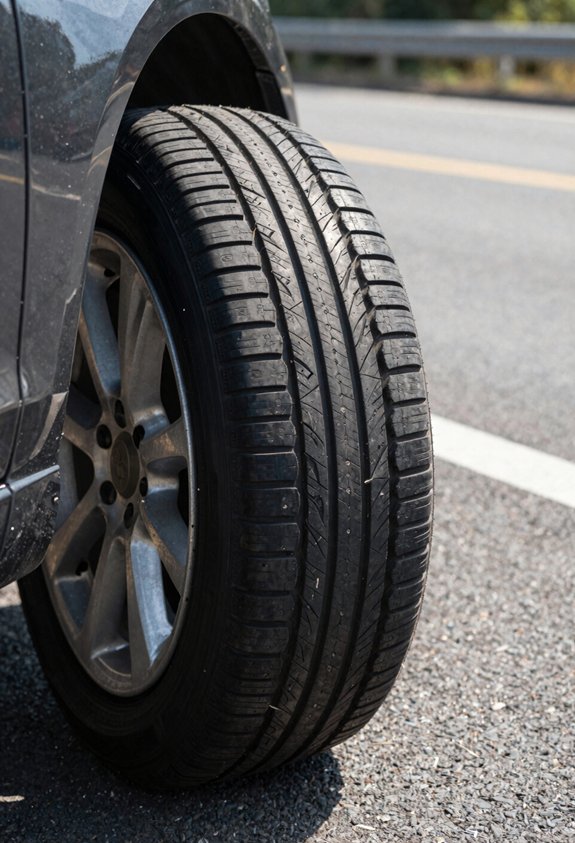
I want you to understand how sidewall height directly shapes what you feel through the seat and steering wheel, because that percentage number isn’t just a specification; it’s a mechanical trade-off between cushioning and control. When you choose a lower aspect ratio, say dropping from a 60-series to a 45-series tire, you’re sacrificing impact absorption for reduced sidewall flex that sharpens turn-in response and cuts body roll, though you’ll pay for that precision with harsher impacts transmitted through the chassis.
Conversely, a taller sidewall acts as a secondary suspension spring, smoothing potholes and expansion joints but introducing delay and vagueness when you ask for rapid directional changes. This is why manufacturers engineer specific balances rather than extremes for each vehicle platform.
Sidewall Height Impact
Consider how the vertical strip of rubber between your wheel rim and the road surface, commonly called the sidewall, functions as the primary suspension component you actually control. Its height, determined entirely by aspect ratio, dictates whether your vehicle glides over imperfections or crashes through them.
How Sidewall Height Works
Your aspect ratio, the second number in your tire size, expresses sidewall height as a percentage of tire width. On a 225/50 tire, that 50 means 112.5 mm of sidewall, while a 225/65 gives you 146.25 mm.
The Ride Comfort Divide
- Higher ratios (65%+): Taller sidewalls flex more, boosting ride comfort but dulling steering response
- Lower ratios (40–50%): Shorter sidewalls sharpen handling and steering feel, yet transmit harsh impacts
Beware: altering aspect ratio changes tire diameter, risking speedometer errors.
Cushioning Trade-offs
Three distinct cushioning behaviors emerge when you compare aspect ratios across the same tire width, each directly traceable to sidewall height. I’ll break down exactly how your tire aspect ratio dictates what you feel through the seat.
Cushioning Mechanics
Higher sidewall height creates more flex, absorbing impacts before they reach your suspension. High-profile tires, think 65% or above, deliver superior cushioning and ride comfort on pitted asphalt, though you’ll sacrifice some road feel. Conversely, low-profile tires with squat sidewalls (40-45%) transmit every expansion joint and pebble directly to the cabin, trading plushness for immediacy.
Practical Considerations
When you’re swapping tire aspect ratio, maintain similar overall diameter. Deviate too far, and you’ll scramble speedometer accuracy while altering traction characteristics that change ride quality. Your choice between isolation and feedback shapes every mile.
Handling Stiffness Balance
Your choice between a plush, cushioned ride and a sharp, controlled feel hinges on how much sidewall flex you’re willing to accept. That brings us to the mechanical balance between handling precision and ride stiffness.
The Aspect Ratio Equation
I’ve found that aspect ratio directly shapes your sidewall height, calculated as tire width multiplied by that percentage. A 225/50R17 tire, for instance, gives you 112.5 millimeters of sidewall. A 225/40R17 drops to 90 millimeters. Lower ratios (40–50%) minimize flex, tighten your handling balance, and sharpen steering response, though you’ll sacrifice some comfort. Higher ratios (65%+) let that taller sidewall absorb impacts, softening ride stiffness considerably.
Critical Trade-offs
Reduced flex improves wheel control during cornering but amplifies road harshness. Contact patch dynamics shift, altering grip and wear patterns. Suspension interaction changes: stiffer sidewalls transfer more vibration through your chassis.
Choose deliberately: comfort versus connection, compliance versus control.
How to Choose Between Low and High Aspect Ratios
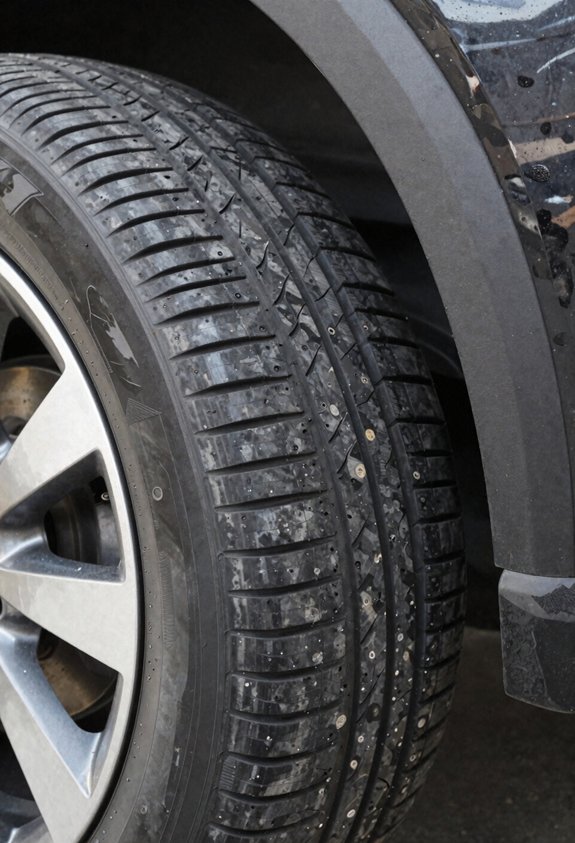
- The satisfaction of nailing every corner on winding roads
- The relief when potholes don’t shatter my wheels
- The confidence of knowing my setup is dialed in
- The frustration of compromise we all face together
Can You Switch Aspect Ratios Safely?
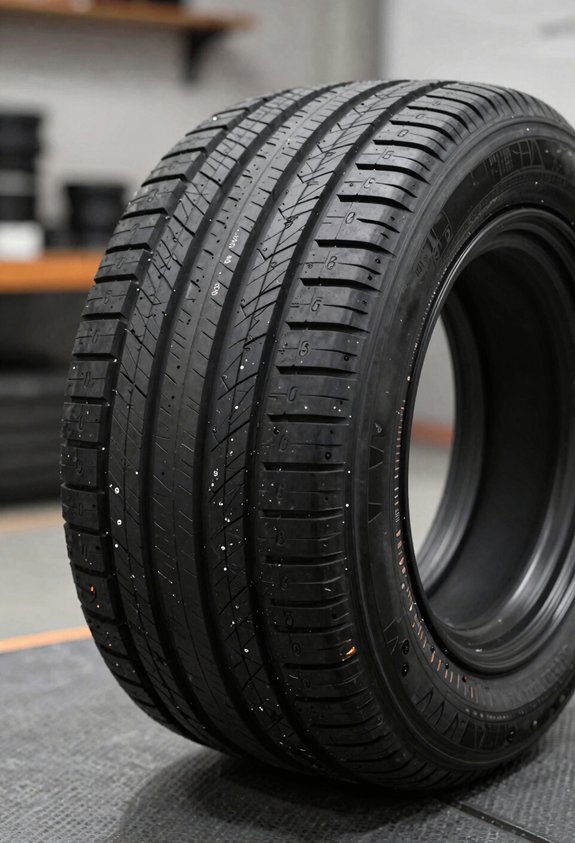
After weighing the trade-offs between low and high aspect ratios, I’m ready to tackle a question that comes up constantly in tire shops and online forums: whether swapping to a different aspect ratio is actually safe.
The Short Answer: Sometimes, But With Critical Caveats
Changing your aspect ratio alters sidewall height, which directly affects handling, ride comfort, and, crucially, vehicle clearance. I’ve seen drivers scrape fenders after installing lower-profile tires without verifying wheel well space, or rub suspension components when going taller.
Key Risks to Understand
- Axle mismatch creates dangerous imbalances; never mix aspect ratios across axles, as this strains differentials and destabilizes cornering
- Speedometer accuracy shifts because tire diameter changes, though I’ll detail calibration elsewhere
- Wheel fitment must accommodate new sidewall dimensions without interference
Manufacturer specifications exist for valid safety and warranty reasons. Before any switch, consult tire professional to verify load ratings, diameter tolerances, and compatibility with your specific vehicle.
How Changing Aspect Ratio Affects Your Speedometer
How precisely does changing to a lower aspect ratio disrupt your speedometer calibration, and why should you care about those apparently minor millimeters of sidewall height? When you swap to a lower aspect ratio, say, from 225/60R16 to 225/50R16, you’re keeping the width and rim size identical, but that sidewall height drops from 135mm to 112.5mm, shrinking your tire diameter by 45mm overall. Your speedometer, programmed for the original tire diameter, now receives flawed rotation data, compromising speed reading accuracy.
Here’s what you’re risking when you ignore these calculations:
- Speeding tickets you never saw coming because your speedometer reads low while you’re actually flying past limits
- Transmission damage from mismatched gear ratios working overtime to compensate
- ABS and traction control failures when wheel speed sensors detect impossible variances
- That sickening moment you realize you’ve been driving blind to your true velocity, endangering everyone you care about
Manufacturers specify precise aspect ratios for a reason. Deviate without recalibration, and you’ve betrayed your vehicle’s engineered design.
How Aspect Ratio Impacts Gas Mileage and Tire Life
Why would you sacrifice efficiency for performance, or cushioning for precision, when selecting your tire’s aspect ratio? I’ve watched this tradeoff confound drivers, so let’s break it down together.
Gas Mileage and Rolling Resistance
Your aspect ratio directly shapes fuel economy through rolling resistance. Lower ratios (40–50%) reduce tire sidewall height, stiffening the structure and potentially raising consumption if the tire’s heavier. Higher ratios (65–75%) add cushion and improve ride comfort, though increased weight can offset efficiency gains.
Tire Wear and Longevity
Taller sidewalls absorb road punishment, preserving tire wear on rough surfaces, yet they heat more under aggressive driving. Lower sidewalls run hotter but resist damage differently.
Critical Warning on Speedometer Accuracy
Mismatched sizes alter your speedometer, distorting mileage calculations and masking true consumption patterns. Always verify fitment to protect both your wallet and your tires.
Handling vs. Comfort: What You’ll Feel Behind the Wheel
When you’re behind the wheel, the aspect ratio you’ve chosen becomes something you feel through your fingertips and seat, translating every decision into concrete sensation. I want you to understand how your tire profile shapes every mile.
A lower aspect ratio, think 40–50%, delivers a shorter sidewall that sharpens handling and quickens steering response, though you’ll sacrifice some ride quality as road imperfections transmit directly to your hands. Conversely, a higher aspect ratio, 65% or greater, provides cushioning sidewall flex that prioritizes comfort over cornering precision.
Here’s what fellow drivers experience:
- The thrill of connection when your steering response matches your intentions exactly
- The relief of absorption when potholes don’t jar your spine
- The frustration of compromise when you can’t have both extremes
- The confidence of alignment between your driving style and your sidewall choice
Your aspect ratio isn’t merely technical, it’s deeply personal.
How to Match Aspect Ratio to Where and How You Drive
Where you drive matters just as much as what you drive, and I’ve learned that matching your aspect ratio to your typical environment isn’t guesswork, it’s a decision that protects your investment and your safety.
Urban and Performance Driving
If you navigate tight city streets or crave responsive steering, a low-profile tire with a 40–50% aspect ratio delivers the handling you need. The shorter sidewall height sharpens cornering, though you’ll sacrifice some ride comfort and risk wheel damage from potholes.
Suburban and Highway Commutes
For most daily drivers, a 55–65% aspect ratio strikes the right balance. This tire size maintains reasonable handling while preserving cushioning over uneven pavement.
Critical Compatibility Warning
Never stray outside your manufacturer’s specified range. Altering sidewall height affects speedometer accuracy and overall tire size, creating safety hazards and potential mechanical conflicts you cannot ignore.
When You Need a Pro to Change Your Tire Size
How exactly do you know if you’re crossing the line between a simple swap and a sizing decision that demands expert input? I’ll walk you through when professional replacement becomes essential for your safety and your vehicle’s integrity.
Critical Moments Requiring Expert Guidance
When your new tire size deviates in width, aspect ratio, or diameter from manufacturer specifications, you’re venturing beyond DIY territory. Here’s what keeps me up at night:
- Your family’s safety depends on matching load index and speed rating precisely; mismatches risk catastrophic failure under stress.
- Your vehicle’s soul, its handling, braking, and stability, shifts unpredictably when vehicle dynamics are altered without verification.
- Your connection to the road frays when speedometer accuracy and ABS compatibility go unchecked.
- Your peace of mind crumbles realizing rim size and construction type mismatches can strand you, alone with choices you shouldn’t face.
Pros confirm compatibility across radial, bias, LT, ST, and C-type distinctions, recommending approved alternatives when exact specs vanish.