
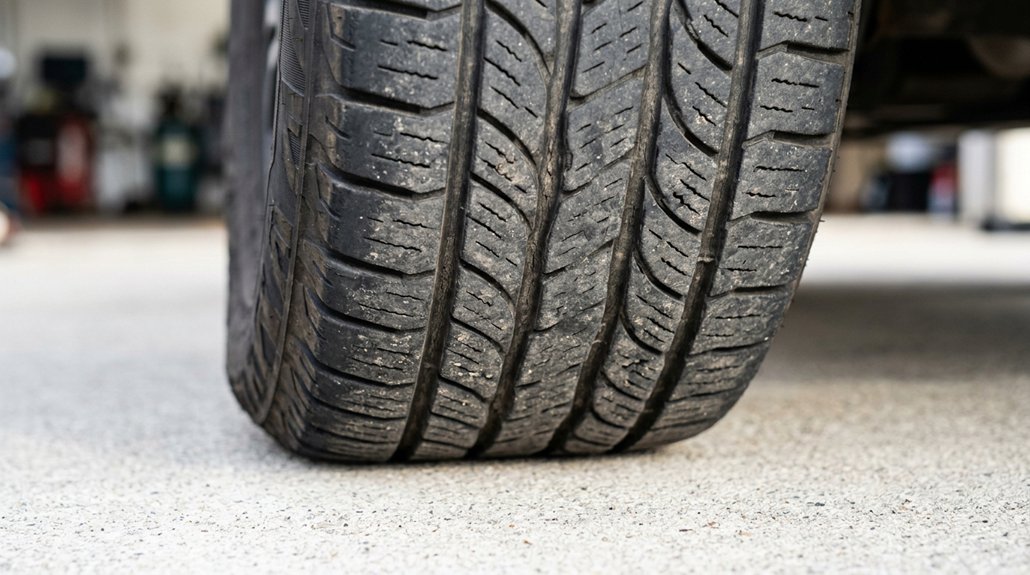
Imagine running your palm across a fresh tire’s surface, feeling deep, unworn grooves built to channel water and grip the road. I’m here to walk you through exactly what “new” means in tread terms, why those fractions of an inch matter, and when that depth shifts from asset to liability, because understanding these measurements could determine how your vehicle handles the next heavy rain.
How Deep Is New Tire Tread?
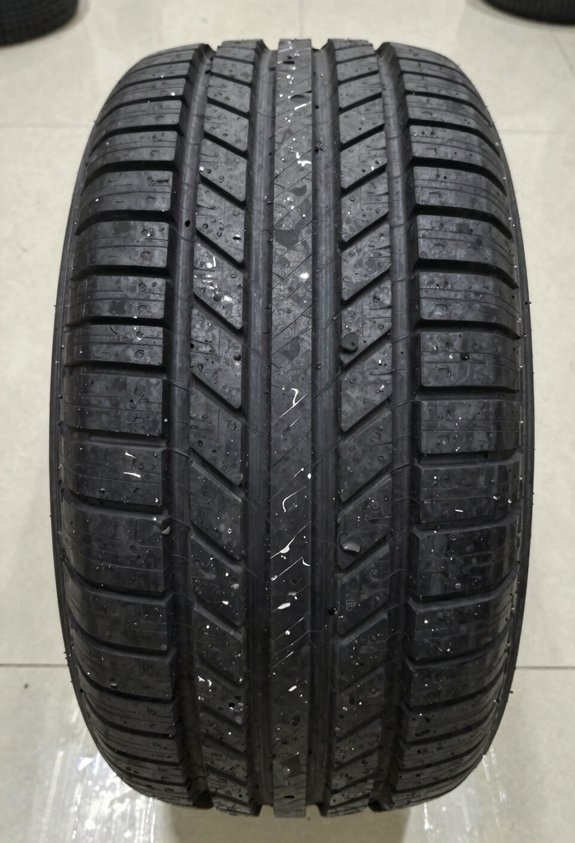
When evaluating tire safety, I always begin by asking exactly how deep new tread should be, since this baseline measurement governs every subsequent assessment of wear and replacement timing.
New tires arrive with tread depth measuring 10/32″ to 11/32″. That’s ten to eleven 32nds of an inch of usable rubber before you hit critical thresholds. I measure this myself using a tread depth gauge (inexpensive, essential), checking at multiple points: inner edge, center groove, outer shoulder.
Here’s what we’re all watching for: those recessed wear indicators sit at 2/32″ depth, signaling mandatory replacement. But tread depth alone won’t guarantee tire safety. I also inspect for uneven patterns, sidewall cracking, and age-related degradation. Understanding your starting point grounds every maintenance decision you’ll make as part of the informed driving community.
Why Does Tread Depth Affect Crash Risk?
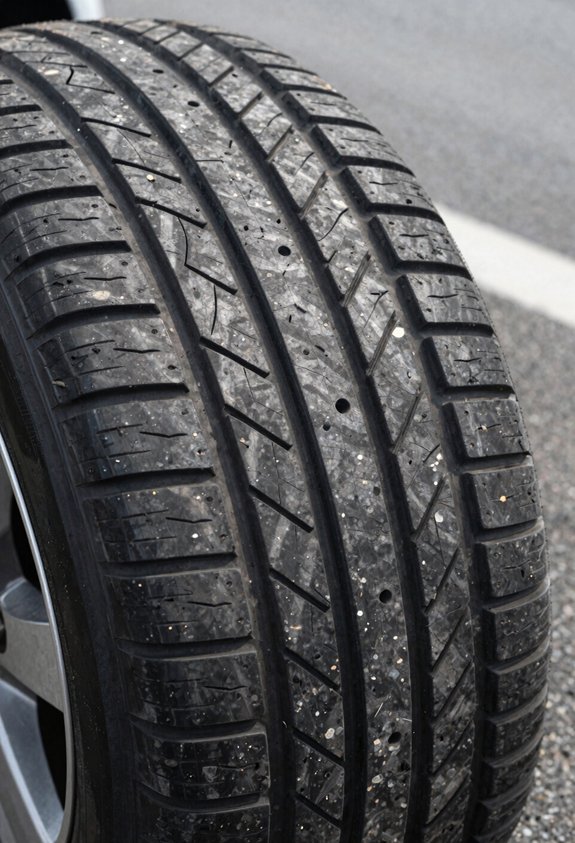
When tread depth wears down, the tire’s ability to maintain contact with the road surface diminishes through two critical mechanisms I’ll examine here: traction loss mechanics, which involve reduced biting edges and compound stiffness that compromise grip on dry, wet, or contaminated surfaces, and hydroplaning thresholds, where insufficient groove volume fails to evacuate water at speeds often above 45–50 mph, leading to complete loss of contact.
I want you to understand that these aren’t abstract concerns. At 2/32 inch, your stopping distance on wet pavement can increase by nearly 100 feet compared to new tires, while hydroplaning risk escalates dramatically below 4/32 inch, a threshold many safety advocates now recommend as the practical replacement point.
The interaction between these factors creates compound risk scenarios where marginal conditions (standing water, worn suspension components, or suboptimal inflation) transform manageable hazards into loss-of-control events.
Traction Loss Mechanics
I want you to understand that tire tread depth operates as your primary defense against hydroplaning and extended stopping distances on wet pavement, with each additional 32nd of an inch providing measurable resistance to accident risk until you reach the point of concerning degradation.
How Traction Loss Develops
Tread depth channels water away from your contact patch; as it diminishes, hydroplaning becomes more likely and wet braking distances expand significantly. Below 4/32″, you’re entering dangerous territory where traction loss accelerates. The penny test reveals 2/32″ replacement thresholds, but 4/32″ offers safer margins.
Uneven Wear Complications
Even adequate tread depth fails if uneven wear concentrates stress on limited surface areas. Edge wear, center wear, or cupping patterns reduce effective contact, compounding risks. Inspect regularly; depth alone doesn’t guarantee safety when distribution is compromised.
Hydroplaning Thresholds
Why does a fraction of an inch mean the difference between control and catastrophe?
Hydroplaning Thresholds: The Critical Role of Tread Depth in Wet-Road Safety
Tread depth governs how effectively I channel water away from my tires, and when it drops too low, I face catastrophic hydroplaning risk. Here’s what I need to know:
- The 4/32 inch warning: At this threshold, my wet-weather braking degrades measurably; research confirms longer stopping distances, so many safety advocates urge replacement here.
- The 2/32 inch danger: This is where federally mandated wear indicators sit, but hydroplaning risk spikes dramatically. Waiting this long leaves me vulnerable.
- Uneven wear complications: Even if my average tread depth seems acceptable, irregular patterns across tire edges worsen hydroplaning potential.
I inspect all four tires meticulously, because controlling water evacuation means maintaining control of my vehicle.
What Does the Law Say About Minimum Tread Depth?
How precisely does one navigate the complex regulatory terrain governing minimum tire tread depth? I’ll walk you through what I’ve found, so we’re all on the same page.
Navigating minimum tire tread depth regulations requires understanding a patchwork of state laws rather than any unified federal standard.
Understanding the Legal Landscape
The minimum tread depth isn’t uniform across America; state variations dominate this space. Most states (42, specifically) set the legal threshold at 2/32 inch, but California and Idaho drop to 1/32 inch, while Arkansas, Montana, New Mexico, North Dakota, South Carolina, and West Virginia impose no statutory minimum whatsoever.
For tire safety, Canada enforces 2/32 inch federally under its Motor Vehicle Safety Act; Texas applies 3/32 inch for inspections, particularly emphasizing wet conditions. Your enforcement threshold depends entirely on where you’re driving; there’s no blanket federal rule guiding us here.
Why Did Consumer Reports Change to 4/32 Inches?
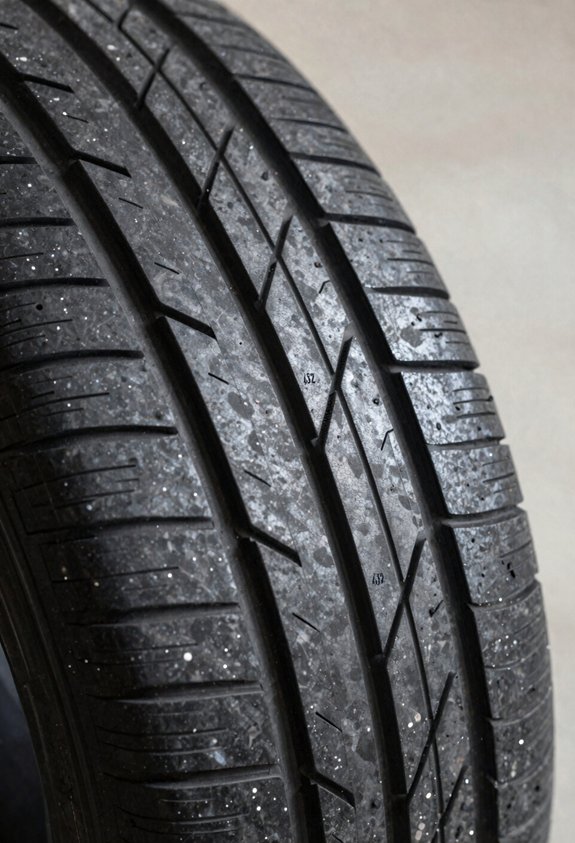
Consumer Reports raised its minimum recommendation to 4/32 inches because findings show wet-weather braking distances increase dramatically once tread drops below that threshold, creating a real safety hazard I don’t think most drivers appreciate until it’s too late. This earlier replacement guideline also acknowledges that tires rarely wear perfectly evenly, so maintaining that extra 2/32 inches beyond the legal minimum provides a critical buffer against hydroplaning and loss of control, particularly when you hit water at highway speeds.
I’m pointing this out now because understanding why the standard changed helps you weigh the trade-off between tire lifespan and the very real risks of delayed replacement.
Wet-Weather Safety
Where exactly does a tire cease being merely worn and become hazardous on rain-soaked pavement? I’ve looked at the research, and it points significantly to the 4/32 inch threshold. Consumer Reports shifted their tire replacement guidance here because wet-weather safety demands more tread than most drivers realize.
Here’s what happens: as tread depth drops toward that 4/32″ mark, your tires lose their ability to channel water effectively, and hydroplaning risk climbs dramatically. Multiple studies confirm that wet-weather braking distances lengthen clearly below this point.
Some dealers already treat 2/32″ as bald, and I think they’re right, especially when rain hits. We’re not just talking numbers; we’re talking about keeping control when the pavement disappears beneath standing water.
Earlier Replacement
Why did Consumer Reports make the shift? Substantial evidence indicates wet braking distances increase dramatically once tread depth reaches 4/32 inch, creating a critical safety threshold earlier than most drivers realize.
The Technical Basis for Earlier Replacement
I’m adjusting my maintenance schedule after learning that hydroplaning resistance and wet-weather traction degrade considerably before tires reach the legal minimum. Consumer Reports raised their recommendation to 4/32 inch because prolonged stopping distances in rain present unacceptable risks, particularly at highway speeds where every 10 feet matters.
Industry Alignment and Practical Considerations
Many dealerships and safety-conscious drivers already adopted this 4/32 inch standard, so CR’s guidance brings official recommendations in line with widespread practice. You’re not alone if you’ve questioned whether 2/32 inch represents real safety. The shift prevents premature replacement fears by validating what knowledgeable motorists already practice: replacing tires before performance drops dangerously, not merely when legally required.
How Much Safer Is 4/32 Than 2/32 Inch?
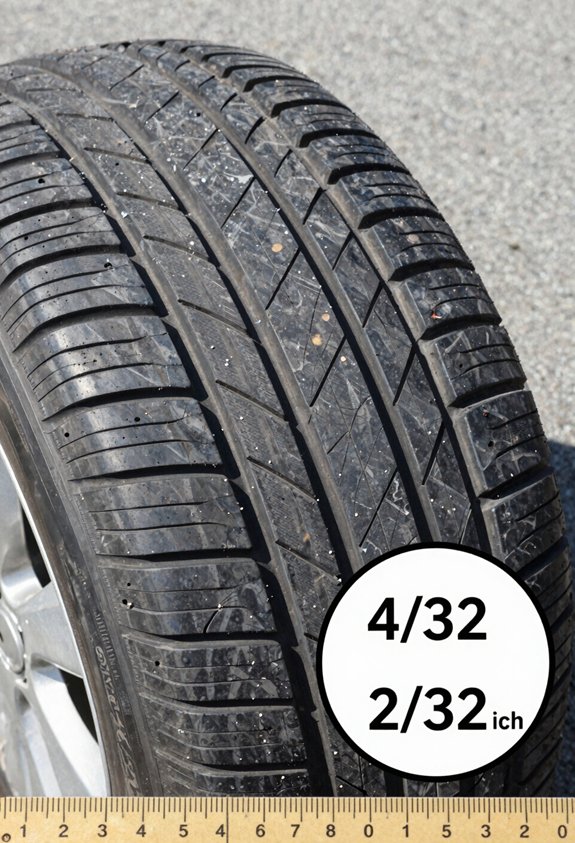
A tire with 4/32 inch of remaining tread delivers substantially greater safety margins than one worn to the 2/32 inch legal minimum, particularly when I consider how rapidly wet-weather performance degrades as rubber wears away.
Consumer Reports and I both recognize 4/32 inch as a more prudent safety threshold than the 2/32 inch baseline many states mandate. Research demonstrates that wet braking distance lengthens considerably once tread depth drops below this 4/32 mark, while hydroplaning resistance similarly deteriorates.
Here’s what I want you to understand:
Wet-surface risk escalates sharply as grooves shallow out. Industry professionals increasingly treat 4/32 inch as a practical replacement point. Uneven wear patterns (often invisible without thorough inspection) can compromise performance even at acceptable overall measurements.
I urge you: don’t let legal minimums dictate your timing. That extra 2/32 inch provides critical traction reserves when you need them most.
Does the Penny Test Still Work?
I think the penny test still technically captures that 2/32″ legal minimum, though I’ve started advising you to consider the quarter test instead, since it flags wear at 4/32″, a threshold that addresses wet-weather performance and uneven wear patterns you might miss with a single-point check.
If you’re sticking with Lincoln’s head, you’ll need to verify multiple ribs across the tire’s width, but I’d rather you adopt the quarter method for conservative safety margins, especially where state laws and dealer guidance diverge on replacement timing.
Penny Test Reliability
How reliably does the penny test gauge tire safety in modern driving conditions? I find it still functions for detecting the legal minimum, yet its reliability for real-world protection deserves scrutiny.
The penny test confirms tread depth at 2/32 inch, the threshold where wear indicators become flush with tread ribs. However, I recognize this legacy benchmark originated when wet-weather safety standards differed substantially from today’s requirements.
| Scenario | What You Risk |
|---|---|
| Lincoln’s head partially hidden | False confidence in marginal tread |
| Head fully visible at 2/32″ | Aquaplaning, extended wet braking |
| Uneven wear across the tire | Missing dangerous thin spots |
I check multiple locations on each tire because uneven wear compromises the penny test’s accuracy. While technically valid, this method can reassure me when tires have already become hazardous for highway-speed rain conditions.
Quarter Test Alternative
Why does the penny test persist when safer alternatives exist? I believe you deserve better protection than outdated benchmarks provide.
The quarter test replaces the penny method by measuring tread depth at 4/32″, double the penny’s 2/32″ minimum. Consumer Reports endorses this approach because research demonstrates wet braking distances degrade sharply below 4/32″, compromising your security when roads turn treacherous.
Many dealers now recognize 4/32″ as the practical replacement indicator, acknowledging that legal minimums (often 2/32″) fail to address real-world safety threshold requirements. While the penny test remains technically valid, it underestimates hydroplaning risks during summer downpours.
No federal mandate dictates specific depths, though state laws vary. I recommend adopting the quarter standard now; replacing tires proactively costs less than recovering from preventable accidents.
What Test Replaces the Penny for Better Safety?
insert Washington’s head down into your grooves, and if any part remains covered, you’ve got adequate tread depth. Research shows hydroplaning risk and braking distances worsen dramatically below 4/32″, which is why I follow Consumer Reports’ guidance. Some dealers already adopted this standard, though tire wear indicators at 2/32″ remain legal minimums.
When you’re deciding between safe and sorry, I choose the quarter, because belonging to the community of protected drivers matters more than stretching tire life.
How Do You Use a Tread Depth Gauge?
While the penny and quarter offer quick roadside assessments, I prefer precision when my safety rides on millimeters or thirty-seconds of an inch, which is why I reach for a tread depth gauge, a purpose-built tool that eliminates guesswork with calibrated accuracy.
Using Your Tread Depth Gauge
I start by selecting my gauge type: digital (instant LCD readout), probe-style (pencil-like with measuring shaft), or sliding ruler (manual vernier scale). Each delivers reliable measurement, though digital models reduce human error.
Taking Proper Measurements
I insert the probe perpendicular to the tread surface, ensuring full contact without angling. Crucially, I check three locations per tire, inner, center, outer edges, since uneven wear patterns hide in isolated spots. I record each reading, then average them for actionable data.
Interpreting Results
The 2/32 inch threshold represents legal minimums in most jurisdictions, though I replace tires earlier for wet-weather safety. Some gauges reference wear indicators directly; when my measurement matches these embedded bars, replacement is mandatory.
What Do Wear Indicator Bars Tell You?
Where exactly do tires telegraph their final warnings, I’m often asked, and the answer sits molded into the rubber itself: tread wear indicator bars, those subtle raised sections engineered to become flush with the surrounding tread surface when I’ve worn my tires down to 2/32 inch, the legal minimum in most jurisdictions and, frankly, a threshold I’ve learned not to flirt with in wet conditions.
Wear bars run straight across my circumferential grooves, buried beneath usable tread depth until I’ve shed enough rubber to expose them fully. When tire wear indicators sit visibly level with my remaining tread, I’ve arrived at that critical replacement threshold, no guesswork required.
While my tread depth stays above 2/32 inches, those bars hide below the surface, reassuring me I’ve got usable life left. Some professionals cross-check them against the penny or quarter tests, but I’ve found the bars alone deliver clear guidance if I’m inspecting honestly.
When Does Tread Depth Force Replacing All Four Tires?
| Scenario | My Action | Risk If I Delay |
|---|---|---|
| Uneven wear across axle | Replace all four | Instability, oversteer |
| Tread depth mismatch >2/32″ | Match pairs minimally | AWD component damage |
| Past replacement age (~10 years) | Replace regardless | Sidewall failure |
I prioritize installing newer tires on the rear axle when I must pair, reducing spin-out danger. Yet uneven wear, damage, or age frequently compels complete sets for unified performance.
Does Tread Depth Affect Hydroplaning Risk?
How considerably does tread depth influence hydroplaning risk? Let me break this down for you, because I want you and your passengers arriving safely, every time.
The Direct Connection
Tread depth governs how efficiently tires channel water away from the contact patch. Shallow grooves simply cannot evacuate water fast enough, and that gap between rubber and road grows. Your wet traction vanishes, sometimes catastrophically.
The Critical Numbers
Industry sources converge around one figure: the 4/32 inch threshold. Below this point, which you can gauge using the quarter test, hydroplaning risk escalates sharply. Stopping distances stretch longer, tire safety margins compress, and speed amplifies every vulnerability.
What Worn Tread Means
Reduced water evacuation efficiency equals diminished road contact. When tread approaches that 4/32 inch threshold, replacement isn’t premature; it’s protective.
How Often Should You Check Tread Depth?
Why let uncertainty about your tires put you at risk? I check my tread depth monthly, and I urge you to join me in this routine that keeps our community safe on the road.
| Check Method | Tread Depth | When to Act |
|---|---|---|
| Penny test | 2/32″ | Replace immediately |
| Quarter test | 4/32″ | Plan replacement for wet-weather safety |
| Wear indicators | Flush with tread | Critical replacement needed |
New tires start at 10/32″ to 11/32″, measured in 32nds of an inch, but I don’t wait for built-in wear indicators to signal danger. I perform the penny test regularly, though I’ve upgraded to the quarter test since Consumer Reports recommends 4/32″ for safer wet-weather performance.
Monthly checks, paired with inflation monitoring, catch uneven wear before it compromises our shared roads.
Why Replace Old Tires Even With Good Tread?
The replacement threshold escalates dramatically below 4/32″ because wet braking risk doubles compared to new tires, but age-related hardening similarly extends stopping distances regardless of tread indicators.
I recommend replacing tires at 4/32″ or six years, whichever arrives first, sheer prudence for those prioritizing collective safety.