
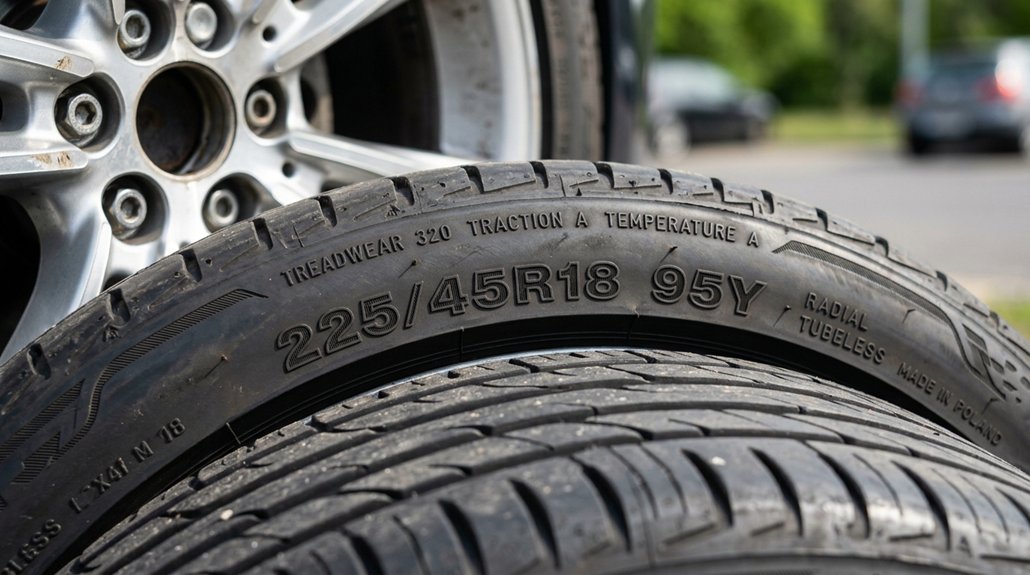
I’m going to show you why that two- or three-digit code on your sidewall, typically ranging from 70 to 126 for passenger vehicles, determines whether your tires can safely support your vehicle’s weight, or whether you’re risking blowouts, tread separation, and catastrophic failure.
The load index translates directly into pounds: a 92 rating carries roughly 1,389 lbs per tire, while a 126 handles 3,748 lbs. Multiply by four, compare against your GVWR, and you’ll know if you’re compliant.
But that’s only half the equation, because inflation pressure, speed ratings, and load range all intersect with this number in ways that aren’t immediately obvious.
What Your Tire Load Index Really Means
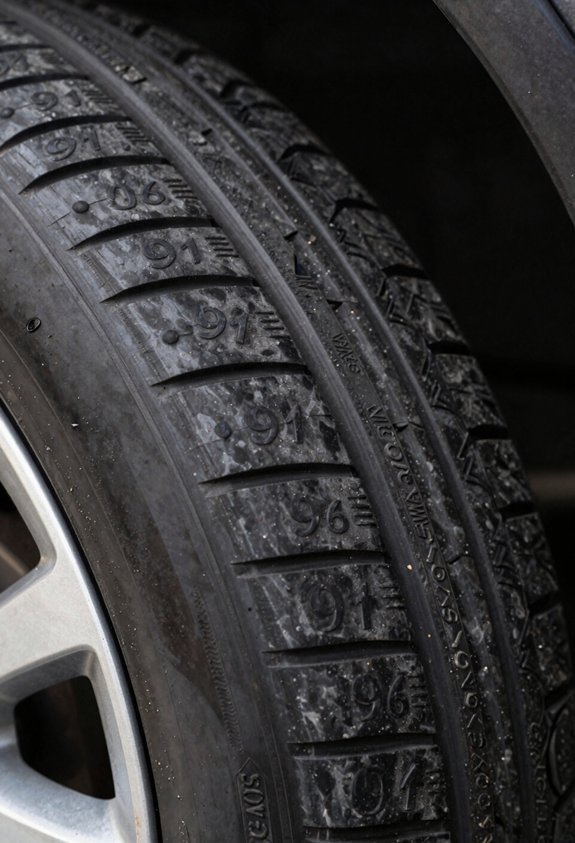
Why does a seemingly insignificant number stamped on your tire’s sidewall matter so much for your safety? I’m here to walk you through exactly what your Load Index really means, because understanding this keeps us all safer on the road together.
Your Load Index is that numerical code, typically ranging between 70 and 126 for passenger vehicles, indicating the maximum load each tire can safely carry when properly inflated. A higher number means greater capacity; for instance, a 92 index supports 1,389 pounds per tire, while a 100 index handles 1,764 pounds.
To calculate your vehicle’s total capacity, multiply that single-tire rating by four tires, then compare this figure against your vehicle’s GVWR. Your replacement tires must meet or exceed the original factory tire load rating. Never compromise here, as inadequate ratings risk catastrophic failure.
Why the Load Index Matters for Safety
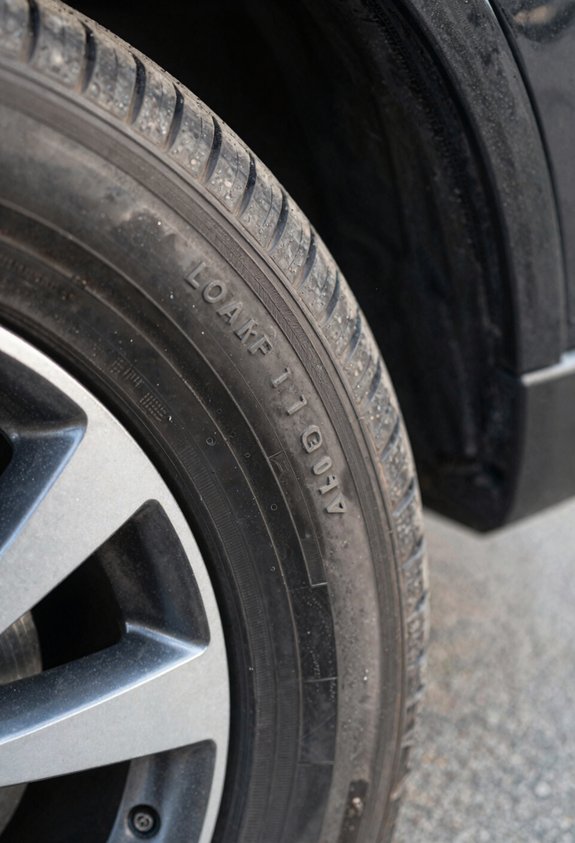
Why the Load Index Matters for Safety
Understanding your tire’s load index isn’t merely about reading numbers on a sidewall: it’s about preventing catastrophic failures that occur when rubber meets physics. This includes tire blowout prevention, which happens when under-rated rubber collapses under stress; maintaining vehicle control management, since overloaded tires deform unpredictably during cornering, braking, and emergency maneuvers, compromising your ability to steer and stop; and guaranteeing maximum load protection, which requires matching or exceeding factory specifications so that your combined tire capacity (load index × 4) adequately covers your Gross Vehicle Weight Rating plus passengers, cargo, and dynamic forces.
I’ll break down exactly how these three critical areas interconnect, starting with the physics of blowout prevention, moving through the dynamics of control loss, and ending with the mathematical verification that keeps you safe.
Tire Blowout Prevention
| Risk Factor | Consequence |
|---|---|
| Underrated load index | Sidewall stress, heat buildup |
| Excess weight | Structural degradation |
| Underinflation | Amplified load per square inch |
| Ignored GVWR | Catastrophic separation |
| Improper replacement | Compromised emergency handling |
I verify replacement tires against my manual’s requirements because collective maximum weight capacity, calculated per tire, multiplied by four, must satisfy total vehicle demands. This diligence protects everyone sharing the road.
Vehicle Control Maintenance
How exactly does a single number on my tire’s sidewall translate into real-world control when I’m steering through a rain-slicked highway or executing an emergency lane change? That number, your Load Index, directly determines how much maximum weight each tire handles, and when I match this to my vehicle’s demands, I maintain the precise contact patch geometry that keeps me planted to the pavement.
Understanding the Connection
I find my load rating in the tire’s service description, typically paired with the speed rating (like 91V), right there on the tire sidewall. This isn’t arbitrary: proper inflation at the specified pressure makes certain the tread face maintains its engineered profile.
When I multiply my per-tire capacity by four, I verify against my GVWR, confirming my setup won’t compress sidewalls beyond their design limits during cornering or braking.
Why Exceeding Specifications Compromises Control
If I install tires with insufficient load index, the sidewalls flex excessively, generating heat and unpredictable handling. Conversely, selecting a higher load rating than factory specs enhances stability, particularly when I’m hauling cargo or navigating adverse conditions where every input demands predictable response.
Maximum Load Protection
each number translates to specific per-tire capacity, a 92 rating means 1,389 pounds when properly inflated, and I’ve got four tires carrying my cargo. I multiply that per-tire figure by four, then check my vehicle’s GVWR in the manual to confirm I’m within bounds.
Downgrading my tires breaches safety compliance, inviting sidewall collapse. I don’t gamble with overload.
Where to Find the Load Index on Your Tires
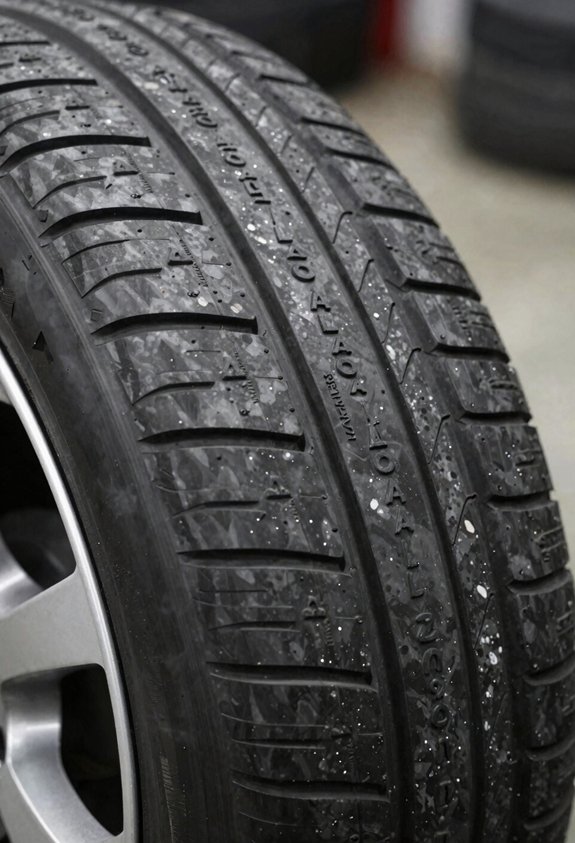
You’ll find the load index stamped on the tire sidewall, typically positioned after the tire size designation and speed rating in a sequence like “225/45R17 94W,” where that two- or three-digit number, 94 in this example, represents the specific load-bearing capacity.
While the sidewall remains the primary location, you should also consult your vehicle’s tire placard, usually affixed to the driver’s door jamb, fuel door, or glove box, and the owner’s manual. Both list the factory-specified load index alongside proper inflation pressures.
Checking these sources together makes sure you’re reading the correct number. Selecting replacement tires without enough capacity compromises safety and could void your warranty coverage.
Tire Sidewall Location
Locating the load index on a tire sidewall requires understanding the standardized marking system that manufacturers use to encode critical performance specifications. I want you to feel confident reading these markings, because knowing where to look keeps you safe.
Where to Find Your Load Index
The load index appears as a two- or three-digit number on the tire sidewall, typically following the tire size code. For most cars and light trucks, you’ll see values ranging from 70 to 124. This number indicates the maximum load each tire can carry at proper inflation pressure.
Understanding the Full Service Description
Your load rating never works alone. Manufacturers pair it with a speed rating letter (like H or T) to create the complete service description. Together, these define your tire’s operating limits.
When replacing tires, always match or exceed your vehicle’s factory-specified load index to maintain safe weight distribution across all four tires.
Load Index Number Position
Mastery of tire identification begins with recognizing how manufacturers structure the critical information molded into every sidewall. I’m guiding you to locate your Load Index, a critical numeric code positioned directly after your tire size marking on the tire sidewall. You’ll find this two- or three-digit number, typically ranging from 70 to 126 for passenger vehicles, embedded within the standardized alphanumeric sequence that defines your tire’s capabilities.
This load rating translates directly to maximum weight capacity per tire when I consult standardized conversion charts, and I multiply this figure by four to validate against my vehicle GVWR. My replacement tire must match or exceed this factory specification; dropping below invites catastrophic failure.
Note that manufacturers pair this data with speed rating (the adjacent letter) to establish complete operational boundaries.
Vehicle Documentation Sources
When I’m selecting replacement tires, I cross-reference three authoritative sources to verify the required load index: my tire’s sidewall marking, the vehicle’s owner’s manual, and the federally mandated tire information placard.
| Source | What You’ll Find |
|---|---|
| Sidewall Marking | Service description showing tire sizing and load rating |
| Owner’s Manual | Manufacturer’s specified tire capacity requirements |
| Tire Placard | Door jamb sticker with load index and pressure values |
| Load Index Chart | Maximum weight per tire for safety standards compliance |
I don’t guess with tire capacity. The placard, required by federal safety standards, sits on my driver’s door edge. I multiply that per-tire number by four, confirming my vehicle’s total load-carrying capability.
Never drop below the factory load rating. A lower load index risks catastrophic failure.
How to Read a Load Index Chart
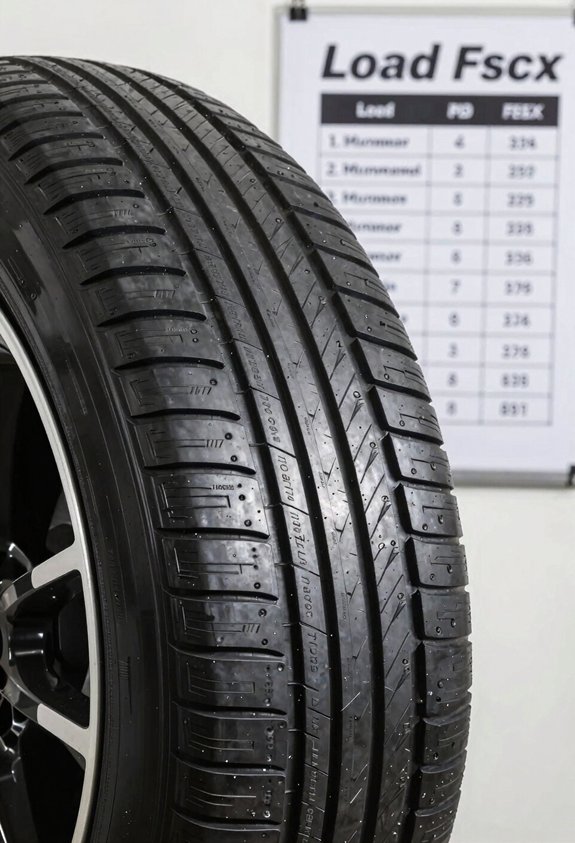
Where exactly do you find the meaning behind that two- or three-digit code stamped on your tire’s sidewall, and how do you translate it into practical carrying capacity? I’m going to walk you through reading chart fundamentals so you can interpret any tire load index with confidence.
Locating Your Load Index
Your Load Index appears after the tire size, typically as a two- or three-digit number (e.g., 225/45R17 92H). This number, not the letter following it, determines your maximum weight capacity.
Decoding the Numbers
Each tire load index corresponds to a specific load in pounds. For instance, 92 equals 1,389 lbs, while 105 equals 2,039 lbs. Higher numbers mean greater capacity, but only with proper inflation; underinflation drastically reduces what your tire can safely handle.
Calculating Total Capacity
Multiply your single-tire maximum weight by four, then compare this figure against your vehicle’s GVWR. Your replacement tires must meet or exceed factory specifications; anything lower risks catastrophic failure.
Understanding Service Description
Your load index combines with speed rating to form the complete service description, defining overall performance limits you cannot ignore.
Load Index vs. Load Range: What’s the Difference?
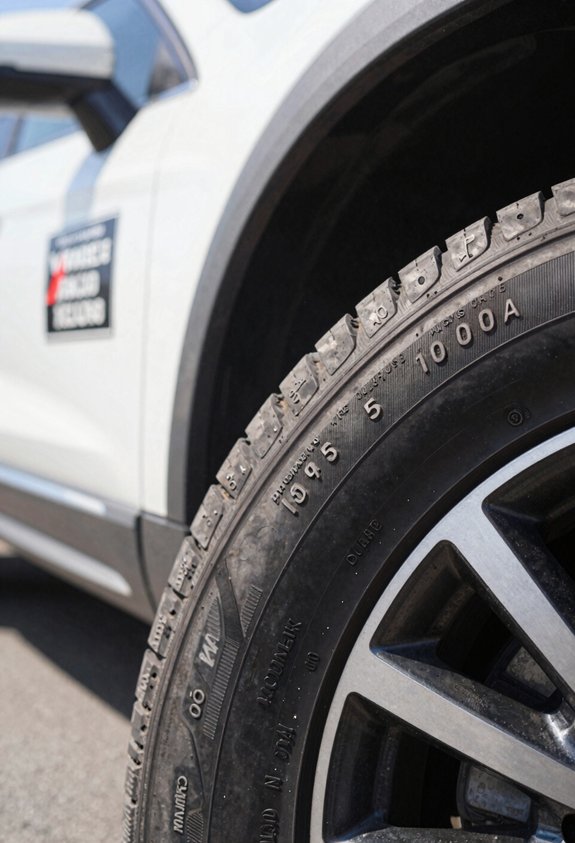
Confusion between load index and load range can cost you thousands in tire failure or worse, so I’m going to clarify exactly how these two systems differ before you make your next purchase.
Load Index: Precise Numerical Weight Capacity
The load index appears as a specific number on your tire sidewall, typically following the tire size designation. This figure directly translates to a maximum load in pounds: 92 means 1,389 lbs, 110 means 2,337 lbs. I multiply this per-tire capacity by four to estimate my vehicle’s total supported weight.
Load Range: Letter-Based Pressure Ratings
Load range, expressed as letters (B, C, D, E, F), indicates relative casing strength and required inflation pressure rather than exact weight capacity. Higher letters mean stiffer construction for heavier loads, but without the precision of numerical load indexing.
Why Both Matter for Replacement Tires
I always verify that my replacement tires match or exceed both my original load index and appropriate load range. This way, my tire sidewall displays ratings compatible with my vehicle’s GVWR and actual carrying demands.
How to Choose Replacement Tires by Load Index
Why risk catastrophic tire failure when selecting replacements? I always check the load index stamped on the tire sidewall before purchasing replacement tires, because this numerical code directly indicates the maximum weight each tire can safely support at proper inflation. For instance, when I see a load index of 92, I know that equals 1,389 pounds per tire, which means four tires provide 5,556 pounds of total load capacity.
I never install tires with a lower load index than my vehicle’s original factory specifications, since doing so compromises structural integrity and safety. To make certain GVWR compatibility, I multiply the per-tire capacity by four, then verify this figure meets or exceeds my vehicle’s gross vehicle weight rating. I also cross-reference the tire placard, owner manual, and manufacturer specifications to confirm my selections align with engineered safety margins.
What Happens When You Overload Your Tires
How quickly can a routine drive turn catastrophic when tires shoulder burdens beyond their engineered limits? I know you’d never want to find out firsthand, so let me show you what’s at stake when you ignore your load index.
Every ignored load index carries the weight of potential catastrophe—burden your tires beyond their engineering, and routine becomes ruinous in seconds flat.
- Sidewall failure from excessive flexing under overload conditions
- Catastrophic blowouts triggered by heat buildup exceeding safe thresholds
- Complete loss of vehicle control when tire carrying capacity is breached
- Accelerated tread wear that compromises your entire payload system
Your GVWR helps me calculate precise limits, since each tire’s numerical rating, say, 92 at 1,389 pounds, multiplies across four contact points. Combine improper inflation with excess weight, and I’ve seen temperatures spike past critical thresholds in minutes. Stay within engineered specifications, and we’re traveling safely together.