
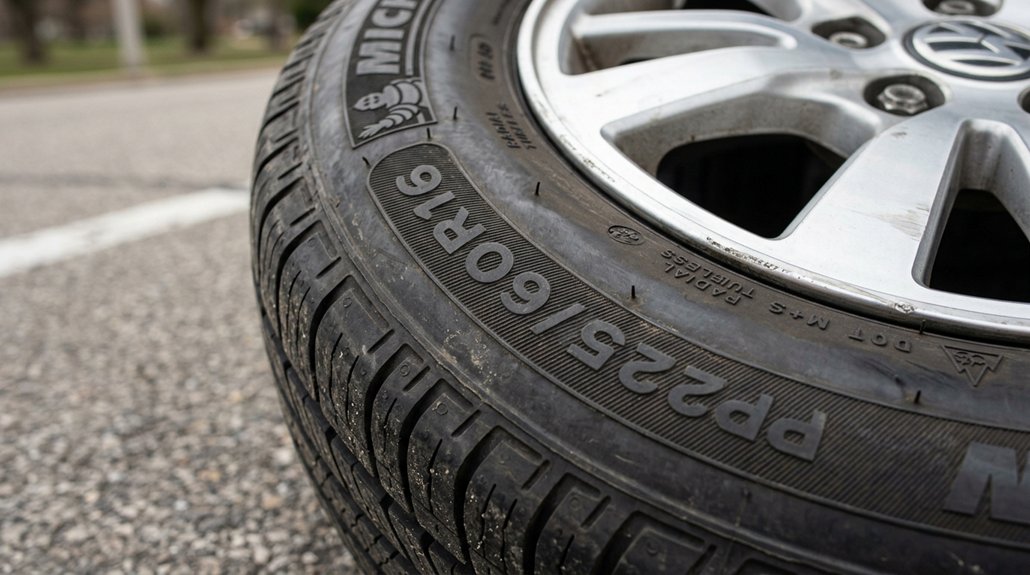
Most drivers never realize their tire sidewall contains a standardized engineering code that governs vehicle safety, handling, and legal compliance. When I examine a tire marked P225/60R16 98H, I’m looking at six distinct data points, each one calculated to precise tolerances, that determine whether this rubber will support your car’s weight, absorb road shock, and maintain structural integrity at highway speeds.
Get one number wrong, and you’re risking blowouts, uneven wear, or complete fitment failure. I’ll break down exactly what each position means, why manufacturers enforce these specifications, and how a two-minute check against your door placard could prevent catastrophic failure.
Read Your Tire Sidewall Like a Code
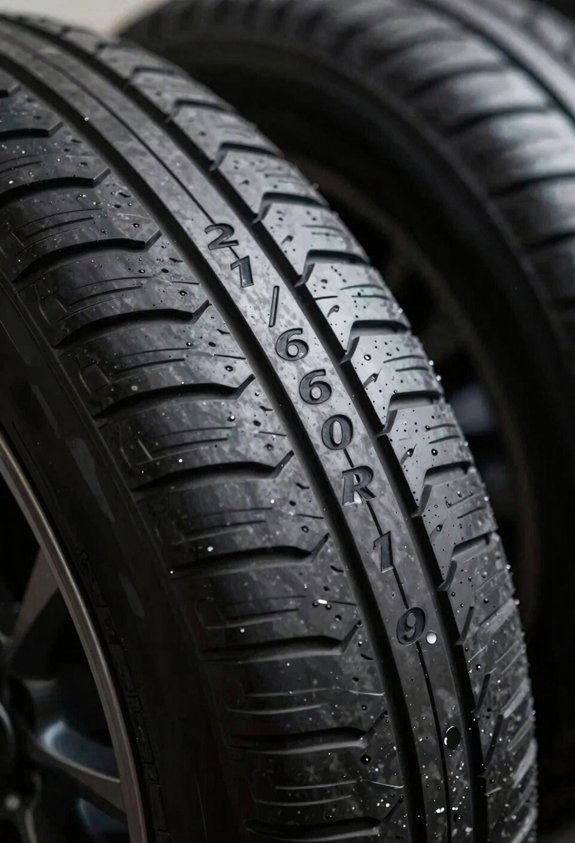
How do you transform a string of numbers and letters into practical knowledge about your tire’s capabilities? I crack this code every time I shop for rubber, and I’ll show you how we read these markings together.
The Basic Format
A typical tire size reads like P225/60R16. That prefix letter matters. P means passenger vehicle, while LT indicates light trucks built for heavier loads.
Breaking Down the Sequence
I always start with that first number: the section width, measured in millimeters from sidewall to sidewall. In our example, 225 means 225 millimeters of tread contact width.
Next comes the aspect ratio, expressed as a percentage. This 60 tells me the sidewall height equals 60% of that section width; not the raw millimeter measurement itself, but a proportional relationship I’ll calculate when needed.
The R designates radial construction, today’s standard, followed by wheel diameter in inches.
Decode Width, Aspect Ratio, and Sidewall Height
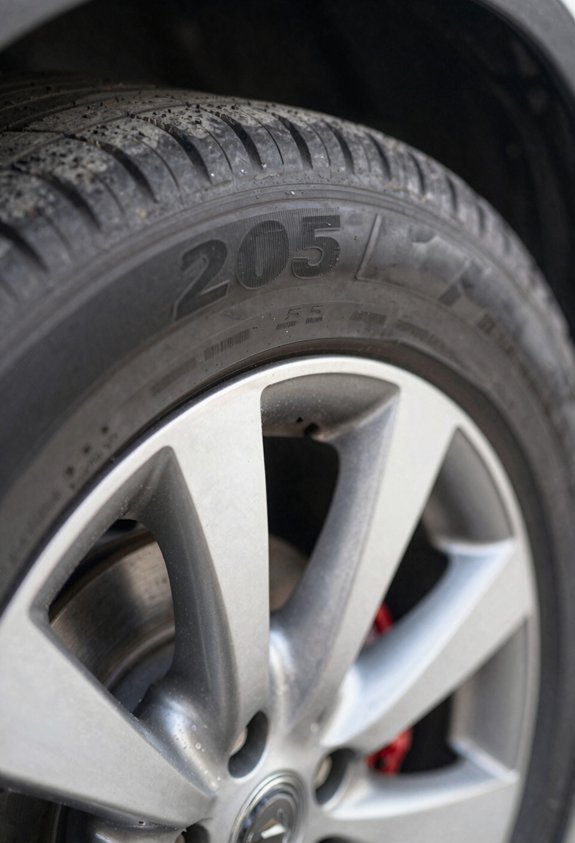
Now that we’ve established how to locate these markings on your tire’s sidewall, I’ll walk you through what each measurement actually means for your vehicle’s performance and fitment.
Section Width (e.g., 225) measures millimeters from sidewall to sidewall, determining your tire’s footprint on the road. Aspect Ratio (e.g., 60) expresses Sidewall Height as a percentage of that width; multiply 225 by 0.60 to get 135mm of sidewall.
Lower ratios (45-55) deliver sharper handling but harsher rides; higher ratios (65-80) cushion impacts but increase body roll. Your driving priorities should guide this choice.
| Component | What It Means |
|---|---|
| Section Width | Tread width in millimeters |
| Aspect Ratio | Sidewall height as % of width |
| Sidewall Height | Calculated: width × ratio |
| Low Ratio (45-55) | Sport handling, firm ride |
| High Ratio (65-80) | Comfort, absorption, height |
Understand Construction, Rim Size, and Tire Type
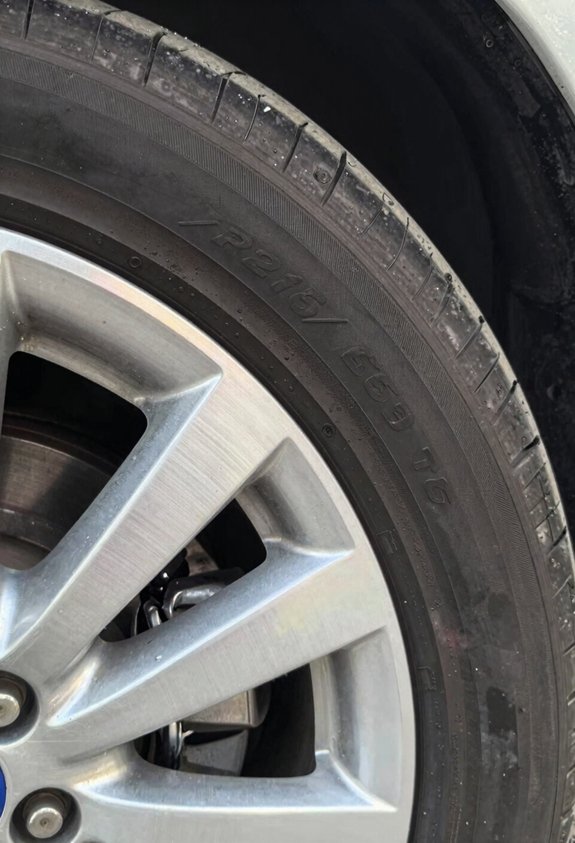
Once you’ve grasped width and sidewall proportions, you’ll encounter a single letter: R, D, or B, that reveals how your tire is actually built.
Construction Types
- R (Radial): Internal plies run perpendicular to travel direction, delivering durability and even wear. This is what you’ll find on nearly every modern vehicle.
- D or B (Bias/Diagonal): Plies crisscross at angles; found in classics and specialty applications.
This construction letter directly affects handling, ride quality, and heat dissipation.
Rim Size and Fitment
Immediately following that letter, you’ll see a two-digit number (15, 17, 20, etc.): your rim size in inches. This must match your wheel exactly; there’s no flexibility here.
Your complete tire size reading: width/aspect ratio/construction/rim size, guarantees proper mounting, clearance, and safe performance.
Check Load Index and Speed Rating Next
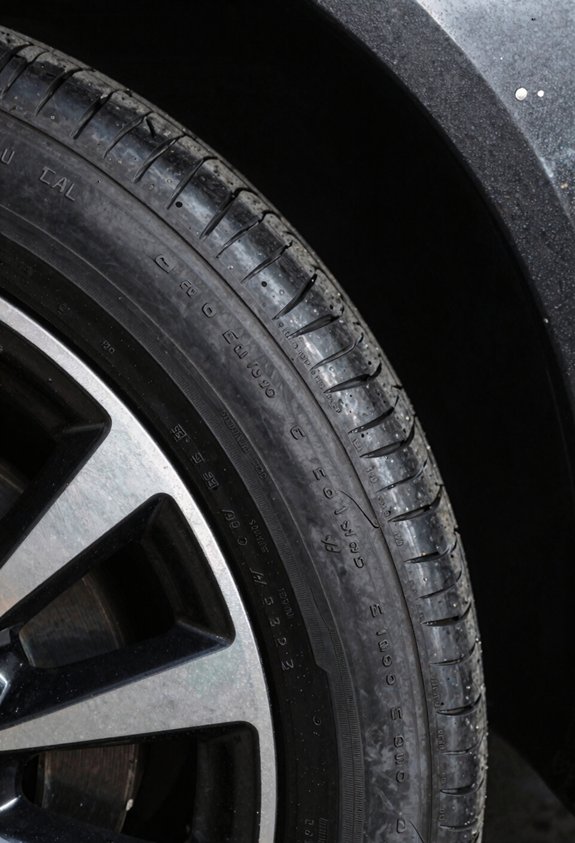
Load Index and Capacity
The load index indicates maximum weight capacity at proper inflation; higher numerals mean greater loads (94 exceeds 91). For LT or ST tires, you’ll encounter dual numbers: the first for single-tire use, the second for dual-wheel configurations.
Speed Rating Parameters
The trailing speed rating letter denotes maximum safe velocity; V-rated tires tolerate 149 mph. Never downgrade this rating when replacing tires.
Critical Pairing Requirements
Always combine your load index and speed rating with manufacturer inflation guidance and vehicle specifications. Mismatched ratings risk catastrophic failure, so verify these limits align with your driving demands.
Verify Size on Your Placard (or Know When to Change)
Where exactly should you look to confirm you’re buying the right tire? I always check my tire size placard first, it’s usually on the driver’s doorjamb, inside the fuel-filler door, or in my glove box. That placard displays the complete size string, something like P225/60R16, which encodes width (225 mm), aspect ratio (60%), construction type (R for radial), and wheel diameter (16 inches).
It also specifies the load index and speed rating my vehicle requires for safe operation. If I can’t locate the placard, I consult my owner’s manual immediately. I never guess or switch sizes without manufacturer guidance because improper fitment compromises handling, clearance, and safety. Sticking to the placard makes certain my tires match the engineered specifications exactly.