
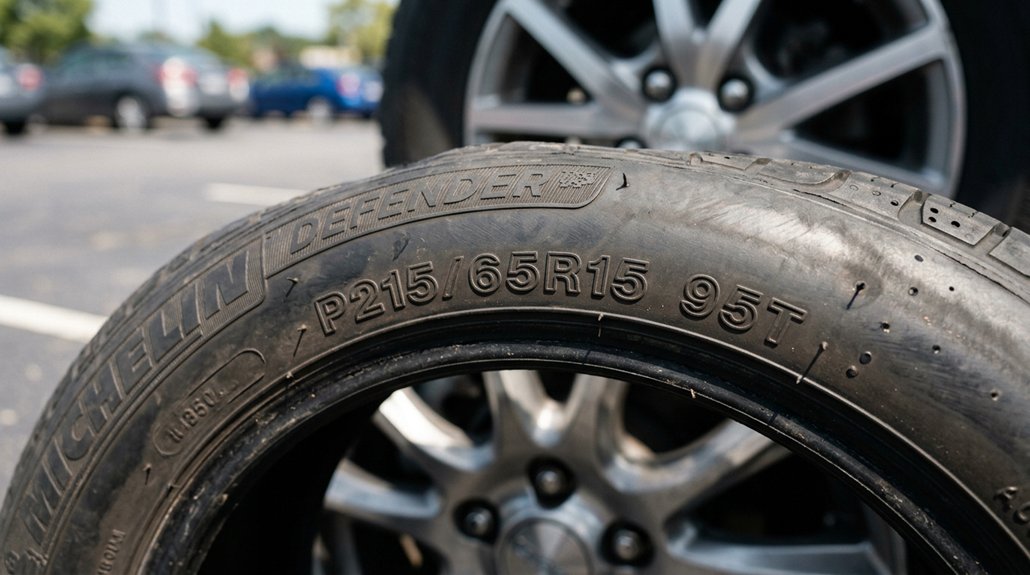
When my neighbor installed 225/50R16 tires on his 2015 Honda Accord without checking the load index, he discovered, too late, that his highway handling had degraded dangerously, a mistake that cost him both safety and money I’ll help you avoid.
Those cryptic sidewall markings aren’t manufacturer jargon; they’re precise engineering specifications governing every aspect of tire performance, from sidewall deflection under cornering loads to maximum sustained speed capability, and misreading even one digit can void your warranty or compromise vehicle stability. I’ll break down exactly what each position means, why construction type affects replacement costs, and which ratings you can safely mix without risking blowout or uneven wear.
How to Read Tire Size Numbers From Left to Right
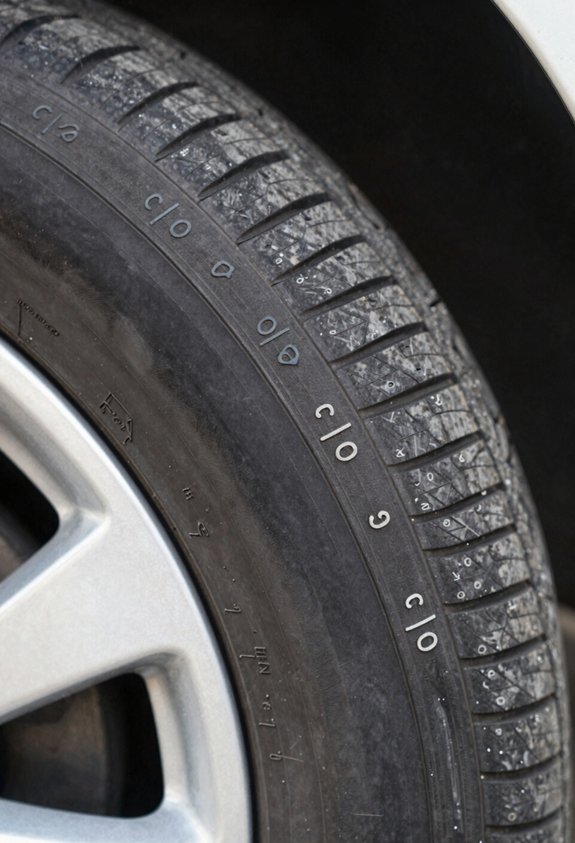
Why does a simple string of numbers and letters on your tire’s sidewall matter so much? It’s because I’m not just looking at random code, I’m deciphering essential specifications that keep my vehicle safe and performing optimally. Let me break down tire sizing so you’ll read these markings with confidence.
Breaking Down the Sequence
When I examine tire size numbers, I read them left to right: width, aspect ratio, construction type, and rim diameter. For instance, in 225/50R16, each element serves a distinct purpose I can’t afford to misinterpret.
- Width in millimeters: That first number (225) represents my tire’s width, measured sidewall to sidewall; broader contact patches mean different handling characteristics.
- Aspect ratio: The second number (50) indicates sidewall height as a percentage of that width; lower percentages mean shorter, stiffer sidewalls.
- Radial construction: The “R” confirms radial construction, today’s industry standard.
- Rim diameter: Finally, 16 denotes the rim diameter in inches my tire must match precisely.
What P, LT, and ST Mean (and Where They Appear)
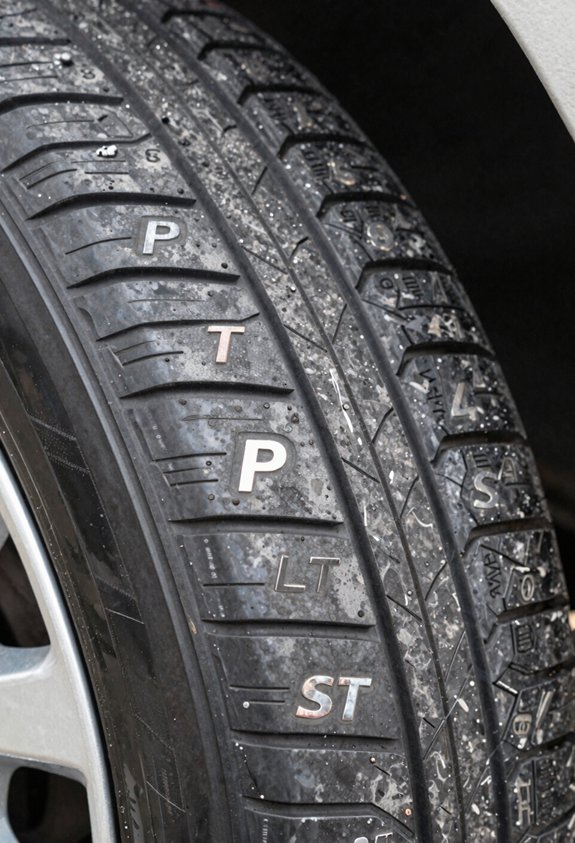
These size designation letters indicate intended vehicle type and load capacity:
- P identifies *passenger vehicle tires* for everyday cars, crossovers, and minivans
- LT marks *light truck tires* engineered for heavier loads, towing, and commercial duty
- ST specifies *Special Trailer* tires exclusively for towed applications; never for driven axles
- No prefix means metric/European sizing with a different load index system
- Dual load index numbers (e.g., LT245/75R16 120/116Q) appear on LT and commercial tires for single versus dual rear wheel configurations, unlike standard P-metric tires
I always check this prefix first when reading tire size markings, because using an ST tire on my car, or skipping the distinction between P and LT ratings, creates serious safety risks I can’t afford to ignore.
How to Calculate Sidewall Height From the Aspect Ratio
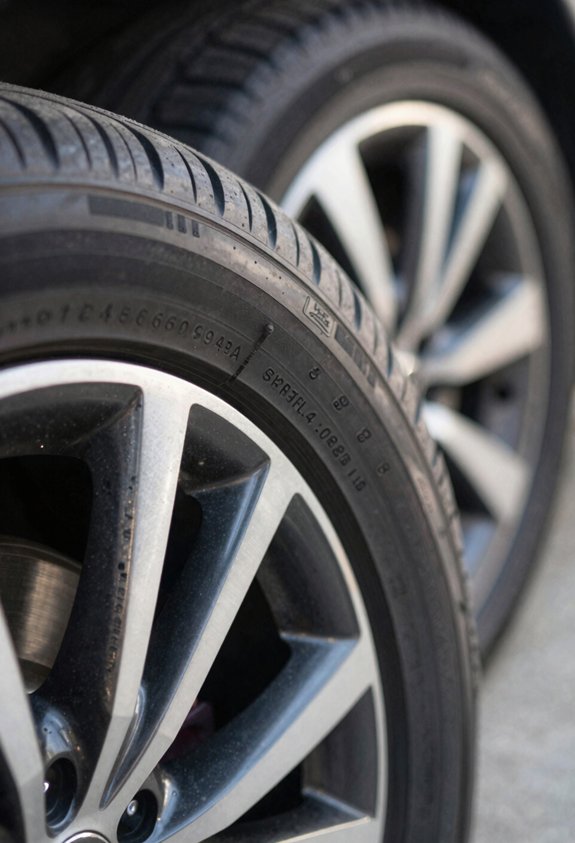
How exactly do we translate that mysterious aspect ratio into an actual, measurable sidewall height? I’ll walk you through this sidewall height calculation, so you’ll never feel lost in tire sizes again.
The Formula
Your sidewall height equals tire width times aspect ratio (as a decimal). First, take that width in millimeters and perform conversion to inches by dividing by 25.4.
Example: 225/50R16
For this common size, I calculate: (225 ÷ 25.4) × 0.50 = 4.43 inches.
This sidewall height ignores construction, rim diameter, and ratings; they don’t affect this measurement. Once you’ve mastered this, you can compare different tire sizes confidently for fitment and ride quality decisions.
You’re now equipped to decode any tire you encounter.
Why R Means Radial (and Why It Matters for Your Wallet)
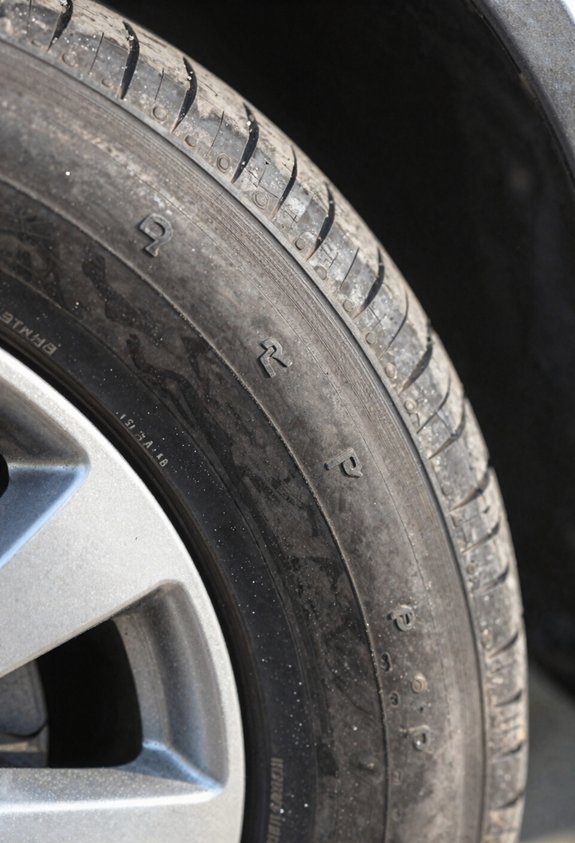
Now that you’ve calculated sidewall height and understand how width and aspect ratio interact, I’ll shift our attention to that single letter separating those numbers from the wheel diameter.
That R denotes radial construction, the backbone of modern tire size codes and the industry standard you’ll encounter on virtually every passenger vehicle tire today. Radial construction means tire plies run perpendicular to your direction of travel, creating a flexible sidewall and stable crown that delivers superior fuel economy, extended tread life, and responsive handling.
Here’s why sticking with R matters when you’re staring at replacement options:
- Radial tires dominate the market, guaranteeing availability and competitive pricing
- Bias-ply alternatives (marked D, B, or -) compromise load capacity, speed rating, and safety in modern driving conditions
- Your vehicle’s engineering assumes radial construction for proper suspension geometry
- Mixing tire type damages handling predictability, particularly emergency braking
- Non-radial options increase long-term operating costs through reduced efficiency
Unless you operate specialized equipment requiring vintage construction, R protects both performance and your wallet.
Load Index, Speed Rating, and What You Can Actually Mix
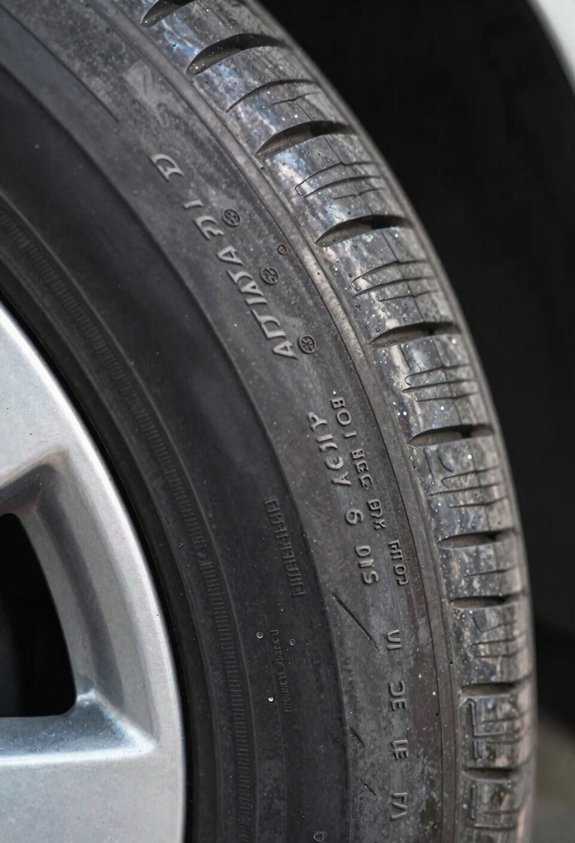
LT-prefix tires, distinct from standard passenger grades, carry heavier loads with specific load range designations. You’ll spot dual load index figures on LT-Metric variants, one for single, one for dual application, that demand careful verification against your setup.
| What You’re Feeling | What Your Tire Sidewall Demands |
|---|---|
| Anxiety about hauling your family’s gear | Match or exceed OEM load index |
| Pressure to keep up with highway flow | Never mix downward on speed rating |
| Confusion at the shop | Verify LT load range against your axle rating |
| Fear of catastrophic failure | Cross-reference dual index numbers for your configuration |
Substituting tire size without aligning load index and speed rating to manufacturer specifications invites compromised performance, potential liability, and catastrophic failure under stress. There’s no flexibility here that your safety can afford.