
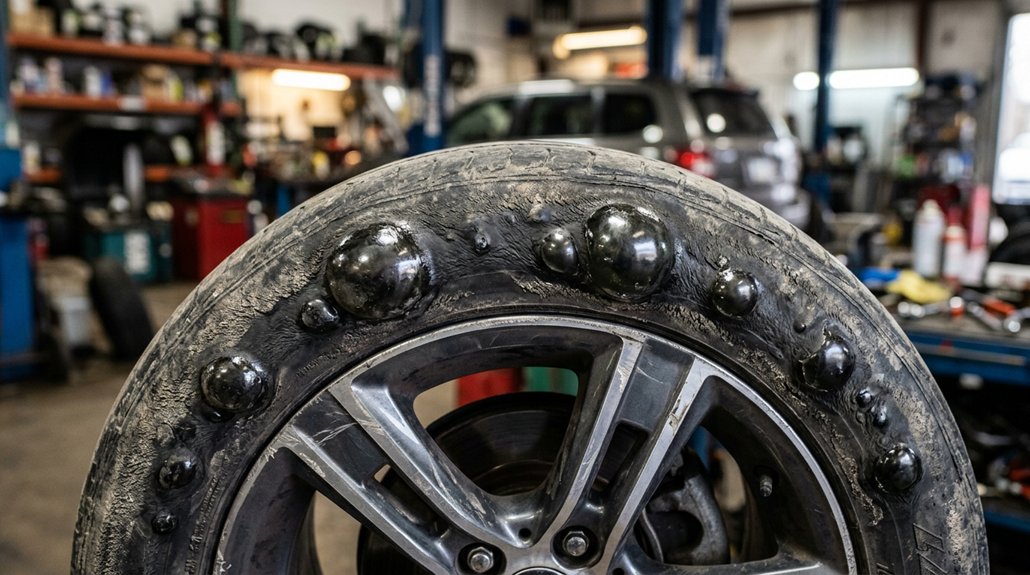
I’ll spot a sidewall bubble during routine inspection, and I know immediately that the tire’s compromised: air has migrated through a breached inner liner, creating a visible deformity that demands replacement, not repair.
But here’s what most drivers miss: the bubble itself isn’t the root cause, it’s merely the symptom of impact damage, manufacturing defects, or structural failures that occurred days or weeks prior. I’ve learned to trace these failures backward through specific damage patterns, and what you’ll discover about your own tires might surprise you.
Why a Sidewall Bubble Means Immediate Tire Replacement
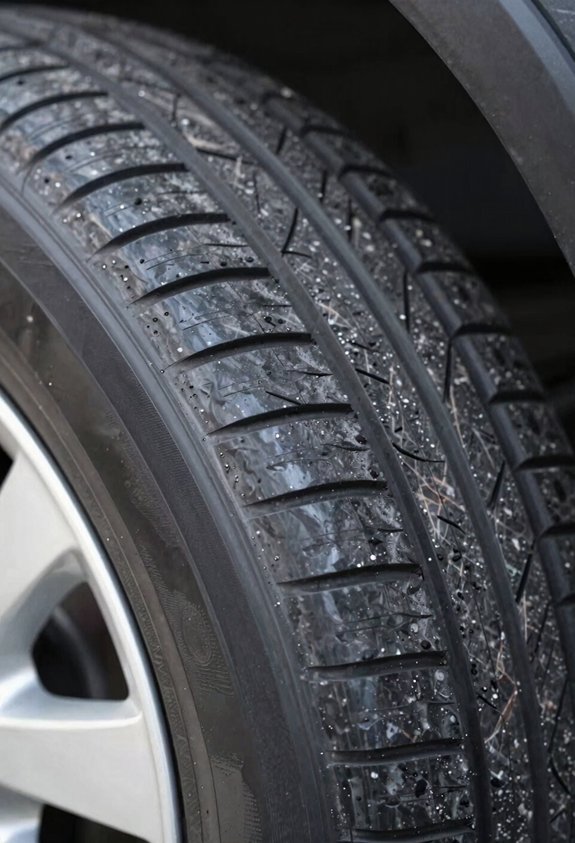
How exactly does a small bulge in your tire’s sidewall translate to an immediate safety crisis? I’m going to tell you what I’ve learned about tire sidewall damage, and why we’re all in this together when it comes to road safety.
The Hidden Danger
A sidewall bubble forms when internal structures break after impacts, letting air push into damaged areas. You’re not looking at a cosmetic flaw; you’re seeing compromised structural integrity that creates blowout risk.
A sidewall bubble isn’t cosmetic—it’s structural collapse waiting to blow.
Why Repair Isn’t an Option
I wouldn’t risk driving on this. The damaged cords can’t be fixed, and the bubble grows through moisture and flexing. Every mile increases failure probability.
What You Must Do
Replace that tire immediately. I’ll also check my other tires for similar damage, because one impact often affects multiple wheels. We’re protecting everyone on the road when we act fast.
How Pothole Impacts Create Hidden Tire Bubble Damage
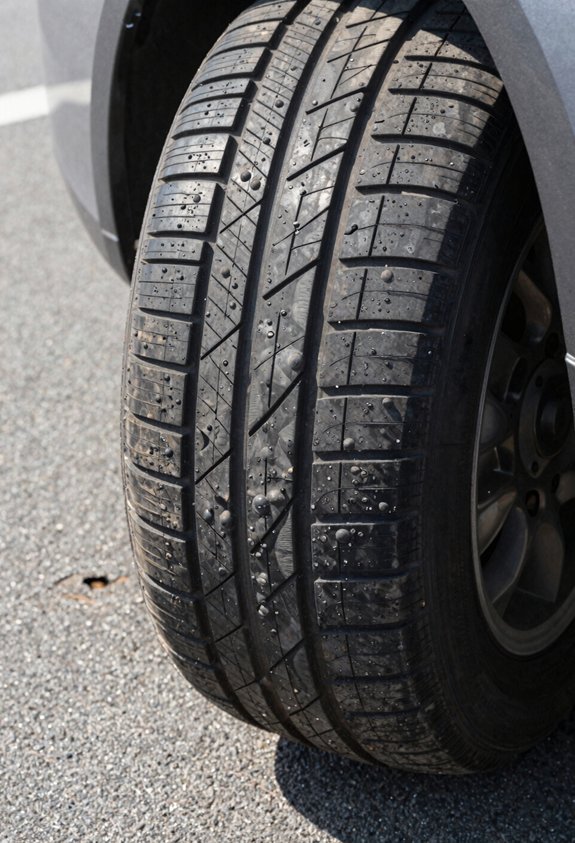
When you hit a pothole, the tire pinches violently against the rim, creating Impact Damage that fractures the internal cords and belts while leaving the outer rubber deceptively intact.
This Hidden Internal Structure Failure allows high-pressure air to infiltrate between the plies, forming a bubble that may not appear for days or even weeks after the initial trauma. I’ll explain exactly how this mechanism unfolds, why the damage often escapes immediate detection, and what specific signs you should inspect for after any significant road hazard encounter.
Mechanism of Impact Damage
Why do apparently minor encounters with potholes so often lead to catastrophic tire failure? The mechanism unfolds through immediate physical interference between the tire and road hazard. When my tire strikes a pothole, the sidewall collapses inward, pinching rubber against the rim between the bead and wheel edge. This compression ruptures the inner liner, the airtight barrier sealing pressurized air, creating tire damage that permits air migration into the carcass structure.
I cannot see this breach: air infiltrates between steel belts and fabric plies, accumulating where rubber layers separate. Each subsequent mile applies flexing stress, expanding the compromised zone until a visible bubble protrudes. Even absent external scars, internal plies sustain micro-fractures from impact transfer. Professional inspection reveals these injuries through ultrasonic detection, since my visual assessment misses hidden structural degradation that precedes sudden blowout.
Hidden Internal Structure Failure
Where exactly does the damage hide when my tire appears unscathed after striking a pothole? I’ve learned that the real destruction occurs internally, where I can’t see it.
How Internal Structure Compromises Create Tire Bubbles
When my tire slams into a pothole, the impact pinches the tire against the rim, rupturing the inner liner and reinforcing plies. Air then seeps into these damaged layers, forming tire bubbles within the sidewall that enlarge as moisture accelerates deterioration. Even without visible exterior wounds, repeated impacts progressively degrade this hidden architecture.
The compromised structure cannot maintain standard pressure, making tire bubbles both a symptom and a warning. I’ve found that once this internal damage occurs, repair isn’t viable; immediate replacement becomes necessary to prevent catastrophic blowout.
Can Curb Strikes Cause Bubbles Without Visible Scuffs?
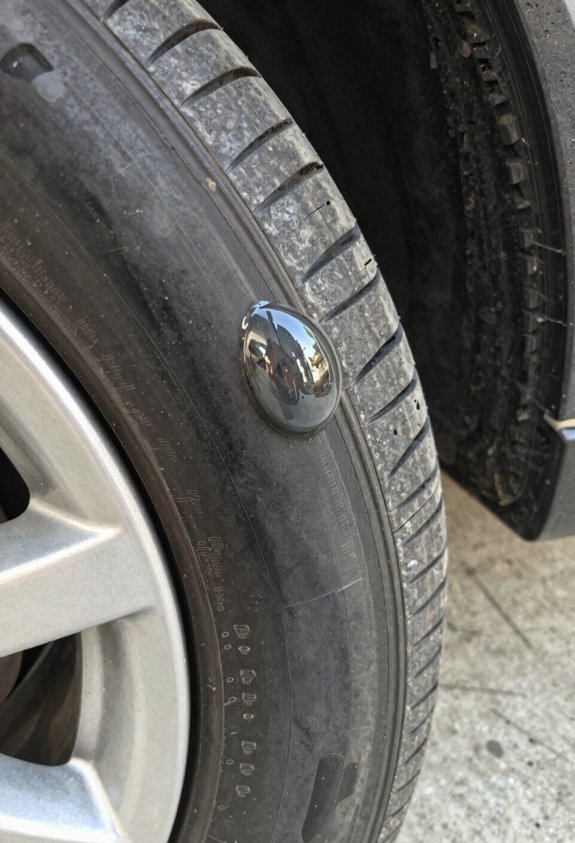
How can a tire sustain internal damage from a curb strike without showing any external evidence? When you strike a curb, the sidewall pinches against the rim, injuring inner layers while the exterior remains unscathed. This hidden trauma allows air to push outward, forming tire bulges you’d never expect from an apparently clean surface.
I’ve learned that Tire Bulges: The Hidden Curb Strike Indicator
- Internal liner damage occurs (pinch points fracture bond plies)
- Air migrates through compromised structure
- External rubber may show zero scuffing
Critical Safety Protocol
Without obvious scuffs, a bulge still signals severe structural failure I’ve seen compromise road handling. Replace affected tires immediately; repairs won’t restore integrity.
Professional Diagnosis Requirements
I recommend expert inspection, since manufacturing defects and pothole impacts mimic curb damage. Only trained assessment distinguishes true causation, keeping your fleet’s collective safety standards protecting every member’s journey.
How Speed Bumps and Railroad Crossings Damage Tire Sidewalls
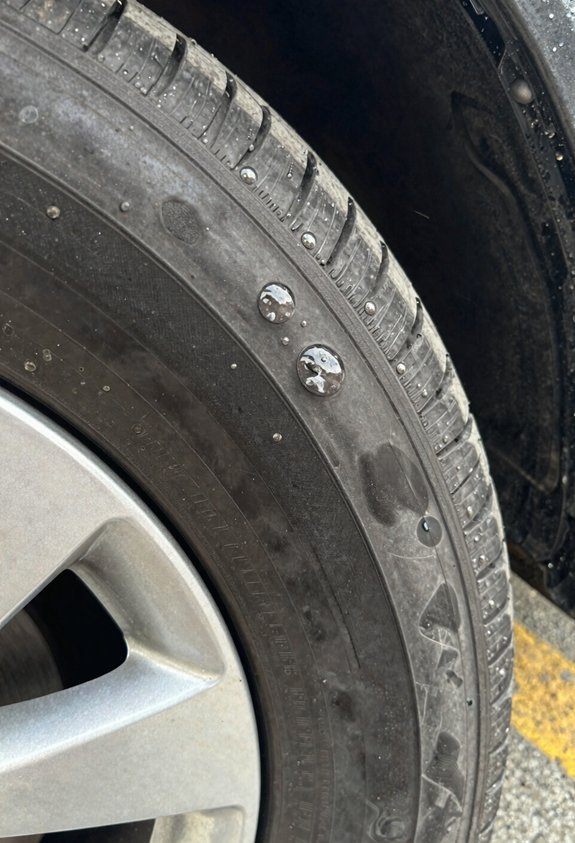
While hidden curb damage can mask itself beneath unscathed rubber, the road itself presents equally deceptive threats that I’ve witnessed catch drivers unaware. Speed bumps and railroad crossings, when traversed at excessive velocity, deliver concentrated vertical impacts that compress tires against their rims with forces reaching hundreds of pounds per square inch.
The Mechanism of Sidewall Failure
When you strike speed bumps too quickly, the tire’s sidewall pinches between rim and obstacle: it severs internal cords and ruptures the inner liner, damage that remains invisible externally for days or weeks. Air infiltrates these compromised plies, forming bubbles that destabilize the entire structure.
Critical Inspection Protocol
I inspect sidewalls within 24 hours of harsh impacts, flexing rubber to reveal latent deformations. These bulges mandate immediate replacement; repair attempts endanger every occupant.
Why Driving Flat Even Briefly Ruins Tire Structure
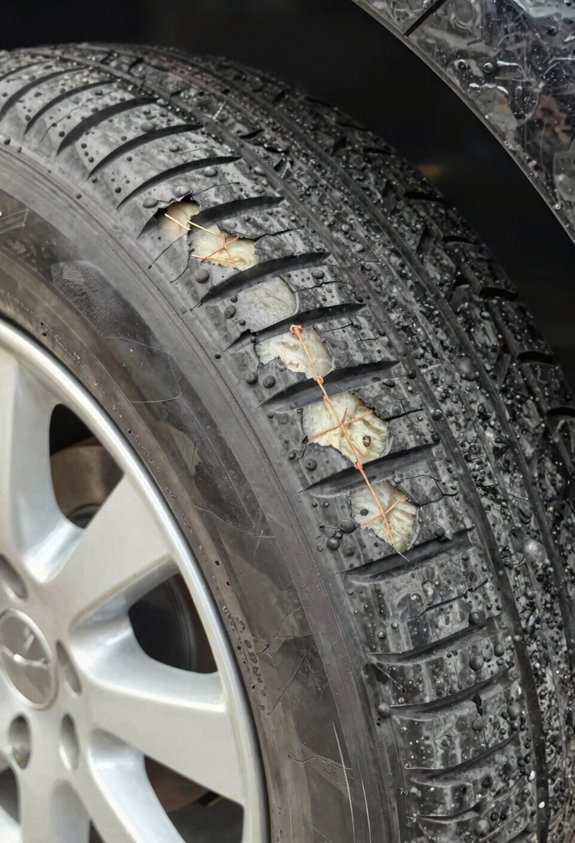
When you’re driving on a flat or even markedly underinflated tire, the sidewall collapses and folds onto itself, generating destructive Internal Friction Heat Buildup that can exceed 200°F within minutes and begins breaking down the rubber compounds and adhesives that bind the internal layers together. This friction, compounded by the tire’s weight crushing the unsupported sidewall against the rim, produces rapid Sidewall Cord Destruction as steel and fabric cords kink, fray, or snap entirely, damage that remains invisible externally but permanently compromises the tire’s load-bearing architecture.
I’ll explain how these two interconnected failures create irreversible structural defects, including the separated plies and weakened zones that appear as dangerous sidewall bubbles once the tire is reinflated and returned to service.
Internal Friction Heat Buildup
Where exactly does the damage begin when you drive on a tire that’s lost its air? It starts with internal friction heat buildup, the invisible enemy that compounds with every rotation you force upon a compromised structure.
| Heat Source | Temperature Rise | Structural Consequence |
|---|---|---|
| Sidewall flexing | 40-90°F above ambient | Ply separation initiation |
| Bead chafing | Localized hotspots 150°F+ | Inner liner degradation |
| Tread buckling | Uneven thermal distribution | Air pocket formation |
I want you to understand: this heat accumulates faster than you’d expect, even during what feels like a “quick” drive to safety. The rubber compounds, adhesives, and reinforcing cords weren’t engineered to withstand sustained deformation without cushioning air pressure.
When you drive flat, you’re grinding the tire against itself, generating thermal energy that permanently alters molecular bonds. The damage rarely shows immediately, which makes it particularly insidious for those of us who depend on our vehicles daily.
Sidewall Cord Destruction
When your tire loses pressure, the sidewall collapses inward, pinching the internal steel cords against the wheel rim. This compression fractures the cord structure, creating microscopic breaks that compromise the entire carcass. The damage occurs within seconds, not minutes.
Heat and Flexing Accelerate Failure
A near-flat condition permits excessive sidewall flexing, generating heat that separates plies from cords. Each additional mile drives temperatures past 200°F, accelerating structural breakdown. Repeated incidents compound this stress, guaranteeing premature failure.
Why Replacement Becomes Mandatory
Once cords separate, air channels into the sidewall, forming visible bulges. Unlike tread punctures, tire sidewall cord destruction permits no repair; replacement is your only safe option.
How Overloading Leads to Sidewall Separation and Bubbles
Why does overloading pose such a severe threat to tire integrity? When I overload my vehicle, I’m forcing the tire’s sidewall to bear weight far beyond its engineered capacity, which generates excessive stress that frays internal fabric layers and ultimately creates bubbles or complete sidewall separation.
The Mechanics of Overload Damage
- Structural deformation: Excess weight makes my tire deform past design limits, concentrating stress at the rim-tire interface where pinch damage forms a visible bulge.
- Thermal degradation: Heavier loads increase heat buildup within the sidewall compound, accelerating molecular breakdown and bubble formation during routine driving.
- Compounded vulnerability: Overloading magnifies damage from potholes or curb impacts, causing faster failure than isolated trauma alone.
- Critical interaction: When underinflation accompanies heavy loads, sidewall flex intensifies dramatically, exponentially raising bubble risk.
I always verify my load ratings before hauling cargo; it’s necessary protection I owe my passengers and fellow drivers.
Inside a Tire Bubble: How Air Escapes the Inner Liner
Overloading may compromise my tire’s structure from the outside, but the bubble itself originates from a failure within, specifically, the breach of my tire’s inner liner, that thin, airtight layer of halobutyl rubber bonded to the interior carcass.
When I strike a pothole or curb, that impact punctures or damages this liner, allowing pressurized air to escape its sealed chamber. The air bubble forms as this leaking air migrates into the tire body, collecting between layers of rubber and fabric. With every rotation and flex under load, especially when I’m running low pressure, that compromised liner permits more air intrusion, accelerating the bulge’s growth.
A severe pinch between bead and rim during impact can also trap air, forcing it into the carcass. Once established, this air bubble expands progressively, even without additional external trauma, because the liner cannot self-seal.
How Manufacturing Defects Mimic Impact Damage
I’ll walk you through three critical angles: Defect Detection Methods, Warranty Coverage Options, and Professional Inspection Importance. Manufacturing flaws can produce sidewall bulges that look virtually identical to pothole damage, yet they stem from entirely different failure mechanisms within the tire’s carcass, belts, or inner liner.
You can’t reliably distinguish a defect-driven bubble from impact trauma through casual visual inspection alone, so I always recommend requesting a dealer-level assessment where technicians examine the interior casing for signature patterns like linear separations, inconsistent belt alignment, or adhesive failures that external impacts rarely replicate.
When no road hazard evidence surfaces, you’re potentially looking at warranty-eligible replacement, though coverage windows, proration formulas, and regional exclusions vary significantly across manufacturers. This makes documentation of your inspection findings, mileage records, and maintenance history absolutely essential to securing a successful claim.
Defect Detection Methods
While impact damage accounts for the vast majority of tire bubbles you’ll encounter, manufacturing defects can produce nearly identical symptoms without any collision history, and this is why I always recommend a systematic inspection before assuming road hazard is the culprit.
Authorized Inspection Protocol
I take my vehicle to an authorized dealer or manufacturer facility when I suspect defect-related bulges, since only trained technicians can distinguish internal ply separation from pothole damage through specialized examination. They’ll assess whether the bubble stems from improper curing, belt placement errors, or adhesive failures; defects that create identical inner liner protrusions without external trauma.
Diagnostic Indicators
I look for these telltale signs: absence of sidewall scuffing, no wheel rim damage, and bubble positioning inconsistent with typical impact zones. When inspection reveals no high-impact evidence, I pursue warranty channels, documenting findings meticulously to support my claim.
Warranty Coverage Options
Once I’ve ruled out impact damage through professional inspection, I turn my attention toward warranty coverage, since manufacturing defects, though statistically uncommon, can produce sidewall bulges that are visually indistinguishable from pothole trauma. I’ve learned that pursuing these claims requires understanding how tire makers structure their protection programs. A tire warranty typically covers defects in materials or workmanship, not road hazards, so I document everything: inspection reports, maintenance records, and photographs, to strengthen my position. I’ve found that authorized dealer assessments carry significant weight with manufacturers, who often require their verification before honoring replacement claims. While defect-related bubbles represent a small fraction of failures, I’ve learned they’re worth pursuing when no impact evidence exists.
- Manufacturer defect coverage typically extends 4–6 years from production date, prorated based on remaining tread depth
- Road hazard programs (often purchased separately) cover impact damage that standard tire warranty excludes
- Documentation requirements include maintenance records, inspection reports, and photographic evidence of the undamaged tread and sidewall areas
Professional Inspection Importance
Why does a tire bubble demand professional scrutiny rather than a quick visual check? I’ve learned that authorized dealer inspections distinguish between impact damage and manufacturing defects when diagnosing tire bubbles, and this distinction matters for both safety and your wallet. Manufacturing defects causing these bubbles are rare, yet they imitate bulges from potholes or curb impacts during initial assessment, which traps many of us into assuming driver error.
A professional inspection determines whether internal ply separation or air intrusion created the bubble, directly affecting your replacement decisions. When no obvious high-impact damage exists, you may find warranty coverage through your tire manufacturer’s policy, though terms vary profoundly by brand. I always recommend pursuing a warranty claim when inspection cannot identify clear impact causes: protecting our investment starts with knowing what truly failed.
Signs Your Bubble Qualifies for Free Warranty Replacement
- No visible curb rash, cuts, or impact marks on the wheel or tire exterior, suggesting internal structural failure rather than external trauma
- The bubble appeared shortly after installation (typically under 12 months or 12,000 miles, though specific terms vary by manufacturer)
- An authorized dealer’s inspection confirms the damage originated from ply separation, bead failure, or sidewall lamination defects without evidence of overload or improper inflation
I recommend scheduling that inspection promptly, since driving on any bubble compromises safety regardless of warranty status.
Bubbled Tire Coverage: Warranty, Insurance, or Out-of-Pocket?
Most tire damage from potholes, curb impacts, or road debris qualifies as *impact damage*, which manufacturer’s warranties typically exclude, pushing costs to you or your auto insurance. Conversely, internal defects creating bubbles may qualify for warranty replacement, provided you’ve maintained proper inflation and rotation records.
How Warranty Claims Work
I recommend visiting an authorized dealer immediately; their inspection distinguishes impact damage from manufacturing defects, determining eligibility. Sidewall bubbles, regardless of cause, demand urgent attention due to catastrophic failure risk.
Document everything, photos, mileage, maintenance records, because warranty decisions hinge on proving defect versus driver-induced tire damage. Without clear evidence, you’ll likely pay out-of-pocket.
Why Tire Bubbles Can’t Be Patched or Repaired
Once you’ve determined whether your bubbled tire qualifies for warranty coverage or falls to your financial responsibility, you’ll face a hard truth: this damage cannot be fixed.
Tire sidewall damage creates structural failures that no patch addresses. When impacts, potholes, curbs, or speed bumps pinch your tire against the rim, the inner liner tears and air infiltrates the casing, forming a bubble. This weakened structure risks catastrophic blowout under pressure, even after superficial repair attempts.
- Internal Integrity Loss: The casing, once compromised, lacks the strength to contain pressurized air safely.
- Heat and Stress Accumulation: Driving generates friction that accelerates degradation of damaged layers.
- Liability and Safety Standards: Industry guidelines prohibit repairs because failure modes are unpredictable and lethal.
You’re not alone in wanting a cheaper solution, but replacement protects everyone sharing the road with you.
Emergency Steps If You Must Drive on a Damaged Tire
When you’re stranded with a bubbled tire and no immediate roadside assistance available, how do you balance the urgent need to reach safety against the catastrophic risk of driving on compromised rubber?
Immediate Actions to Mitigate Tire Damage
I inspect the sidewall and tread for visible bulges, recognizing that any bubble signals internal structural failure requiring immediate replacement. If I must drive, I reduce speed substantially, never exceeding 25-30 mph, to minimize blowout risk from this severe tire damage. I limit distance to the nearest safe location, preferably under one mile, and avoid highways, sharp turns, or heavy braking that stress the weakened carcass.
Temporary Solutions
I deploy my emergency spare when available, understanding it’s strictly temporary. I never rely on a bubbled tire for extended travel; I arrange towing or replacement immediately.
Post-incident, I seek professional inspection to determine whether impact damage or manufacturing defect caused the failure, making sure I have proper documentation for potential warranty claims.
Sidewall Bubbles vs. Tread Bulges: Different Dangers
Where exactly does that ominous bulge in your tire’s surface signal imminent catastrophe, and how do I distinguish between two fundamentally different structural failures? Sidewall bubbles emerge when high-impact collisions, potholes, curbs, or road debris, pinch the tire against the rim, rupturing the inner liner and forcing air into the sidewall’s plies. These demand immediate replacement, as catastrophic blowout looms at any speed. Tread bulges, conversely, indicate compromised belt integrity beneath the tread surface; while less prone to sudden failure, they still warrant urgent professional assessment.
- Sidewall bubbles form from impact trauma, not pressure issues alone, though underinflation makes them more likely to develop
- Tread bulges stem from belt separation, requiring inspection rather than automatic replacement
- Critical distinction: sidewall bubbles pose immediate, unpredictable rupture risk; tread bulges offer marginally more predictability, yet neither tolerates continued operation
Where Bubbles Most Commonly Appear on Tire Sidewalls
When I inspect tire sidewalls for bubbles, I focus on three critical zones: the outer shoulder (where impact damage from potholes and curbs first compromises the structure), the mid-sidewall flex points (where repeated stress from underinflation or overloading creates structural weakness), and the inner rim-line area (where manufacturing defects occasionally manifest as isolated bulges, though these remain less common than trauma-induced failures).
Understanding these locations helps me distinguish between common impact zones, typically appearing 2-6 inches above the bead, and rarer defect-driven formations that emerge without prior collision history. Recognizing this geographic pattern on your sidewalls speeds up diagnosis and prevents the false assumption that all bubbles stem from identical causes.
Common Sidewall Locations
Why do sidewall bubbles seem to appear in the same predictable zones across different tires? I’ve noticed they cluster where structural vulnerability meets routine stress, particularly after I’ve examined countless compromised tires.
Sidewall damage manifests most frequently in these identifiable regions:
- Upper sidewall flex zones, where the tire’s thinnest rubber endures maximum deformation during cornering and load shifts
- Lower sidewall bead areas, where pinch damage from rim strikes ruptures inner liners and creates pressure pockets
- Mid-sidewall transition regions, where manufacturing inconsistencies or repeated underinflation generate stress concentrations
I recognize these patterns because I’ve learned that low pressure accelerates deterioration in these exact locations, and manufacturing defects, though less common, often surface during professional inspections of these same critical zones.
Impact Damage Zones
I’ve found that understanding where impact damage actually manifests on a tire helps you diagnose failure patterns before they become roadside emergencies, and this builds naturally on the structural vulnerabilities we’ve already mapped.
High-Impact Contact Points
Sidewall damage from potholes or road debris typically concentrates where the tire flexes most, between the tread shoulder and the rim bead. When you strike a curb, the damage localizes in the lower sidewall, closest to the wheel rim, where structural plies compress against the wheel edge.
Repetitive Stress Zones
Speed bumps and railroad crossings generate cumulative sidewall damage through repeated flex cycles, stressing the ply and inner liner until separation occurs. Overloading compounds this by intensifying flex in load-bearing sidewall sections.
Even brief flat-tire driving pinches internal fabric, creating immediate bulge risks. Inspect these zones after any significant impact.
Structural Weakness Areas
Three distinct structural zones account for nearly all sidewall bubble formations, and recognizing each helps you pinpoint the exact failure mechanism before it strands you on the highway.
- Impact zones near the shoulder, where sidewall meets tread, create separation after pothole strikes
- Mid-sidewall flex points, which accumulate stress from underinflation and repeated deformation
- Bead-adjacent areas, where mounting damage or overload concentrates strain
I’ll show you where tire sidewall damage typically manifests. Underinflation causes excessive flex at these weak points, accelerating internal ply separation. When the inner liner ruptures, air infiltrates between layers, forming visible bubbles.
Repeated impacts worsen these failures, especially at 20-30% below recommended pressure. I’ve learned that any sidewall bulge indicates compromised structural integrity requiring immediate replacement; delay risks catastrophic blowout.
How Regular Inspections Catch Weakness Before Bubbles Form
When exactly does a tire shift from merely worn to dangerously compromised?
I’ve learned that regular inspections catch this critical transition before bubbles form, and I want you to join me in making this habit your own.
I check my tire pressure monthly, since underinflation causes sidewall flex that weakens internal structure. During rotations, I spot uneven wear patterns that signal hidden damage from potholes or curbs. Professionals examine what I cannot see: internal cord damage that predisposes failure.
| Inspection Focus | What I Look For | Why It Prevents Bubbles |
|---|---|---|
| Tire pressure | Underinflation signs | Reduces sidewall stress |
| Tread wear patterns | Uneven thinning | Reveals impact damage |
| Sidewall condition | Early bulges, cracks | Catches weakness pre-failure |
| Impact history | Documented events | Enables timely replacement |
I document everything, replacing weakened tires before catastrophic failure.