
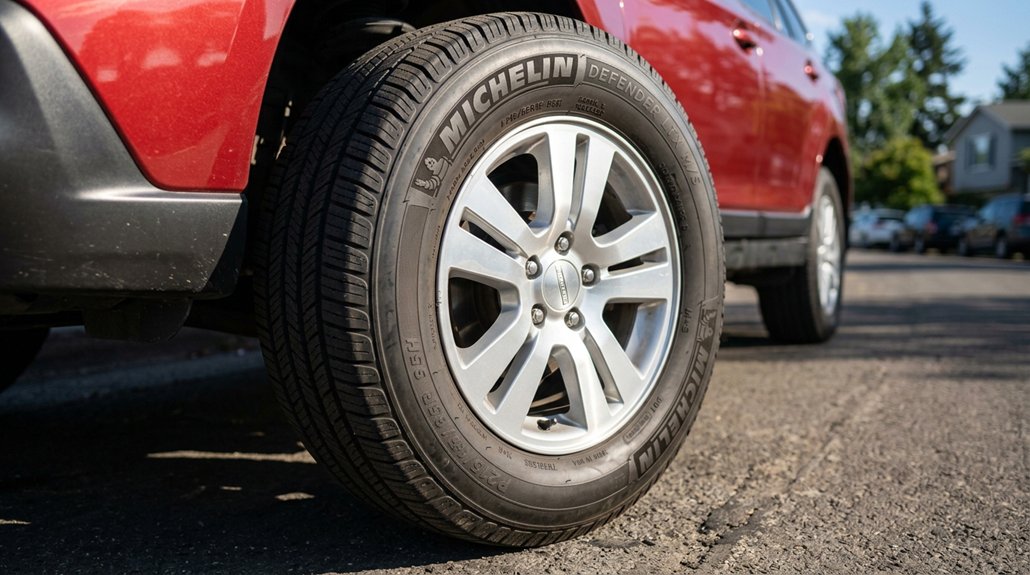
Like the Rosetta Stone revealed ancient languages, the code on your tire’s sidewall contains critical engineering specifications you’ll need to interpret before your next replacement. I’m breaking down every character in P215/65R15 95H, because misreading even one digit risks incompatible fitment, compromised handling, or dangerous overloading. Let’s decode what your vehicle truly requires.
What Does P215/65R15 95H Mean? (Complete Tire Code Breakdown)
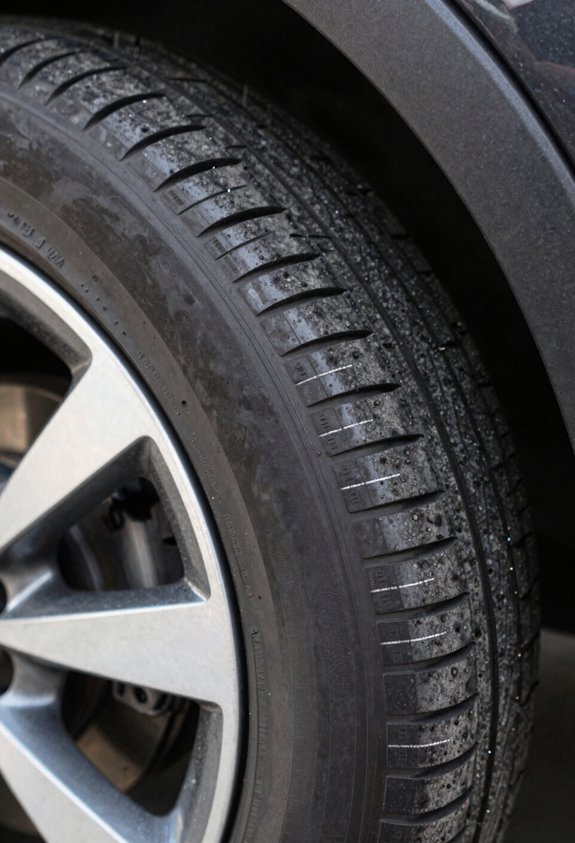
How exactly does a single string of characters convey everything you need to know about a tire’s fit, performance, and safety limits? Let me break down this tire size code so you’ll never feel lost at the shop again.
P215/65R15 95H Decoded:
- P = Passenger vehicle designation
- 215 = Section width in millimeters (sidewall-to-sidewall measurement)
- 65 = Aspect ratio; the sidewall height equals 65% of 215 mm
- R = Radial construction, the industry standard since the 1970s
- 15 = Wheel diameter in inches
- 95 = Load index, meaning each tire safely carries approximately 1,521 pounds
- H = Speed rating, indicating maximum sustained capability of 130 mph
Understanding these specifications helps you select tires matching your vehicle’s engineering requirements, protecting both performance and safety.
P215/65R15 95H vs. Other Sizes: Do You Have the Right Tire?
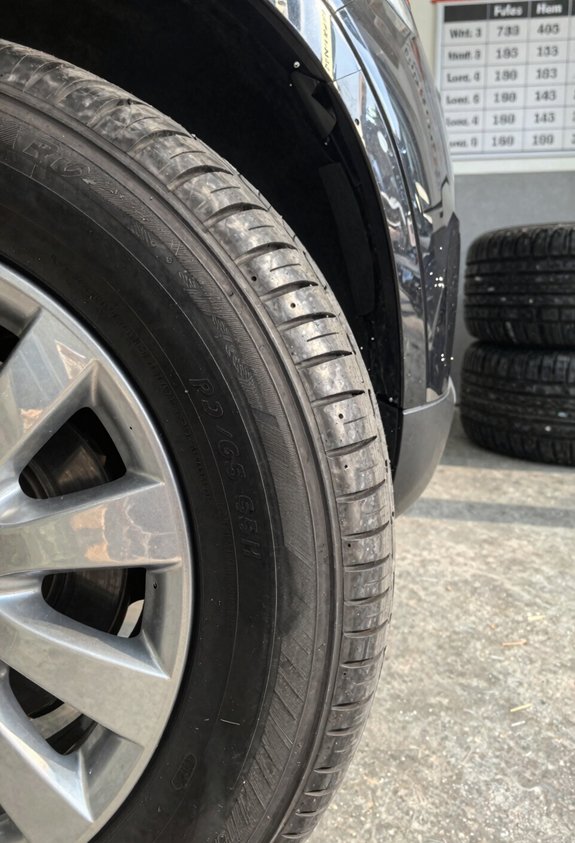
I’ll walk you through comparing tire sizes and verifying fit, since selecting the wrong dimensions compromises handling, safety, and vehicle compatibility. When I examine alternatives to P215/65R15 95H, I cross-reference overall diameter, load index minimums, and speed rating thresholds against manufacturer specifications. I note that a 16-inch wheel requirement immediately disqualifies this 15-inch option.
You must confirm these parameters align precisely, because deviations, even minor ones in aspect ratio or width, alter gear ratios, ABS calibration, and suspension geometry.
Comparing Tire Sizes
When you’re standing in a tire shop comparing P215/65R15 95H against the dozens of alternatives on the wall, the differences between sizes can seem deceptively minor. Yet those millimeters and percentage points determine whether your vehicle handles safely or suffers compromised performance. I want you to understand how this tire size stacks up against common alternatives, because choosing wrong affects every mile you drive.
Key Comparisons
| Specification | P215/65R15 95H | Common Alternative (P205/65R15) |
|---|---|---|
| Tire width | 215 mm | 205 mm (narrower contact patch) |
| Load index | 95 (1,521 lbs) | 94 (1,477 lbs) |
| Speed rating | H (130 mph) | T (118 mph) or H |
The 215 mm width provides more stability than narrower options, while that 65 aspect ratio delivers a taller sidewall for comfort. Your load index and speed rating must meet or exceed manufacturer requirements; never downgrade these critical safety figures.
Verifying Correct Fit
Where exactly should you look to confirm P215/65R15 95H is what your vehicle actually needs? I always check the driver’s door jamb sticker or my owner’s manual first, since that’s where manufacturers place the definitive tire size specification.
For proper fit verification, I compare every element: the 215 mm width, 65% aspect ratio, R radial construction, and 15-inch wheel diameter must match exactly. I also verify the load index, 95 supports roughly 1,521 pounds per tire, and make sure the speed rating meets my driving requirements. If I’m considering alternatives, I never guess; I consult my manufacturer’s approved sizes or a certified tire professional. Mismatched dimensions compromise handling, safety, and vehicle systems, so I treat precise fit verification as non-negotiable.
Where to Find Your P215/65R15 95H on the Tire and Door Jamb
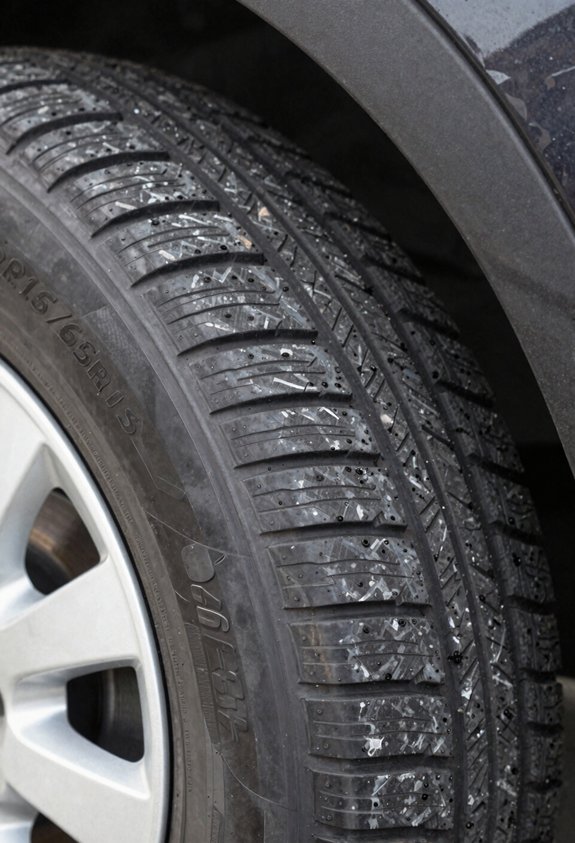
I’ll show you exactly where to locate your P215/65R15 95H specification, because verifying this information prevents costly mismatches and potential safety hazards. You’ll find the full size code molded into the tire’s sidewall, typically following the brand name and model designation. The driver’s door jamb sticker provides the manufacturer’s recommended fitment, which is critical data that should align perfectly with your existing tires.
Cross-referencing these two sources checks that you’re reading the correct specification, not a previous owner’s aftermarket substitution or a mismatched spare.
Tire Sidewall Location
Locating your tire’s specifications requires knowing precisely where manufacturers place this critical data, so I’ll guide you through both primary sources: the tire sidewall itself and your vehicle’s driver-side door jamb placard.
Reading the Sidewall
On the sidewall, you’ll find the complete size code embossed in raised rubber letters. Look for the sequence P215/65R15, which indicates a P-Metric passenger tire, 215 mm wide, with a 65% aspect ratio, radial construction, and 15-inch wheel diameter.
Immediately following this size code, you’ll see 95H: the load index (95, equaling approximately 1,521 pounds per tire) and speed rating (H, 130 mph maximum). Inspect all four tires, as replacement tires may differ from factory specifications. Worn or damaged sidewalls can obscure these markings, necessitating careful examination under adequate lighting to make accurate identification possible.
Door Jamb Sticker
Critical Consideration: If your door jamb sticker lists a different specification than P215/65R15 95H, that OEM recommendation supersedes any tire currently mounted. Deviations compromise load capacity, speed capability, and vehicle dynamics the manufacturer calibrated for ideal performance.
What “P” Means: Passenger Car Tires Explained
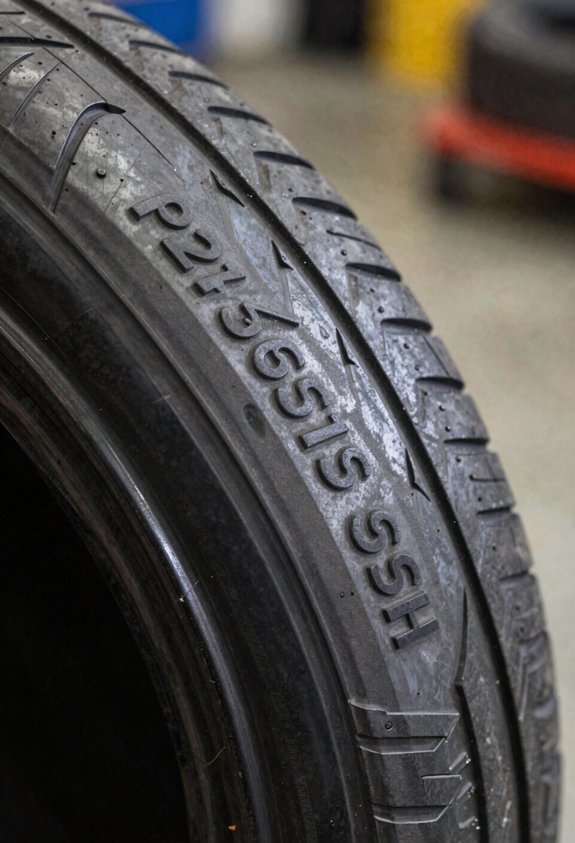
The “P” designation, that single letter preceding the numbers on your tire’s sidewall, serves as your first critical identifier, distinguishing passenger car tires from specialized alternatives designed for heavier or temporary use.
When you see “P,” you’re looking at P-metric sizing, the standardized system for passenger-car tires in North America. This matters because P-metric tires carry specific load/speed ratings matching their imperial-size equivalents, helping your sedan, crossover, or minivan operate within safe parameters.
I need you to recognize what “P” excludes: “LT” marks light truck tires for heavier payloads, “C” indicates commercial applications, and “T” means temporary spare; none suitable for standard passenger use. If no letter appears, you’ve likely found Euro-Metric sizing, also for passenger cars but with slightly different load/speed ratings.
Choosing correctly means your vehicle maintains manufacturer-specified capabilities.
How 215 Mm Width Affects Grip and Handling
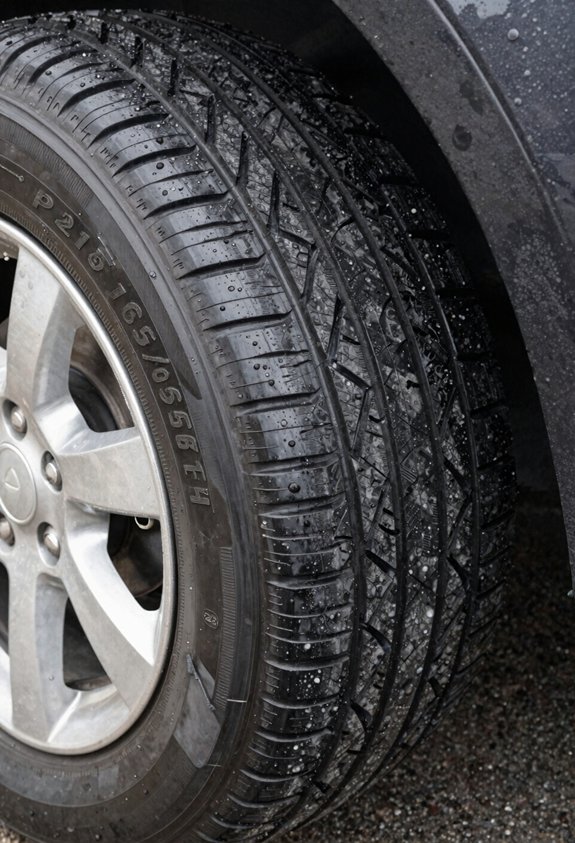
The 215 mm section width creates a broader tread footprint that increases dry-road grip by distributing weight across more rubber, though this expansion comes with measurable trade-offs in steering precision and energy efficiency. When I examine how this dimension interacts with the 65 aspect ratio, I notice that the resulting contact patch shape directly influences cornering stability, particularly during aggressive maneuvers where sidewall flex must be balanced against tread adhesion.
You should recognize that while wider tires generally enhance dry performance, they can compromise wet-weather evacuation and increase hydroplaning risk if not paired with appropriate tread patterns and inflation pressures.
Wider Contact Patch
- Increased dry traction through greater surface engagement
- More transmitted road feedback through the less-flexible patch
- Specific load distribution requirements with your 15-inch wheel
You’ll feel more connected to the pavement, though that connection brings every irregularity directly to your hands and seat.
Cornering Stability Trade-off
That 215 mm measurement creates a contact patch wide enough for confident lateral grip without the steering heaviness you’d feel on 245+ mm performance rubber. It’s the sweet spot many drivers trust.
Sidewall Flex Considerations
Your aspect ratio of 65% means the sidewall stands 139.75 mm tall, taller than a 45-series tire, which cushions impacts but introduces measurable flex during aggressive transitions. You’ll feel slight compression before the tread bites.
Rating Verification
The 95H load/speed rating confirms this tire maintains structural integrity at 130 mph under 1,521 pounds per corner. Exceed either threshold, and you’re compromising the stability this sizing was engineered to provide.
Why 65 Aspect Ratio Changes Your Ride Comfort
How does a single number on your tire’s sidewall shape every mile you drive? That 65 I see in 215/65R15 is your aspect ratio, and it directly determines your sidewall height, specifically, 65% of the tire’s 215mm width, or roughly 140mm of cushioning rubber between rim and road.
Why Taller Sidewalls Matter
Your 65 aspect ratio yields noticeably taller sidewalls, which flex more under load and absorb impacts that shorter, stiffer sidewalls would transmit straight to your suspension. This increased compliance translates measurably into superior ride comfort, particularly on broken pavement or expansion joints, though you sacrifice some steering precision and road feedback in exchange.
Practical Implications
Consider these factors when evaluating your sidewall height:
- Impact absorption: Greater deflection capacity isolates cabin occupants from surface irregularities
- Diameter effects: Your 65% ratio increases overall tire diameter, potentially affecting speedometer calibration
- Load response: Enhanced flex under cornering loads softens transient response
I recommend matching this aspect ratio to your vehicle’s suspension design; deviating substantially, say, dropping to a 50-series ratio, may yield harsher impacts that overwhelm dampers tuned for taller sidewalls, or conversely, create vague handling if you upsize beyond what your suspension geometry accommodates.
What “R” Means: Radial Tire Construction
| Feature | Radial Design | Bias-Ply (Obsolete) |
|---|---|---|
| Cord angle | 90° to travel direction | 30-45° diagonal pattern |
| Sidewall flexibility | Reinforced, absorbs shocks | Rigid, transmits more vibration |
| Heat generation | Lower, extends tire life | Higher, increases failure risk |
| Tread wear pattern | Even, predictable | Uneven, requires more frequent rotation |
| Modern availability | Standard on P215/65R15, nearly all passenger sizes | Limited to specialty, antique applications |
You’ll find radial construction in virtually every contemporary passenger tire, including your P215/65R15.
Its thermal efficiency and structural integrity represent important safety benchmarks.
Matching 15 Inches to Your Wheel Size
I always double-check my door jamb sticker, because matching this 15-inch specification to your existing rims isn’t optional; it’s foundational. Mismatched diameters create hazardous mounting failures, stress on sidewalls, and complete blowout risks.
When I verify compatibility, I also cross-reference the load index (here, 95) against manufacturer requirements; your tire’s structural integrity depends on this synchronization. Tire size consistency across axles preserves handling predictability, traction balance, and suspension geometry, safeguarding everyone who rides with me.
95 Load Index: Weight Capacity per Tire
Your tire’s load index directly determines its weight capacity, and selecting incorrectly compromises everything we’ve covered about your tire size code. Higher numbers mean greater capacity; 95 exceeds 92’s ~1,435 pounds, so matching your vehicle’s axle requirements matters.
Critical Replacement Guidelines
- Always meet or exceed OEM specifications
- Never downgrade your load index
- Consider cumulative weight: passengers, cargo, and fuel
Exceeding this rating strains handling and braking, particularly under heavy loads. When you’re part of the driving community that prioritizes safety, you recognize that proper load index selection protects everyone sharing the road with you.
H Speed Rating: Maximum Safe Speed Explained
- Match or exceed your vehicle’s top speed capability, because I won’t risk my safety with an under-rated tire.
- Consider your typical driving conditions, since sustained highway cruising demands proper heat resistance.
- Never downgrade below manufacturer recommendations, as I’ve seen this void warranties and compromise handling.
- When uncertain, I always consult my vehicle manual or contact the tire manufacturer directly for authoritative guidance.
P215/65R15 95H Handling, MPG, and Road Noise Tradeoffs
How exactly does a tire’s physical construction translates to real-world performance once I’m behind the wheel? The P215/65R15 95H specification reveals critical tradeoffs through its load index, speed rating, and sidewall height.
Handling and Ride Quality
The 65% aspect ratio yields a sidewall height of 139.75 mm, providing substantial cushioning that absorbs road imperfections better than low-profile alternatives. This taller sidewall flexes more during cornering, delivering comfort at modest cost to steering precision.
Fuel Economy Considerations
The compliant sidewall reduces rolling resistance slightly, potentially improving MPG during steady highway cruising, though gains remain marginal compared to dedicated efficiency tires.
Road Noise Characteristics
Increased sidewall flex amplifies vibration transmission on coarse surfaces, generating more noise than stiffer, shorter sidewalls.
Performance Summary
- Load index 95 (1,521 lbs/tire) and speed rating H (130 mph) suit daily driving demands
- Balanced compromise: comfort prioritized over aggressive handling
- Highway stability adequate for typical commuting without performance penalties
Maintain these specifications when replacing tires to preserve intended dynamics.
Checking P215/65R15 95H Fitment for Your Vehicle
Where exactly should I look to confirm this tire will actually fit my vehicle? I always start with the driver’s door jamb sticker or my owner’s manual, since manufacturers engineer these recommendations for optimal safety and performance. Getting fitment wrong risks compromised handling, premature wear, or catastrophic failure.
Verifying P215/65R15 95H Compatibility
- Locate your placard: Check the door frame, fuel door, or glove box for the factory tire specification label.
- Match load requirements: Confirm the 95 load index (1,521 lbs per tire) meets or exceeds your vehicle’s minimum; never downgrade.
- Verify speed rating: Ensure H (130 mph) satisfies your driving profile; substituting lower ratings creates liability and safety hazards.
- Cross-reference dimensions: Validate that 215 mm width, 65% aspect ratio, and 15-inch diameter clear your suspension and fender wells without rubbing.
When in doubt, I consult a certified tire professional before purchasing.
Buying P215/65R15 95H: Where to Shop and What to Skip
Why settle for questionable sources when purchasing tires that directly impact your safety? I always verify that any P-metric passenger tire I consider matches my vehicle’s required load index and speed rating specifications exactly.
| Source | Recommendation | Caution |
|---|---|---|
| Authorized dealers | Full warranty support | Higher initial cost |
| Reputable online retailers | Competitive pricing | Verify seller authenticity |
| Classified listings | Avoid entirely | Counterfeit risk, no recourse |
When I shop for P215/65R15 95H tires, I confirm the load index 95 (1,521 lbs) and speed rating H (130 mph) meet or exceed manufacturer requirements. I skip any tire lacking visible DOT coding or with damaged sidewalls.
I cross-reference the P-metric designation against my door placard, confirming compatibility before purchase. Your safety depends on these details.