

Like the proverbial canary in a coal mine, your tire pressure light signals something you can’t afford to ignore. I walk you through each reset method because I’ve seen too many drivers skip steps, miss spare tire PSI specs, or misread flashing versus solid warnings, errors that’ll strand you roadside or cost you $200+ in damaged TPMS sensors you’ll need to confront next.
Inflate Your Tires to the Right Pressure First
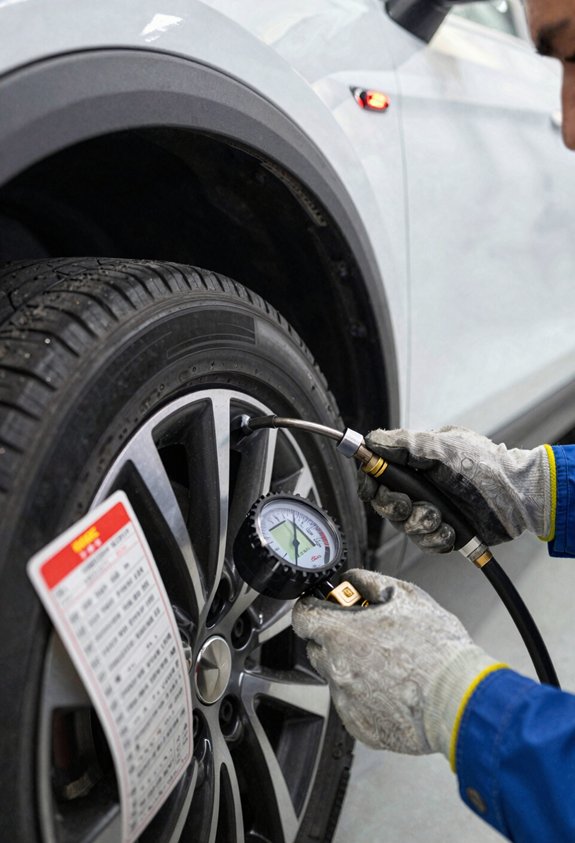
Why does that tire pressure warning light persist even after a quick glance at your tires? I’ll tell you why: your eyes can’t measure pressure, and that quick look won’t cut it when we’re talking about precise tire inflation.
Check Your Recommended PSI
I always start by finding the recommended PSI on my driver’s door jamb sticker or in my owner’s manual; don’t guess, because every vehicle differs, typically ranging 30–35 PSI for passenger cars, higher for trucks.
Use a Proper Tire Pressure Gauge
I grab my tire pressure gauge (digital or dial, not the pencil style), and I check all four tires cold, before driving. I don’t skip the spare if my vehicle monitors it.
Consistent Inflation Matters
I inflate each tire to that exact recommended PSI, matching across all corners, because uneven pressure prevents proper TPMS reset.
Cold weather? I’ll recheck after driving, since pressure rises 1 PSI per 10°F.
Drive at Highway Speed to Reset Your Tire Pressure Light
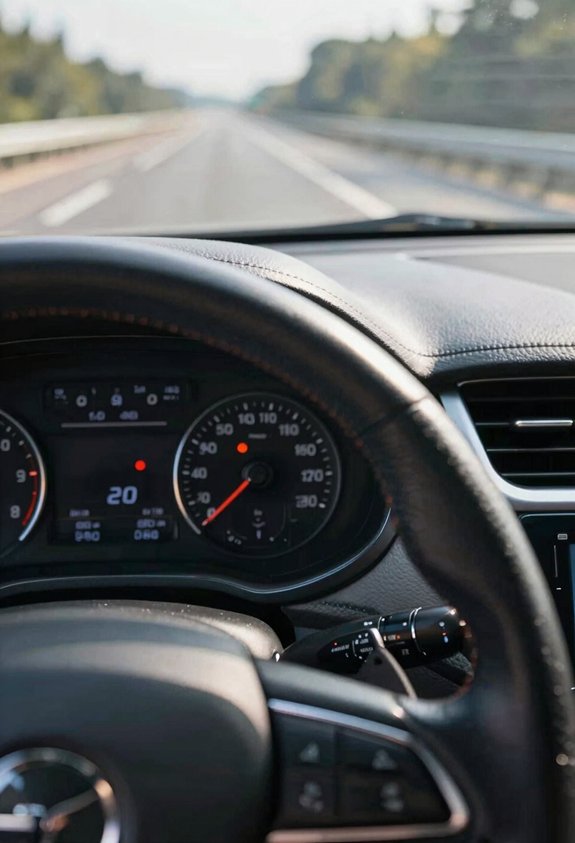
Before You Drive:
- Verify all tires, including the spare, match the recommended PSI
- Confirm recent inflation adjustments or sensor replacements are complete
Why This Works:
Higher speeds reduce signal interference, enabling cleaner tire pressure data transmission between sensors and the control module. This method often succeeds without manual relearn procedures.
Important Consideration:
If the indicator persists after this drive, professional diagnostic equipment becomes necessary to retrieve TPMS fault codes and identify underlying malfunctions requiring targeted repair.
Why Your Tire Pressure Light Still Won’t Turn Off
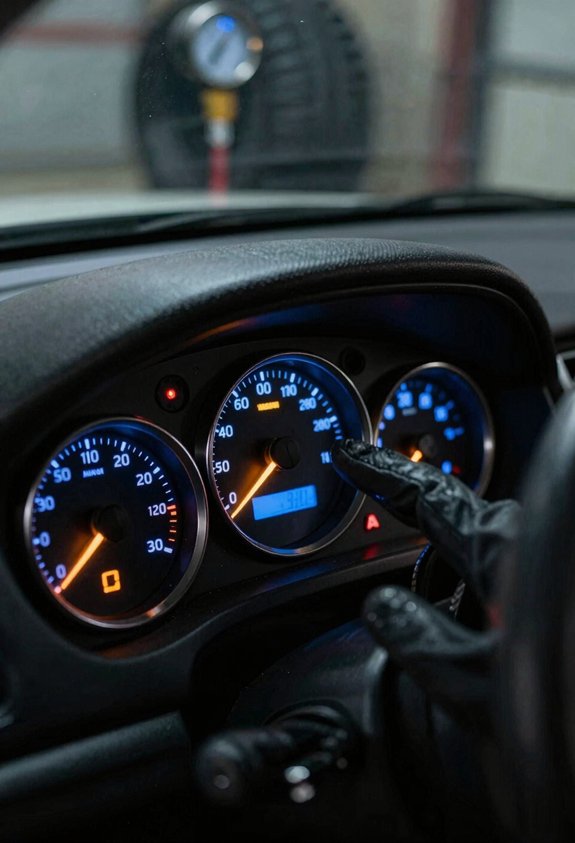
Even after you’ve verified tire inflation and attempted standard reset procedures, the TPMS indicator may stubbornly remain illuminated due to several persistent, often overlooked system behaviors and environmental factors.
Environmental and System Persistence Factors
- Cold weather temporarily triggers the TPMS light, since tire pressure drops roughly 1 psi per 10-degree Fahrenheit decrease until tires warm through driving
- Incomplete data refresh: I’ve found driving at 28+ mph for several minutes often resolves lingering illumination when inflation’s correct but the system hasn’t updated
Required Reprogramming Scenarios
Direct TPMS systems frequently demand sensor relearn or reprogramming after:
- Tire repairs or replacement
- Sensor replacement
- Rotation services
Without proper reprogramming, individual sensor identification fails, sustaining the warning regardless of actual pressure. If procedures fail, professional diagnostic scanning becomes necessary.
Flashing or Solid? Decode Your TPMS Warning
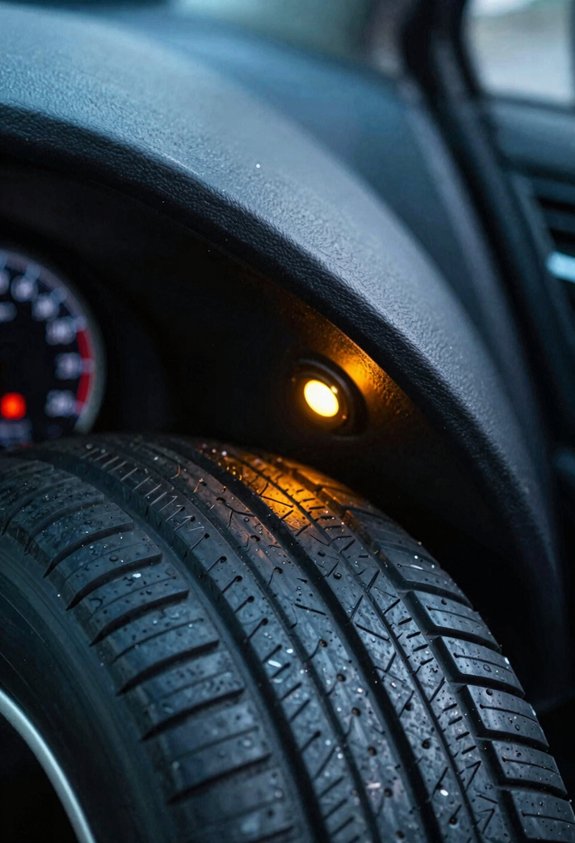
I need to tell you the difference between a flashing and solid TPMS light because knowing which one you’re seeing determines your next move. A flashing light usually means the system itself has a fault, is recalibrating, or detected a sensor communication error, while a solid light typically indicates underinflation or a warning that hasn’t cleared after a reset attempt.
Understanding this distinction saves you from chasing the wrong fix. A flashing warning after reset often demands professional diagnostic tools to read fault codes, whereas a steady light with correct pressures might only need a sensor relearn procedure.
Flashing Light Meaning
I always verify pressures with a reliable gauge first, whether flashing or solid, then drive briefly. Persistent flashing demands service center consultation without delay, as continued operation risks complete system failure and compromised safety monitoring.
Solid Light Causes
A steady glow from your dashboard demands attention, though it carries different implications than the rapid blinking you’ve already learned to treat as an urgent system alert. When your TPMS light burns solid, I want you to recognize underinflation as the primary culprit, typically triggered when pressure plummets roughly 25% below manufacturer specifications.
Cold weather compounds this, so a 10-degree temperature drop steals approximately 1 PSI. Morning commutes in winter often awaken that persistent warning light. I’ve seen drivers complete a reset procedure prematurely, masking symptoms rather than solving root causes; resist this urge. Instead, check all four tires with a reliable gauge, inflate to door-jamb specifications, then monitor.
If the solid glow persists after proper inflation, you’ve likely encountered gradual leakage or temperature-related anomalies requiring methodical attention, not panic.
Reset Your TPMS With an OBD2 Scanner
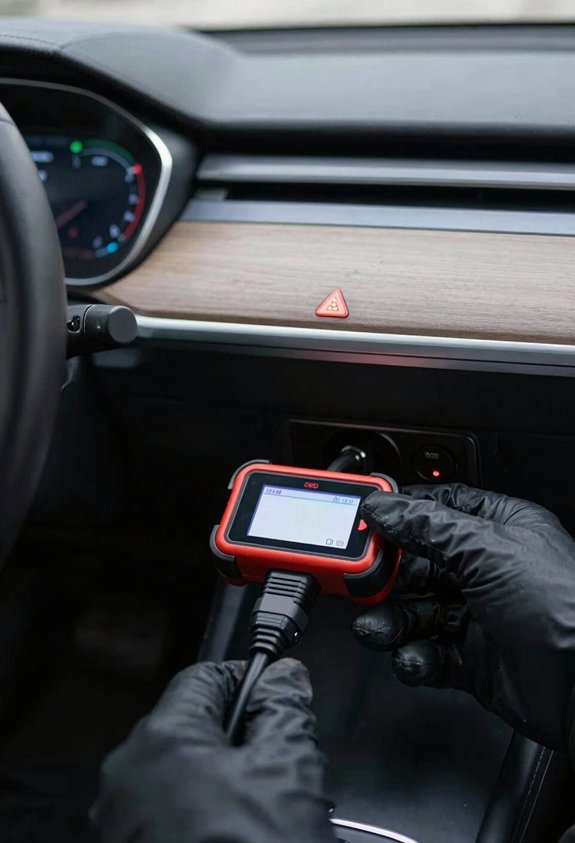
Why struggle with repeated dealership visits when you can relearn your TPMS sensor IDs directly from your driveway? I use a Carista OBD2 scanner to perform TPMS relearn procedures myself, clearing the Tire Pressure Light without dealer appointments. After installing new sensors, I connect the scanner, register the TPMS sensor IDs through the smartphone app, then drive above 28 mph to let the system recalibrate.
The app diagnoses issues and guides each step, clearing fault codes while triggering the vehicle to recheck sensor data.
| What You’ll Need | What It Does |
|---|---|
| Carista OBD2 scanner | Relearns TPMS sensor IDs |
| Smartphone with app | Diagnoses issues, guides sequence |
| New TPMS sensors | Requires registration after install |
| Steady drive above 28 mph | Makes sure of reliable sensor communication |
When DIY Resets Fail: Time to See a Mechanic
When multiple reset attempts using the ignition cycle, button-held procedures, or OBD2 scanners leave the Tire Pressure Light illuminated or flashing, I’m encountering a situation that demands professional intervention rather than persistence with progressively futile DIY methods.
Recognizing System Failures
A steady or blinking light after proper TPMS reset procedures signals deeper issues I’ve likely missed. When my tire pressures read correct yet warnings persist, mechanic diagnosis becomes essential, not optional.
Professional Diagnostic Procedures
Qualified technicians access TPMS fault codes through specialized scan tools I don’t own, identifying sensor failures, dead batteries (typically 5-7 year lifespan), or calibration errors. They’ll verify spare tire sensors on vehicles with direct monitoring, since some systems erroneously flag these units.
Resolution Pathways
My trusted shop handles sensor replacement, reprogramming, or dealership-restricted reinitialization, returning me reliably to safe, informed driving alongside fellow motorists who’ve faced identical frustrations.