
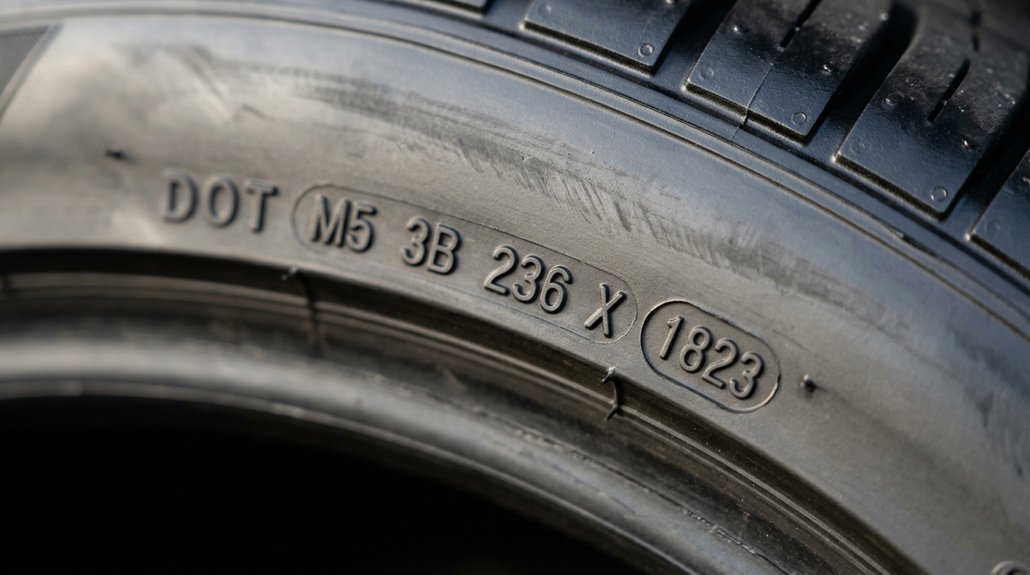
A 2019 study found tires over six years old, regardless of tread, fail three times more often in high-speed blowouts, yet most drivers I’ve encountered can’t locate the DOT code that reveals this hidden age.
You’ll find it stamped on the sidewall, but decoding it properly requires distinguishing between pre-2000 three-digit systems and modern four-digit formats, each with distinct risks you can’t afford to misread.
Where to Find the Tire Date Code on Your Sidewall
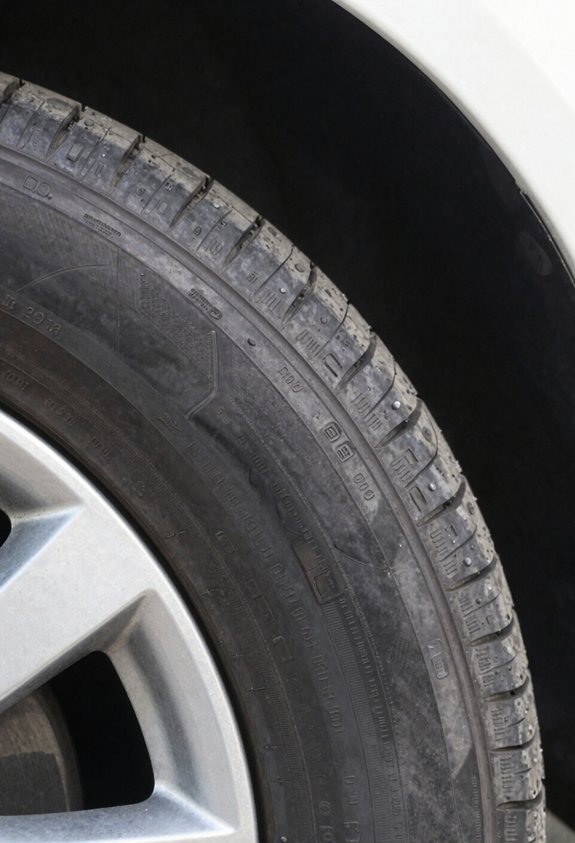
Finding the tire date code requires careful examination of the sidewall, where you’ll locate the DOT (Department of Transportation) marking, a string of characters that encodes critical manufacturing data. I’ll guide you through this essential inspection, because knowing where to look keeps you informed and connected to the community of vigilant vehicle owners.
Primary Location: Near the Bead Area
Your date code sits within the DOT sequence, typically positioned near the bead area or another consistent spot on the sidewall alongside size and construction markings. Since 2000, manufacturers have used a 4-digit format, though pre-2000 tires carry ambiguous 3-digit codes.
Visual Identification Steps
- Scan the inner and outer sidewall for the raised DOT letters
- Note that modern DOT codes may extend to 13 characters after plant-code transitions
- Verify the final four digits represent your date code
I inspect both sidewalls carefully, as mounting position sometimes obscures visibility.
How to Read the 4-Digit Tire Code (With Real Examples)
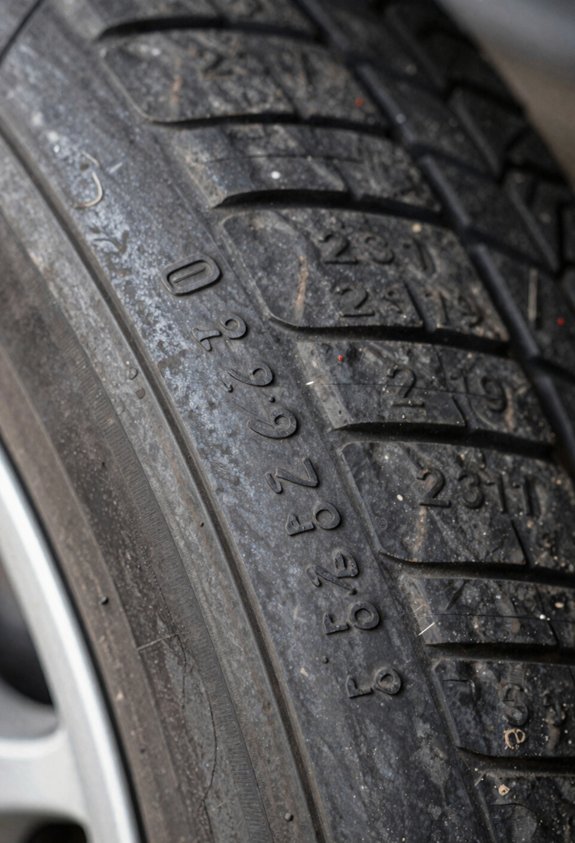
The first two digits indicate the week (01-52), so “47” means late November. The last two digits show the year, making “14” represent 2014. A complete reading of “4714” translates to the 47th week of 2014.
This standard replaced the confusing 3-digit system used before 2000. You’ll find these four digits at the very end of the DOT sequence, regardless of plant code length.
Always verify this code before purchasing; age matters for safety.
What Extra Numbers Mean Before the Date Code
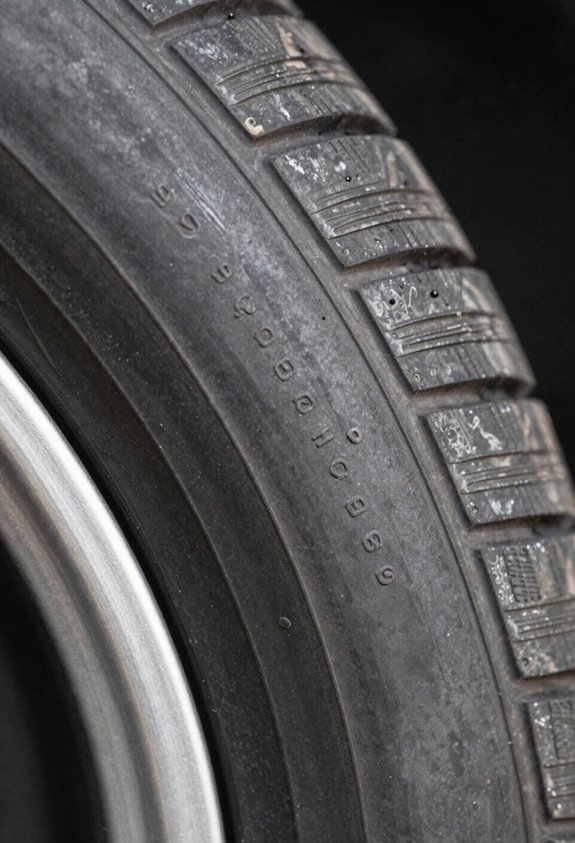
Once you’ve located the four-digit date code at the end of the DOT sequence, you’ll notice it doesn’t stand alone; the digits preceding it carry specific technical meanings you’ll want to understand. The plant code, typically the first two characters, identifies where your tire was manufactured, connecting you to a global network of producers meeting U.S. safety standards.
In 13-character DOT codes, a mandatory six-character segment between the plant identifier and date code specifies tire size and construction type, making certain of proper fitment and load capacity. These internal markings aren’t decorative; they enable recalls, manufacturing tracking, and regulatory compliance.
Key pre-2000 warning: three-digit date codes indicate older tires requiring immediate replacement. Understanding your complete DOT sequence means you’re informed, protected, and confidently maintaining your vehicle’s safety alongside fellow responsible owners.
The New Longer Tire Codes Starting in 2025
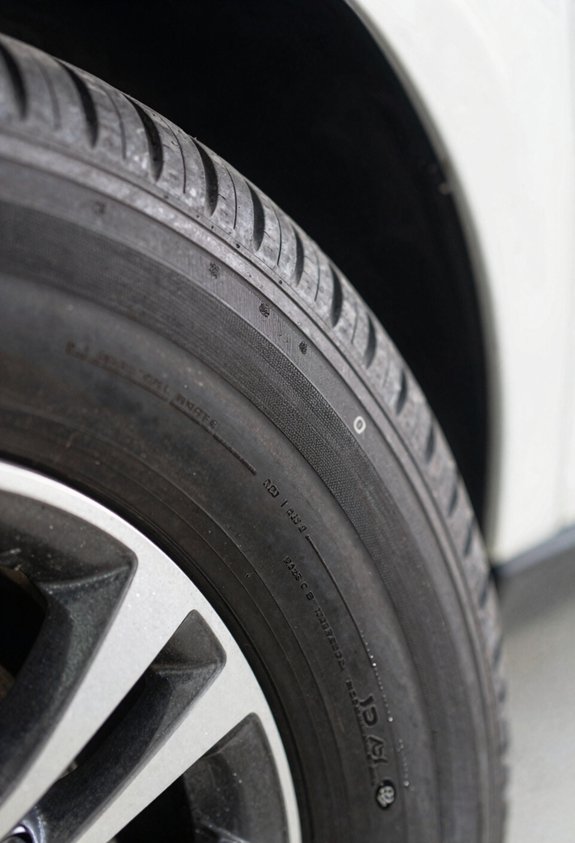
The final four digits still reveal week and year; your familiar date-reading skills transfer directly. Plant codes expand to three characters, accommodating more manufacturing locations globally. Six characters now specify tire size and construction details with greater precision.
Waste tracking and recall standardization improve through this unified system. Pre-2025 tires with 4-digit date codes remain valid; you’re simply adding longer codes to your recognition toolkit.
When you spot that extended DOT Code on your sidewall, locate digits 10-13 for your Tire Date Code. We’re adapting together; same safety priorities, clearer traceability.
How to Read Old 3-Digit Date Codes (Pre-2000 Tires)
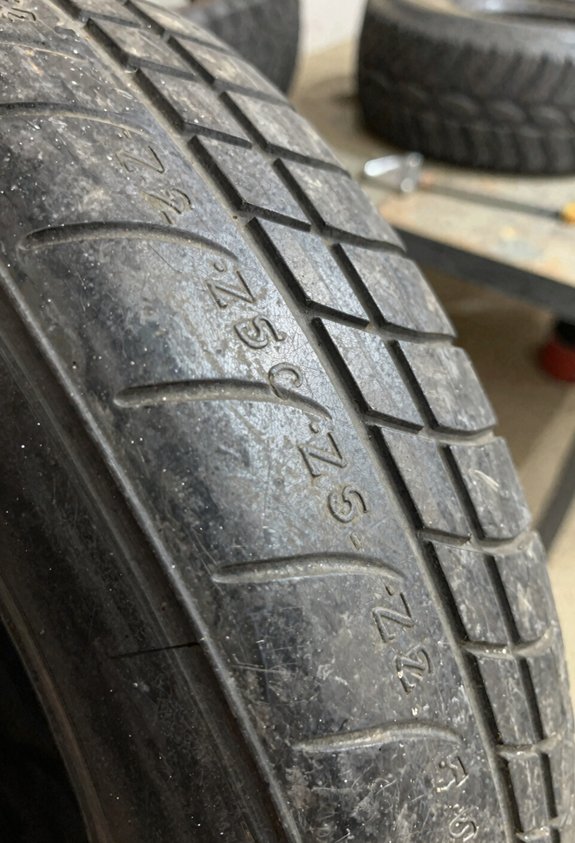
Because decades overlap, pinpointing the exact year proves difficult without additional context. I recommend cross-referencing the tire’s design and any accompanying documentation.
What You Should Do
When encountering pre-2000 tires, treat them as aged inventory regardless of visible wear. Inspect thoroughly, and strongly consider replacement as a precautionary measure rather than relying solely on date interpretation.
How Old Is Too Old for a Tire?
Once you’ve decoded the DOT code and identified your tire’s exact manufacturing date, you’ll need to apply established age guidelines to determine whether continued use remains advisable. Rubber compounds degrade through oxidation and thermal cycling regardless of how much tread remains.
Most manufacturers, including Michelin, now recommend retirement at the 10-year mark from production. This threshold should trigger more frequent inspection milestones, typically annual professional evaluations after year five, to catch early signs of sidewall cracking, belt separation, or compound hardening that compromise structural integrity.
I’ll walk you through how to integrate these chronological benchmarks with hands-on condition assessments, so you’re not relying solely on the calendar when safety hangs in the balance.
Age Guidelines
- Locate the DOT code on your sidewall to start your assessment
- Decode the final four digits: positions one-two indicate week, three-four indicate year
- Recognize pre-2000 tires carry ambiguous three-digit codes requiring expert verification
- Heed Michelin’s recommendation: retire tires ten years post-manufacture
Evaluate age alongside tread depth and overall condition, never isolation.
We’re all in this together, navigating aging rubber, oxidation, and material degradation that accelerates regardless of mileage accumulated.
Inspection Milestones
Where exactly do we draw the line between serviceable and suspect?
The DOT Date Code Decoded
You’ll find your tire’s birth certificate molded into the sidewall: the DOT date code, a four-digit sequence following “DOT” for tires manufactured after 2000. Here’s how to read it; the first two digits indicate the week, the last two the year (4714 translates to the 47th week of 2014). This week/year combination marks your tire age/manufacture date precisely.
Inspection Milestones
Manufacturers recommend retirement at 10 years from manufacture date, regardless of tread appearance. Yet I’d urge you to examine tread depth, heat cracking, and storage conditions annually after year five.
Pre-2000 tires carry three-digit codes; post-April 2025, a 13-character TIN replaces this system. Never rely on date alone; your safety depends on integrated assessment.
Tire Age vs. Tread Wear: Which Matters More?
Why do so many drivers fixate on tread depth while ignoring the calendar? I’ve watched this happen countless times, and it’s a costly oversight. Tire age and tread wear aren’t competitors; they’re partners in keeping you safe.
Tread depth and calendar age aren’t competitors; they’re partners in keeping you safe.
Your DOT code reveals everything; that four-digit number (week/year) tells you when aging began. Rubber degrades internally, even on garage-kept spares with full tread. Heat cycles, ozone exposure, and time itself harden compounds regardless of mileage.
Michelin’s guidance emphasizes evaluating tire age alongside tread wear, never isolation. Most manufacturers recommend replacement near 10 years, though inspection should intensify after year six.
I check both metrics religiously. Deep grooves mean little if the sidewall’s cracking, and fresh-looking rubber still expires. We’re in this together; safety demands we respect the full picture, not just what meets the eye.
Check Your Date Code for Recalls and Registration
I locate my Tire Identification Number (TIN) on the sidewall, decode its last four digits to pinpoint the exact week and year of manufacture, and register that information with the manufacturer to make sure I receive critical recall notifications.
Locate Your TIN
The Tire Identification Number (TIN), commonly referenced as the DOT code, serves as your primary resource for extracting critical manufacturing data directly from the tire’s sidewall.
Once you’ve located your TIN, here’s what you’ll discover:
- The DOT code begins with manufacturer identification, followed by tire size and plant codes
- The final four digits contain your date code, the key to manufacturing week and year
- Post-2000 tires display four-digit codes, while older tires may show three-digit versions
You’ll need this complete code for recall checks and manufacturer registration. Cross-reference your DOT information with tire maker databases to verify safety compliance.
Decode Date Digits
Having located your DOT code, you’ll now read those final digits to determine exactly when your tire left the factory. This step is necessary for recall screening and warranty registration.
Understanding the Four-Digit System
The date code comprises the last four digits of your DOT number, where the first two indicate the manufacturing week (01-52) and the final two specify the year. For example, 4714 translates to week 47 of 2014. Since 2000, this standardized format has been mandatory, though some tires display a 13-character DOT code with the date code still occupying those final four positions.
Pre-2000 Considerations
Tires manufactured before 2000 utilized a problematic three-digit date code, which creates ambiguity regarding the decade of production. These obsolete tires should generally be replaced regardless of apparent condition.
Safety Implications
Most manufacturers, including Michelin, recommend retirement approximately 10 years from the manufacture date, though actual safety depends on combined factors of age, wear patterns, and structural integrity.
Register for Recalls
- DOT codes from 2000 onward use four digits; older tires use three, requiring extra verification
- Registration typically requires the full DOT number from both sidewalls
- Manufacturers maintain recall databases searchable by date code and plant identifier
- Contact manufacturer recall services directly, such as Goodyear at 800-321-2136, or consult local service centers equipped with registration portals
Pre-2000 tires demand additional scrutiny, as ambiguous date coding complicates recall tracing and safety notification accuracy
Spot Old “New” Tires When Shopping
When I’m shopping for tires, whether at a discount outlet, a dealership, or an online retailer, I never assume that “new” means recently manufactured. Rubber compounds degrade through oxidation and thermal cycling even in climate-controlled storage. This means a tire with pristine tread and unblemished sidewalls might still carry a DOT date code placing its birth six or seven years prior.
I always locate the DOT marking on the sidewall, examining the last four digits to determine the age of tire: the first two indicate the week, the final two the year. Pre-2000 tires used three-digit codes, though these rarely appear today.
| DOT Reading | Manufacture Date | Action I Take |
|---|---|---|
| 4714 | 47th week, 2014 | Reject—nearing 10-year limit |
| 0523 | 5th week, 2023 | Accept—recent production |
| 1119 | 11th week, 2019 | Verify remaining service life |
Michelin and other manufacturers recommend replacement around 10 years regardless of tread depth, so I verify before purchasing.
Shelf Life vs. Road Life: Two Ages, Different Risks
Once I’ve located that four-digit date code on your tire’s sidewall, I’m really looking at two distinct aging timelines that demand separate evaluations. Shelf Age Risks accumulate silently while tires sit in warehouses or retail displays, where rubber compounds undergo oxidative degradation, plasticizer migration, and structural fatigue even without road contact. This means a “new” tire manufactured three years ago carries hidden vulnerabilities that visual inspection won’t reveal.
Road Age Risks compound these baseline degradations through mechanical stress cycles, UV exposure, ozone attack, and thermal loading from braking and cornering. This is why manufacturers like Michelin impose that critical ten-year absolute replacement ceiling regardless of remaining tread depth or apparent condition.
Understanding how to read that week-year code correctly, distinguishing post-2000 four-digit formats from obsolete three-digit systems, and recognizing that plant code transitions never alter the final four digits’ meaning, lets me assess whether I’m facing primarily storage-aged rubber, service-worn casing fatigue, or the dangerous overlap of both failure modes.
Shelf Age Risks
- Dry rot develops from oxidation, cracking rubber compounds internally
- Heat accelerates chemical breakdown, even in warehouse settings
- UV exposure degrades sidewalls when protection fails
- Ozone attacks unsaturated polymers in rubber formulations
- Load-bearing capacity diminishes long before visible deterioration appears
Michelin’s guidance aligns with industry consensus: retire tires around 10 years from production, regardless of remaining tread. Your safety depends on understanding both ages, shelf and road.
Road Age Risks
| Stress Factor | Mechanism of Damage | Visible Manifestation |
|---|---|---|
| Mechanical flexing | Repeated deformation weakens steel belts, fabric plies | Tread separation, bulges, irregular wear patterns |
| Thermal cycling | Heat buildup from friction, cooling during stops | Hardened rubber, reduced elasticity, surface cracking |
| UV and ozone exposure | Photodegradation, oxidation of sidewall compounds | Dry rot, crazing, chalky residue on sidewalls |
| Chemical contamination | Road salts, oils, brake fluid contact | Accelerated rubber breakdown, softening or brittleness |
Tire age on the road demands vigilant monitoring; I recommend professional inspection annually after year five, with retirement by year ten regardless of apparent condition.
Age Code Reading
To locate and interpret your tire’s manufacture date, remember these essentials:
Check near the bead area where DOT marking clusters appear, comparing similar codes if multiple entries confuse identification. Read post-2000 tires as four digits: positions 1-2 indicate week (01-52), positions 3-4 indicate year.
Recognize pre-2000 three-digit codes, where the final digit represents year; decoding requires contextual judgment. Calculate elapsed time: manufacture date plus service conditions equals total exposure risk.
Apply the 10-year retirement guideline, though age alone never replaces thorough wear and damage assessment.
Understanding this coding distinction empowers you to evaluate shelf life versus *road life* accurately.
5 Dangerous Myths About Tire Age and Expiration
Why do so many drivers cling to dangerous misconceptions about tire longevity? I’ve seen too many people gamble with age-related tire safety because they misunderstand what that DOT code really means.
| Myth | Reality |
|---|---|
| Tires expire exactly at 6 years | Michelin recommends inspection, with 10-year maximum from year of manufacture |
| Tread depth alone determines replacement | Rubber degrades regardless of tread; DOT code reveals hidden age |
| Pre-2000 date codes are still common | 3-digit codes are phased out; modern tires use 4-digit week/year format |
| New 13-character DOT (post-April 2025) changes expiration rules | Factory coding transitions don’t alter age-related tire safety principles |
| DOT codes predict blowouts | They’re for recalls and tracking, not failure prediction |
Check your sidewall. Those four digits, like 4714 for week 47, 2014, expose what visual inspection cannot.
When to Replace Based on Date and Condition
- Decode the DOT code, verify I’m reading week-year format correctly
- Confirm manufacturing date hasn’t exceeded 6-10 years
- Measure tread depth against wear bars
- Inspect sidewalls for cracking, bulging, or UV damage
- Evaluate storage history; cool, dark conditions extend service life
Stored tires age slower, but rubber still degrades. I don’t gamble on dates alone; visible deterioration demands immediate retirement, regardless of what the numbers say.