
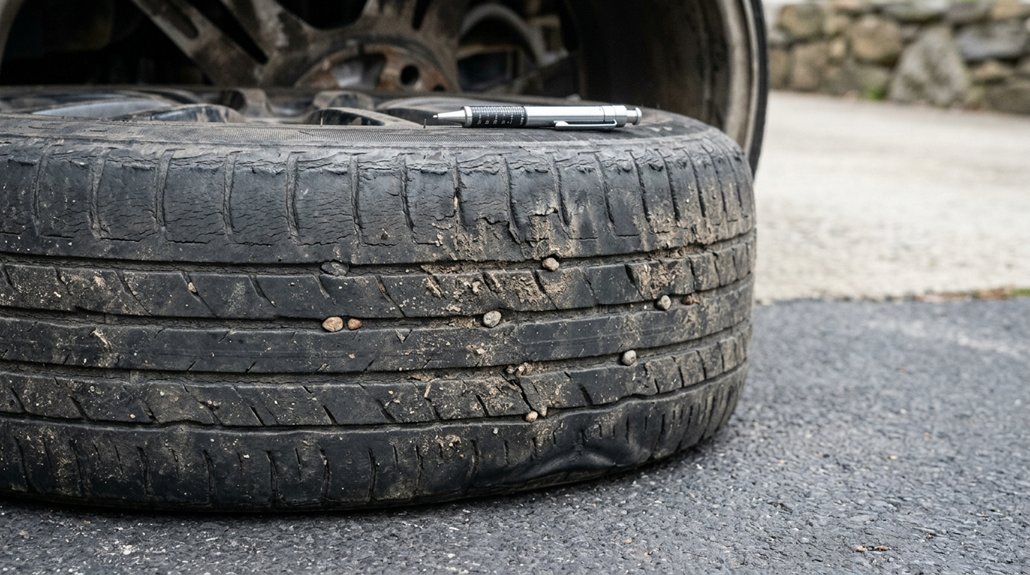
Your tires are the only contact between your vehicle and the road, yet most drivers don’t know what failure actually looks like until it’s catastrophic. I’ve spent years analyzing tread separations, belt shifts, and sidewall compromises, and I’ll tell you this: the warning signs are there if you know where to look.
Below, I’ll break down ten critical indicators, from date-code aging to rhythmic debris noises, that separate a safe tire from a pending blowout.
Your Tires Are 6+ Years Old (Check the Date Code)
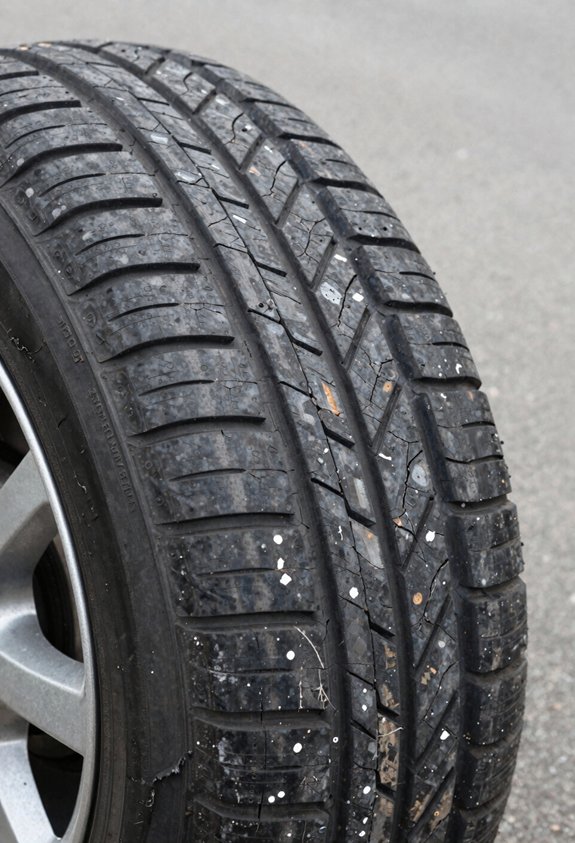
Aging tires concern me regardless of what the tread wear indicators show. Rubber compounds deteriorate through oxidation, heat cycling, and environmental exposure, creating a hidden failure risk I’d never forgive myself for ignoring. After six years, I monitor mine obsessively.
Warning signs I watch for:
- Surface cracking (acceptable) versus deep sidewall fractures (dangerous)
- Color shifts from black to greyish tones
- Noticeable rubber hardening
Even with adequate tread depth, aging tires compromise wet traction and structural integrity. I follow manufacturer guidelines and seek professional assessment when my tires cross that six-year threshold, my family’s safety depends on it.
Your Tires Make Rhythmic Clicking or Thudding Noises
| Noise Pattern | Likely Cause | Required Action |
|---|---|---|
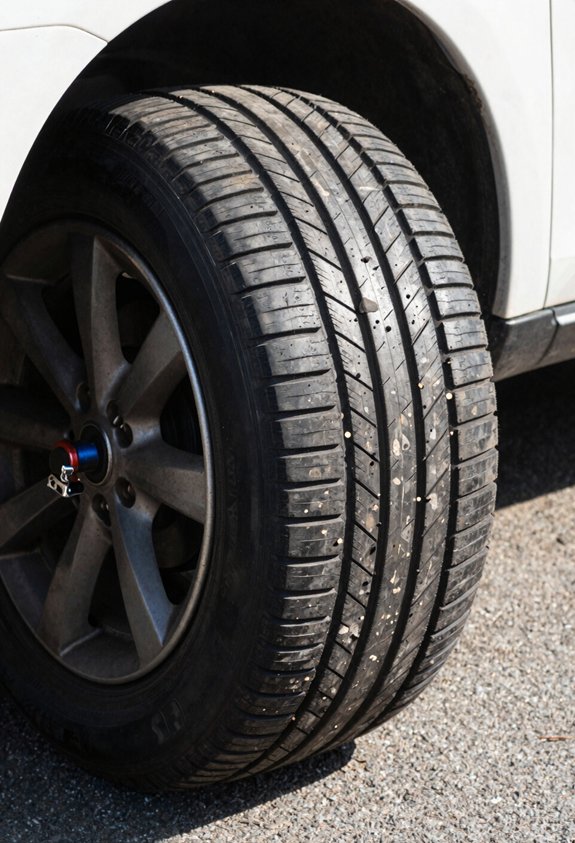
| Clicking at regular intervals | Small stone or debris lodged in groove | Visual tire inspection; remove object carefully |
| Thudding with rotation | Heavy debris or embedded metal | Safe stop; check for puncture depth |
| Sharp, persistent clicking | Active puncture with partial seal | Do not remove; seek immediate professional assessment |
| Noise increasing with speed | Loose object or internal structural damage | Prompt tire inspection to rule out failure |
If clearing visible debris in tread doesn’t eliminate the sound, I’ve learned to schedule a tire inspection without delay. Internal belt separation or hidden punctures require expert evaluation.
Your Tires Cause Vibration at Highway Speeds
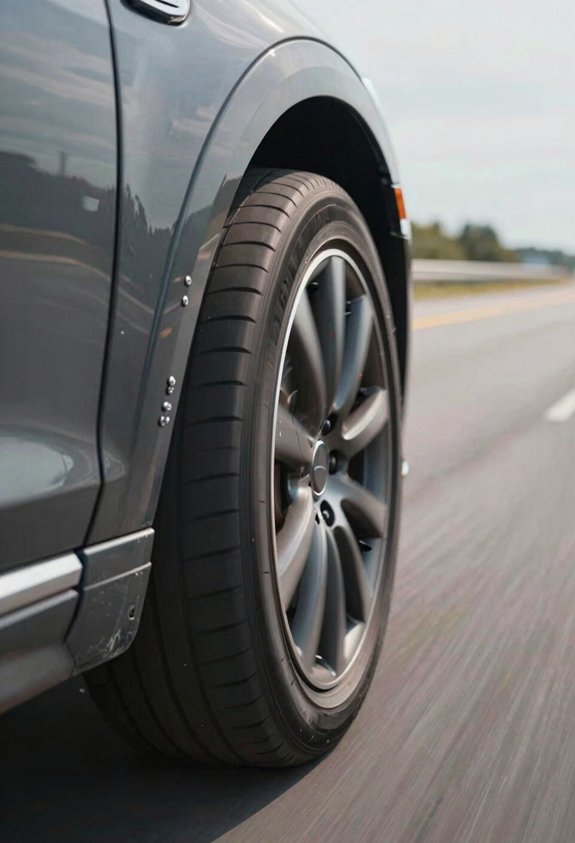
Excessive vibration at highway speeds, typically manifesting as steering wheel shake or seat vibrations between 60, 80 mph, commonly stems from unbalanced tires, misalignment, or worn suspension components, though internal structural failures like broken belts can also trigger this symptom.
I recommend rotating your tires first to isolate whether the issue follows a specific wheel. If vibration persists after balancing, you should immediately seek professional inspection for alignment errors or tire replacement.
You’ll want to distinguish normal road-induced feedback from persistent, worsening oscillations that signal imminent tire failure, as delayed diagnosis risks blowouts at sustained highway velocities.
Common Caused Factors
While highway-speed vibrations often stem from multiple interconnected sources, I’ve found that tire-related factors remain among the most frequently overlooked culprits, demanding systematic identification before they escalate into safety hazards.
Tread Wear and Uneven Wear Patterns
I’ve noticed that tread wear progressing unevenly across your tire surface generates pronounced tire vibration once you cross 55-65 mph, as the inconsistent rubber-to-road contact creates oscillating frequencies through your suspension. Uneven wear, whether cupping, scalloping, or one-sided deterioration, typically indicates misalignment, improper inflation, or failing suspension components that amplify perturbations at rotational velocities exceeding 3,000 wheel revolutions per hour.
Balance and Structural Integrity
Unbalanced tires produce rhythmic disturbances correctable through rotation and balancing, often without replacement, though I’ve learned that damaged internal belts or compromised carcass structures yield persistent thumping that survives rebalancing. When rotation corrections fail, you’re likely facing degraded tires requiring thorough inspection.
When Seek Help
Recognizing when tire-induced vibration exceeds what you can safely monitor yourself marks the difference between preventive maintenance and roadside failure.
Warning Signs You Can’t Ignore
I want you to watch for tire vibration patterns that escalate with speed, especially between 55–75 mph, or shift characteristics during turns; these indicate tire or wheel defects, not engine issues.
Excessive steering wheel or seat vibration at highway speeds signals imbalance or structural damage, including broken belts you cannot see externally.
Required Actions
Persistent vibration demands immediate rotation, balancing, and alignment services. If uneven wear or visible damage exists, tire replacement becomes necessary.
Even post-service vibration reveals hidden internal failure requiring further diagnosis.
Your Safety Net
We’re in this together; your vigilance protects our community on every road. When highway-speed shaking persists despite corrections, I urge prompt professional inspection; delayed action risks catastrophic tire failure at critical moments.
Your Tires Fail the Penny Test
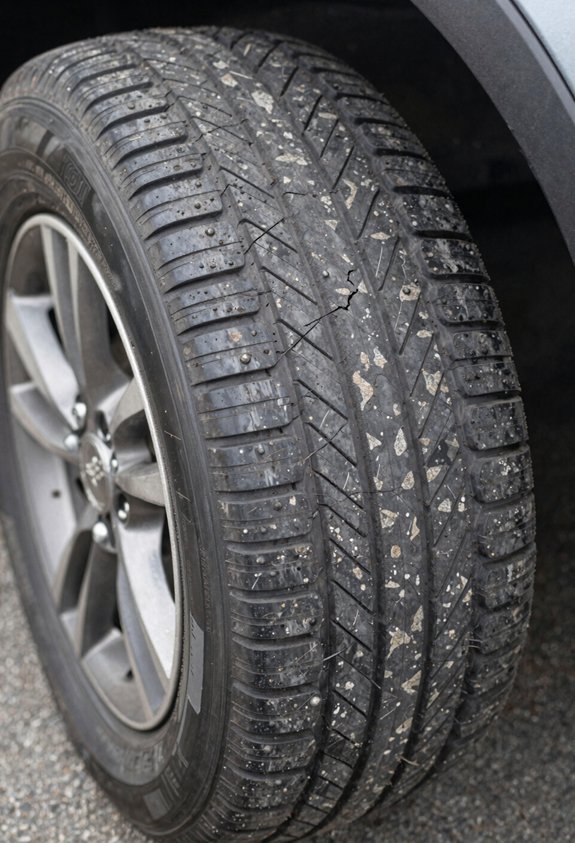
How often have you heard that a simple coin can reveal whether your tires are still roadworthy? I’ll show you why this matters, and how we’re all keeping our vehicles safe together.
Understanding the Penny Test
I insert a Lincoln penny, head facing down, into my tire’s grooves. If I spot the top of Lincoln’s head, my tread depth has fallen below 2/32 inch, replacement becomes necessary. When tread completely covers him, I’m still good for now.
| Penny Test Result | Recommended Action |
|---|---|
| Lincoln’s head fully covered | Tread depth acceptable; monitor regularly |
| Top of head visible | Tread depth insufficient; replace tire |
| Partial coverage | Schedule professional measurement soon |
| Uncertain reading | Consult technician for accurate tread depth |
I treat the penny test as a quick preliminary check, though I don’t rely on it exclusively; professional measurements provide greater precision. Some manufacturers engineer tire wear indicators, colored bars embedded within grooves that emerge as rubber erodes, offering additional monitoring capacity.
I combine these methods, replacing immediately when either the penny test fails or indicators surface, since compromised traction endangers everyone sharing our roads.
Your Tread Wear Indicators Are Visible
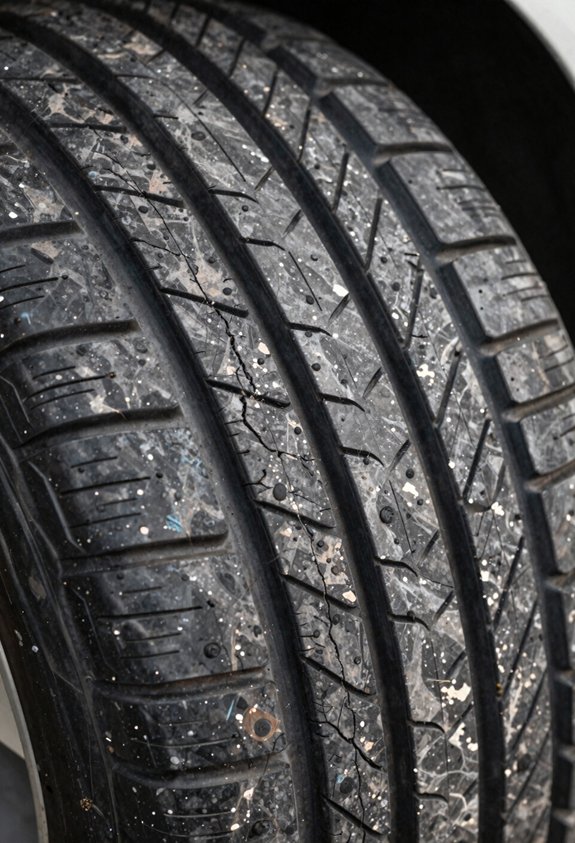
Where exactly do I look to spot the first telltale signal that my tire’s protective tread has reached its service limit? I examine the grooves between my tire tread, where raised bars, commonly called tread wear indicators, reside flush with the surface when new, gradually emerging as rubber erodes.
Built-In Replacement Indicators
My tires incorporate these perpendicular bars (manufactured bridge-like structures spanning tread grooves) specifically to eliminate guesswork. When I spot one or two replacement indicators flush with adjacent ribs, I recognize imminent replacement necessity. Multiple visible tread wear indicators confirm my tire tread has diminished below safe thresholds.
Critical Measurements
I’ve learned depth mustn’t fall beneath 1/16 inch (1.6 mm). Wet performance degrades substantially shallower; puddle passages actually make these bars more noticeable, aiding my assessment.
I combine indicator visibility with supplemental penny tests, making certain I have thorough wear evaluation before hydroplaning risks escalate.
Your Wires or Cords Show Through the Rubber
When you spot wires or cords poking through the rubber, you’re looking at visible structural damage that demands immediate replacement. I’ll explain why this exposure signals catastrophic failure risk: those steel belts, normally sealed beneath thick tread layers, lose all protection once the rubber wears thin, leaving them vulnerable to moisture corrosion and sudden rupture under load pressure.
Don’t hesitate. This isn’t a wear indicator you can monitor; it’s an emergency stop requiring prompt tire installation before a blowout occurs at speed.
Visible Structural Damage
The sight of metallic threads poking through your tire’s rubber surface signals that the structural integrity has collapsed beyond any safe threshold, and I cannot stress strongly enough that this condition demands immediate tire replacement; not tomorrow, not after your next commute, but before you turn the key again.
When I examine tires showing visible cords, I’m looking at high-strength steel belts that manufacturers never intended to contact pavement. This exposure indicates catastrophic structural damage: the rubber tread has worn through, the protective layers have eroded, and the carcass beneath has lost its reinforcing matrix.
Your tire, once engineered to distribute loads across layered compounds, now concentrates stress on exposed metal strands prone to snapping. Driving with visible cords invites sudden, violent failure; particularly at highway speeds where centrifugal forces amplify stress. The compromised structure cannot maintain shape under load, generating lethal heat buildup and catastrophic separation. I’ve seen blowouts shred wheel wells within seconds.
Tire replacement isn’t precautionary; it’s survival. No patch, plug, or prayer restores integrity to a tire this degraded.
Immediate Replacement Needed
Common culprits include chronic underinflation, aging rubber compounds (typically 6–10 years), or impact damage from potholes and curbs. Stop driving immediately; your braking distance, cornering stability, and highway safety evaporate when the carcass beneath shows.
Don’t risk your family’s security or fellow motorists’ lives. Replace the tire now.
Your Tires Have Cracks or Bulges on the Sidewalls
How exactly do you know whether those faint lines on your tire’s edge mean normal wear or impending failure? I inspect my tires monthly, running my hand along the rubber to feel for texture changes that signal deterioration.
| Damage Type | Visual Indicator | Required Action |
|---|---|---|
| Surface cracking | Fine lines, spiderweb patterns | Monitor closely, schedule inspection |
| Deep sidewall cracks | Wide gaps exposing inner material | Immediate tire replacement |
| Small bulges | Raised bumps under 1 inch | Professional evaluation within days |
| Large bulges | Prominent bubbles, soft spots | Stop driving, emergency replacement |
| Combined damage | Cracks with bulging | Immediate tire replacement, do not defer |
Bulges indicate weakened structure from impact damage or manufacturing defects, creating catastrophic blowout risk. Sidewall cracks from ozone exposure, temperature cycling, or aging rubber compromise integrity. Neither condition is repairable.
I replace compromised tires promptly, recognizing that visible sidewall damage demands decisive action to maintain our shared commitment to road safety.
Your Tires Have Bubbles or Blisters on the Surface
Surface anomalies on your tire, particularly bubbles or blisters protruding from the rubber, constitute immediate red flags that demand my full attention during routine inspections. These bulges signal weakening within the tire’s structural layers, often stemming from impact damage, manufacturing defects, or prolonged underinflation. Unlike superficial scuffs, these blisters represent internal air pockets pressing against compromised sidewalls, creating substantial risks that escalate with continued operation.
I’ll urge you to treat any newly discovered bubble as grounds for immediate cessation of driving; the threat of sudden tire failure amplifies dramatically as these deformations expand under rolling pressure and heat accumulation. When I observe such symptoms, I don’t gamble with partial assessments, complete tire replacement becomes mandatory, not optional. Consult qualified technicians promptly to evaluate replacement necessity and inspect adjacent components.
Your Tires Show Uneven Wear Patterns
Where exactly should I direct my attention when I’m scanning my tires? I focus on the tread patterns, running my eyes across the entire circumference to catch uneven wear before it compromises my safety.
Focus on tread patterns, scanning the full circumference to catch uneven wear before it compromises your safety.
Common uneven wear indicators include:
- Feathering, angled ridges suggesting alignment issues
- Cupping, scalloped dips pointing to worn shocks
- Center wear, smooth middle bands from overinflation
- Edge wear, balding shoulders indicating underinflation
These tread patterns reveal critical tire maintenance needs. When I spot uneven wear, I’m seeing symptoms of deeper mechanical problems: misalignment, improper inflation, or failing suspension components.
Left unaddressed, this wear accelerates tire degradation and degrades handling. I inspect monthly, measuring tread depth at multiple points and comparing readings. Correcting inflation pressure, alignment angles, and suspension wear stops continued damage and extends tire life significantly.
Your Tires Lose Grip in Wet Conditions
When my tires start losing grip on wet pavement, I know I’m dealing with a serious safety issue that demands immediate attention, as reduced tread depth, rising hydroplaning risk, and the hardening effects of rubber aging create a dangerous combination. Shallow grooves below 2/32 inch can no longer channel water effectively, which significantly extends my stopping distances and makes hydroplaning at speeds as low as 35-45 mph increasingly likely, especially when my tires have exceeded their 6-10 year service life.
I’ll explain how to recognize these critical warning signs before they compromise my control on rain-soaked roads.
Tread Depth Reduction
I perform the penny test monthly, inserting Lincoln head-first; if his entire head remains visible, my tires have exhausted their safe service life. I watch for wear indicators, those raised bars that emerge flush with the tread surface when replacement becomes critical.
I know that one or two visible bars demand immediate attention, but more than that signals urgent replacement. I combine regular depth measurements with the penny test to time my purchases before traction fails.
Hydroplaning Risk Rises
Why does my car suddenly feel unmoored on wet pavement, skating across the surface rather than gripping it? I’m likely experiencing hydroplaning, a dangerous loss of traction that occurs when my tires can’t channel water fast enough to maintain road contact.
My tread wear directly determines this risk: once depth falls below 1.6 mm (1/16 inch), water displacement fails, and my vehicle rides atop the water film rather than the asphalt. I check my tire condition using the penny test; Lincoln’s visible head means insufficient tread for wet safety. Even properly inflated tires with worn grooves invite hydroplaning during rain or standing water.
Visible damage, including sidewall cracks or bulges, compounds this hazard by compromising overall structural integrity and consistent road contact.
Rubber Aging Effects
Tread wear patterns that accelerate as the rubber stiffens, diminishing water-channeling efficiency and escalating hydroplaning probability
Cracks in the sidewall or between tread blocks, which deepen through repeated thermal cycling and signal structural compromise
Discoloration from deep black to greyish tones, an aesthetic marker of polymer degradation and diminished wet-weather performance
Persistent surface fissures that expand into severe fractures, demanding immediate replacement regardless of apparent tread depth
Tires aged six to ten years, even with minimal use, require vigilant scrutiny because internal degradation progresses invisibly, elevating sudden failure risk during rain exposure.