

You might think your tire’s tread depth tells the whole story, but I’ve learned that rubber degrades long before the pattern wears thin. The DOT code stamped on every sidewall, those critical four digits following “DOT”, reveals exactly when your tire left the factory, and that date determines whether you’re driving on safe compound or time-bomb material.
There’s a specific method to decoding this, and the difference between pre- and post-2000 markings could mean replacing tires you’d otherwise assume were fine.
How to Read the 4-Digit Tire Date Code (Week and Year)
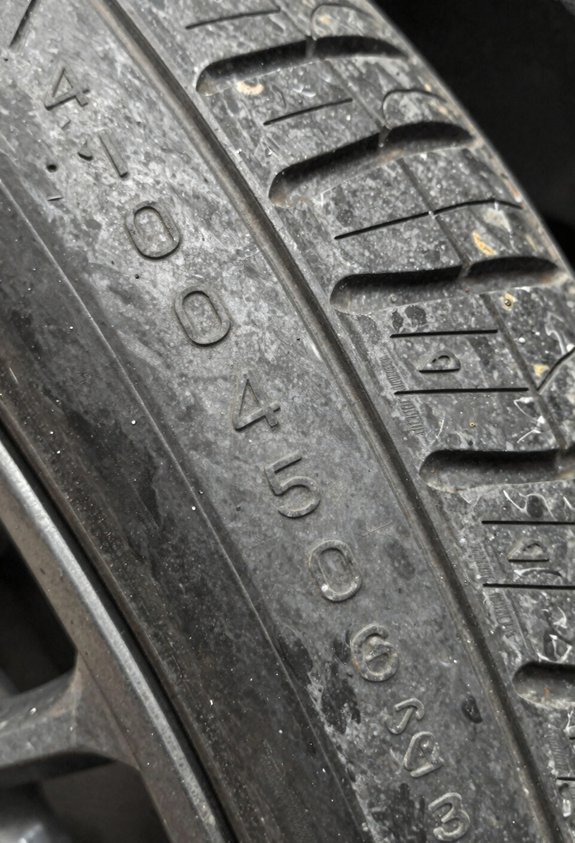
When you’re examining a tire for its age, the four-digit date code is what you’ll want to locate first, as it’s the most straightforward indicator of when that tire rolled off the manufacturing line. I find this system pleasantly straightforward once you know what you’re looking at.
Breaking Down the Code
The tire date code follows a clear pattern: the first two digits represent the production week, while the last two indicate the year. For instance, 1023 means that tire was manufactured during the 10th week of 2023, specifically, sometime in early March.
Why This Matters for Age Determination
Since the 2000 model year, this four-digit date code has replaced the older three-digit system on all DOT-approved tires. When I perform age determination, I always cross-reference the manufacture date against tread depth and visible deterioration, because rubber degrades regardless of mileage accumulated.
Where to Find the DOT Code on Any Tire
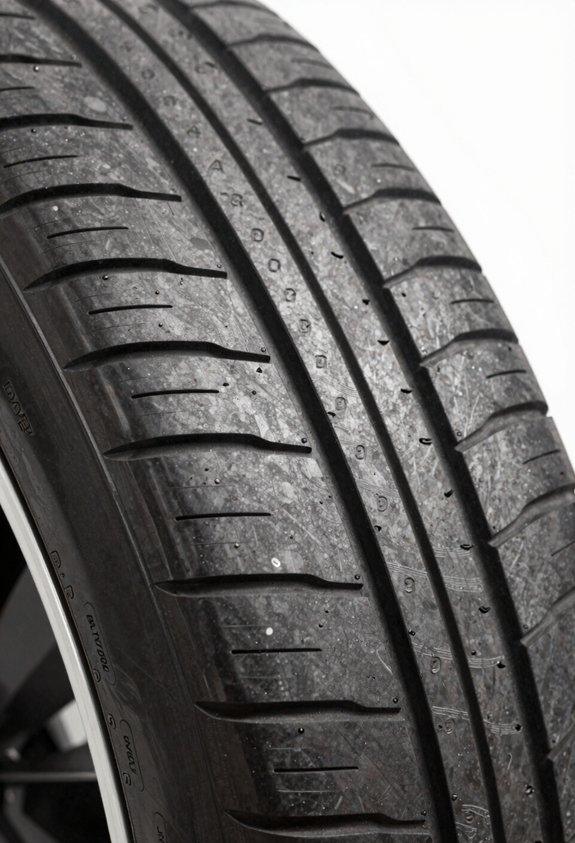
Locating the DOT code requires a systematic inspection of the tire’s sidewall, where this essential identifier is embossed during manufacturing. I’ll walk you through exactly where I look, so you’ll never miss this important marker.
Primary Sidewall Location
I always start by checking the outer sidewall, near the maximum load and tire identification details. The DOT prefix stands out once you know what to seek.
I always start by checking the outer sidewall, near the maximum load and tire identification details. The DOT prefix stands out once you know what to seek.
Full vs. Partial Codes
Here’s what frustrates many owners: some radial tire models display only a partial code on one side. I make it habit to flip the tire, checking both sidewalls for the complete DOT code, typically 10–12 characters.
Why This Matters
That full string, ending in four digits showing week and year, reveals the manufacturing date. Miss it, and you compromise tire safety.
I inspect both sides, every time.
What 3 Digits Means: Pre-2000 Tire Dating
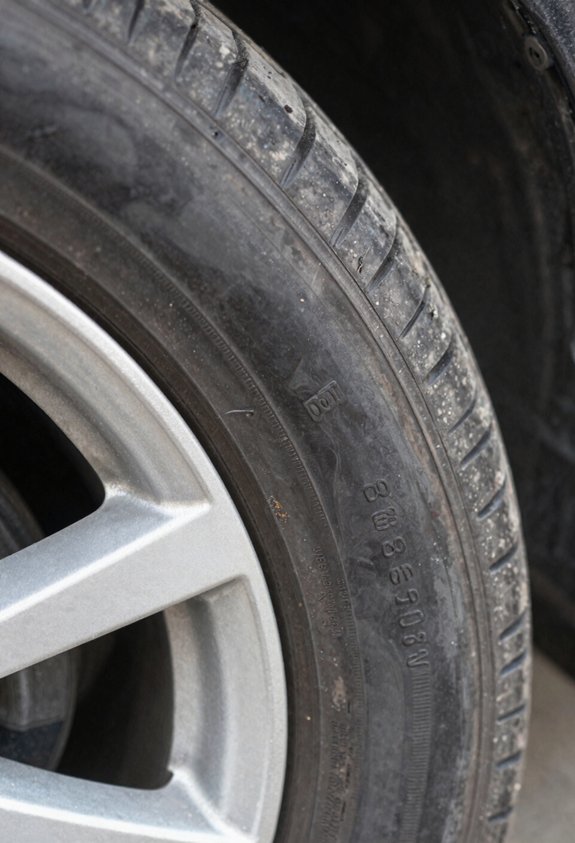
Not every tire you’ll encounter follows the modern four-digit dating system I described earlier, and recognizing this distinction immediately determines whether you’re looking at a pre-2000 manufacture.
Pre-2000 Tire Dating Format
The three-digit date code represents a critical piece of pre-2000 tire dating methodology I’ve learned to identify. Within the DOT designation, you’ll find three numbers: the first two indicate the week of production, while the final digit denotes the year. So, “439” translates to the 43rd week of 1999.
Interpreting Your Findings
When you spot this format, you’re examining a tire manufacture date from the last millennium. The DOT code has evolved, and this shortened version demands your attention for road safety.
Tire age calculations become necessary here, as these tires likely exceed recommended service life regardless of tread condition. I cross-reference age indicators, including cracking, hardness, and tread depth, to assess viability.
Why Old Tires Fail Before the Tread Wears Out
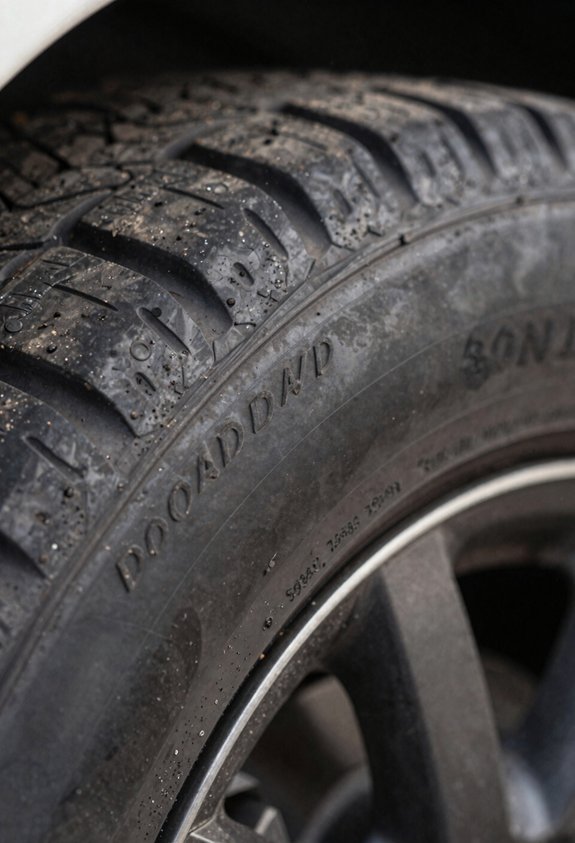
Why Tires With Tread Still Fail on the Highway
Why do tires with plenty of tread remaining still fail catastrophically on the highway? I’ll show you why tire aging matters more than most drivers realize.
The DOT code contains your answer, specifically the date code revealing tire age through a four-digit code (post-2000) showing week and year, or the murkier pre-2000 vs post-2000 three-digit system. Rubber compounds degrade from oxidation, UV exposure, and heat cycles regardless of mileage; that’s tire aging in action.
I’ve seen aging tires failure occur precisely because owners ignore this. The date code determines recalls safety status, yet many never decode it. Michelin recommends inspection at five years, replacement by ten; proof that tire safety extends far beyond tread depth.
Check your sidewall. Your DOT code holds critical intelligence you’re currently overlooking.
When to Replace: Tire Age Limits That Actually Matter
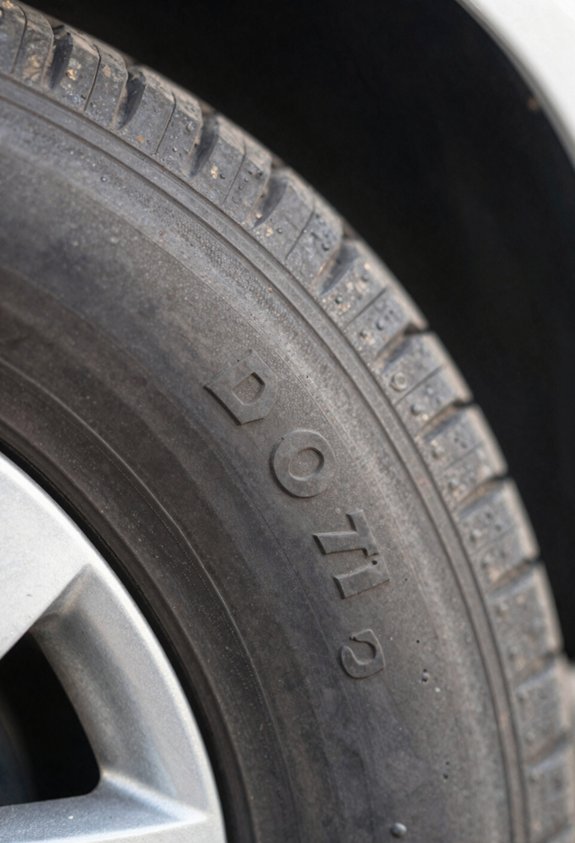
Knowing where to find the date code on your sidewall is only the beginning; you need hard numbers that separate acceptable aging from dangerous deterioration, and that is where manufacturer guidelines give you actionable thresholds. Once I’ve read the DOT code and identified that 4-digit date code showing week and year, I match that manufacturing date against real age limits that protect you.
Here is what I follow for responsible tire replacement:
- I decode every tire’s date code immediately after installation, storing that manufacturing date for tracking.
- I schedule detailed inspections at five years from the DOT code reading, checking rubber integrity beyond surface appearance.
- I enforce ten-year age limits absolutely, regardless of remaining tread wear and condition.
- I cross-reference tire age with tread wear, cracking, and sidewall damage, because tire safety demands evaluating multiple failure modes simultaneously.