
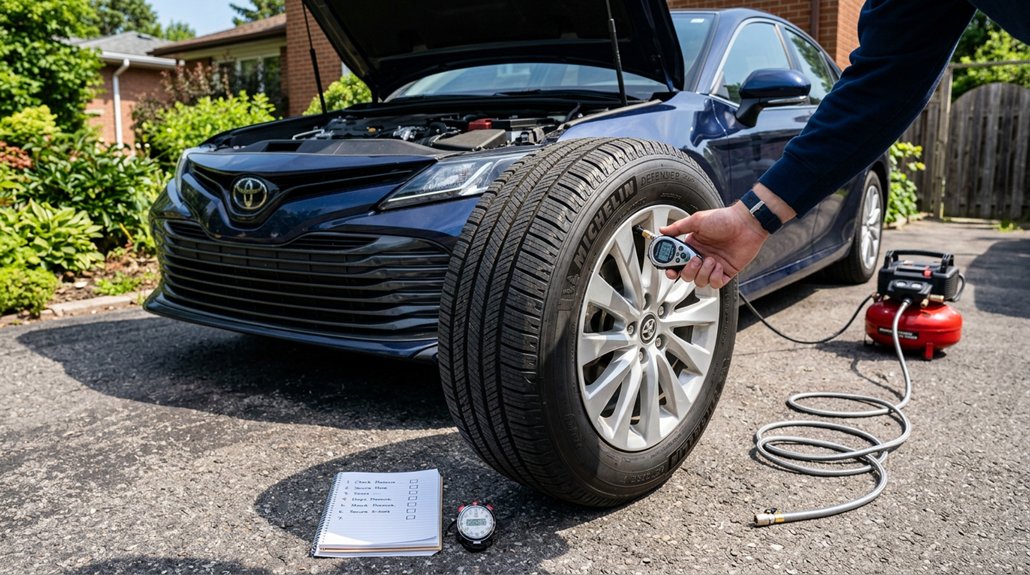
Nearly 75% of drivers encounter a TPMS warning light annually, yet most can’t navigate the reset process confidently. I see this confusion constantly, and it’s why I’ve broken down every critical step you’ll need.
Why Your Honda’s TPMS Light Comes On
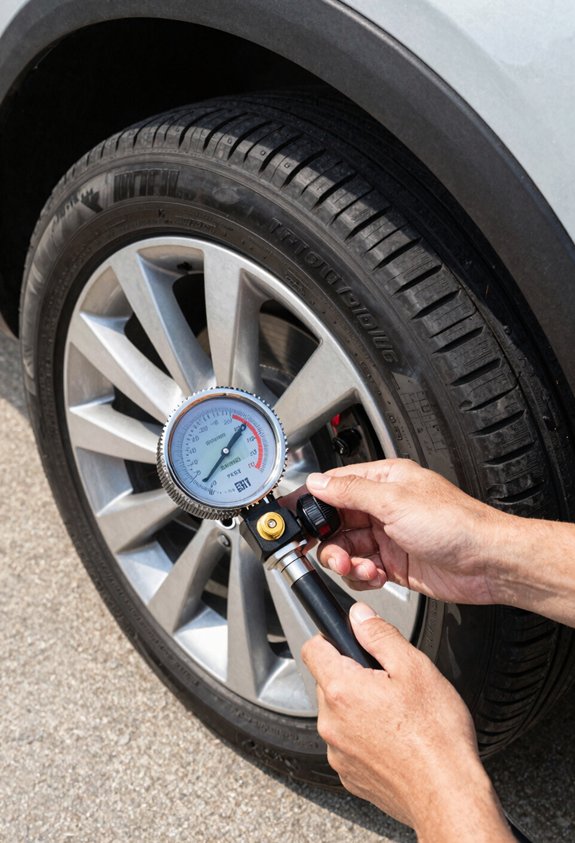
Why does that little amber icon suddenly appear on your dashboard? Your TPMS light activates when the Tire Pressure Monitoring System detects irregularities, most commonly low tire pressure from punctures, gradual leaks, or sudden pressure loss. I’ve seen this happen countless times: temperature fluctuations, particularly those 10-15°F overnight drops, contract the air inside your tires, triggering alerts on crisp mornings or after regional weather shifts.
Following tire rotations or replacements, improper system recalibration often illuminates the warning, requiring a proper reset procedure. While these scenarios typically resolve with pressure correction and system relearning, persistent illumination demands professional diagnostics. Faulty sensors, damaged valve stems, or internal system malfunctions may necessitate dealer-level intervention.
Understanding these triggers helps you address warnings promptly, maintaining optimal safety and preventing premature tire wear before attempting any reset sequence.
Check Tire Pressure Before You Reset the Light
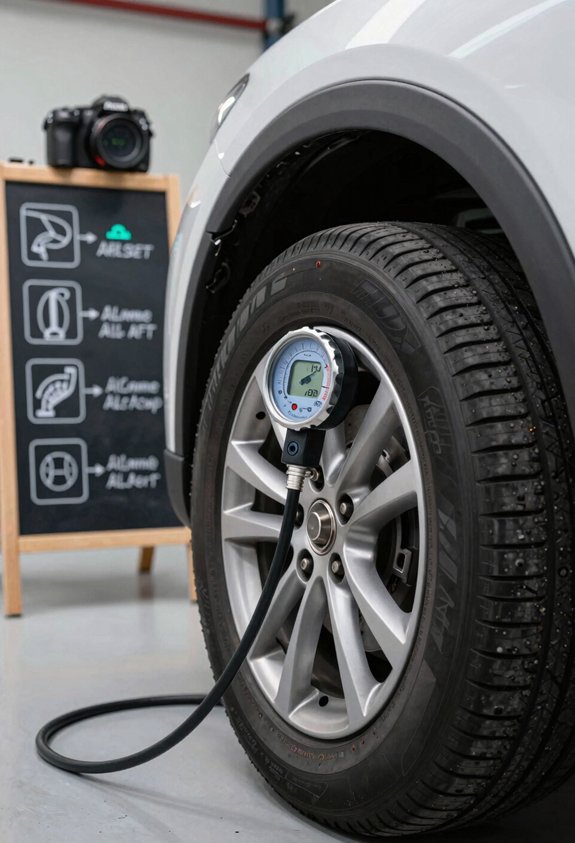
Where exactly should you begin when that TPMS warning illuminates your dashboard? I always grab my reliable gauge first, because rushing into a TPMS reset without verifying actual tire pressure is a mistake I’ve seen too many drivers make.
Check all tires cold, ideally in the morning, since I’ve learned pressure drops 1–2 PSI per 10-degree temperature change. Compare your readings to the door jamb sticker, not the tire sidewall, and don’t forget the spare if it’s a full-size sensor-equipped unit.
| When to Check | What to Use | Where to Look |
|---|---|---|
| Morning, before driving | Digital or dial gauge | Driver’s door jamb label |
| After temperature swings | Calibrated, reliable tool | Not the tire sidewall |
| Before any TPMS reset | Quality gauge you trust | Includes spare if applicable |
If you find underinflation, inflate to recommended PSI, recheck all tires, then proceed.
Reset the TPMS Light on Touchscreen Models
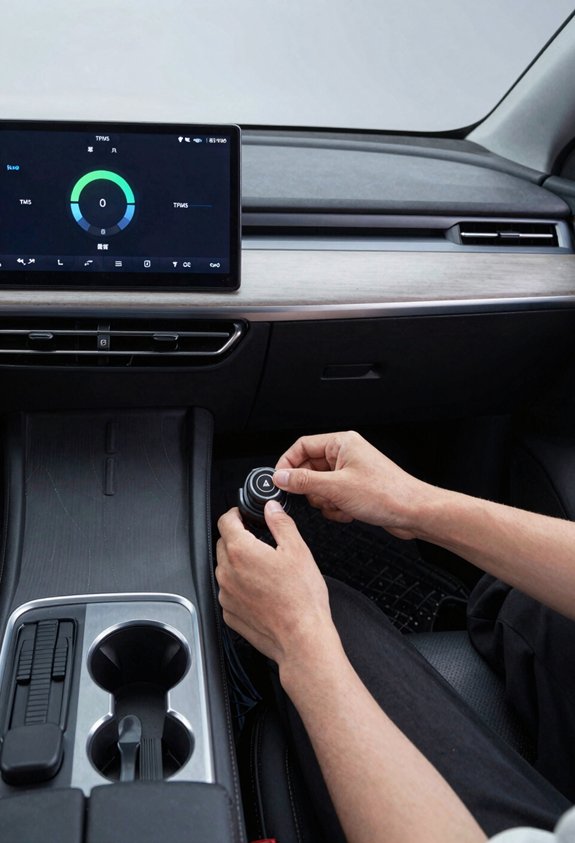
Once I’ve verified and adjusted all tire pressures to specifications, I’m ready to address the illuminated TPMS warning through the vehicle’s touchscreen interface, a process that varies notably from older button-controlled systems.
Initiating TPMS Calibration on Touchscreen Models
I turn my ignition to ON without starting the engine, then navigate through the digital menus: I press Home, select Settings, choose Vehicle, and find either TPMS Calibration or Tire Pressure → Calibrate, confirming to initiate the process. After starting calibration, I drive normally, understanding that recalibration occurs dynamically during operation, with the light extinguishing within 10 to 20 minutes.
Critical Preconditions and Troubleshooting
I make certain all four tires (plus spare, if applicable) meet manufacturer PSI before calibrating. If the light persists, I continue driving at normal speeds to complete the Learn process, or repeat steps.
Persistent warnings indicate potential sensor failures requiring professional diagnostics at authorized service centers.
Reset the TPMS Light on Non-Touchscreen Models
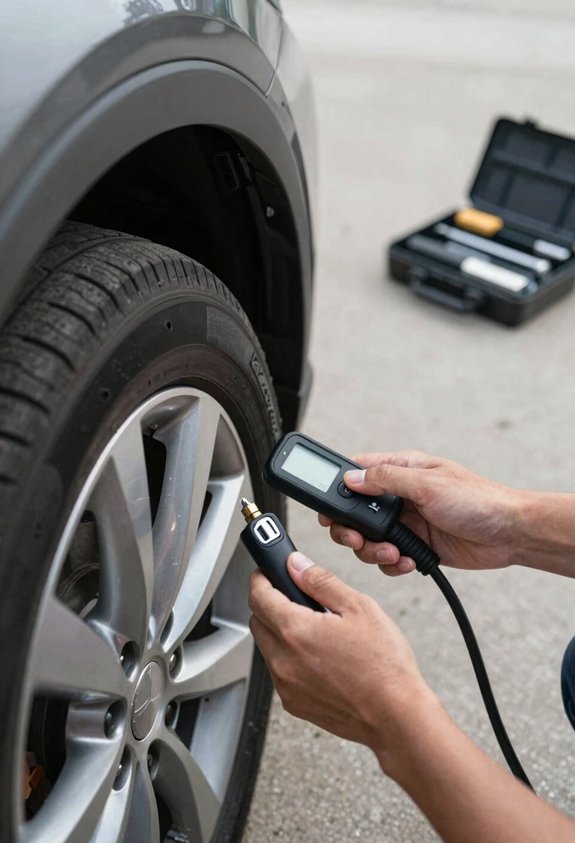
Although my vehicle lacks the digital convenience of a touchscreen interface, I can still efficiently reset the TPMS warning through the dedicated physical button, a method that requires precise timing and deliberate action rather than menu navigation.
I begin the ignition procedure by turning the key to ON without starting the engine, then I locate the TPMS reset button, typically positioned beneath the dashboard or adjacent to the steering column, and press and hold it until the warning light blinks twice, confirming successful initiation. This TPMS reset technique demands deliberate attention, as premature release or incorrect timing will abort the sequence entirely.
Once the light responds, I start the engine and proceed with a calibration drive, maintaining moderate speed to allow the system to synchronize with current tire pressures.
Drive 10 Minutes to Finish the Reset
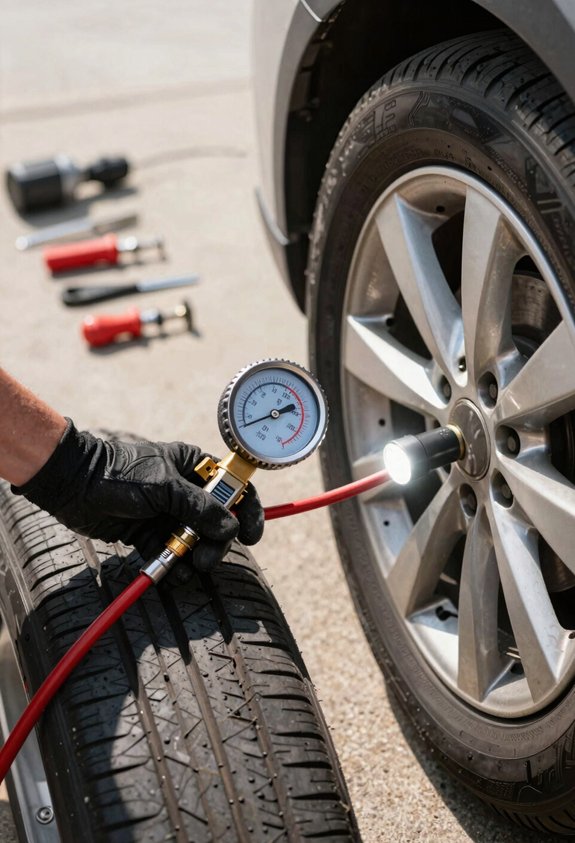
Why does the TPMS light sometimes persist even after I’ve inflated my tires to the proper pressure? The system requires motion to complete its TPMS reset calibration, which is the reason I need to drive 10 minutes at approximately 50 mph to finalize the process.
How Driving Completes the Reset
During this drive, the TPMS sensors transmit updated tire pressures to the vehicle’s computer, allowing automatic recalibration. For direct TPMS models, I make certain all four tires (plus the spare, if applicable) match cold PSI specifications before starting.
Key Considerations
- Maintain steady speeds between 45-55 mph when possible
- Avoid abrupt stops or rapid acceleration during this window
- The reset typically completes without manual intervention
If the light remains illuminated after this drive, I’ve confirmed proper inflation and given the system adequate recalibration time, indicating potential sensor malfunction requiring professional diagnostics.
If the Light Stays On, Try These Steps
When the TPMS warning persists despite my initial efforts, what systematic approach yields the most reliable results? I’ve found that a methodical sequence transforms frustration into resolution, and you’re not alone in this; we’ve all faced that stubborn dashboard glow.
Here’s what I do when the light won’t quit:
- Inflate tires to cold pressure specifications, making sure each valve stem hisses with precision
- Drive 10 minutes at 50 mph, letting road vibration awaken dormant sensors
- Execute TPMS reset via touchscreen (Settings → Vehicle → Calibration) or physical button; hold until double-blink
- Complete calibration drive at steady speed, monitoring for extinguishment
If darkness persists after this ritual, we’ve exhausted home remedies together. Your diligence matters, yet some battles require specialized equipment beyond our shared garage expertise.
When to Get Professional TPMS Help
If the TPMS warning persists after you’ve driven at 50 mph for ten minutes and attempted a manual reset, you’re likely dealing with Persistent Warning Signs that indicate deeper system faults, such as a failed sensor battery (typically lasting 5-7 years), damaged valve stems, or interference from aftermarket wheel installations.
Sensor Replacement Needs often arise when direct TPMS units, those transmitting actual pressure data from within each tire, can no longer communicate with the vehicle’s receiver, a condition requiring specialized diagnostic tools most owners don’t possess. Rather than continuing to troubleshoot complex electrical or radio-frequency issues yourself, I recommend seeking professional TPMS help when warning lights remain illuminated, flash intermittently, or display inconsistent readings across multiple drive cycles, as improper handling of these sensitive components can lead to costly damage or compromised safety monitoring.
Persistent Warning Signs
Although you’ve followed every recommended procedure for inflating your tires to manufacturer specifications and attempted the standard reset sequence, a stubbornly illuminated TPMS warning demands escalation beyond basic troubleshooting. This is particularly true when you’ve already invested time in pressure verification and manual recalibration attempts.
I’ve learned that persistent warning signs reveal deeper system failures we shouldn’t ignore together:
- The 10–20 minute rule — when your TPMS light survives this drive cycle post-reset, you’re facing sensor or synchronization faults, not pressure issues
- Cold-weather false positives — ambient temperature drops mask damaged sensors requiring professional diagnostics
- Post-rotation confusion — direct TPMS sensors lose their recalibration memory, demanding dealer-level re-learning procedures
- Indirect system drift — wheel changes trigger miscalibration that basic TPMS reset protocols cannot resolve
We deserve accurate monitoring. When these signals persist, professional intervention protects our shared commitment to road safety.
Sensor Replacement Needs
- Persistent illumination after attempted resets
- Failure to establish communication between new sensors and my vehicle’s receiver module
Beyond Simple Fixes
If the light remains active post-replacement, I’m likely facing wiring faults, connector corrosion, or module malfunctions. These complexities exceed standard maintenance, requiring diagnostic equipment I rarely possess.
Recognizing these limits protects my safety, and my wallet, from prolonged troubleshooting.