
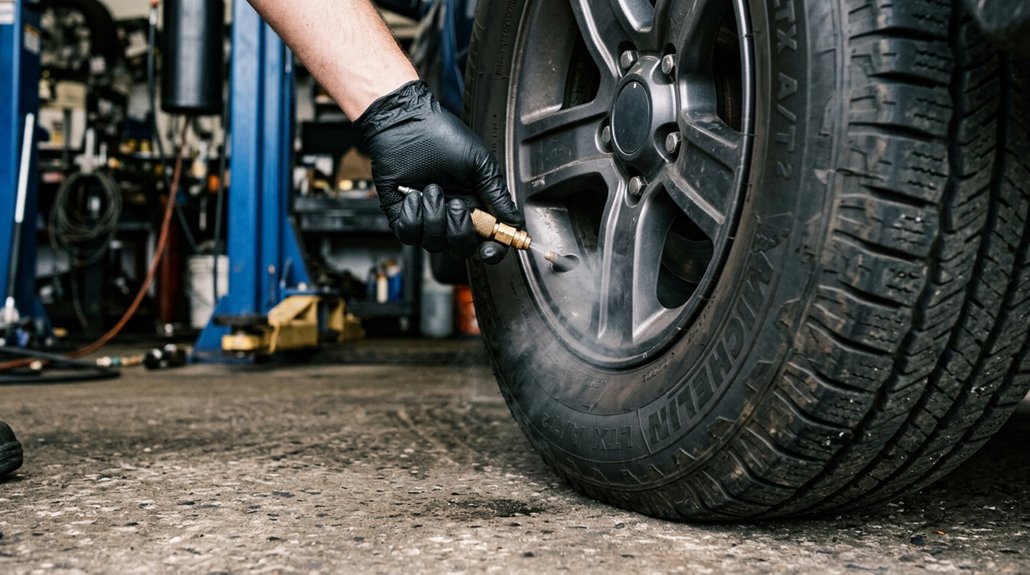
I want to show you something that seems simple but catches people off guard: releasing air from your tires without damaging the valve stem or losing control of the pressure drop. Most drivers don’t realize that rapid deflation can weaken tire sidewalls, create uneven wear patterns, or trigger TPMS warnings they’ll struggle to reset.
Whether you’re adjusting for sand, lowering pressure after accidental overinflation, or prepping for seasonal temperature shifts, the method matters more than you’d expect, and there’s a specific sequence that protects both your tires and your safety. Let me walk you through what I’ve learned from years of monitoring pressure across varied driving conditions, because the wrong approach costs more than just time.
Let Air Out of Your Tires Step by Step
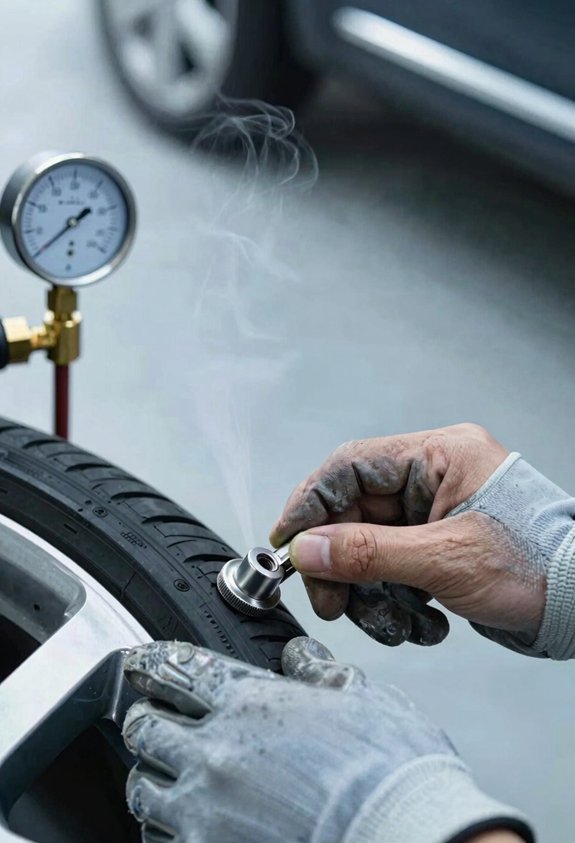
Why risk damaging your tire or your vehicle when releasing pressure requires only methodical attention to detail? I always begin by parking on a level surface, turning off the engine, and engaging the parking brake, foundational safeguards that prevent unintended movement during deflation.
Accessing the Valve Stem
I remove the valve cap to expose the valve stem, that small yet critical component controlling airflow. This metal or rubber protrusion, typically 0.5–1.0 inches in length, serves as the gateway for pressure adjustment.
Controlled Air Release
I employ either a tire pressure gauge with a deflation feature or a dedicated valve tool, pressing the central pin in measured bursts. Real-time monitoring proves essential; I watch the gauge decrementally, halting precisely when reaching target PSI.
Final Verification
I recheck all tires, reattach valve caps securely, and adjust neighboring tires to maintain uniform tire pressure across the axle.
Check Your Current Tire Pressure First
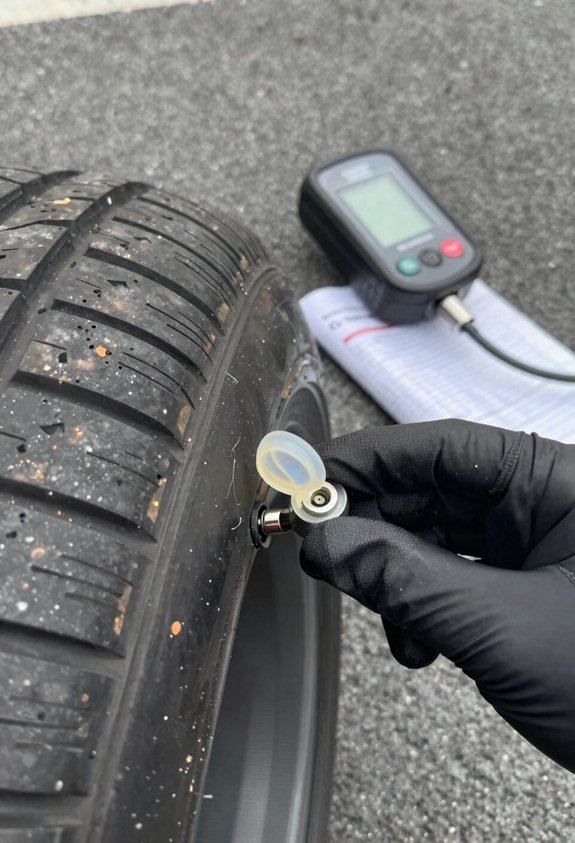
Before I’ll release any air from my tires, I’ll always establish my baseline pressure by measuring each tire when they’re cold, meaning the vehicle hasn’t moved for at least three hours or traveled less than one mile, since heat from driving expands the air inside and skews my readings. I’ll press a reliable tire pressure gauge firmly onto each valve stem, record the current PSI for all four tires, and immediately compare those numbers against the manufacturer’s specification, which I’ll find on the driver’s door jamb placard or in the owner’s manual.
This documentation step matters because I’ll need these exact figures to calculate precisely how much air to remove, making sure I don’t accidentally over-deflate and create a dangerous underinflation scenario that compromises handling, fuel economy, and structural integrity.
Know Your Baseline
Know Your Baseline
| Tire Position | Baseline PSI Reading |
|---|---|
| Front Driver | ___ PSI |
| Front Passenger | ___ PSI |
| Rear Driver | ___ PSI |
| Rear Passenger | ___ PSI |
| Spare (if applicable) | ___ PSI |
I press my digital or analog gauge firmly onto the valve stem, recording the precise measurement. I then compare this figure against my manufacturer’s recommendation, typically found on the door jamb placard or in the owner’s manual.
I note temperature effects: cold tires read 1-2 PSI lower, skewing my baseline if unaccounted for. Documenting each tire maintains consistency across my set, preventing uneven wear and handling issues that compromise safety.
Gauge Before Releasing
How do I know precisely how much air to release if I haven’t established my starting point? I can’t, and neither can you, which is why I always grab my tire pressure gauge before touching that valve stem.
Pre-Deflation Protocol
I park on level ground, kill the engine, and wait. Tires must be cold for accurate readings, since heat drives tire pressure up artificially. I unscrew the valve cap, press my gauge firmly onto the stem until the hissing stops, and record that baseline PSI for each tire. I cross-reference these numbers against the manufacturer’s placard, typically found on the driver’s door jamb or within the owner’s manual.
Critical Comparisons
If I’m reading 38 PSI against a recommended 32, I’ll know I’m releasing roughly 6 PSI. Without this measurement, I’m deflating blindly, risking underinflation that compromises handling and fuel efficiency. I check, then I cut.
Know Your Car’s Correct Tire Pressure
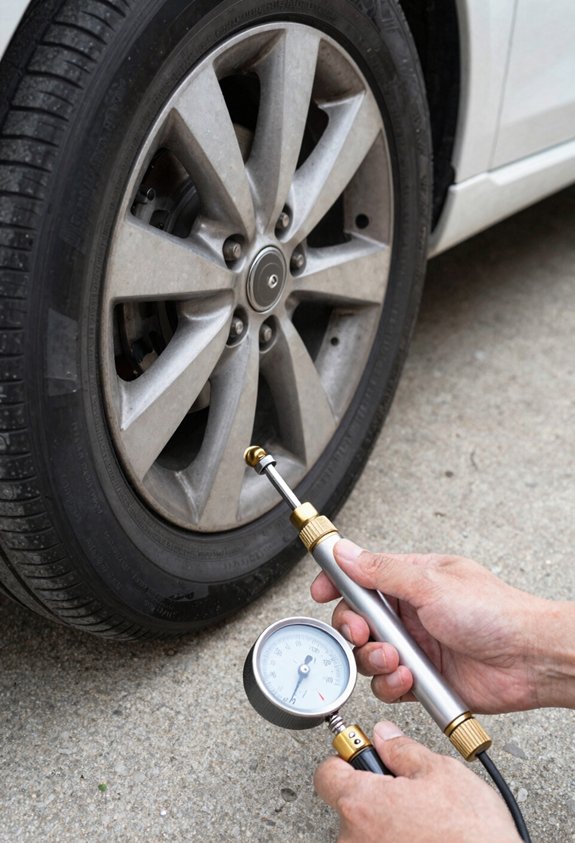
My car typically needs 32–35 PSI when cold, though I verify this exact figure rather than relying on memory since temperature fluctuations alter readings. I use a reliable gauge to confirm current pressure before any adjustment, knowing that deviation from recommended levels causes uneven wear, compromised handling, and safety risks.
After deflating, I recheck immediately: precision protects my tires, my vehicle’s stability, and everyone sharing the road with me.
Tools You Need to Release Tire Air Safely
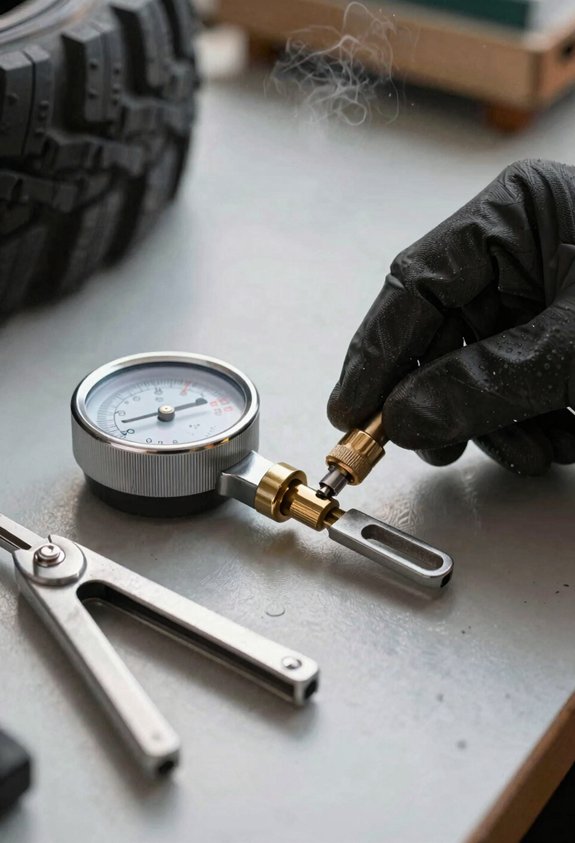
Before you touch any tire valve, you’ll need a small but essential toolkit to release air safely and accurately. I recommend gathering a reliable pressure gauge, either analog or digital, to monitor your starting pressure, plus a valve core tool or a gauge with a built-in release function for controlled deflation in short bursts. These instruments let you avoid dangerous over-deflation while maintaining precise control over the entire process.
Essential Tire Tools
| Essential Tool | Specific Purpose |
|---|---|
| Valve core tool | Controlled air release |
| Digital tire gauge | Accurate pressure measurement |
| Air compressor | Re-inflation when needed |
I never skip parking on level ground with the engine off and parking brake engaged.
Selecting Pressure Gauges
After securing the vehicle and gathering my core tools, I turn my attention to the pressure gauge, which serves as the critical reference point for every deflation decision I’ll make.
A tire pressure gauge provides a numeric PSI reading, establishing my baseline before any adjustment. I prefer digital gauges for their high accuracy, clear displays, and handy features like backlighting and hold functions that lock my reading after removal. Analog (dial) gauges work reliably too, though I must steady them firmly against the valve stem for precise needle positioning.
Key Selection Criteria:
- Wide compatible range (minimum 0–60 PSI) for versatility across vehicles
- Built-in air release mechanisms (levers or pins) for controlled, incremental deflation without cap removal
- Protective caps to shield sensors from debris and moisture
I never guess my tire pressure; accurate measurement prevents dangerous underinflation and uneven wear.
How to Deflate Tires When You Don’t Have a Gauge
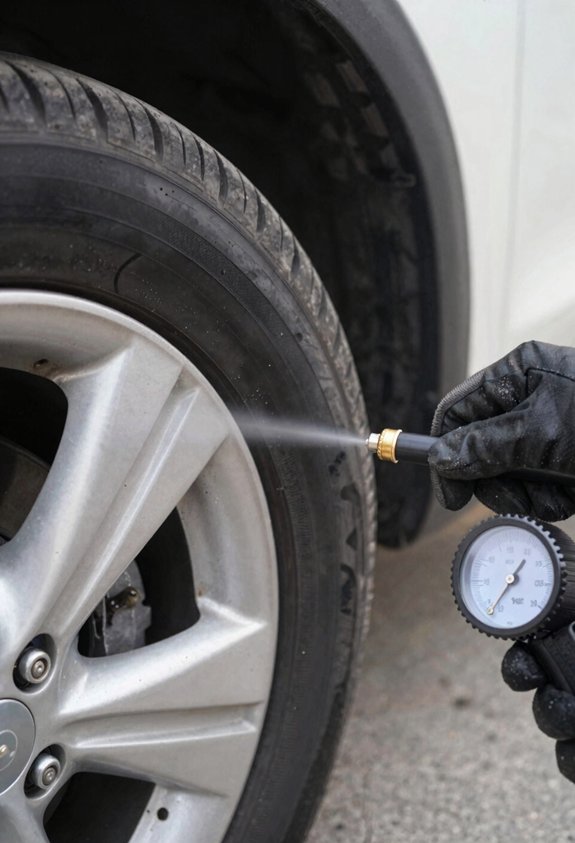
Ideally, I’m using a pressure gauge for accuracy, but when I’m without one, I can still safely deflate my tire by relying on methodical observation and controlled technique. I start by parking on level ground, turning off my engine, engaging my parking brake, and removing the valve cap to expose the valve stem.
I press the valve stem with a small tool to initiate air release in short, controlled bursts. I listen for the hissing sound and periodically feel the tire’s firmness to gauge progress. I release air incrementally, pausing to reassess after each burst to prevent over-deflation. Finally, I replace the valve cap securely and visually inspect the tire.
| Method | Sensory Cue | Risk Level |
|---|---|---|
| Valve stem press | Audible hiss | Moderate |
| Firmness check | Tactile resistance | Low |
| Visual inspection | Sidewall bulge | Low |
| Incremental release | Sound diminishing | Minimal |
| Cap replacement | Secure threading | Negligible |
When to Lower Tire Pressure for Driving Conditions
Why would I ever intentionally reduce my tire pressure after spending so much effort maintaining it? Sometimes, I need to lower tire pressure to expand my tire’s footprint and improve traction in challenging terrain. Before I begin, I always park on level ground, shut off the engine, and engage the parking brake for deflation safety.
I consider three situations where controlled deflation helps:
- Off-road trails, I reduce pressure to 15-20 PSI to let tires conform to rocks and ruts, preventing damage and improving grip.
- Deep sand or snow, I release air to 12-18 PSI, creating a larger contact patch that prevents me from sinking.
- Muddy conditions, I lower pressure slightly to enhance tread bite without compromising sidewall integrity.
I never exceed manufacturer minimums, and I always verify my final pressure with a gauge.
Tire Deflation Mistakes That Cause Damage
- Deflating beyond target PSI reduces load-bearing capacity and risks bead separation
- Trusting TPMS displays without manual gauge verification masks persistent underinflation
- Deflating while driving, or on uneven surfaces, creates sudden pressure fluctuations that damage tire structure
- Prepare your workspace: Park on level ground, shut down the engine, and remove the valve cap to expose the valve stem for accurate access.
- Reference proper PSI: Consult your door jamb placard or owner’s manual (never the sidewall maximum) to confirm manufacturer-specified pressure for your exact tire position and load conditions.
- Incremental inflation: Add air in brief bursts, rechecking with your gauge between each increment until reaching target PSI, then reinstall valve caps securely and verify all four tires before departing.
I always deflation tires on level ground, engine off, using calibrated tools. Join me in protecting your investment: precise technique preserves performance and safety.
How to Fix Over-Deflated Tires
An over-deflated tire demands immediate correction, as pressures falling markedly below manufacturer specifications compromise vehicle stability, accelerate irregular tread wear, and elevate the risk of catastrophic bead separation during cornering or load-bearing maneuvers. I recognize this is a situation we’ve all encountered after excessive deflation, so let’s address it properly together.
An over-deflated tire demands immediate correction before it compromises your stability and safety on the road.
Immediate Restoration Protocol