
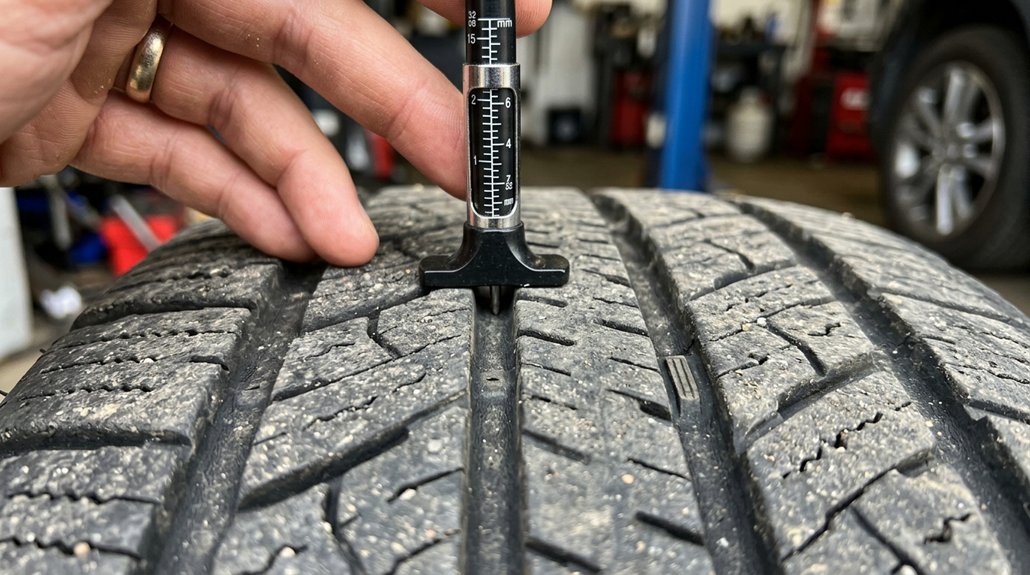
Like checking the oil in a classic engine, I measure my tire tread depth because worn rubber doesn’t grip when I need it most. You’ll want to continue for the five steps that could keep you out of a skid.
What Your Tread Depth Means for Safety
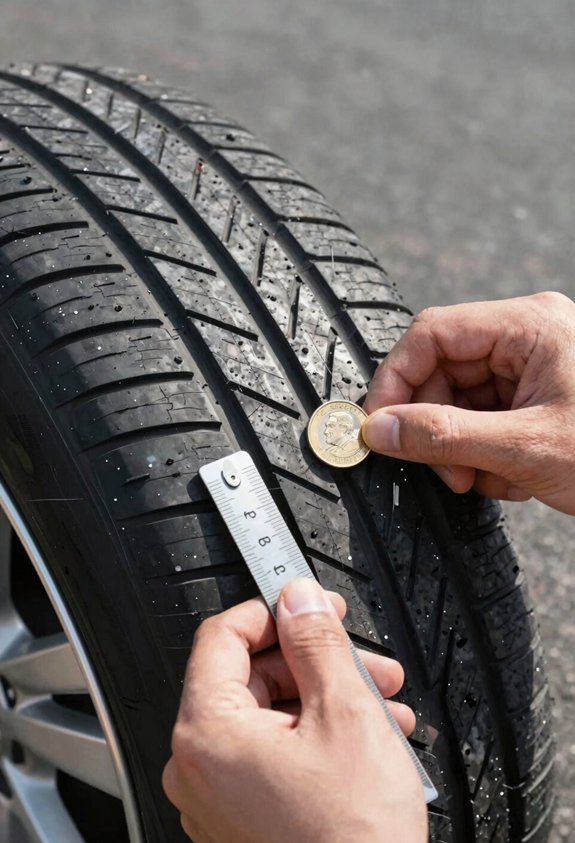
When tread wears below 4/32 inch, hydroplaning risk escalates dramatically, that’s why the quarter test exists as an early warning. Fall to 2/32 inch, and you’re at the legal minimum where wear indicators sit flush with the tread surface; hydroplaning becomes likely, and stopping distances stretch dangerously. The penny test confirms this critical threshold, but waiting that long means you’ve already compromised performance.
I check for uneven center/edge wear because irregular patterns signal alignment or inflation issues. Precise gauge measurement, averaging inner, center, and outer readings, reveals hidden problems simple tests miss. Don’t belong to the group learning too late; monitor your tread depth proactively.
Pick Your Tool: Penny, Quarter, or Gauge
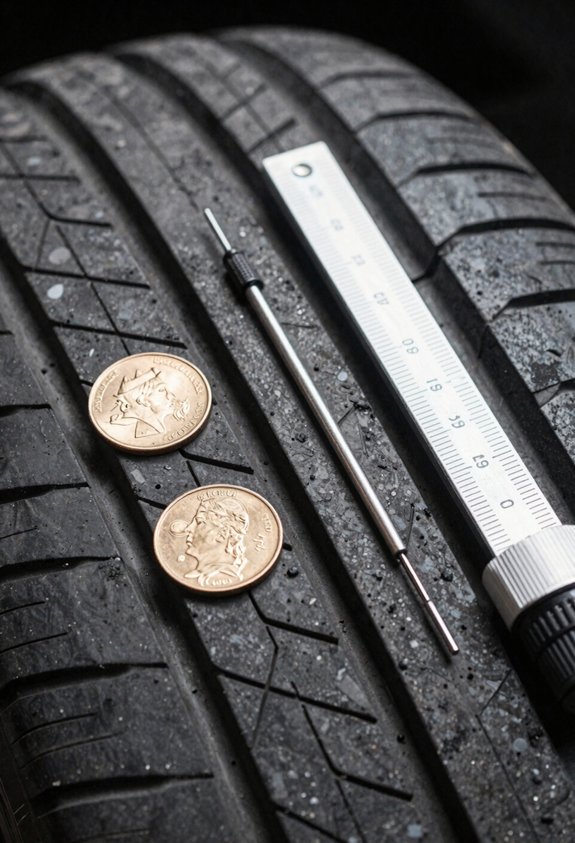
Professional Gauges: Maximum Confidence
Digital or dial gauges display tread depth in 32nds of an inch or millimeters, removing interpretation entirely.
Measure Tread Depth in the Center Groove
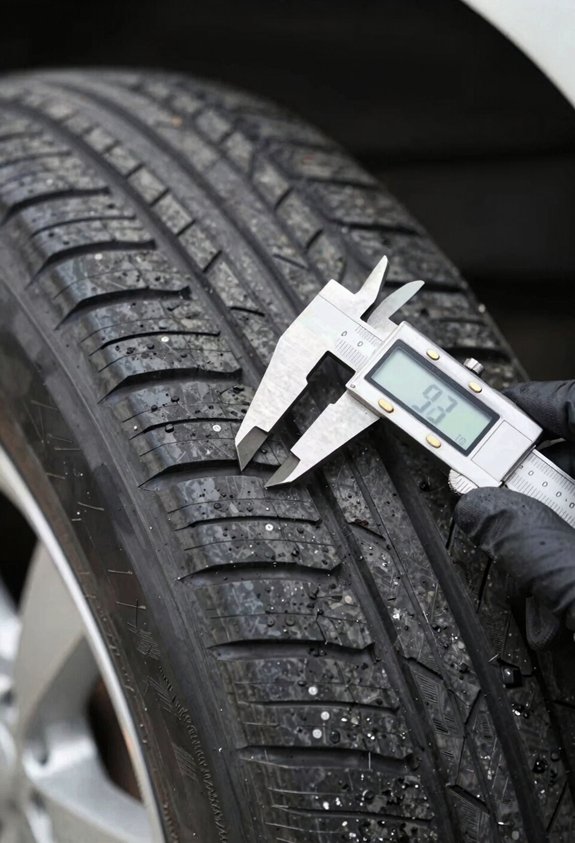
Once you’ve selected your preferred tool, whether that’s a coin for a quick check or a professional gauge for precise measurement, you’ll want to focus your attention on the center groove of your tire. This central channel provides the most representative reading of your remaining tread depth.
I use a tire tread depth gauge for accuracy, pressing it fully into the center groove until the base contacts the tread. My reading depth appears in 32nds of an inch; new tires measure 10–11/32″, while wear indicators sit at 2/32″.
| Critical Tread Depth Measurements | Value in 32nds of an Inch | Safety Implication |
|---|---|---|
| New Tire Tread Depth | 10–11/32″ | Optimal performance |
| Caution Threshold | 4/32″ | Reduced wet traction |
| Wear Indicators | 2/32″ | Immediate replacement required |
| Measurement Location | Center Groove | Most Representative Reading |
| Complete Assessment | Center, Inner, Outer | Reliable Remaining Tread Estimate |
While center inner outer measurements strengthen reliability, always begin with the center groove as your primary measurement technique.
Check Two More Spots for Uneven Wear
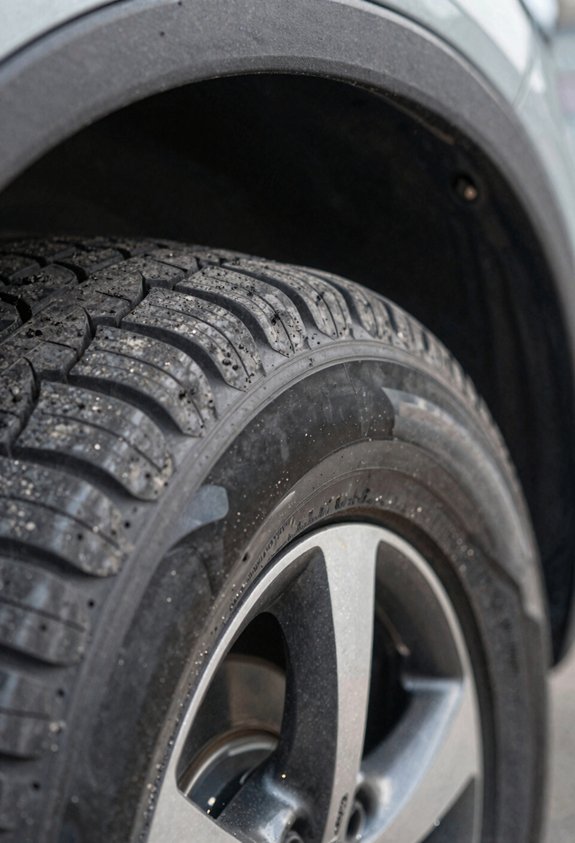
- Center tread: where you measured first
- Inner edge: closest to the vehicle
- Outer edge: facing away from the vehicle
Using my tread gauge at all three locations, I compare readings. When wear differs markedly between edges, you’ve found uneven wear, which demands attention. Such variation often signals pressure problems, suspension faults, or alignment issues requiring an alignment check.
I average my three readings for accuracy, then act on discrepancies: adjust pressure, proceed with tire rotation to balance forces, and schedule inspections. Re-check post-correction to confirm the pattern resolves, protecting your investment and keeping you safely connected to the road.
When Your Readings Mean It’s Time for New Tires
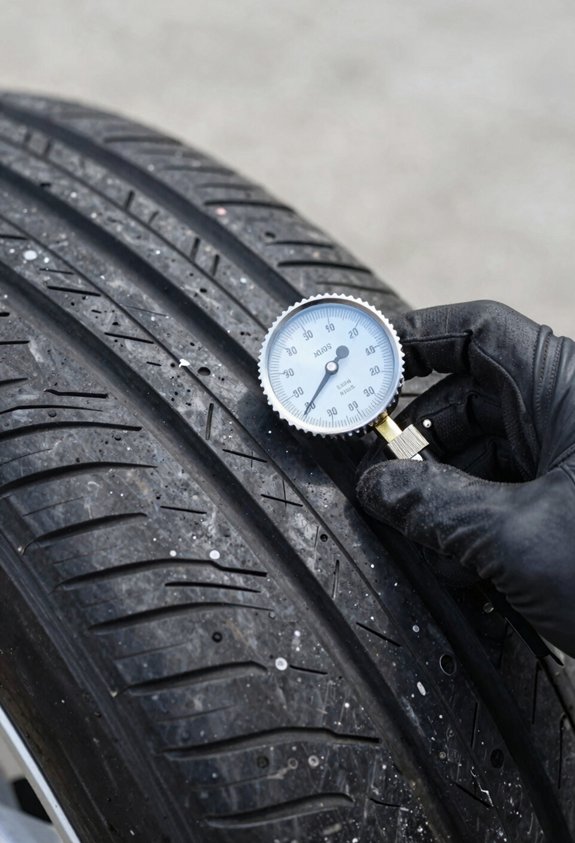
How do you know when your careful measurements translate into action? I compare my average readings against critical thresholds to protect everyone who rides with me.
When my tire tread depth reaches 4/32 inches, I’ve learned wet performance drops significantly. Hydroplaning risk increases, and braking distances extend dangerously. I don’t wait for the legal minimum of 2/32 inches, though that’s where most states draw the line. At that depth, tread wear indicators, those raised bars running across grooves, become flush with surrounding rubber, signaling imminent failure.
I verify borderline cases with the penny test: inserting Lincoln head-first, if I see his entire crown, my reading depth confirms replacement necessity. Whether my gauge shows 2/32 inches or indicators appear level, I replace tires immediately, because belonging means keeping my community safe on every road we share.