
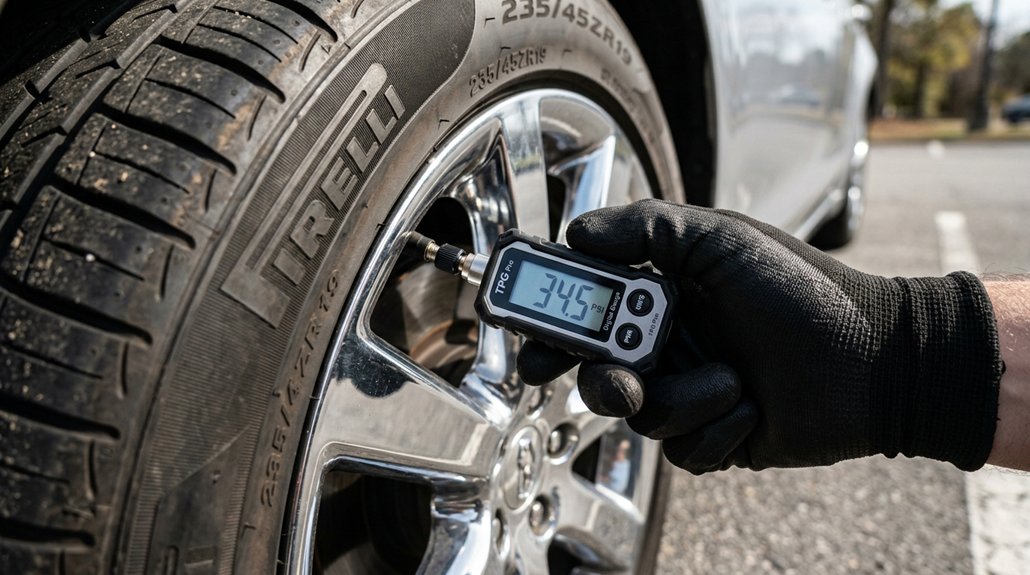
I check my tire pressure monthly, and I’ll show you how I do it in three steps that could prevent a blowout. First, I grab my digital gauge, though analog works if you prefer, and press it firmly onto the cold tire’s valve stem until the hissing stops. Then I compare that PSI reading to the placard on my driver’s door jamb, not the sidewall, because that’s where the manufacturer lists front and rear specifications separately.
The real question is what happens when your numbers don’t match, and whether you’re overinflated, underinflated, or dealing with something worse.
Check Tire Pressure With a Reliable Gauge
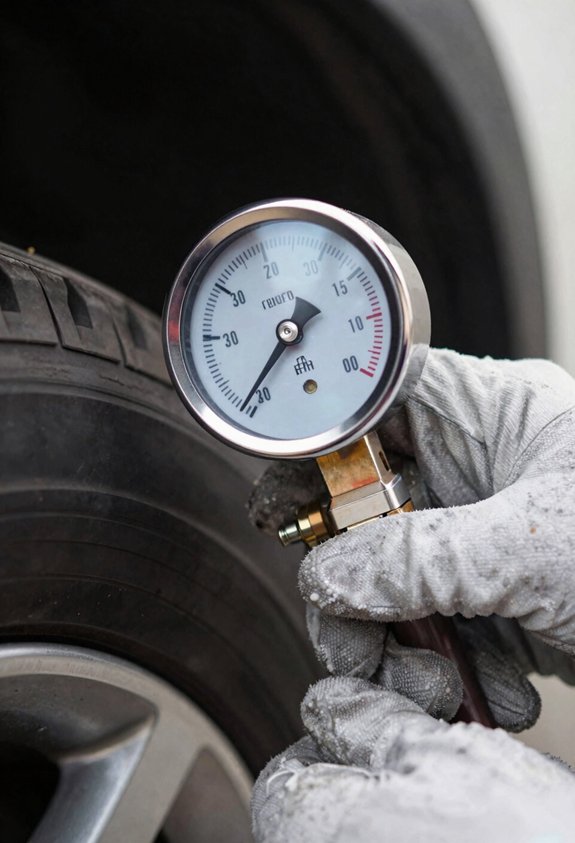
Before you can trust any number on your dashboard or guess at inflation by sight, you’ll need a quality tire pressure gauge. Digital models offer precise readouts to the tenth of a PSI, while analog dial gauges provide reliable measurements without batteries. Even basic pencil-style gauges suffice in emergencies, though they sacrifice some accuracy.
I always remove the valve cap first, press the gauge firmly onto the valve stem until I hear no hissing, then read the measurement for true gauge accuracy. I check all four tires individually, plus my spare tire if I have one, recording each PSI separately to prevent mix-ups. I only test cold tires; heat from driving inflates readings falsely.
Once finished, I replace every valve cap to block debris. Your door jamb sticker lists the recommended pressure, but measuring correctly comes first.
Find Your Recommended PSI on the Door Jamb
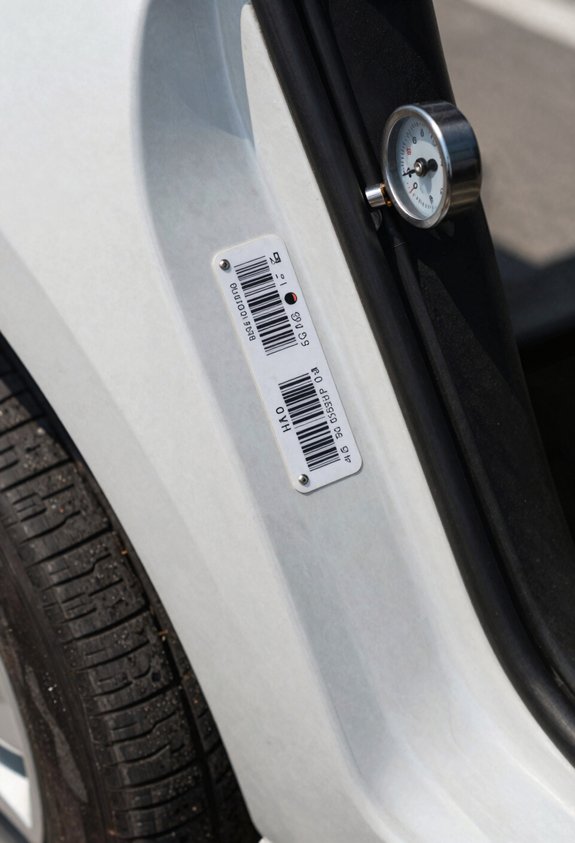
Where exactly should you look once you’ve measured your tires? I open my driver’s side door and scan the door jamb for a small placard listing my recommended psi. This figure represents cold tire pressure, meaning tires rested three-plus hours or driven under one mile, so I verify my tire gauge readings match this condition.
If the placard’s missing, I consult my owner’s manual or vehicle manual, where manufacturers specify optimal PSI for safety and efficiency. I note whether front rear values differ, as many vehicles require distinct tire pressure per axle. I record these numbers before inflation, distinguishing manufacturer recommendations from maximum sidewall ratings. Following these specifications provides proper handling, fuel economy, and tread longevity without compromising safety.
Match Your Reading to the Recommended Tire Pressure
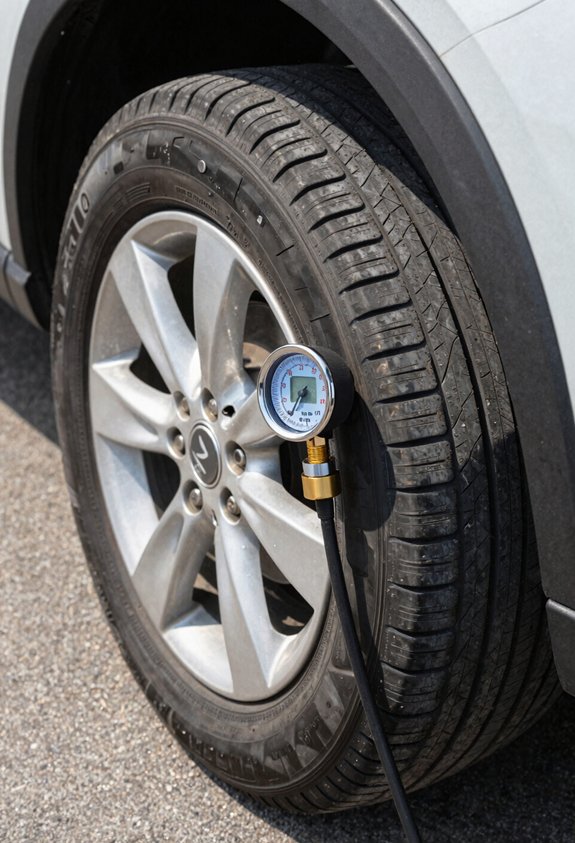
Once I’ve identified my recommended PSI from the door jamb placard or owner’s manual, I position my tire gauge on the valve stem and press firmly until the hissing stops, capturing the current pressure reading.
Comparing Readings to Specifications
I always check cold tires, those resting at least three hours, to get an accurate tire pressure measurement. Heat from driving temporarily elevates PSI, yielding misleading results. I verify my driver’s door jamb sticker distinguishes front and rear tires, as many vehicles specify different pressures for each axle.
Adjusting to Match Recommendations
When my tire gauge displays below the recommended pressure, I inflate to the exact PSI listed. Conversely, I release air in small increments if overinflated, rechecking frequently. Precision matters: even 2-3 PSI deviation affects handling, fuel economy, and tread wear. I document final readings, confirming all four tires (plus spare) align with manufacturer specifications for safe, consistent performance.