
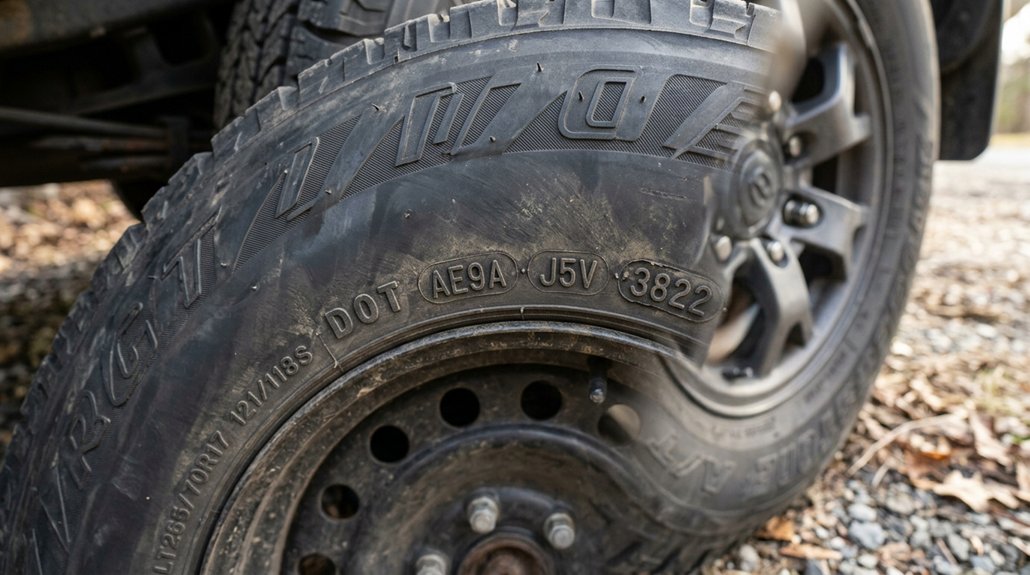
I inspect every tire sidewall before purchase or installation because that DOT code tells me exactly when it was manufactured, and that date determines everything about safety, warranty coverage, and whether I’m looking at a fresh tire or dangerous old stock someone wants off their shelf.
You’ll find this critical identifier near the rim, stamped into the rubber after “DOT,” but there’s a problem most drivers never anticipate: the code looks simple, yet misreading it by a single digit can cost you hundreds in premature replacement or far worse.
I’m going to show you why the final four digits hold the key, what happens when you encounter the rare three-digit variant, and how manufacturers use this tiny stamp to avoid responsibility when their aging rubber fails on the highway.
How to Read a 4-Digit Tire Date Code (Step-by-Step)
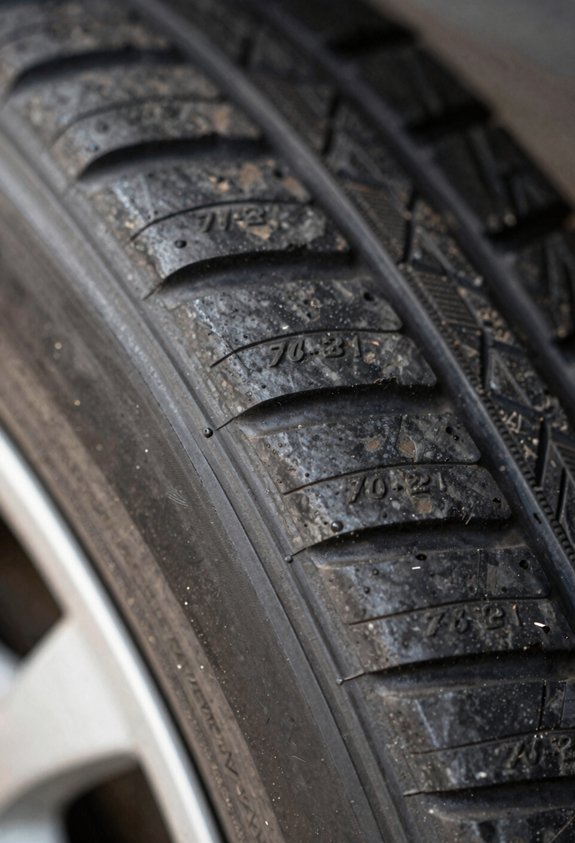
Where exactly do you find the critical manufacturing information that tells you whether your tires are still roadworthy? I look at the tire sidewall, where the DOT (Department of Transportation) Tire Identification Number reveals everything I need.
I always check the tire sidewall first—it’s where the DOT code hides the manufacturing secrets that determine roadworthiness.
For post-2000 tires, manufacturers use a 4-digit date code at the end of this sequence. Here’s how I decode it:
- Locate the DOT imprint on the sidewall’s inner or outer face
- Identify the final four digits following the factory and size codes
- Interpret the structure: digits 1–2 indicate the week (01–52), digits 3–4 indicate the year
For example, when I see “1422,” I know my tire rolled off the line during the 14th week of 2022. This precision matters because rubber compounds degrade regardless of tread depth, and I’m not taking chances with outdated components carrying my vehicle’s weight at highway speeds.
What If Your Tire Shows Only 3 Digits? (Pre-2000 Guide)
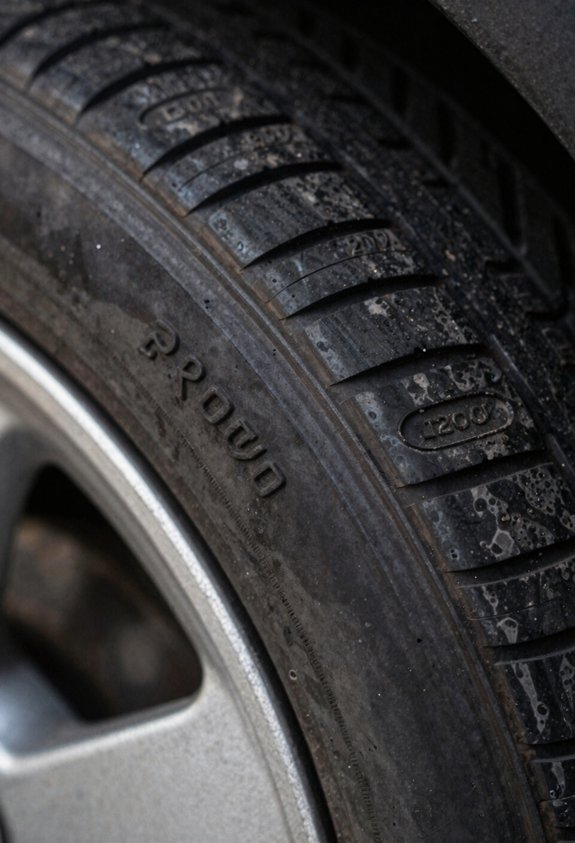
Not every tire follows the modern 4-digit convention I’ve just outlined, and when I’m examining older rubber, particularly anything manufactured before the year 2000, I encounter a fundamentally different encoding system that demands extra scrutiny.
3-Digit Date Code Structure
Pre-2000 tires display a 3-digit date code: the first two digits indicate the week of manufacture, while the final digit represents the year. For example, “439” translates to the 43rd week of 1999.
Critical Limitations
This format creates year digit ambiguity, as “439” could theoretically mean 1989, 1979, or 1969. The DOT/TIN code lacks century specification, making precise dating impossible without additional context.
Safety Considerations
Given tire aging risks, I never rely solely on my interpretation. Professional verification remains essential for establishing accurate manufacturing dates and assessing whether replacement is warranted.
How Old Is Too Old? Tire Age Safety Limits
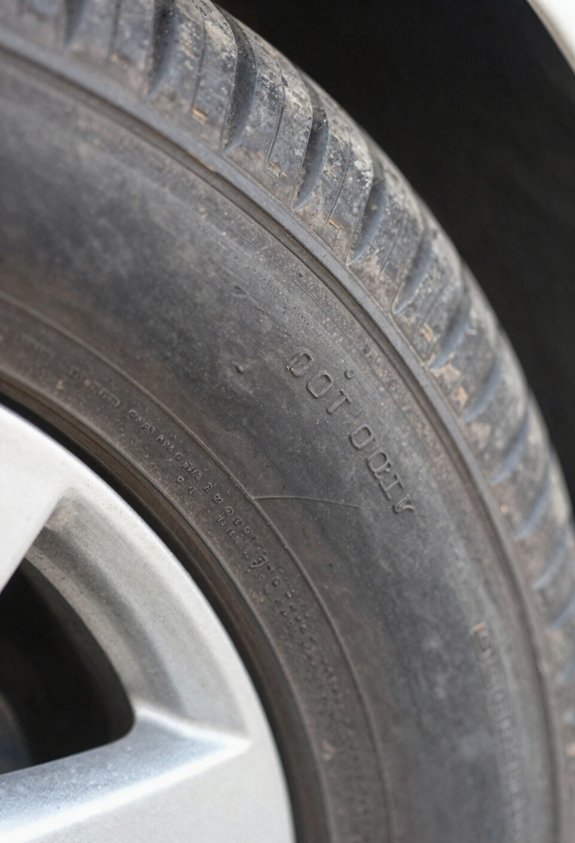
Now that you can read your tire’s birth date, I’m going to walk you through what the numbers actually mean for your safety on the road. Industry safety guidelines, which I’ll break down with specific replacement timeframes from major manufacturers and safety organizations, aren’t just suggestions; they’re based on rubber degradation chemistry, heat cycling damage, and real-world failure data that accumulates regardless of tread depth.
I’ll show you why a tire with plenty of tread can still be a blowout risk once it crosses certain age thresholds, typically ranging from six to ten years depending on climate, storage conditions, and usage patterns.
Industry Safety Guidelines
Although tire manufacturers and government agencies don’t always align on exact timelines, I’ve found that understanding these varying safety guidelines helps me make informed decisions about when to replace aging rubber.
Decoding Your DOT/TIN Date Code
The DOT (Department of Transportation) number, also called the TIN (Tire Identification Number), contains your tire’s birth certificate. For post-2000 tires, I read the last four digits of this date code: the first two indicate the week of production, the last two the year. A code reading 1422 means the 14th week of 2022; 0913 signals the 9th week of 2013.
Pre-2000 tires use three digits: 439 equals the 43rd week of 1999.
Industry Recommendations
Most manufacturers suggest replacement at six years tire age, while DOT guidelines urge caution approaching ten years. I always inspect for cracking, bulging, or tread separation, regardless of what the numbers indicate.
Replacement Timeframes
Once I’ve decoded the date code stamped into the sidewall, I’m faced with the practical question of what that age actually means for my safety on the road. Most manufacturers and safety experts recommend tire replacement at six to ten years, regardless of tread depth, because rubber compounds degrade over time.
The DOT/TIN four-digit code, showing week and year, gives me the manufacturing date I need to calculate tire age accurately.
| DOT Date Code Format | Interpretation | Replacement Indicator |
|---|---|---|
| Four-digit (2000+) | First two digits = week, last two = year | 6-10 years from this date |
| Three-digit (pre-2000) | Week + single year digit (ambiguous) | Immediate replacement advised |
| Thirteen-character TIN (post-April 2025) | Four-digit date code retained | Same 6-10 year standard applies |
I check this code alongside tread wear and visible damage, since tire age alone doesn’t tell the complete story.
Why the DOT Stamp Proves Your Tire’s Legitimacy
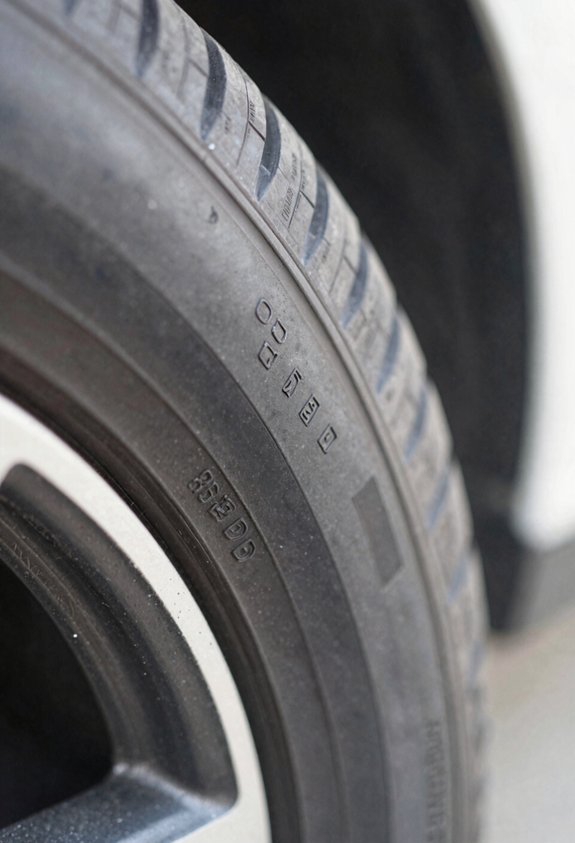
Never trust a tire lacking this verification. The DOT stamp distinguishes regulated, trackable products from unsafe counterfeits, giving you, and everyone you share the road with, documented protection.
Load Index, Speed Rating, and UTQG: Your Full Sidewall Decoded
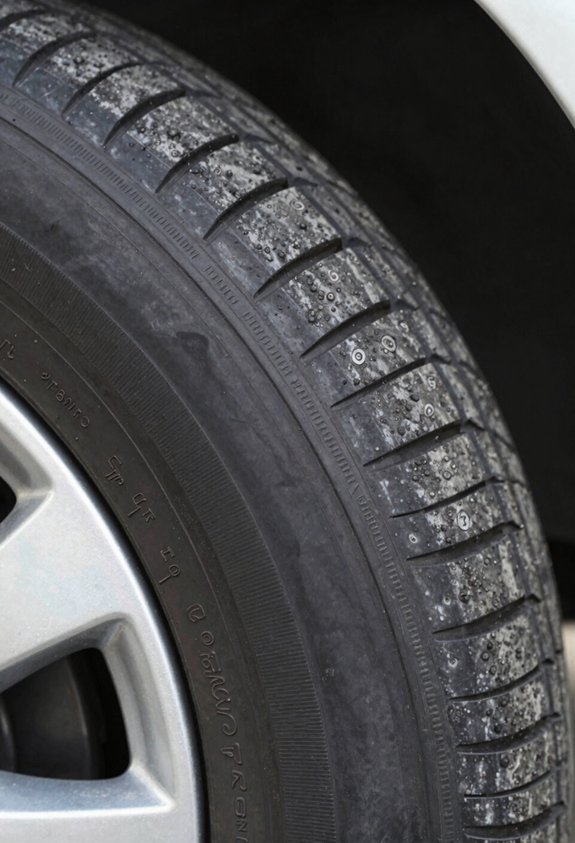
I’ll examine the sidewall markings beyond the DOT code, where you’ll find critical performance specifications that determine whether a tire suits your vehicle’s demands. The Load Index and Speed Rating appear as paired codes, such as 97T or 120/116Q, indicating maximum carrying capacity and safe velocity thresholds, though these must always be cross-referenced against your placard rather than used as standalone replacement criteria.
I’ll also break down the UTQG system, which provides standardized Treadwear, Traction, and Temperature grades to help you compare relative durability, wet-road grip, and heat dissipation across different tire models.
Load Index Explained
Beyond the tire’s basic size designation lies a critical trio of performance codes: Load Index, Speed Rating, and UTQG. I’ll decode these so you can select rubber capable of safely supporting your vehicle’s demands.
Load Index: The Weight Your Tire Can Bear
The Load Index is a numeric code stamped on the sidewall, indicating maximum weight capacity. In “P225/60R16 97T,” the number 97 translates to 1,609 pounds per tire. Never downgrade this value. Underestimating loads risks catastrophic failure.
Locating Critical Information Alongside DOT Codes
While examining your Tire Date Code (the DOT-prefixed sequence revealing week of year and year of manufacture), you’ll spot the Load Index near the tire identification number. That plant code preceding manufacture dates shares space with these performance indicators, creating a complete technical profile on your sidewall.
Speed Rating Guide
| Speed Rating | Max Speed (mph) | Common Application |
|---|---|---|
| T | 118 | Family sedans, minivans |
| H | 130 | Sport sedans, coupes |
| V | 149 | High-performance vehicles |
I always cross-reference Speed Rating with Load Index before installation, because mismatched components compromise safety regardless of UTQG scores or DOT compliance. Your Tire Date Code confirms age, but these ratings determine operational limits.
UTQG Grading System
I examine UTQG grading because it completes our tires performance understanding. These metrics, mandated by federal regulation, let us compare models objectively.
However, I caution: standardized laboratory conditions differ from real-world variables (climate, load, inflation pressure, driving habits). Use UTQG as comparative guidance, not prophecy, and remember that manufacturers conduct their own testing.
When to Replace: Putting Date Codes to Work
Once you’ve deciphered the date code stamped into your tire’s sidewall, you’re holding critical information that directly informs your replacement timeline, since age-related degradation operates independently of how much tread remains or how the tire visually appears.
I check my DOT code carefully, knowing the tire date code reveals week and year of manufacture, critical data for assessing tire age. On post-2000 tires, I read the final four digits of the DOT/TIN, while pre-2000 vs post-2000 decoding differs significantly (three digits versus four). When I replace tires, I follow manufacturer guidance:
- Six years is my replacement benchmark for most tires
- I never exceed ten years regardless of visible condition
- I document manufacture dates immediately upon purchase