
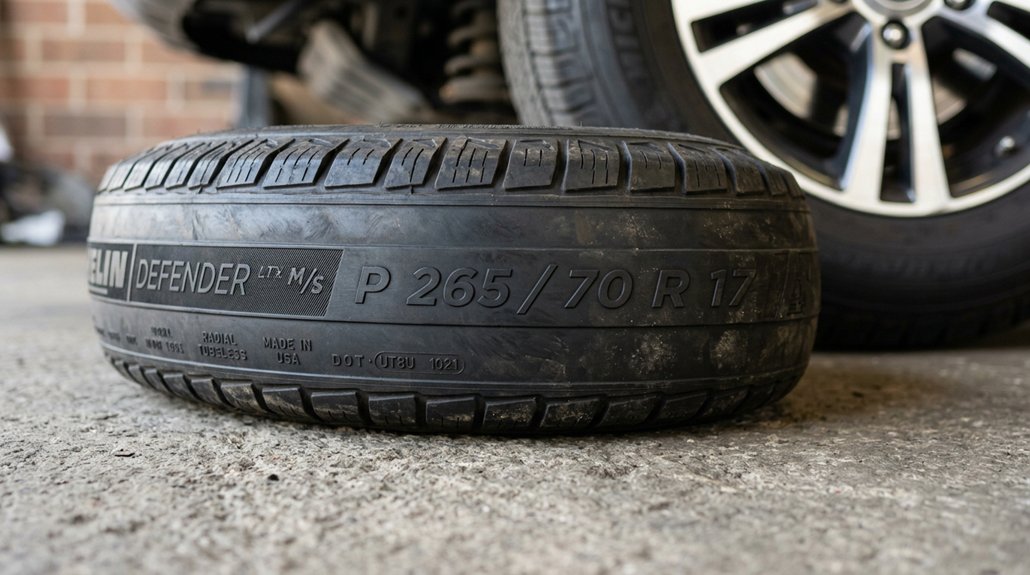
A tire’s sidewall is a cryptic ledger, etched with codes that govern your vehicle’s safety and performance. I will decode these markings for you, because misreading even one number risks catastrophic failure. The stakes are higher than most drivers realize.
How to Read a Tire Size: Left to Right in Under 60 Seconds
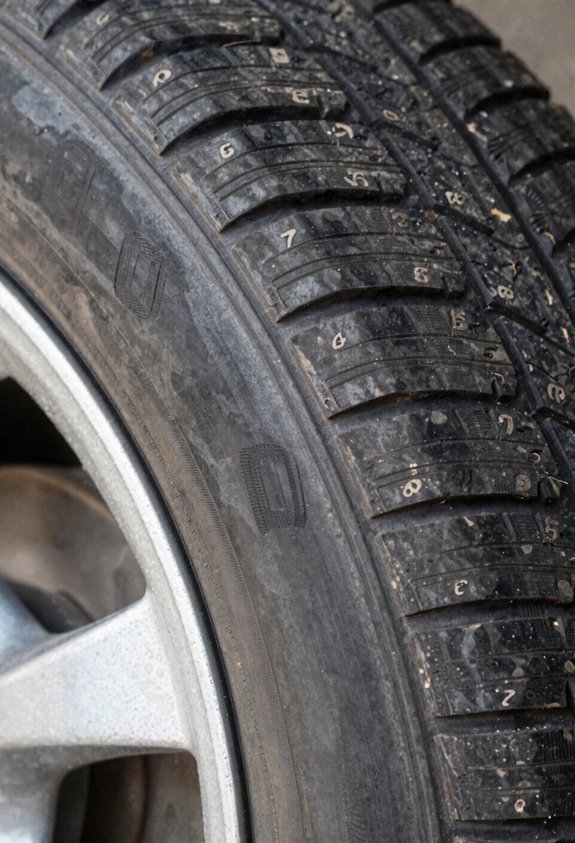
How quickly can you decode the critical specifications molded into your tire’s sidewall? I’ll show you how to read any tire size left to right in under sixty seconds, because understanding your tires shouldn’t feel exclusive: it’s knowledge we all deserve.
Understanding your tires shouldn’t feel exclusive: it’s knowledge we all deserve.
Breaking Down the Numbers
Take 225/70R16, a common tire size you’ll encounter. Here’s what each segment means:
- Width (225): The first number measures tire width in millimeters, sidewall to sidewall. This 225mm measurement directly impacts your vehicle’s contact patch and handling characteristics.
- Aspect Ratio (70): After the slash, this percentage indicates the sidewall height relative to the width, here, 70% of 225mm.
- Construction (R): This letter denotes Radial construction, the industry standard.
- Rim Diameter (16): The final number specifies your wheel size in inches.
Master this sequence, and you’ll never second-guess your tire specifications again.
P, LT, ST: What Your Tire’s First Letter Means
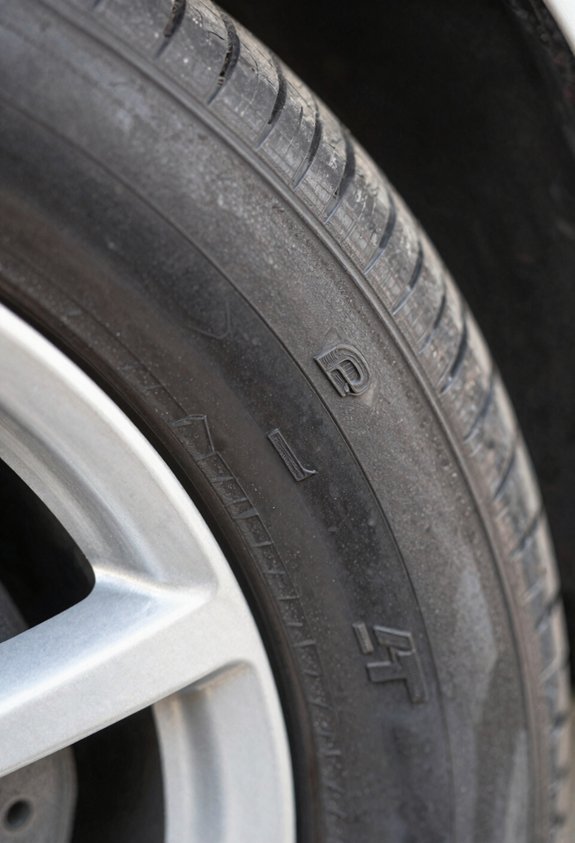
Glancing at your tire’s sidewall, you’ll notice that some sizes begin with a letter while others don’t, and that single character, or its absence, fundamentally determines what your tire is designed to do.
The P in P245/65R17 identifies passenger tires for cars, SUVs, and minivans, specifying a load index and speed rating calibrated for standard vehicle weights. LT, as in LT265/70R17, denotes light-truck tires built for heavier payloads, with reinforced sidewall lettering indicating sturdy construction for trucks and commercial vehicles.
ST signals Special Trailer or trailer tires, engineered exclusively for non-powered axles; these must never mount on drive or steer wheels. When no letter precedes the first number, you’re examining a metric/European tire size designation.
Decode the Middle: Width, Aspect Ratio, and Construction
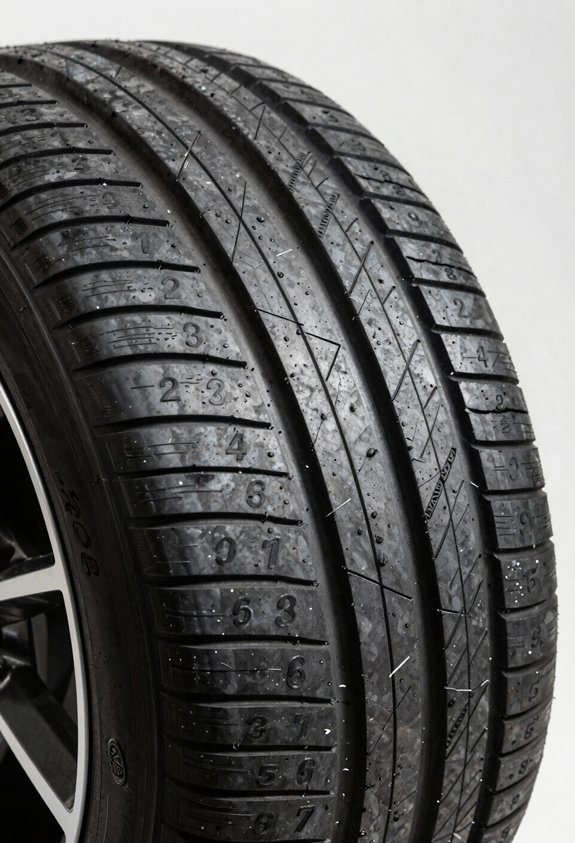
Why do those three numbers and letters clustered in the middle of your tire’s sidewall matter so much? They define everything about how your tire fits, performs, and handles on the road.
Those sidewall markings define everything about how your tire fits, performs, and handles on the road.
The Three Critical Measurements
- Width: The three-digit number (e.g., 225 in P225/70R16), measured in millimeters, indicating sidewall-to-sidewall distance.
- Aspect ratio: The two-digit figure after the slash, expressing sidewall height as a percentage of width (70 means 70% of 225 mm), directly impacting ride comfort and handling precision.
- Construction: The letter revealing internal structure; R for radial (dominant standard in modern P-metric tire sizing), or D for diagonal/bias ply (rare, mostly trailer applications).
Together, these elements determine your tire’s overall diameter, contact patch, and wheel compatibility. Mastering this middle section lets you confidently compare options and verify proper fitment before purchasing.
Rim Size, Load Index, and Speed Rating: The Final Digits
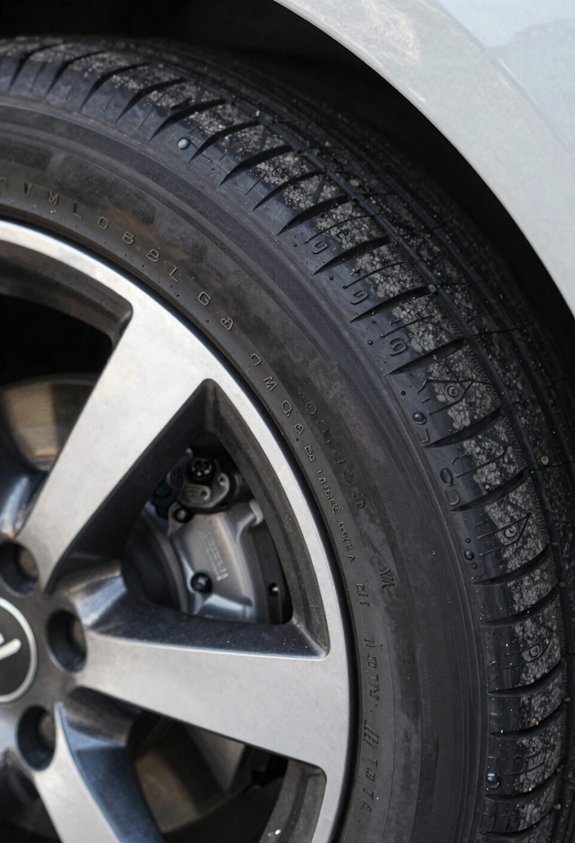
I’ve walked you through width, aspect ratio, and construction, and now I’m going to bring you to the endpoint of the tire code: rim diameter, load index, and speed rating.
These final specifications, the two-digit rim diameter following the construction letter, the numerical load index indicating weight capacity, and the alphabetic speed rating denoting maximum sustained velocity, are non-negotiable parameters that must align precisely with your vehicle’s requirements. Mismatched rim size prevents mounting entirely, while inadequate load or speed ratings create dangerous failure risks under stress.
When you select tires, I recommend verifying that all three values meet or exceed your manufacturer’s specifications, remembering that your vehicle’s overall speed capability is always limited by its slowest-rated tire.
Rim Diameter Basics
Where exactly does the tire meet the wheel, and what do those final cryptic markings actually tell us about performance limits?
Rim Diameter: The Critical Interface
I know you’re trying to decode your tire size completely, so let’s examine where rubber meets metal. The rim diameter appears right after the construction letter on your sidewall, in P225/70R16, that “16” means 16 inches, measuring where the tire’s bead seat contacts the wheel diameter.
Key Distinctions by Tire Category
- LT‑Metric and Euro‑Metric Commercial tires may display dual load index figures for single versus dual mounting configurations
- Your rim diameter must precisely match your wheel; even half-inch deviations risk catastrophic bead failure, blowouts, and complete loss of vehicle control
Measure carefully. Your safety depends on this exact dimension.
Load Index Meaning
The digits immediately following your rim diameter aren’t arbitrary serial numbers; they’re the load index, a standardized numerical scale that translates directly into how much weight each tire can safely support when properly inflated.
Your load index appears as a two- or three-digit number on the sidewall, positioned after tire construction and rim diameter, but before the speed rating. Each value corresponds to a specific load-carrying capacity at maximum inflation pressure; higher numbers mean greater weight capacity.
You’ll find dual numbers on tire size markings for LT-Metric applications, indicating single versus dual wheel configurations. During any tire replacement, match or exceed your original vehicle specification; selecting an insufficient load-carrying capacity compromises safety, handling, and structural integrity. Ignoring this specification risks catastrophic failure under load.
Speed Rating Importance
Your overall vehicle speed is limited by the lowest speed rating among all four tires, so mixing grades compromises tire safety. Exceeding the rated speed generates dangerous heat buildup, risking catastrophic failure.
The load index paired beside it on the tire sidewall must also match your vehicle’s demands. Together, these final digits guarantee tire performance and protect you at every velocity.
How to Read Flotation (Off-Road) Tire Sizes
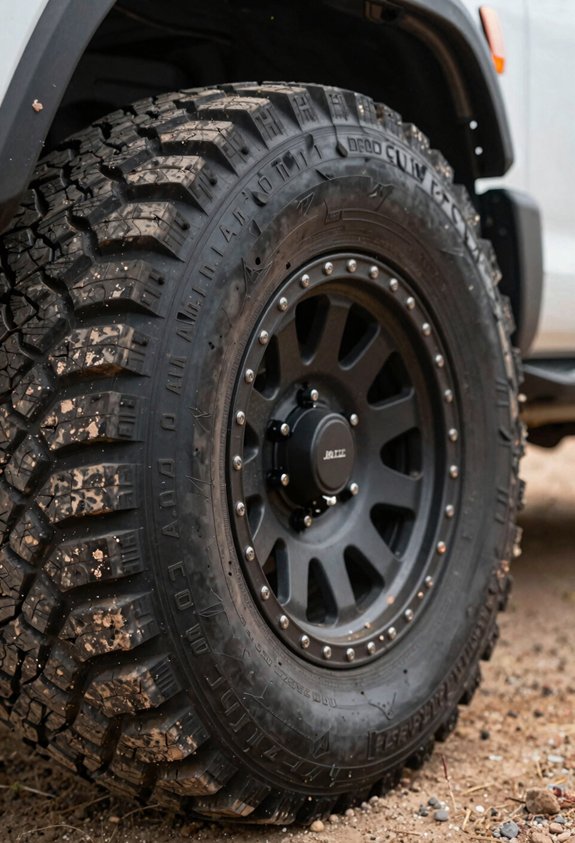
Why does flotation sizing look so different from the metric codes I’ve already covered? Flotation tire sizes follow an inch-based format, such as 33X12.50R17LT 120Q, prioritizing overall diameter first and section width second, directly opposing metric sequencing. This reversal matters because you’re joining an off-road community that speaks this language fluently.
Breaking Down Flotation Tire Sizes
The overall diameter (33 inches) appears first, followed by section width (12.50 inches), then tire construction (R for radial, D for bias ply). The LT designation signals light-truck duty, distinguishing these from passenger tires and confirming dual-application capacity limitations: flotation tires cannot run dual setups despite showing two load index values. Many off-road tires lack UTQG rating requirements entirely.
Critical Specifications to Verify
- Confirm LT marking appears before load index
- Verify single- versus dual-rated load capacities match your axle configuration
- Check for missing UTQG ratings, which indicates exemption from standard grading
What Tire Size Actually Fits Your Vehicle?
- P-metric sizes (e.g., P225/70R16) suit most passenger vehicles
- LT-metric sizes (e.g., LT245/75R16) handle heavier loads for trucks and SUVs
I never compromise on load index or speed rating, which must meet or exceed your vehicle’s requirements. Before deviating from stock dimensions, I consult an authorized retailer to confirm vehicle clearance, speedometer accuracy, and structural compatibility; safety depends on precision.