
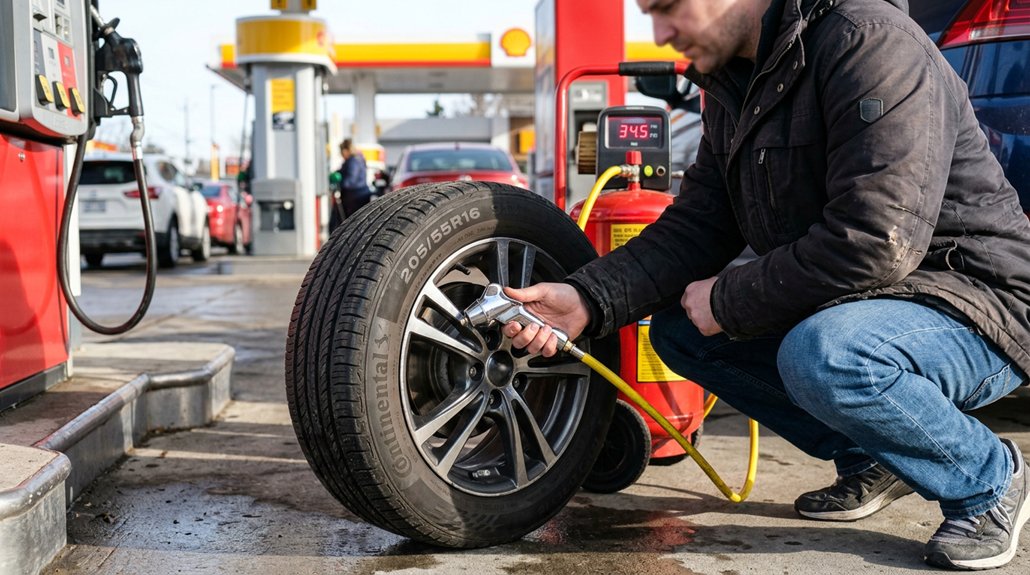
The NHTSA reports that tires underinflated by 25% are three times more likely to cause a crash, yet most drivers check pressure less than once a year. You’ll need to know the precise technique, not just the general idea, to avoid overinflation, valve damage, or uneven wear that compromises handling.
The three-step method I’m breaking down eliminates guesswork, but one common mistake at the pump can ruin your tire’s internal structure before you even notice.
Check Your PSI Before You Drive
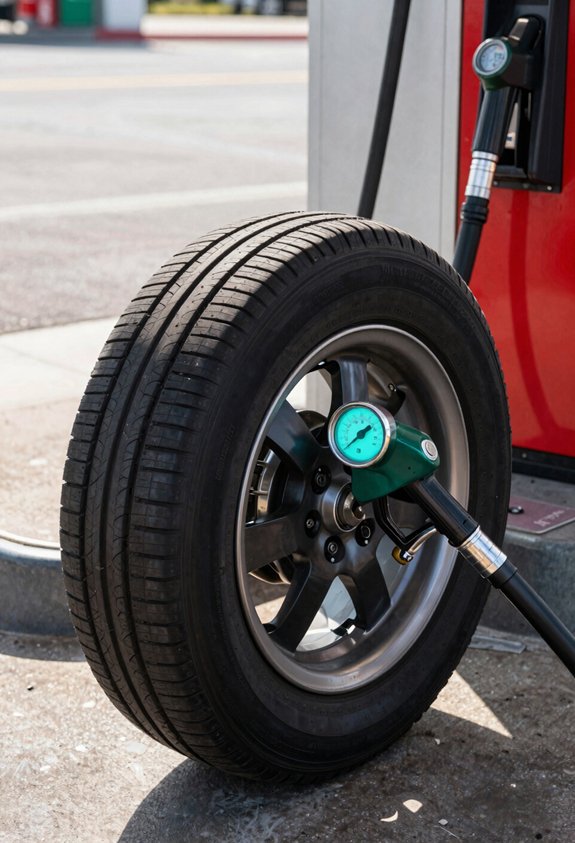
Why risk improper inflation when a few minutes of preparation guarantees both accuracy and safety? I always check your psi before you drive, and I’m inviting you to join those of us who prioritize proper maintenance.
First, locate your recommended pressure on the driver’s door jamb sticker; never trust the tire sidewall maximum, which differs from your vehicle’s optimal tire inflation. Most passenger cars need 32–35 PSI.
I wait for cold tires, meaning at least three hours since driving, because heat expands air and skews readings. Then I remove the valve cap, press my tire pressure gauge firmly onto the valve stem, and record the measurement. A reliable tire gauge prevents the inaccuracy common with gas station inflator gauges, which face constant use and calibration issues.
Put Air in Your Tire at the Gas Station Pump
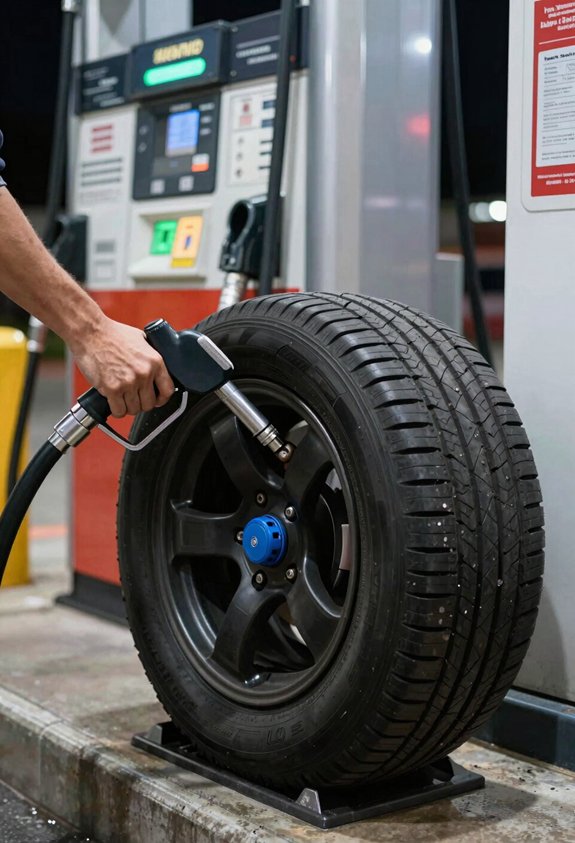
Once I’ve confirmed my tires need air and I’m standing at the gas station pump, I begin by removing the valve cap from the first underinflated tire and placing it in my pocket or a secure spot where it won’t roll away or get lost. I connect the air pump hose firmly to the valve stem, making sure a tight seal to prevent leakage during inflation.
I inflate in bursts of 2-3 seconds, periodically detaching the hose to check tire pressure with my gauge, comparing pressure readings against the PSI listed on my door jamb sticker. This prevents overinflation, which damages tire integrity. I continue until the gauge matches the recommended PSI exactly. I replace the valve cap securely, checking it seals properly, then repeat this process for each underinflated tire before finishing.
Confirm Your Pressure and Drive Safer
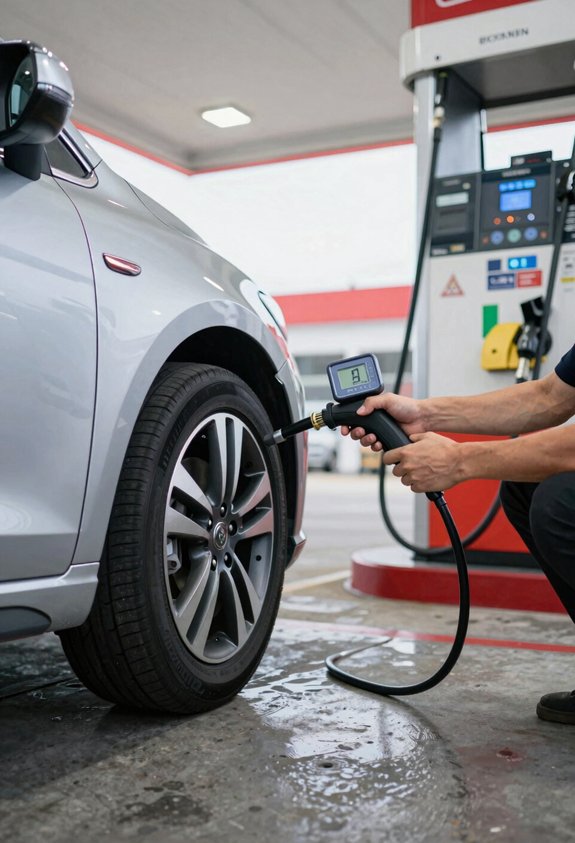
After I’ve finished inflating each tire, how do I know I’ve actually achieved safe, road-ready pressure? I recheck each one with a gauge against my door jamb sticker’s PSI recommendation, never the sidewall maximum.
Verify Correct Inflation
I always inflate when tires are cold; no driving for three hours, because hot rubber skews readings toward over-inflation. At the gas station, I inflate in short bursts, checking frequently until I hit target PSI. Then I check that all four tires match, since uneven pressure compromises handling.
Secure and Protect
I twist every valve cap tight; they’re my first defense against debris and slow leaks.
Drive with Confidence
Proper tire pressure isn’t merely maintenance, it’s the foundation of safety and fuel efficiency. When I’ve checked every PSI reading, I know I’m driving smarter, saving money, and keeping my community’s roads safer for all of us.