
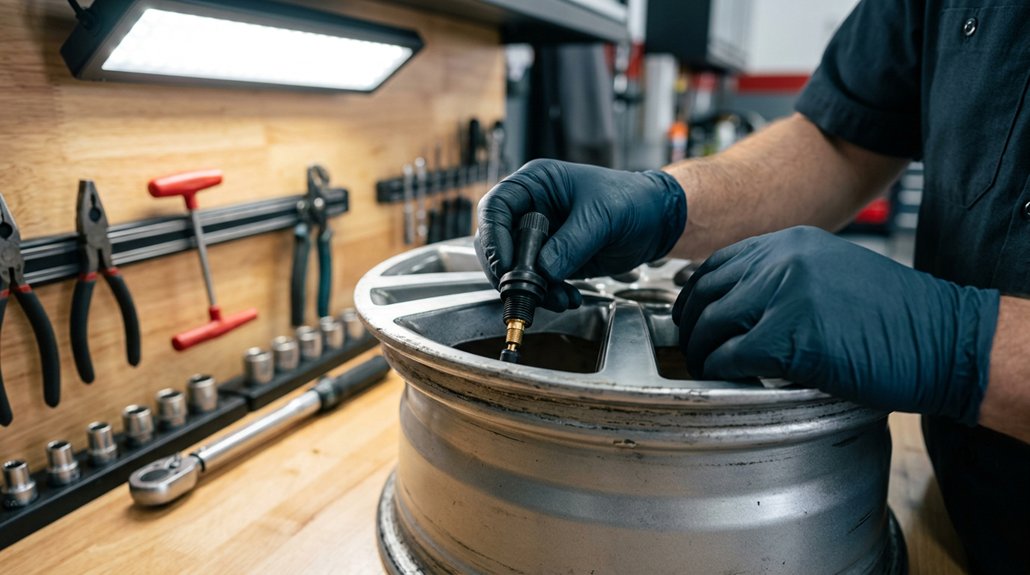
I’ve installed hundreds of valve stems, and one wrong move can destroy a tire or trigger a TPMS failure. You’ll need precise technique, proper torque specs, and the right stem type: rubber snap-in, metal clamp-in, or TPMS-specific. The process demands bead breaking, hole inspection, lubricant selection, and leak verification.
Most DIYers fail at steps 6 and 8. Here’s exactly how to avoid their mistakes.
Select the Correct Valve Stem for Your Vehicle
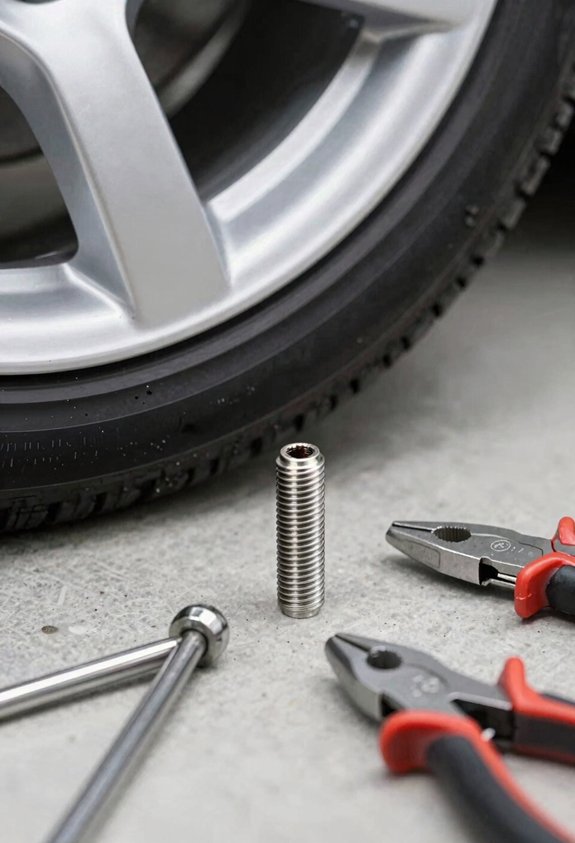
I need to select the correct valve stem for my vehicle before beginning any installation procedure, as this foundational choice determines both the safety and longevity of the tire assembly. Let me walk you through what matters here, so we get this right together.
Valve Stem Type and Wheel Design
I consider my wheel design first, because this dictates whether I need a rubber snap-in stem (standard for passenger cars and light trucks) or a metal clamp-in stem (required for trucks and high-speed applications). Snap-in stems aren’t reusable after removal, while clamp-in stems need fresh grommets at each service.
Hole Size and TPMS Compatibility
I verify my wheel’s hole size, either .453 or .625 inches, matches my selection. Finally, I check for TPMS compatibility; without it, I’ll trigger fault codes and dashboard warnings.
Assemble Your Tools and Materials
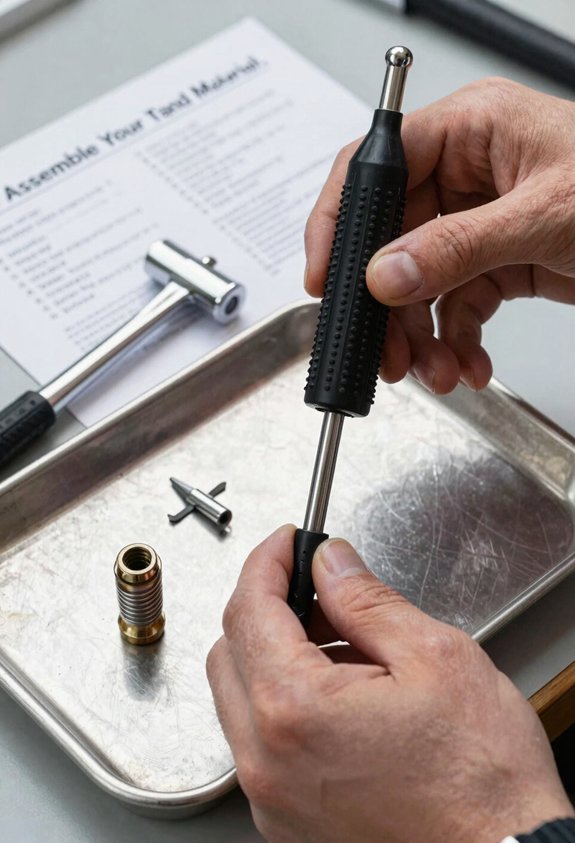
Before I break the tire bead or touch a single bolt, I’ve learned to lay out every tool and component my specific installation demands, cross-referencing my valve stem type, snap-in rubber or clamp-in metal, with the corresponding grommets, washers, and torque specifications. You’ll want your valve stem installation tool, bead breaker, torque wrench (set to 25-35 in-lbs for most metal stems), and soapy water within arm’s reach, since interrupted workflow invites contamination and improper seating.
I don’t proceed until my safety equipment, including rated glasses and cut-resistant gloves, is donned and my air compressor’s delivered a verified, clean pressure reading.
Essential Equipment Checklist
Don’t forget your jack, jack stands, lug wrench, and bead seating compound (this lubricant prevents damage during insertion). For bolt-in metal stems, I keep grommets, washers, nuts, and a 14mm socket ready. Rubber snap-in types demand a puller or insertion tool, plus matching valve cores.
Safety gloves and glasses protect you throughout. If your vehicle carries TPMS sensors, confirm stem compatibility immediately. A proper leak test with soapy water catches failures before they strand you roadside.
Tool Selection Tips
Laying out every tool on a clean work surface prevents mid-job scrambles that can compromise safety or damage components. I always start with the valve stem tool or core removal device, which handles extraction and insertion, plus a dedicated valve core removal implement for releasing old cores and reinstalling fresh ones after seating.
For breaking stubborn tire beads, you’ll need a manual bead breaker or hydraulic equivalent; never pry bars, which damage rims. Your tire inflator or air compressor must deliver sufficient volume (8-10 CFM minimum) to seat beads rapidly without overheating. Include a torque wrench (80-100 ft-lbs for most vehicles), safety glasses, cut-resistant gloves, soapy water for leak detection, and wheel chocks.
For rubber snap-in stems, keep seal lubricant ready; metal clamp-in types require grommets, washers, and correct nuts. TPMS-equipped wheels demand compatible stems or service kits; verify before starting.
Position Your Vehicle Safely and Remove the Wheel
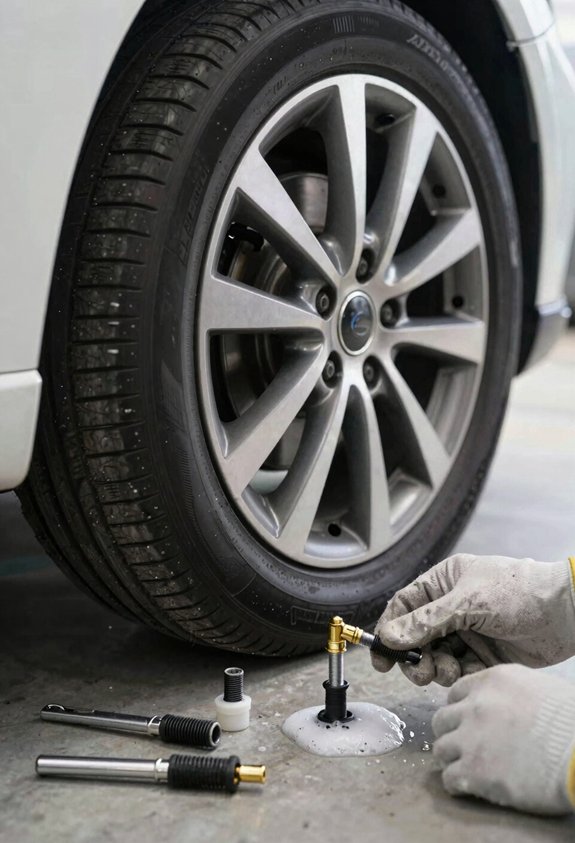
Where exactly should you position your vehicle before beginning valve stem replacement?
Find flat, level pavement away from traffic, engage the parking brake, and block the opposite wheels before proceeding.
I recommend finding flat, level pavement away from traffic, engaging the parking brake, and blocking the opposite wheels before proceeding.
Prepare for Wheel Removal
First, I loosen the wheel lug nuts slightly while the tire still touches the ground, preventing dangerous rotation. Then I position my jack at the manufacturer-approved lifting points; consult your manual, as improper placement damages structural components. Raise the vehicle until the tire clears the surface. I immediately secure jack stands beneath designated support areas, lowering the jack so the frame rests entirely on these stands. Never trust the jack alone.
Remove the Wheel and Position for Access
I finish removing the wheel lug nuts, pull the wheel straight toward myself, and as I lay it flat, I rotate it so the valve stem faces upward. This positioning gives me clear access to the valve hole during valve stem replacement. With the remove wheel step complete, you have opened the path to the tire’s interior.
Deflate the Tire Completely Before Breaking the Bead
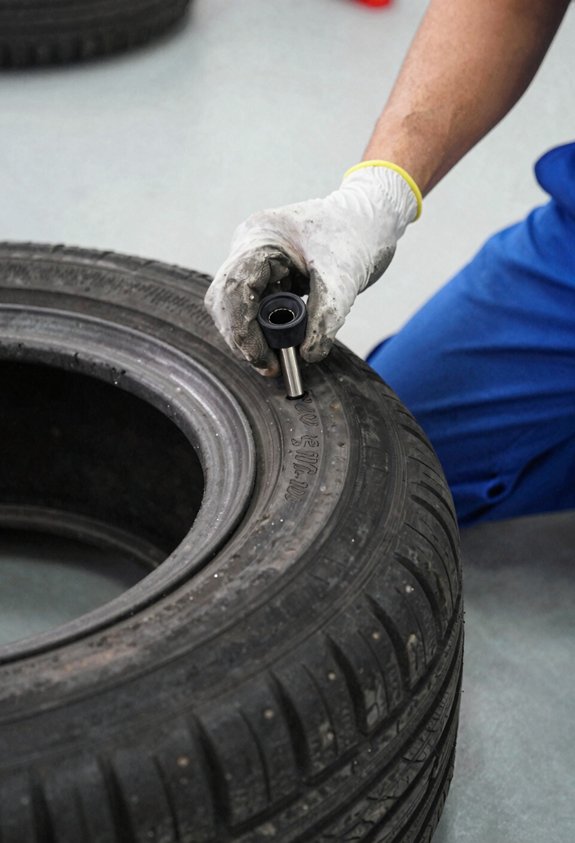
With the wheel positioned valve-upward and resting on a stable, flat surface, I move immediately to complete deflation, since any trapped air creates explosive risk during bead breaking.
Complete Deflation Procedure
I grab my valve core removal tool, insert it into the valve stem, and twist counterclockwise until the core releases. Air rushes out; I let it deflate fully, which typically takes 30-60 seconds for standard passenger tires. I never rush this step; residual pressure turns bead break operations dangerous, potentially causing sudden tire movement or injury.
Verification Methods
Once hissing stops, I press the valve stem; no resistance means success. I also listen closely for escaping air. Complete tire valve stem installation demands zero pressure; even 5 PSI risks unpredictable bead behavior. I confirm deflation twice before proceeding, because shortcuts compromise safety and technique integrity.
Break the Tire Bead to Access the Valve Stem
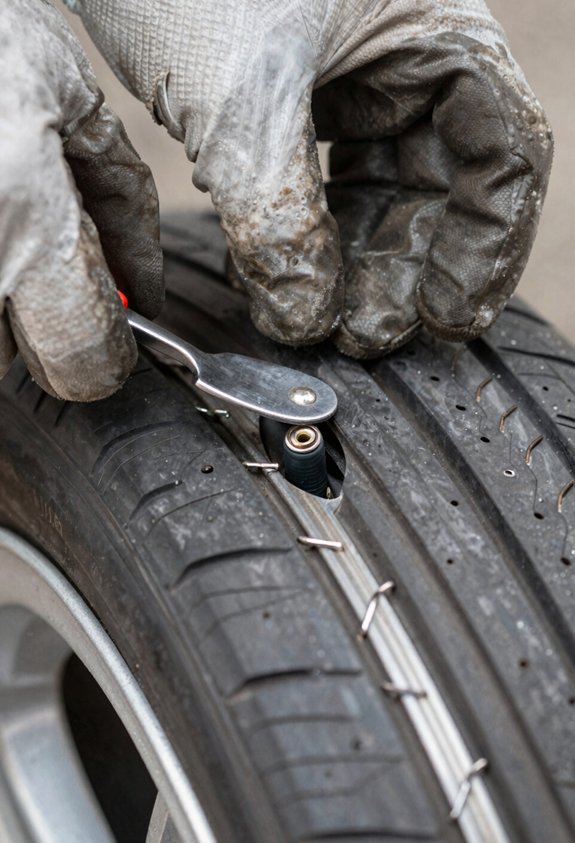
I position my bead breaker against the tire sidewall, applying steady pressure to separate the bead from the wheel bead seat without scarring the rim surface. After tire deflation, this mechanical separation creates the necessary clearance for my valve stem tool to pass through the rim hole during replacement.
Critical Considerations for Bead Breaking
| Technique | Risk Level | Outcome |
|---|---|---|
| Manual bead breaker | Moderate | Controlled separation, minimal rim damage |
| Tire iron leverage | Higher | Requires skill to avoid wheel scratching |
| Hydraulic press | Lower | Even pressure distribution, safest option |
I make certain the bead breaks evenly around the circumference, preventing tire slippage or distortion. I lay the wheel with the valve stem facing upward, maintaining clear access while I work. Uneven breaking risks structural damage to both tire and rim.
Pull Out the Old Valve Stem Without Damaging the Rim
Why risk rim damage when the right technique makes extraction straightforward? I’ve found that tire bead access is essential, so I release all air first by removing the valve core, then break the bead on one side to create working space.
For old valve stem removal, I position my valve stem puller carefully, hooking the tool around the rubber body to extract it smoothly through the rim hole without tearing the base seal. If I’m dealing with a snap-in design, I push from the inside while keeping the wheel steady; scratching the rim here would compromise everything we’ve done so far. I maintain firm, even pressure throughout, knowing that patience prevents costly mistakes. This methodical approach protects your investment and keeps you firmly in control of the process.
Clean and Inspect the Valve Hole for Burrs or Corrosion
I’ll inspect the valve hole from inside the wheel, looking for burrs, corrosion, or sharp edges that could compromise the new stem’s seal, and I’ll check for white powdery residue around metal surfaces as a telltale sign of degradation. I’ll clean out all debris, dirt, and old grommet fragments that might cause air leaks, making sure the surface is pristine before proceeding.
If I find any burrs, I’ll smooth them carefully with a small deburring file or fine sandpaper to guarantee a secure, airtight fit for the replacement valve stem.
Visual Inspection Steps
Where exactly should your attention focus before pressing a new valve stem into service?
Critical Inspection Zones
I direct my examination to the valve hole and its immediate surroundings, knowing that overlooked imperfections here compromise everything that follows. I scan methodically for burrs, those sharp, raised metal edges that shred rubber seals, and for corrosion, which often announces itself through powdery white residue or pitted discoloration spreading across the rim bed.
I inspect the seating surface where the valve stem will rest, confirming it presents an uninterrupted, flat plane without elongation or deformation that would permit air migration. I trace the rim circumference for rough spots that could nick the stem during insertion, and I verify no debris remains lodged in crevices. This systematic scrutiny prevents failure.
Surface Preparation Methods
Once I’ve confirmed what the visual inspection revealed, I move directly into active remediation of any defects I’ve identified, because observation without correction leaves the same vulnerabilities in place.
Valve Hole Preparation
I begin surface cleaning by wiping the valve hole with a shop rag, applying solvent if corrosion residues persist. For burr removal, I file sharp edges until the seating surface feels uniformly smooth. My corrosion assessment determines whether treatment suffices or replacement becomes necessary, as compromised metal threatens seal integrity.
| Preparation Stage | Tool/Material | Critical Outcome |
|---|---|---|
| Debris removal | Shop rag, solvent | Contaminant-free surface |
| Burr elimination | Fine file, sandpaper | Smooth seating interface |
| Final verification | Dry cloth, visual check | Oil-free, moisture-free condition |
I make certain the surface is completely dry before proceeding; residual lubricants or moisture prevent proper sealing, inviting slow leaks that undermine our collective standard of workmanship.
Seat the New Valve Stem Using Proper Technique
A properly lubricated valve stem is essential for smooth insertion and reliable sealing, so I’ll begin by applying a thin, even coat of rubber lubricant (or mild soapy water as an alternative) to the entire stem surface, paying particular attention to the lower ring and the tapered section that’ll pass through the rim hole.
- Insert the stem top-first into the insertion tool, aligning them carefully
- Slide the combined tool and valve stem through the rim hole until resistance indicates the bottom ring has passed inside
- Pull the stem back upward to lock the bottom ring against the rim’s inner surface, confirming proper seating
- Remove the insertion tool by rotating or releasing per manufacturer instructions, then verify the stem remains secure and properly aligned
With seating complete, you’ve joined countless others who’ve mastered this fundamental skill.
Re-Seat the Bead and Inflate to Manufacturer Pressure
The valve stem now sits securely in the rim, so I turn my attention to re-establishing the tire’s airtight seal by re-seating the bead on both sides of the wheel. Proper bead seating demands that I work the tire into position, making sure the bead contacts the rim flange evenly around the entire circumference before introducing air.
I inflate gradually, stopping at 10 PSI to verify the bead hasn’t slipped, then continue to the manufacturer-specified inflation pressure, typically 30-35 PSI for passenger vehicles, though I always cross-reference the placard. During this process, I perform preliminary leak testing by applying soapy water to the valve stem installation site and bead interface, watching for bubble formation that indicates incomplete sealing.
| Bead Seating Checkpoint | Action Required |
|---|---|
| Visual bead alignment | Confirm even rim contact |
| Initial inflation (10 PSI) | Verify bead position |
| Full inflation pressure | Match manufacturer spec |
| Soapy water application | Detect leaks early |
If bubbles persist, I deflate, reseat, and repeat.
Test for Leaks and Complete Your Installation
Now that you’ve seated the bead and inflated the tire, you’ll move to Leak Detection Methods and Final Inspection Steps, where I’ll show you how to confirm your installation holds pressure and meets safety standards. I’ll walk you through applying soapy water to expose escaping air bubbles, verifying torque on your reinstalled wheel, and checking TPMS compatibility if your vehicle’s equipped with tire pressure monitoring.
These verification steps aren’t optional shortcuts; they’re your assurance against roadside failures, pressure loss, and the costly damage that follows undetected leaks.
Leak Detection Methods
How can I be certain the installation holds? I rely on proven leak detection methods that verify every seal point between the valve stem and wheel assembly.
My Four-Step Verification Process
- I inflate the tire to manufacturer-specified pressure, typically 32-35 PSI for passenger vehicles, then wait 24 hours to confirm pressure retention.
- I perform the soapy water test, brushing the solution across the valve stem base and bead seating area, watching intently for expanding bubbles that betray escaping air.
- I inspect the valve core directly, making certain of proper torque and undamaged threads, since a compromised core causes insidious, slow pressure loss.
- I apply professional-grade leak detector spray or electronic detection equipment when bubbles elude visual detection, particularly around complex rim profiles where microscopic gaps hide.
If I detect any valve stem leak, I immediately reseat or replace the component, repeating verification until absolute integrity is confirmed.
Final Inspection Steps
“Final Inspection Steps Once I’ve reinstalled the wheel and brought the tire to its recommended pressure, typically 32-35 PSI for standard passenger vehicles, though I always defer to the placard inside the driver’s door or the tire sidewall for precise specifications, I don’t consider the job finished until I’ve subjected every seal point to rigorous verification.
I conduct a thorough leak check by applying soapy water to the valve stem base and circumference, plus the entire bead seating perimeter, watching closely for bubble formation that indicates seal failure. I verify proper valve stem installation by confirming the bottom ring sits flush inside the rim while the top ring faces outward, then hand-tighten the valve core before final torquing with a core tool, avoiding cross-threading or overtightening that damages threads.
For TPMS compatibility, I confirm sensor integrity if equipped. I retorque lug nuts in a star pattern after a brief settling period, then recheck for leaks, as slow losses often manifest once the tire settles.”