
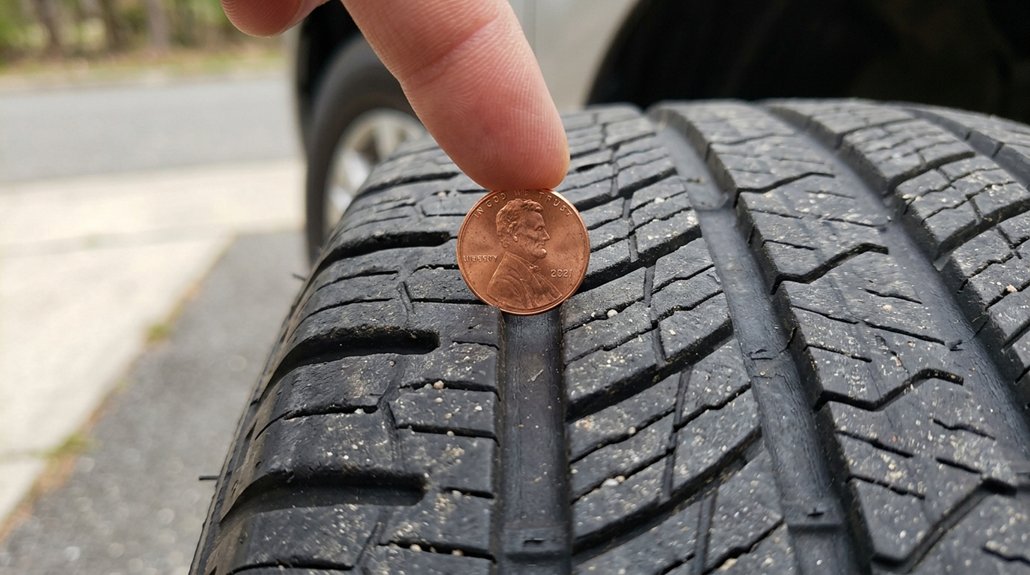
I suspect the penny test’s reliability depends on technique more than most drivers realize. When I insert Lincoln’s head upside down into multiple grooves, I’m not just checking depth: I’m hunting for uneven wear patterns that could mask dangerous thin spots.
The 2/32″ legal minimum tells only part of the story. I’ll explain why your safety actually demands earlier intervention.
Do the Penny Test Right in 60 Seconds
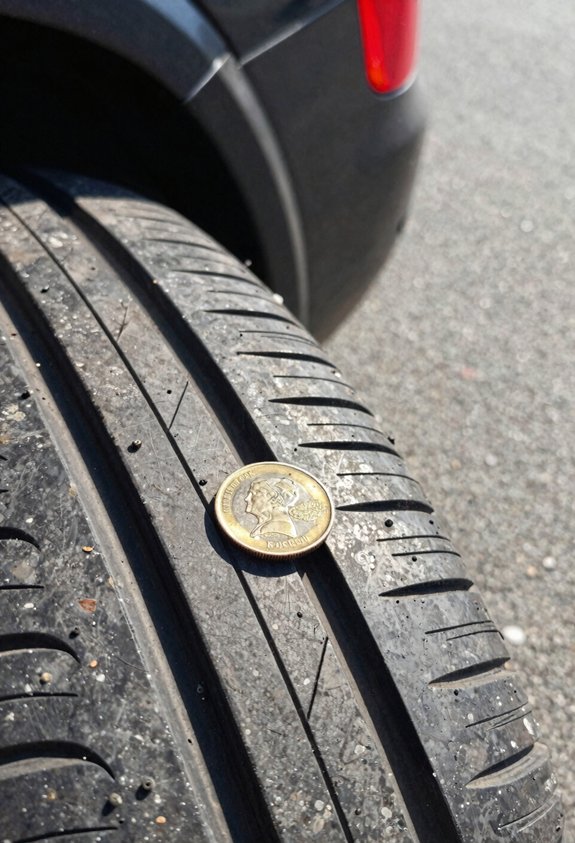
A worn tire can betray its condition through something as simple as copper pressed into rubber. I want you to join me in mastering this essential safety check, because knowing how to measure tread properly keeps us all protected on the road.
Positioning the Penny
Insert a penny into multiple tread grooves with Lincoln’s head upside down and facing you. I always check several spots around each tire, since tire wear rarely distributes evenly across the surface.
Insert a penny upside down in multiple grooves—tire wear rarely distributes evenly, so check several spots around each tire.
Reading the Results
If any portion of Lincoln’s head hides behind the rubber, your tread depth exceeds 2/32 inch. When the entire head emerges between the ribs, you’ve reached the critical wear bars threshold.
Critical Limitations
Even passing results demand caution. I never treat the penny test as complete tire maintenance; it won’t reveal hazardous degradation for wet conditions, where compromised traction already endangers drivers.
Pass, Fail, or Borderline: Read Your Results Correctly
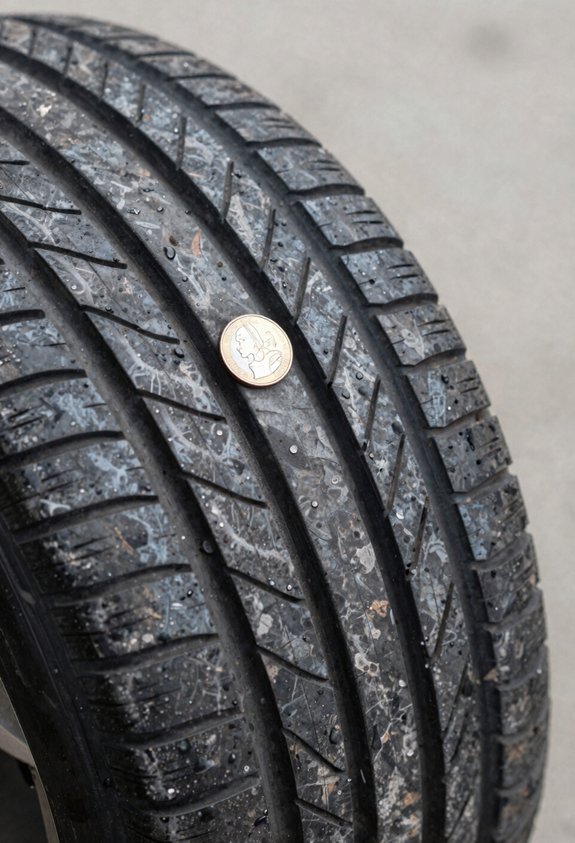
Running a penny through your tread grooves gives you one of three verdicts, and I’m here to help you interpret each without misjudgment. Pass: When Lincoln’s head stays hidden, your tread depth exceeds 2/32 inch, meeting minimum tire safety standards. Fail: If his entire head shows, you’ve hit 2/32 inch or less, replace immediately. Borderline: Partial visibility demands closer inspection.
Borderline results require checking multiple points; uneven wear can fool single-spot assessments. For ambiguous zones, grab a tread depth gauge—penny tests lack precision when millimeters matter.
Even a pass warrants caution: performance degrades well before the fail zone, especially in wet conditions. Cross-reference your penny test with built-in wear indicators (those raised bars between ribs) and periodic gauge measurements. Never rely on one method; combine tools for sound judgments that keep us all safer on the road.
Where to Check Your Penny Test for Uneven Wear
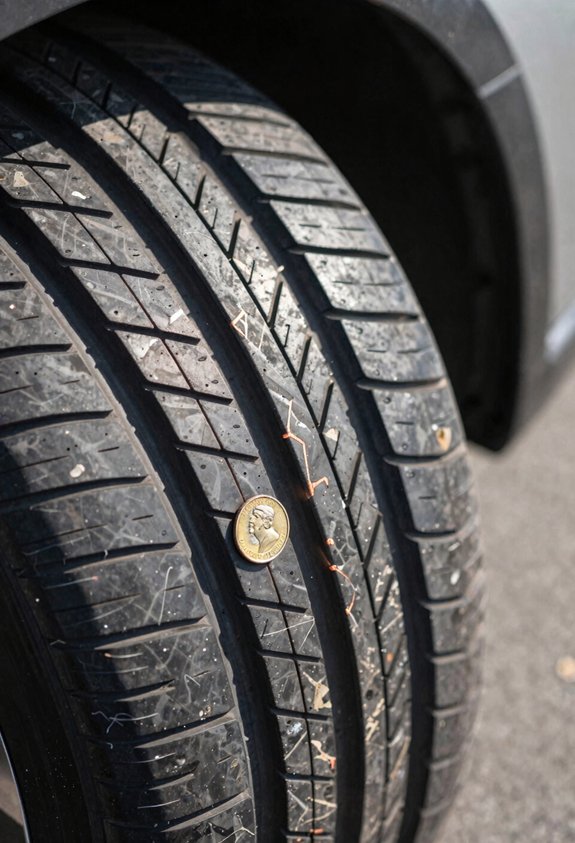
Where exactly should you press that penny into your tread to catch uneven wear before it compromises your safety? I always check multiple measurement locations because uneven wear hides in spots you’d never expect, threatening tire safety when you need it most.
Press that penny into multiple tread locations—uneven wear hides where safety depends on catching it before it’s too late.
Essential Measurement Locations for Your Penny Test
- Inner edge – Camber issues wear this shoulder first, so press Lincoln’s head here to reveal hidden tread depth problems.
- Center ribs – Overinflation creates bald strips; your lowest reading often lives here, below 2/32 inch before wear indicators even appear.
- Outer shoulder – Cornering stress attacks this edge, making it critical for catching uneven wear that compromises handling.
I never rely on a single tire check. Insert that penny, note where Lincoln’s head disappears, and use your lowest reading to decide; your safety depends on it.
Why 2/32nds Is Legally Sufficient but Practically Dangerous
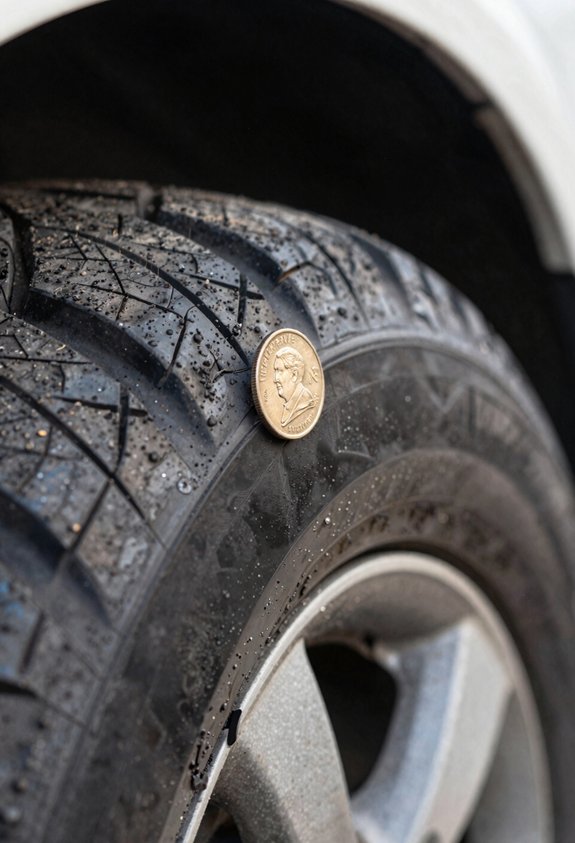
I’ve seen too many drivers learn this lesson the hard way. The penny test, inserting a penny into your tire’s grooves to see if Lincoln’s head disappears, tells you only whether you’ve hit the 2/32 inches legal minimum, not whether you’re actually safe.
When tread depth reaches this threshold, wet traction plummets and hydroplaning risk spikes dramatically. Sure, you’ll pass inspection, but safety margins have already vanished. Tire wear below 4/32″ compromises performance you count on when storms hit.
That’s why I don’t wait for the Lincoln’s head test to fail before planning tire replacement. Belonging to the community of protected drivers means acting before the law demands it.
When to Upgrade to the Quarter Test for Earlier Warnings
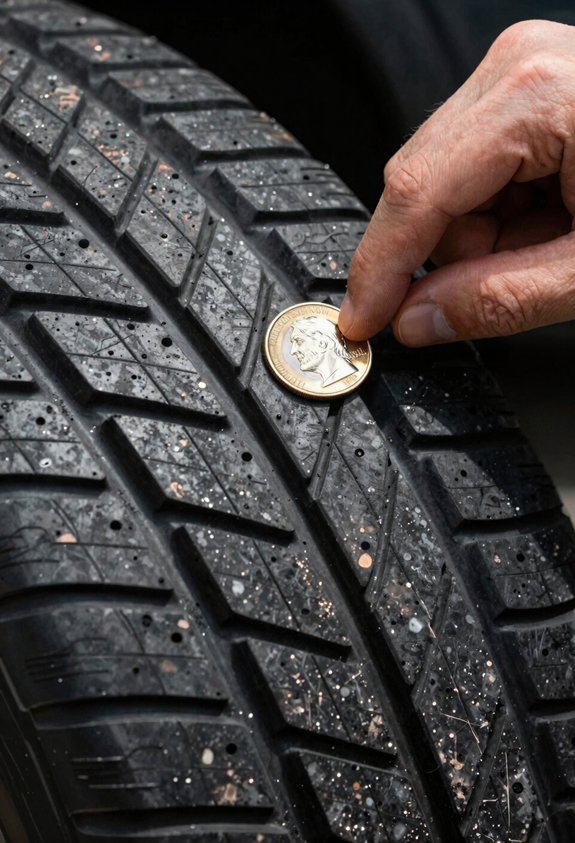
- Rainy seasons approaching, where wet-grip degrades long before the penny test fails
- Winter preparation, because snow traction vanishes around 4/32 inch
- Uneven wear detection, since I check multiple spots per tire and the quarter reveals hidden thin spots
The quarter test raises our safety threshold, giving us time to plan replacements rather than panic-buying in a storm.