

Most drivers will replace tires 5-7 times over a vehicle’s lifespan. Yet most pay 15-30% more than necessary due to hidden fees and miscalculated ownership costs. I want to show you how to avoid that overpayment.
Start With Base Tire Price Before Add-Ons

Where exactly does the tire replacement process begin? I start with the base price, stripping away every add-on until I’m left with the tire itself, nothing more. This foundational cost, typically hovering near $300 for new tires or roughly $100 for retreads, establishes my starting point before mounting, balancing, or valves enter the equation.
I exclude labor entirely, along with dismounting and disposal fees, because these distort my true comparison. I also watch for Federal Excise Tax, which tacks $18–$28 onto new tires; retreads dodge this. By isolating the base price first, I build transparency into my calculation, itemizing each subsequent charge to reach my installed total. This method keeps me grounded, preventing sticker shock when the final quote arrives.
Count Mounting, Balancing, and Installation Costs
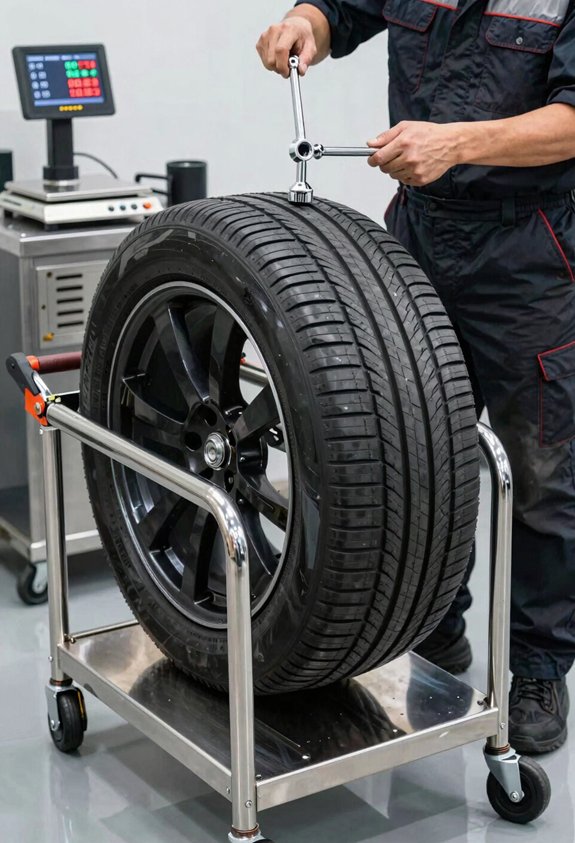
Why do so many drivers underestimate the true cost of tire installation? I see it constantly: people focus on the tire price alone, then stagger at the final bill.
Here’s what I’ve learned: installation costs encompass mounting, dismounting, and balancing as distinct labor events, each itemized separately. Labor rates vary significantly by shop, commonly ranging $15–$50 per tire for these services combined. Tire rotation may bundle into packages or carry separate pricing.
Road hazard protection and disposal fees further inflate your total beyond core mounting charges. When I calculate replacement expenses, I demand itemized quotes specifying every labor component. Don’t let opaque pricing surprise you; understanding these layered charges means you’re prepared, not ambushed, when the invoice arrives.
Add Valve Stems, Cores, and Small Hardware
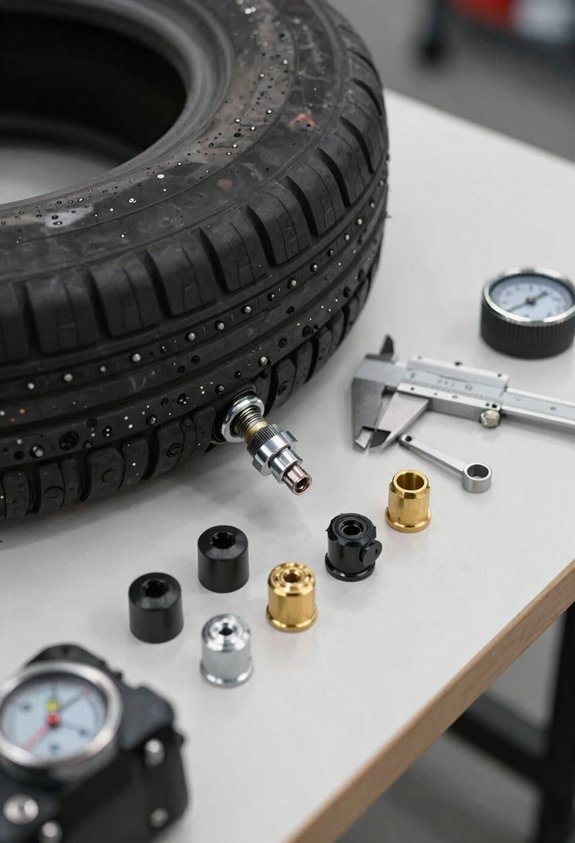
Once you’ve accounted for mounting and balancing labor, you can’t stop there. I’ve watched too many technicians spot corroded stems during a routine change, only to have the customer balk at an unexpected upcharge. Valve stems, cores, and small hardware aren’t optional; they’re necessary permanent components that belong in your total calculation from the start.
| Component | Typical Cost Range |
|---|---|
| Standard valve stems (metal/rubber) | $1–$5 each |
| Valve cores | $0.50–$2 each |
| TPMS-equipped stems | Additional sensor/reprogramming fees |
I always verify whether my quote bundles these into the mounted price or itemizes them as “stem/core service,” since labor time for installation varies by shop. If your vehicle carries TPMS sensors, factor in specialized stems and reprogramming costs; these aren’t corners we cut when calculating true replacement expenses.
Include Tire Disposal and Environmental Fees

How often do you remember to ask about disposal fees before the invoice arrives? I’ve learned this oversight stings when you’re budgeting carefully, because those line items add up fast across four tires. Disposal fees, typically $2-$3 per tire, cover the regulated handling of your old rubber, while environmental surcharges fund recycling and retreading programs your community depends on. You’re part of a system that values responsible stewardship, so factor these costs in early.
Disposal fees hide in plain sight—ask before the invoice surprises you.
- Separate line items, isolate disposal/eco-fees from base tire pricing for clarity
- Verify state surcharges, local regulations vary, and missing these skews your total
- Ask about bundled programs, some warranties wrap disposal fees into unified pricing
- Request written estimates, verbal quotes often omit these mandatory charges
Watch for integrated environmental fees disguised as single payments; understanding the breakdown keeps your calculation honest and your wallet prepared.
Don’t Forget Taxes and Regional Fees
When calculating tire replacement expenses, I’ll account for multiple tax categories and regional fee structures that compound the base price, including the Federal Excise Tax (which ranges from $18 to $28 depending on tire weight), state and local sales taxes, and jurisdiction-specific environmental or disposal levies. These mandatory charges can add 5% to 15% or more to your total. I always verify the complete fee breakdown at the point of sale rather than relying on advertised tire prices alone.
Factoring in these variables prevents budget surprises and helps with accurate cost comparisons between retailers operating in different tax zones.
Tax and Fee Types
Accounting for every tax and fee category prevents unexpected cost inflation when budgeting for tire replacement, a step I consider essential before finalizing any purchase decision. I break down the specific charges you’ll encounter so we stay informed together.
Key Tax and Fee Types
- Federal Excise Tax: I factor this weight-based charge ($18–$28) into all new tire calculations, since it doesn’t apply to retreads
- Regional Sales Tax: I check local rates, as these vary dramatically by municipality and state
- Environmental Fees: I include these location-specific surcharges for tire disposal and recycling programs
- Labor Taxation: I verify whether my jurisdiction taxes installation services separately
When I compare quotes, I confirm each includes identical tax and fee inclusions for accurate cost assessment.
Impact on Total Cost
Critical components affecting your total cost:
Mandatory fees and taxes
- Federal Excise Tax (new tires only)
- Regional sales taxes, tire disposal fees, environmental levies
Service costs
– Labor: mounting, balancing, repairs, emergency service
Neglect these, and you’ve understated true expenditure substantially.
Compare Road Hazard and Warranty Protection
When I’m comparing tire replacement costs, I need to weigh the Cost Comparison Analysis of road hazard protection, typically ranging $10-40 per tire or included in promotional bundles, against potential repair savings from punctures. I also need to examine how Protection Plan Benefits like mileage warranties affect long-term value through prorated replacements when treadwear falls below guaranteed levels.
Retailers structure these protections differently, with some bundling mounting, balancing, and valve stems into “out-the-door” pricing that obscures true per-component costs, making direct comparison essential. I’ll caution that warranty terms vary substantially between brands, with mileage prorations often requiring documented rotations and alignment checks. I always verify claim eligibility requirements before calculating whether added protection reduces my lifetime tire expenditure.
Cost Comparison Analysis
Where exactly does your money go when you pay for tire replacement, and how do bundled protections alter that equation? I break down how road hazard protection, which runs about $12.00 at some shops or comes free elsewhere, directly shapes what you’ll actually pay when that nail finds your sidewall.
- Road hazard protection ($12.00 vs. free) creates immediate price divergence that affects your total upfront investment
- Mileage warranties reduce cost-per-mile over time, rewarding drivers who track treadwear religiously
- Labor bundling (dismount, mount, balance) obscures true protection costs unless itemized separately
- Free valve stems with paid road hazard demonstrate how shops package value to earn your loyalty
We’re all navigating the same confusing quotes. Knowing which protections shift numbers, and which merely shift perception, keeps you from overpaying while still covering genuine risks.
Protection Plan Benefits
Although protection plans appear deceptively simple at the counter, I’m here to show you how road hazard coverage and warranty protections operate as distinct financial instruments with overlapping but non-identical coverage territories.
Road Hazard vs. Warranty Coverage
- Road Hazard Protection: Covers punctures, cuts, and impact damage, often free, though paid options run ~$12.00 per tire, directly affecting your installed price
- Mileage Warranties: Vary by tire make/model and service vocation; steer tires frequently lack guarantees unavailable to passenger tires
- Retread Protections: Include treadwear mileage warranties that complement or substitute road hazard terms
I want you to understand how a protection plan reduces out-of-pocket expenses from road hazards or premature tread/retread failures, depending on specific coverage terms. Warranty credits and rebates substantially influence cost-per-mile calculations, making your protection plan selection integral to accurate lifecycle cost projections.
Calculate True Tire Cost Per Mile
- Capture Total First Life Cost: Record purchase price plus installation, then divide by miles to first retread.
- Factor Retread Economics: Add precure or mold-cure expenses, subtract casing carry-forward value, and spread across subsequent mileage.
- Adjust for Position and Duty: Apply different wear rates for steer, drive, and trailer positions, calibrating for line haul versus severe service.
- Validate Casing Integrity: Inspect casing condition rigorously; compromised casings terminate retread viability and inflate per-mile costs.
Precise fleets work in fractions of a penny. Your math belongs here.
Plan for Emergency Roadside and Downtime Costs
I factor roadside emergency budgeting into my total tire replacement strategy by accounting for per-event labor charges, mounting and dismounting fees, balancing costs, and potential after-hours premiums that can escalate a simple service call to $300–$800 per incident.
I also quantify downtime cost factors, including fleet productivity losses during mobile service delays, driver wait times, and the cascading financial impact when commercial vehicles sit idle for 2–4 hours or require towing. By cross-referencing historical incident frequency with average repair times and travel variances, I build a data-driven contingency that offsets these exposures through road hazard protection programs, warranty credits, and recovered salvage value from worn casings.
Roadside Emergency Budgeting
When a tire fails unexpectedly on the road, the ripple effects extend far beyond the repair bill itself. This demands that you account for downtime penalties, lost productivity, and the cascading costs of keeping your operation moving. I’ve learned that smart roadside emergency budgeting means anticipating every contingency before you’re stranded.
- Labor and Service Fees: Budget for on-site repair, mounting, dismounting, balancing, valve work, and wheel or bead work during emergencies.
- Road Service Premiums: Include response time premiums, towing, mobile service charges, and potential overnight lodging if your vehicle sits idle.
- Contingency Reserves: Build funds for replacement tires, retreads, and fuel or labor to reach repair facilities.
- Fleet Downtime Metrics: Use historical data to estimate incidents per 100,000 miles, converting this into per-mile downtime costs that inform your emergency budget.
Downtime Cost Factors
Roadside emergency budgeting builds the framework, but you’ll collapse it without precise calculations for what downtime actually drains from your operation.
Downtime costs split into emergency and planned categories, each demanding distinct accounting. Emergency incidents, unplanned blowouts, sidewall failures in remote locations, typically generate $500 to $3,000+ per event through vehicle idle time, towing, and technician dispatch, while response windows stretch 1–2 hours minimum with mounting delays extending that burden.
Planned downtime costs incorporate labor for rotations, balancing, and dismounting, though road-hazard discoveries during service escalate expenses through mandatory inspections and retread evaluations.
Your fleet’s unique profile, mileage accumulated, terrain severity, load weights, weather exposure, and proximity to mobile repair or on-site retread capabilities, determines where you land within these ranges. I reduce these variables through preventive maintenance schedules, continuous tire condition monitoring, strategically stocked spares, and negotiated service contracts guaranteeing predictable response intervals, converting unpredictable emergency drains into manageable, budgeted line items.
Apply Rebates, Warranties, and Trade-In Credits
Three distinct credit sources, manufacturer rebates, pro-rated warranties, and casing trade-ins, can substantially deflate your net tire replacement expenditure before you’ve finalized any service invoice. I recommend you hunt aggressively for available rebates, since manufacturers frequently offer seasonal promotions ranging $25–$75 per tire set, and missing these means leaving money on the table that directly reduces your net replacement cost.
Here’s how I optimize credits:
- Subtract rebates and trade-in credits from base tire or retread prices immediately
- Apply mileage warranties to estimate long-term value and potential replacement coverage
- Include labor, mounting, balancing, and bead materials in your total calculation
- Separate casing and tread warranties, since retread eligibility triggers different guarantees
I always cross-reference manufacturer, retailer, and road hazard programs; each layer compounds your savings, and overlooking any single source inflates your cost per mile unnecessarily.
Compare Total Out-the-Door Prices Across Shops
Where exactly does your money go once you’ve chased down every rebate and warranty credit? I break down total out-the-door tire pricing by summing every component: tire cost, mounting/dismounting, balancing, valve stem/core replacement, tire disposal fees, road hazard protection, and all labor charges. I verify whether shops quote “installed price” versus base tire pricing, since unscrupulous vendors bury critical services in fine print. I include Federal Excise Tax (FET) where applicable, noting retread alternatives may carry different tax treatment.
I insist on identical scope across quotes; same tire model, size, vehicle type, and service package; to make certain of valid comparison. I disregard add-ons (rotation schedules, mileage guarantees) unless they affect my final out-the-door total.