
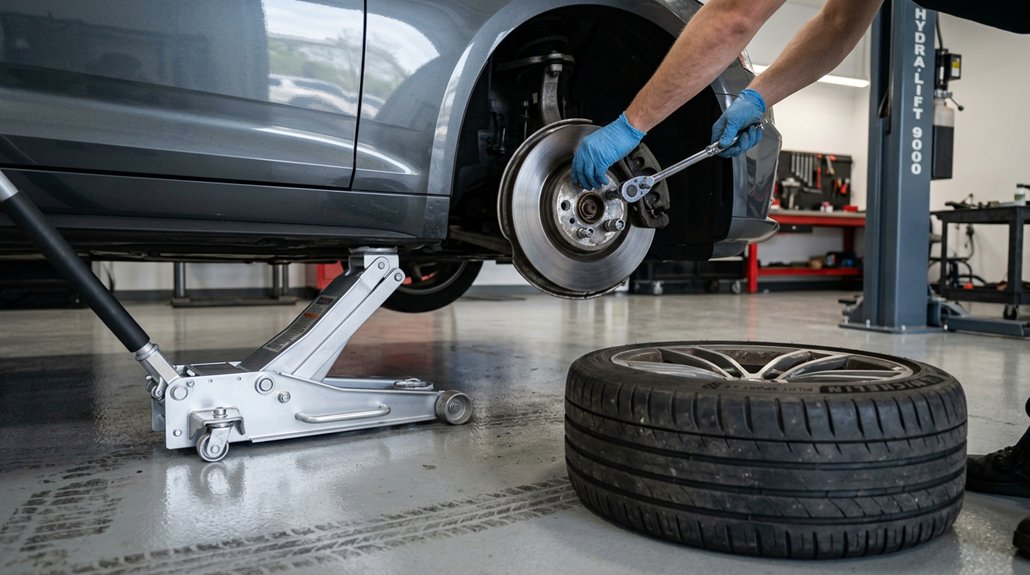
I want you to understand what you’re actually paying for when you schedule a tire rotation, because the advertised price rarely tells the full story. A basic rotation runs $20–$50 at most independent shops, though I’ve seen national chains advertise $19.95 specials that exclude critical services.
Dealerships typically charge $40–$75, while precision rotations at high-end facilities can reach $100–$150.
What separates these price points isn’t just labor rates: it’s what’s bundled, what equipment is used, and whether your tires survive the next 10,000 miles.
Tire Rotation Costs: What You’ll Actually Pay
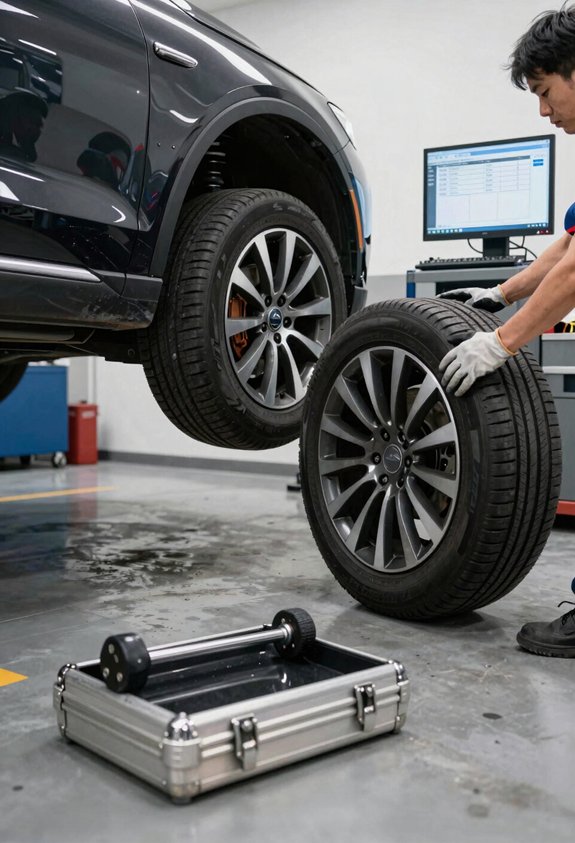
How much should I realistically expect to pay when I take my vehicle in for a tire rotation? I’ve found that tire rotation costs typically fall between $20 and $50, though I’ve seen prices climb to $100-$150 at high-end shops offering precision tool-assisted service. When I’m budgeting, I always factor in regional variations. I’ve noticed examples like $27 in Greensboro, or promotional rates dropping to $19.95 at certain local dealerships.
My cost can escalate if I’m driving a luxury or complex vehicle requiring additional labor, or if I’m bundling rotation with balancing and alignment recommendations. I’ve learned to watch for retailer promotions, since purchasing tires at a location often earns me free rotations. Understanding these variables helps me anticipate expenses without surprises.
Tire Rotation Prices by Service Provider

Where you choose to get your tires rotated matters as much as what’s being done to your vehicle, and I’ve learned that service providers structure their pricing around distinct business models, equipment investments, and customer retention strategies.
Dealership service centers typically charge $40-$75 for a basic rotation, though I’ve encountered luxury brand facilities quoting $90-$150 when specialized lifting equipment or torque specifications are required for performance vehicles. National tire retailers, think Discount Tire, Firestone, often position Tire Rotation as a loss leader, advertising $19.95-$29.95 standalone services while aggressively pushing installation packages that bundle lifetime rotations with new tire purchases, a structure I’ve found can reduce long-term Costs significantly if I’m disciplined about returning to that specific chain.
Independent mechanics and quick-lube shops occupy the middle ground, generally landing between $25-$45, though I’ve noticed substantial regional variance: a suburban Texas shop might charge $24.99 while metropolitan California equivalents push $55, reflecting labor rates and real estate Costs rather than technical differences. Warehouse clubs (Costco, Sam’s Club) present another calculus entirely, frequently including rotation in tire installation fees or offering it complimentary to members who purchased tires there, subject, I’ve discovered, to state regulatory restrictions that prohibit tying free services to membership in certain jurisdictions.
What’s Included in Your Tire Rotation Cost (And What Costs Extra)
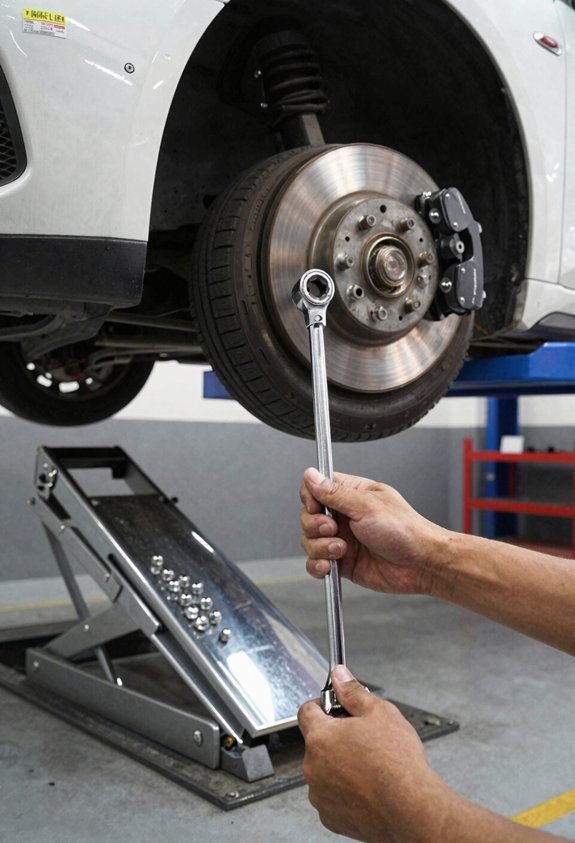
When you pay for a tire rotation, you’re typically getting the manufacturer-approved repositioning of your tires plus computer balancing to eliminate vibrations, though what actually shows up on your invoice depends heavily on whether you’re paying à la carte or working within a broader service structure.
I’ll break down exactly what falls under standard rotation services, which additional options, like wheel alignment checks, TPMS servicing, or disposal fees, can inflate your bill, and how bundled packages, including those free dealer rotations tied to tire purchases, might ultimately save you money if you understand their long-term value.
Knowing these distinctions matters because a $25 rotation can quickly balloon toward $150, or drop to zero, based on decisions you make before ever pulling into the bay.
Standard Rotation Services
Whether you’re scheduling routine maintenance or addressing uneven wear patterns, understanding what a standard tire rotation entails, and where providers might tack on fees, keeps you from overpaying for services you don’t need. A standard Tire Rotation typically involves repositioning tires between wheels to distribute wear evenly, with most shops pairing this with computer balancing to eliminate vibrations. Costs for this basic service generally fall between $20 and $50, though dealerships and chains frequently run promotional rates that drop these figures lower.
Many reputable providers include courtesy inspections of tread depth, sidewalls, and valve stems. These valuable checkpoints identify emerging issues before they compromise safety. However, watch for upsells: balancing, alignment, and mounting services often carry separate charges. Your vehicle type and whether you choose a local shop versus a full-service dealer also create notable price variations for identical rotation work.
Additional Service Options
Why does one shop quote $25 for a rotation while another demands $150? The difference often lies in what’s bundled with your Tire Rotation, and whether you’re paying à la carte or receiving value-added services that protect your investment.
Core vs. Add-On Services
A basic Tire Rotation ($20–$50) covers repositioning tires only. However, most reputable shops recommend complementary procedures:
- Wheel Balancing: Corrects uneven weight distribution, typically $15–$50 per wheel; some shops include this in rotation packages, while others itemize it separately.
- Alignment checks: Often suggested post-rotation, adding $75–$150 if adjustment is needed.
Where You Bought Matters
If you purchased tires at that location, you likely received perks: free lifetime rotations, Balancing, or inspections that outsiders pay full price for. Vehicle type (trucks, performance cars) and appointment timing (standalone vs. maintenance visit) further influence your final bill.
Bundled Package Deals
How exactly does your money translate into services when you purchase a rotation package rather than a standalone procedure? Tire rotation bundled deals typically combine balancing, tread depth inspection, sidewall and valve stem checks, plus digital documentation, services that, purchased separately, would cost significantly more.
Standard Package Pricing
Most bundled rotation and balance services run $20–$50, though premium facilities using precision equipment charge $100–$150. Some retailers offer lifetime balance/rotate through Tire Installation Packages (approximately $18 installation plus ongoing service).
Potential Add-Ons
Bundled deals may incorporate road-hazard warranties, TPMS service, disposal fees, or alignment recommendations, increasing your total investment. Watch for promotions: free rotations with tire purchases or loyalty programs can eliminate rotation and balancing costs entirely, making strategic bundling financially advantageous for routine maintenance.
Where to Find Free Tire Rotation: and the Catch
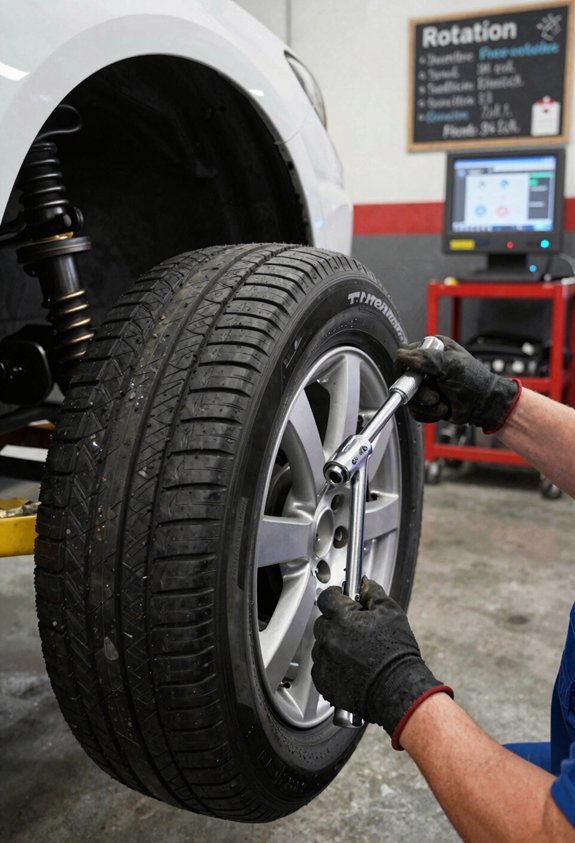
Many major retailers bundle complimentary maintenance with tire purchases, significantly reducing long-term cost. Walmart’s Tire Installation Package includes lifetime balance and rotation, while America’s Tire advertises free rotations and rebalancing as standard offerings. These aren’t “free”; you’ve prepaid through your initial purchase, but they eliminate per-visit charges.
The Catch: Eligibility Restrictions
Always verify current terms, as offers change. Some require original purchase proof; others mandate specific membership tiers.
Local dealers occasionally run $19.95–$27 specials, but standard paid rotations range $20–$50, with precision shops reaching $100–$150.
Rotation vs. Balance vs. Alignment: What’s the Difference?

When I’m scheduling maintenance, I often see shops bundling rotation, balancing, and alignment together. Each service addresses a fundamentally different mechanical issue, and understanding these distinctions protects me from paying for unnecessary work while ensuring my tires wear properly and my vehicle handles safely.
| Service | Primary Function |
|---|---|
| Tire Rotation | Repositions tires (front-to-back, sometimes side-to-side) to distribute wear evenly across all four tires |
| Balancing | Adds precise weights to wheel assemblies to eliminate vibrations at highway speeds |
| Alignment | Adjusts camber, caster, and toe angles to correct steering geometry and tracking |
| Rotation + Balancing | Combined service every 5,000–7,000 miles for optimal tread life and ride quality |
| When Alignment Matters | After hitting potholes, curb strikes, or when vehicle pulls despite proper Tire Rotation and Balancing |
I schedule Tire Rotation and Balancing together at oil-change intervals, but I only request alignment when my steering feels off. Knowing the difference keeps my maintenance costs precise and my vehicle safe.
How Often Should You Rotate Tires to Maximize Value?
I recommend following manufacturer-recommended rotation intervals, typically every 5,000–7,000 miles. High-mileage drivers should consider shorter cycles around 5,000 miles to counter accelerated wear patterns. Low-mileage maintenance timing demands attention every six months regardless of distance to prevent flat-spotting and rubber degradation.
You’ll want to adjust these baselines based on your driving conditions, load demands, and whether your tires are new, where earlier rotations establish even wear, or older, where slightly extended 6,000–8,000 mile intervals may suffice. Watch for warning signs like uneven front wear, pulling, or vibrations, which demand immediate intervention regardless of your scheduled interval.
Manufacturer-Recommended Rotation Intervals
Warning signs requiring earlier service:
- Steering-wheel vibration
- Uneven tread depth
Routine rotations help maintain even tread wear, optimal traction, and safe handling. I don’t wait for visible damage; proactive maintenance protects my tires and my safety on every drive.
High-Mileage Driving Schedules
Because I log more miles than the average driver, I’ve found that sticking to a tighter rotation schedule is one of the most cost-effective ways to extend tire life and maintain consistent performance.
High-Mileage Driving Schedules
For those of us covering 15,000+ miles annually, Tire Rotation Costs become more predictable, and more justified, when we rotate every 5,000–7,000 miles, typically aligning with oil changes. I recommend marking your calendar for at least every six months, even if you hit mileage targets sooner, since aggressive acceleration and cornering accelerate uneven wear patterns.
Monitor tread depth differences between axles; significant disparities signal earlier rotation needs. Pairing rotations with inspections catches alignment drift and suspension degradation before they compound wear issues.
This proactive approach, central to effective high-mileage driving schedules, preserves traction, minimizes vibration, and maximizes your investment across demanding annual mileages.
Low-Mileage Maintenance Timing
- Rotate every 5,000, 7,000 miles for new tires, typically coinciding with oil changes
- Schedule every 6 months minimum to prevent flat-spotting from prolonged parking
- Watch for steering-wheel vibration or uneven tread depth as early warning signals
- Combine rotation with balancing to preserve even wear and ride quality
- Follow manufacturer intervals, adjusting only when tread wear or alignment issues demand deviation
5 Warning Signs Your Tires Need Immediate Rotation
Why might your vehicle suddenly feel off during an otherwise routine commute? I’ve learned that uneven wear patterns, typically more pronounced on front tires, signal that rotation is overdue, and ignoring this invites compromised handling.
When my car pulls persistently to one side, I recognize this as either uneven wear or alignment drift demanding immediate attention. Increased road noise from degraded tread patterns tells me wear has become irregular enough to require rebalancing through rotation. Steering wheel vibrations, especially at highway speeds, indicate unequal tire wear that rotation typically corrects before damage escalates.
I schedule rotation proactively because uneven wear accelerates replacement costs, whereas timely intervention preserves tread life, reduces noise, and eliminates vibrations. These five indicators—uneven wear, pulling, noise, vibration, and accelerated degradation—demand immediate action to maintain safety and performance.
How Bundling Rotation With Other Services Saves Money
Most drivers I’ve advised discover that combining tire rotation with complementary services, balancing, mounting, inspections, or alignment checks, yields measurable cost reductions that isolated purchases cannot match. I’ve seen bundled services cut per-service costs significantly, especially when providers package mounting, balancing, valve stems, and tire rotation under one quoted price rather than itemizing each separately.
Consider these advantages of bundling:
- Lifetime balance and rotation packages eliminate future rotation fees after initial purchase
- Single combined pricing avoids the premium of à la carte service charges
- Retailer installation packages at major chains include complimentary rotations
- Road-hazard warranties bundled with rotation plans reduce unpredictable repair expenses
- Maintenance plans deliver predictable, long-term pricing for ongoing tire rotation needs
When you invest in bundled services strategically, you’re not merely saving money; you’re joining informed drivers who prioritize both vehicle longevity and financial efficiency.
Is Skipping Tire Rotation Really Worth the Risk?
When you weigh the modest expense of rotation against the cascading mechanical consequences of neglect, the arithmetic becomes unmistakably clear: skipping this routine service invites disproportionate penalties that extend far beyond the tire itself.
The Mechanics of Uneven Wear
I see it constantly: drivers who defer tire rotation discover their front tires have worn dramatically faster than their rears, a pattern that accelerates traction loss and compromises handling at highway speeds. This uneven wear generates vibrations, noise, and pulling that signal deeper trouble.
Deferring rotation costs more than tires—it costs control, safety, and peace of mind at highway speeds.
Hidden Costs of Deferral