
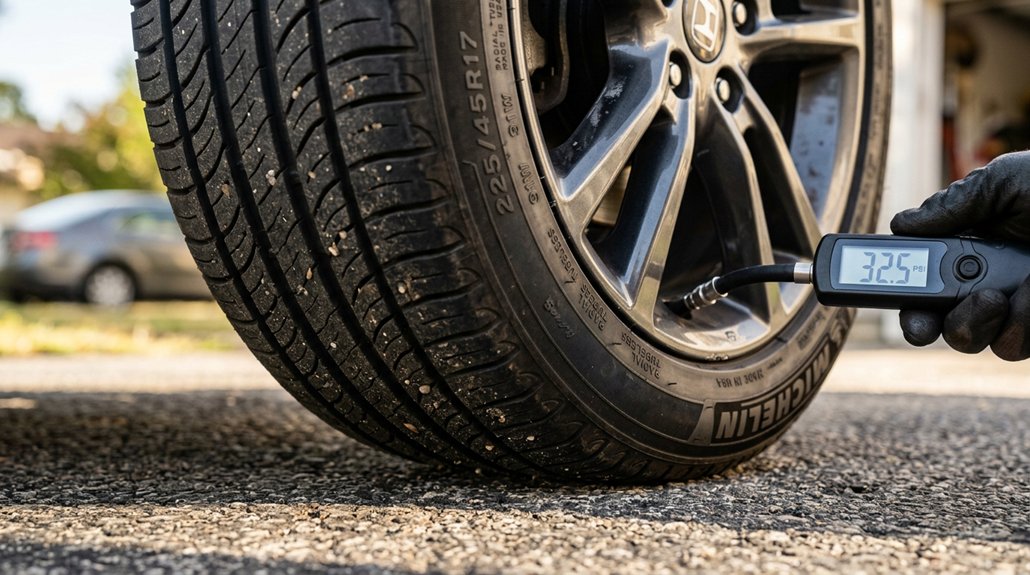
When I checked my 2019 Honda Accord’s door jamb after noticing uneven tread wear, I found 32 PSI front and rear, far from the 44 PSI stamped on the tire sidewall. Most drivers mistakenly inflate to that maximum, risking dangerous overinflation, reduced traction, and blowouts.
I’ll explain exactly where your specific number hides, why temperature swings demand seasonal adjustments, and how ignoring your TPMS warning jeopardizes fuel economy and handling.
What PSI Do Car Tires Actually Need?
Your recommended PSI represents the optimal balance of handling, fuel efficiency, and tire longevity that engineers designed for your specific vehicle. The door jamb tag lists separate values for front and rear tires, reflecting weight distribution differences.
I measure tire pressure when cold, before driving or at least three hours after, to avoid the 4–6 PSI increase that occurs from heat buildup. I adjust all four tires to specification, reinstall valve caps, and recheck monthly.
Where to Find Recommended Tire Pressure for Your Car
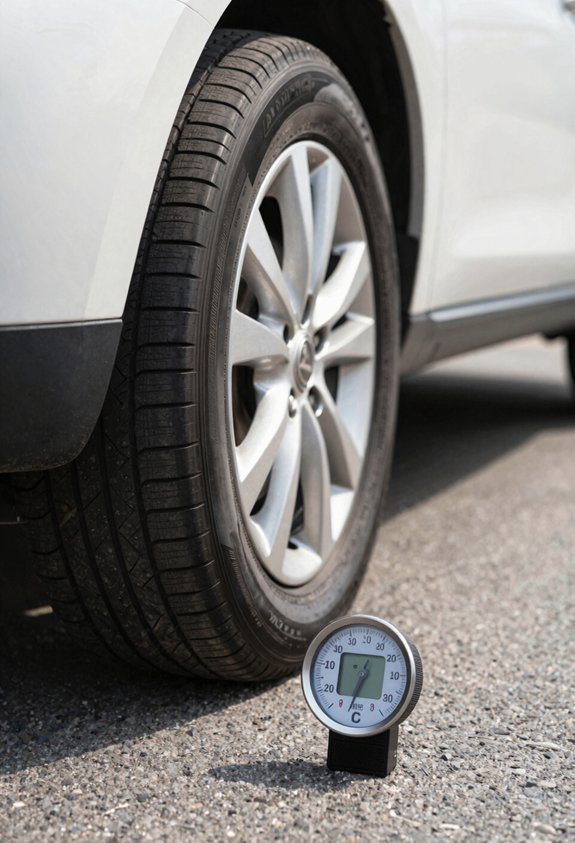
I’ll show you exactly where I find my car’s recommended tire pressure, since it’s not something you want to guess. I always check the driver’s side door jamb sticker first, which lists the manufacturer’s specified PSI for front and rear tires. If that’s missing or worn away, I turn to the owner’s manual for those same values matched to my specific vehicle configuration.
I make sure I’m checking cold pressure, meaning before I’ve driven at all, or at least three hours after, because driving heats the tires and gives me a falsely high reading that won’t reflect true inflation needs.
Check Owner’s Manual
Finding the correct tire pressure isn’t always intuitive, yet it’s the foundational step toward safe, efficient operation.
Primary Source: Owner’s Manual
I always look first at the owner’s manual, which remains the definitive source for your vehicle’s recommended PSI values. Manufacturers engineer these specifications precisely for your car’s weight distribution, handling characteristics, and fuel economy targets. I never guess when this authoritative document sits in my glove box or online through my manufacturer’s portal.
Why the Manual Supersedes Other Sources
I’ve learned that tire sidewalls display maximum PSI only, never the operating pressure, so I ignore those inflated numbers entirely. While the door jamb label (addressed separately) serves as my backup reference, the owner’s manual provides context I can’t find elsewhere: temperature adjustments, load-carrying variations, plus front-to-rear pressure differentials for my specific trim level. When precision matters, I consult the manual first.
Door Jamb Sticker
| Location | What It Shows | Key Detail |
|---|---|---|
| Driver’s door jamb | Front and rear PSI values | Vehicle-specific settings |
| Fuel door or glove box | Alternate placement | Same specifications |
| Owner’s manual | Backup reference | When sticker is damaged |
| Tire sidewall | Maximum PSI only | Not your daily target |
I check this sticker because it specifies cold tire pressure, meaning I measure when tires haven’t been driven. Ambient temperature affects readings profoundly.
If this sticker is faded or missing, I consult the owner’s manual immediately, never relying on the tire’s sidewall maximum, which serves only as a safety ceiling, not an operational guideline.
Cold Pressure Definition
Where exactly should you look to find the correct tire pressure for your vehicle, and why does “cold pressure” matter so much? I check my door jamb sticker, that label inside the driver’s door post, because it lists the precise PSI my manufacturer recommends for front and rear tires, not the maximum sidewall pressure, which is merely a safety limit I must never confuse with daily operating values.
Cold pressure means measuring before driving heats the rubber, typically after several hours of rest; heat expands air, so warm readings mislead me into underinflation. I grab my tire gauge when tires are truly cold, then adjust all four to match that door jamb specification.
Accuracy protects my handling, fuel economy, and tread life. Small vigilance brings significant safety dividends.
When Front and Rear Tires Need Different Pressure
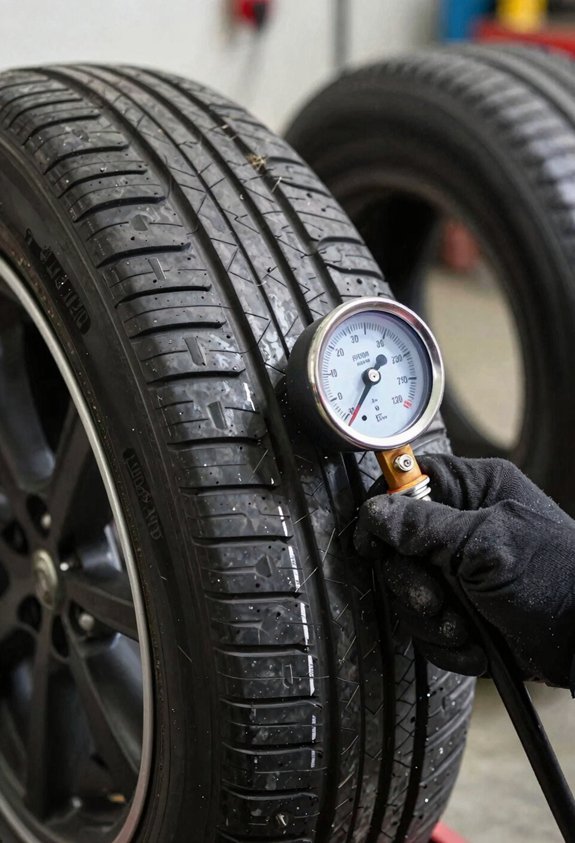
I’ll start by explaining why your vehicle might list different pressures for its front and rear tires. Axle weight differences, performance handling needs, and load distribution factors each play a role in how engineers adjust tire pressure to match where the weight sits and how the car responds under braking or cornering.
Following these specific front and rear values matters because swapping them or guessing can upset the balance the manufacturer built into your suspension geometry, traction thresholds, and safety margins.
Axle Weight Differences
- Locate your door jamb sticker displaying separate front and rear recommended PSI values for your exact configuration
- Understand that ignoring axle-specific pressures risks underinflation on loaded axles, causing accelerated shoulder wear and potential failure
- Recognize that many sedans require higher rear pressures than fronts, despite intuitive assumptions about engine weight
- Adjust pressures when loading changes, as additional passengers or cargo shift weight distribution between axles
Performance Handling Needs
Beyond accounting for static weight distribution, I’ll show you how those same front-to-rear pressure differentials actively shape your vehicle’s handling characteristics when you’re pushing through corners or making emergency maneuvers. When you mismatch front and rear tire pressure, you’re inviting understeer or oversteer that’ll catch you off-guard at speed.
I always check my door jamb sticker for the manufacturer recommended PSI, because those separate values aren’t suggestions; they’re engineered for how your chassis balances load transfer during aggressive driving. Your TPMS might alert you to general underinflation, but it won’t flag a subtle imbalance between axles that degrades cornering precision.
Set your pressures before spirited drives, and you’ll feel the difference in turn-in response and mid-corner stability that keeps you confidently in control.
Load Distribution Factors
With weight rarely sitting evenly between axles, I’ve learned that treating all four tires as identical pressure vessels ignores the fundamental physics governing how your vehicle actually carries its load.
Load distribution varies dramatically by vehicle architecture. Front-engine cars concentrate mass forward, while trucks and vans shift burden rearward when hauling cargo. Manufacturers account for these imbalances through distinct front vs rear tire pressure (PSI) specifications, typically displayed on your door jamb placard or within the owner’s manual.
When you’re towing or transporting heavy payloads, increasing rear pressure becomes essential to prevent dangerous underinflation. Maintaining identical pressures across axles risks uneven wear and compromised handling stability.
Critical Load Distribution Considerations:
- Consult manufacturer-specific front vs rear values rather than averaging pressures
- Increase rear tire pressure (PSI) proportionally when exceeding standard cargo capacity
- Recognize that incorrect equalization accelerates shoulder wear on overloaded axles
- Recalibrate pressures after significant load changes to preserve optimal load distribution
Why Cold Tire Pressure Is the Only Number That Matters
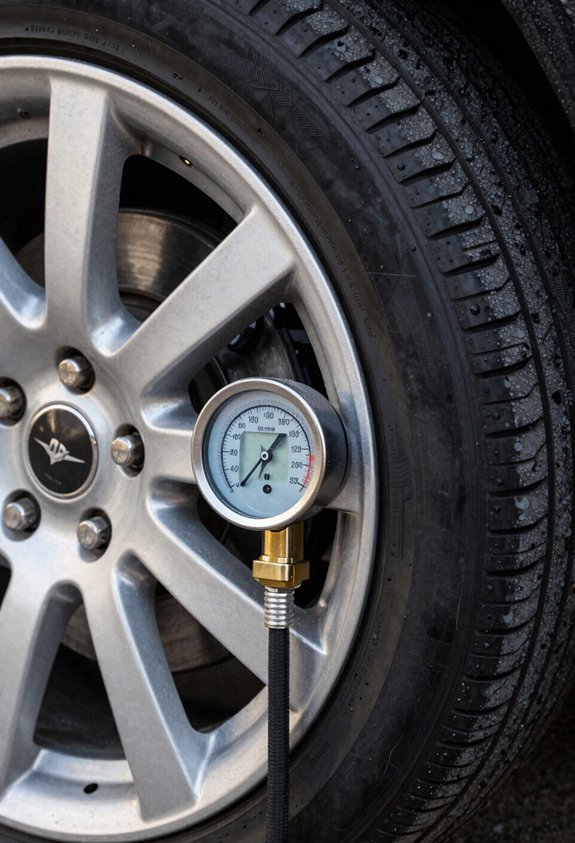
Because tire pressure fluctuates with temperature, I always measure and set inflation when my tires are cold, the state manufacturers use when establishing their specifications. This cold pressure baseline matters because every drive generates heat, raising internal pressure by roughly 4–6 PSI and rendering warm readings unreliable.
Critical Distinctions for Proper Tire Inflation
Consult your manufacturer’s specification (owner’s manual, door jamb sticker), never the tire sidewall maximum. Measure before driving, after the vehicle sits overnight, or away from direct sunlight. Accept that heat from ambient conditions or motion temporarily elevates readings.
Using hot measurements risks systemic under-inflation, while cold readings keep you maintaining the engineered baseline designed for safety, fuel economy, and uniform tread wear. Skip this protocol, and you compromise the very performance standards your vehicle was built around.
How Heat Affects Tire Pressure Readings
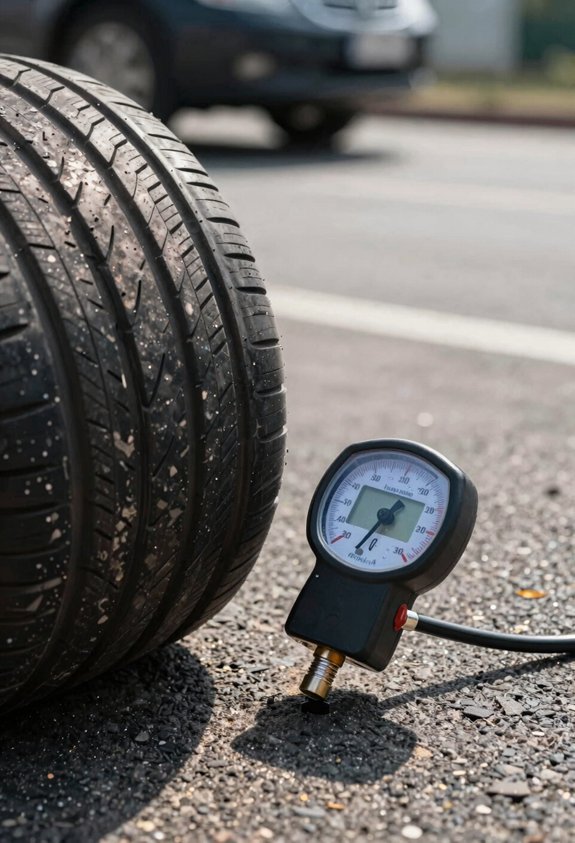
I want you to understand that temperature and PSI share a direct, quantifiable relationship, with tire pressure typically climbing 4–6 PSI above cold baseline when tires warm from driving or sun exposure, and shifting approximately 1 PSI for every 10°F (6°C) of ambient or internal temperature change. Warm tire readings create a significant risk of overestimation, since the temporary elevation caused by friction, brake heat, or solar radiation can mislead you into thinking your tires are properly inflated when they may actually be underinflated once cooled.
For this reason, you must always measure and adjust to your vehicle’s recommended cold PSI, taken after at least three hours of non-use or parking in shade, guaranteeing your baseline reflects stable, accurate conditions rather than heat-distorted data.
Temperature and PSI Relationship
Why does your tire pressure reading seem to change throughout the day, even when you haven’t touched the valve stem? The answer lies in how temperature affects PSI.
When tires warm from driving or ambient heat, the air inside expands, increasing pressure. Here’s how this relationship works:
- Warm tires typically read 4–6 PSI higher than their cold tire pressure baseline
- Cold tire pressure is measured after 3 hours of stillness, or driving ≤1.6 km
- Expect roughly 1 PSI change per 10°F temperature shift
- Seasonal temperature swings demand regular checks, since morning frost and afternoon sun create different readings
Never accept a warm reading as your final measurement. Always revert to manufacturer’s recommended cold tire pressure when inflating.
Warm Tire Reading Impact
How exactly does a warm tire throw off your pressure reading, and why should you care? I’ve learned that warm tires can read 4–6 PSI higher than cold tires, whether from recent driving or solar heating, and this creates serious problems when you’re trying to set proper inflation.
Temperature drives PSI changes at roughly 1 PSI per 10°F, meaning heat artificially inflates your numbers. When you check tire pressure after driving, or during hot afternoons, you’re seeing unreliable data that overstates actual cold pressure. If I adjust based on warm readings, I risk overinflation, reduced traction, and uneven wear.
Cold tires represent the reference standard because they reflect true resting pressure. For accurate measurements, I always wait several hours after driving, making sure my tires have cooled completely before trusting any gauge.
Cold Pressure Best Practice
Where exactly should you begin when checking tire pressure to guarantee accuracy? I’ll show you why cold pressure readings form the foundation of proper tire maintenance, and how temperature fluctuations can mislead even careful drivers.
Why Cold Pressure Matters
I always measure when tires have rested at least three hours or driven under 1.6 km; warm tires read 4–6 PSI higher, skewing your baseline. For every 10°F temperature rise, expect roughly 1 PSI increase, making warm readings unreliable for inflation decisions.
Your Cold Pressure Checklist
- Park overnight, then use your tire pressure gauge before sunrise driving
- Compare cold pressure readings against your door-jamb sticker’s specified PSI
- Inflate or deflate to match manufacturer cold pressure values precisely
- Never rely on post-drive gauge readings for final adjustments
How to Check Tire Pressure in 60 Seconds
When exactly should you check your tire pressure to guarantee accuracy, and what tools will you need to complete this essential maintenance task in under a minute? I always check when my tires are cold, meaning they haven’t been driven or exposed to direct sunlight for at least three hours, because heat expansion skews readings, producing falsely elevated PSI values that compromise safety decisions.
| Step | Action |
|---|---|
| 1 | Remove valve cap, press gauge firmly onto valve stem |
| 2 | Read PSI, compare to door jamb specification |
| 3 | Adjust air (add if low, release if high), recheck, reinstall cap |
I work through all four tires systematically, never skipping the spare if equipped, since uneven tire pressure accelerates wear and destabilizes handling. Consistent monitoring keeps me, and everyone sharing the road, safer.
Digital or Analog Gauge: Which Measures More Accurately?
- Resolution advantage: Digital gauges measure to 0.1 PSI versus analog’s typical 1 PSI increments
- Readability: Backlit digital displays eliminate parallax errors that plague analog needles
- Consistency: Analog gauges require frequent calibration; digital units maintain stability longer
- Best practice: Use one gauge exclusively, comparing results against your vehicle’s recommended PSI
You’ll get dependable accuracy from either type if you verify calibration annually and store gauges in moderate temperatures.
Maximum vs. Recommended PSI: Why the Sidewall Number Is Wrong
Consequences of Misinflation
Inflating to the sidewall maximum degrades ride comfort, accelerates uneven tread wear, and compromises predictable handling. Always prioritize your recommended PSI for balanced, safe performance across varied driving conditions.
Risks of Over-Inflated Tires: Blowouts and Poor Handling
I want to walk you through three critical dangers you’ll face when you push your tire pressure too high, starting with Blowout Danger Zones, where sustained pressures at or near the maximum sidewall rating, typically 35-44 PSI for standard passenger tires, create catastrophic failure risks that spike dramatically on hot asphalt surfaces exceeding 90°F or when you strike potholes at highway speeds.
Next, consider Handling Degradation Effects: over-inflation shrinks your contact patch by 15-25%, producing skittish steering response, extended braking distances on wet pavement, and a marked reduction in cornering stability that becomes especially treacherous during emergency maneuvers.
Finally, examine Center Tread Wear, an accelerated deterioration pattern where the tire’s middle section bears disproportionate load, often reducing total tread life by 20-30% and forcing premature replacement even when outer edges appear serviceable.
Blowout Danger Zones
- Impact vulnerability: Over-inflation makes tires rigid, so potholes or debris cause catastrophic failure rather than absorption.
- Maximum PSI misuse: Using sidewall ratings (often 44-51 PSI) as daily targets exceeds vehicle specifications, creating explosive failure points.
- TPMS limitations: These systems frequently miss early over-inflation warnings, alerting only at dangerously high thresholds.
- Tread center degradation: Extreme pressure concentrates wear patterns, weakening structural integrity before visible damage appears.
We belong to a community that prioritizes safety through precision. Stick to your door-jamb cold PSI recommendations, not maximum sidewall figures, and you’ll avoid the catastrophic blowout danger that claims thousands of drivers annually.
Handling Degradation Effects
When I over-inflate, the tire’s contact patch shrinks, concentrating weight on a smaller footprint. This impairs handling precision, extends braking distances, and reduces cornering grip, particularly dangerous during emergency maneuvers or load changes.
Warning Signs of Degraded Handling
- Vague or twitchy steering response
- TPMS alerts indicating pressure spikes
- Unpredictable tire behavior under hard acceleration or braking
Critical Safety Limits
The maximum sidewall PSI marks a structural safety threshold, not a daily operating target. Pushing toward this limit worsens steering feedback and ride harshness while magnifying blowout risk when encountering road hazards at speed.
Center Tread Wear
At the core of over-inflation’s damage lies a predictable wear pattern: the center of your tread bears disproportionate load while the edges scarcely touch the road. I’ve seen this countless times; excessive tire pressure transforms your contact patch from a broad footprint into a narrow, high-pressure strip that accelerates center tread wear while leaving outer shoulders nearly pristine. When you exceed recommended psi, you’re not just risking handling degradation; you’re actively destroying your tires from the inside out.
Key Consequences of Improper Tire Pressure:
- Concentrated Load Distribution: Center tread wear intensifies as the inflated tire crowns, forcing the middle section to absorb disproportionate road friction.
- Reduced Cornering Grip: Stiff sidewalls resist lateral deformation, compromising traction when you need it most.
- Blowout Vulnerability: Pressures approaching maximum ratings strain internal plies, risking catastrophic failure.
- Uneven Wear Progression: Severe over-inflation creates pronounced center balding while edges remain underutilized.
I check my tire pressure monthly, keeping it at recommended psi; no exceptions.
How Low Tire Pressure Hurts Gas Mileage and Safety
Low pressure produces uneven road contact, generating destructive heat that degrades rubber compounds prematurely. This thermal stress weakens tire structure, creating unpredictable failure points.
Compromised Vehicle Control
Underinflated tires extend braking distances and diminish cornering precision. In emergency maneuvers, that reduced responsiveness translates directly into elevated collision risk.
The Bottom Line
Maintaining proper PSI optimizes mpg, extends tire lifespan, and preserves the load distribution and grip your safety depends upon.
Higher PSI for Road Trips and Heavy Trunks
Why do so many drivers overlook pressure adjustments before loading up for a long haul? I’ve learned that when we’re packing heavy trunks or planning extended road trips, our tires need extra support, and that means adjusting PSI carefully without exceeding what our vehicle door jamb sticker specifies for cold tire pressure.
Here’s what I always check before hitting the road:
- Find your baseline: Locate the vehicle door jamb sticker to identify manufacturer-recommended cold tire pressure ranges for loaded conditions.
- Increase within limits: Add PSI up to recommended maximums for heavy loads, never using the tire sidewall maximum as your daily target.
- Verify cold readings: Adjust to cold tire pressure before departure, not warm driving pressures, accounting for temperature effects.
- Balance all four: Match PSI across tires to maintain stable handling under additional weight.
For extreme loads, I consult manufacturer guidance directly.
What Your Blinking TPMS Light Really Means
When your TPMS light illuminates, whether blinking rapidly at startup or glowing solid while you’re driving, you’re seeing two distinctly different warnings that demand immediate, though varied, responses.
A blinking TPMS warning light typically signals a system malfunction, not a pressure problem, requiring professional inspection. A solid warning light indicates your pressure has dropped approximately 25% below manufacturer recommendations. Check all tires immediately, comparing current readings against the door jamb sticker’s cold psi specification.
Your TPMS employs direct valve sensors or vehicle-based monitoring to track pressure continuously. After adjusting pressures to proper levels, some systems need a reset procedure to extinguish the warning light. Ignoring either signal risks tire damage, reduced fuel economy, and compromised handling safety.
Do You Need to Reset TPMS After Filling?
Whether you’ve just topped off your tires at a gas station or completed a full inflation adjustment, you’re likely wondering if your dashboard warning will clear itself or if you’re facing a manual reset procedure.
Most modern TPMS configurations eliminate manual intervention, though your specific requirements depend on system architecture and recent service history. Direct TPMS implementations typically auto-relearn through accumulated driving data, whereas indirect systems or those with replaced sensors demand deliberate reset protocols.
Determining Your Reset Requirements
- Verify auto-reset capability by consulting your owner’s manual for TPMS specifications
- Drive 10–20 minutes at steady speed after achieving proper inflation to trigger automatic relearning
- Execute manual reset via instrument cluster menu or dedicated button if auto-learn fails
- Diagnose persistent warnings through professional sensor inspection when inflation and driving cycles prove insufficient
How Often to Check Tire Pressure (Monthly Minimum)
Once you’ve confirmed your TPMS has registered the corrected pressures through either automatic relearning or manual intervention, you’re positioned to establish sustainable monitoring habits that prevent future discrepancies from developing undetected.
I check my tire pressure monthly as a baseline commitment, treating this frequency as non-negotiable maintenance that safeguards both handling precision and tread longevity. When I perform these checks, I make sure I’m measuring cold PSI, meaning my vehicle hasn’t been driven for at least three hours, since even brief driving generates heat that artificially elevates readings and masks true inflation levels.
I remove each valve cap, press my gauge firmly against the valve stem, and compare results against my door jamb specifications. After adjusting any tire, I check monthly verification readings immediately, confirming I’ve achieved target pressure before the next thermal cycle begins.
How Much PSI to Add or Drop Each Season
Why do seasonal temperature swings demand deliberate recalibration of your tire pressure strategy? I track how seasonal temperature changes affect your tires, and I want you prepared for every shift.
For every 10°F fluctuation, expect roughly 1 PSI movement. This compounds across seasons into significant pressure deviations that compromise handling, efficiency, and safety if ignored.
Follow this seasonal adjustment protocol:
- Establish your baseline: Locate the door jamb recommended PSI (never the tire sidewall maximum), noting this cold PSI specification applies to tires at rest for three-plus hours.
- Winter preparation: Inflate to cold PSI before outdoor storage; recheck after cold nights, as frigid temperatures naturally deflate tires below operating thresholds.
- Summer monitoring: Expect 4 to 6 PSI increases from heat buildup; release excess pressure post-drive if readings exceed safe margins.
- Transition discipline: Recalibrate quarterly, verifying cold PSI status before adjustment.