
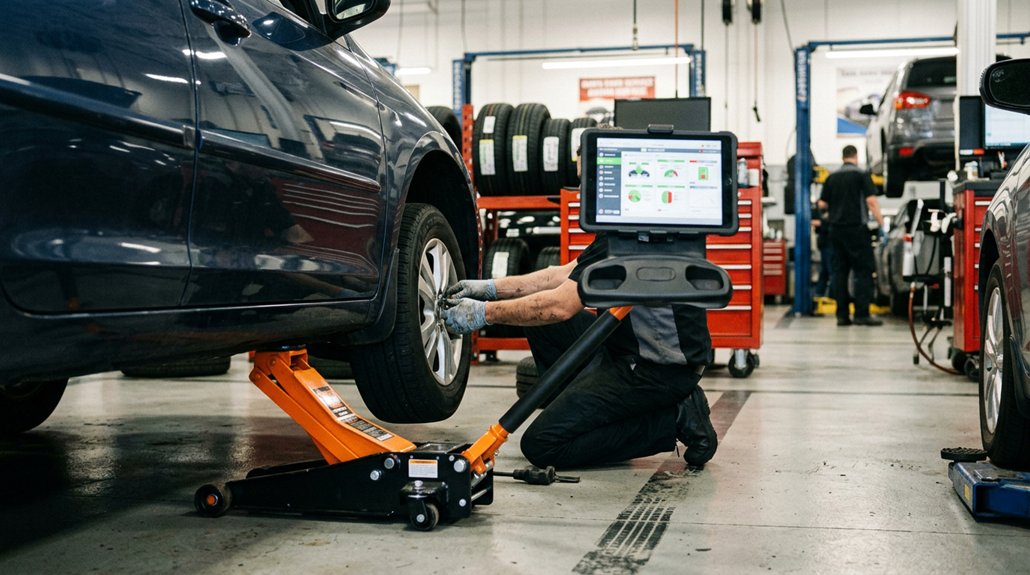
Nearly 70% of drivers neglect routine tire rotation, yet this simple maintenance step can extend tread life by up to 20,000 miles. I’m walking you through Discount Tire’s rotation pricing structure, which varies by location and purchase history, because understanding what’s actually free versus what’ll cost you extra isn’t always straightforward.
You’ll want to stick around for the specifics on hidden fees, certificate coverage, and whether that “complimentary” service truly covers your vehicle.
Is Tire Rotation Free at Discount Tire?
Key locations with confirmed service:
- Hastings, MN
- Cottage Grove
What you should know:
- Policies vary by store, so I recommend scheduling online or calling ahead
- Some technicians appreciate tips, though this isn’t mandatory
- Additional complimentary services (flat repairs, checkups) may accompany your rotation; ask your local store
Important considerations: While core rotation services remain consistently free, specific amenities differ geographically. Always verify availability through direct contact, as pricing structures and inclusion details shift by location and technician discretion.
What’s Included in a Free Tire Rotation
When you’re deciding where to rotate your tires, you’ll want to know exactly what services you’re actually receiving at no charge.
What’s Included in a Free Tire Rotation
At America’s Tire, I receive a complimentary tire rotation for my passenger car or non-dually light truck, regardless of where I originally purchased or installed my tires. This free rotation covers the standard repositioning of tires following recommended patterns.
If I bought my tires from America’s Tire, the complimentary service also includes balancing at no extra cost. However, if I purchased tires elsewhere, optional balancing carries a separate fee that varies by location. I can also request free air checks and inspections during my visit, though availability depends on my local store.
I always confirm exact pricing and current promotions by scheduling online or contacting my nearest location directly.
What Happens During a Tire Rotation Appointment

A tire rotation appointment follows a systematic procedure designed to maximize tread longevity and maintain consistent handling characteristics across all four wheels. I guide you through exactly what occurs, so you’ll feel prepared and confident as part of our informed customer community.
Initial Assessment
I observe your current tread wear patterns, identifying uneven distribution that rotation will correct.
Rotation Execution
I relocate each tire to a new position, typically front-to-rear, or in cross-patterns for directional tires, every 6,000–8,000 miles, or sooner if irregular wear demands attention.
Balancing Option
I offer balancing as a separate, paid service; while not included at no extra cost, I strongly recommend it when vibration persists, since unbalanced assemblies accelerate wear and compromise ride quality.
Final Verification
I torque fasteners to specification, confirming your rotation delivers reduced noise, smoother operation, and extended tire life you’re seeking.
How to Schedule a Tire Rotation
Once your rotation is complete and I’ve verified proper torque on all fasteners, you’ll want to establish a consistent scheduling rhythm to maintain those even wear patterns we’ve worked to achieve.
Scheduling Your Tire Rotation
I recommend starting with Discount Tire’s online scheduling system, which lets you book appointments at your preferred location without calling ahead. Since tire rotations are complimentary for eligible customers, regardless of where you purchased your tires, you’re already part of our service community.
When scheduling, confirm your vehicle qualifies (passenger cars, non-dually light trucks). Though Hastings, MN and Cottage Grove report no rotation charges, I’ve found pricing varies by store, so verify with your local shop. Ask about balancing fees, which may apply separately.
Book through the store’s scheduling link, or call directly for specifics.
How Often Should You Rotate Your Tires?
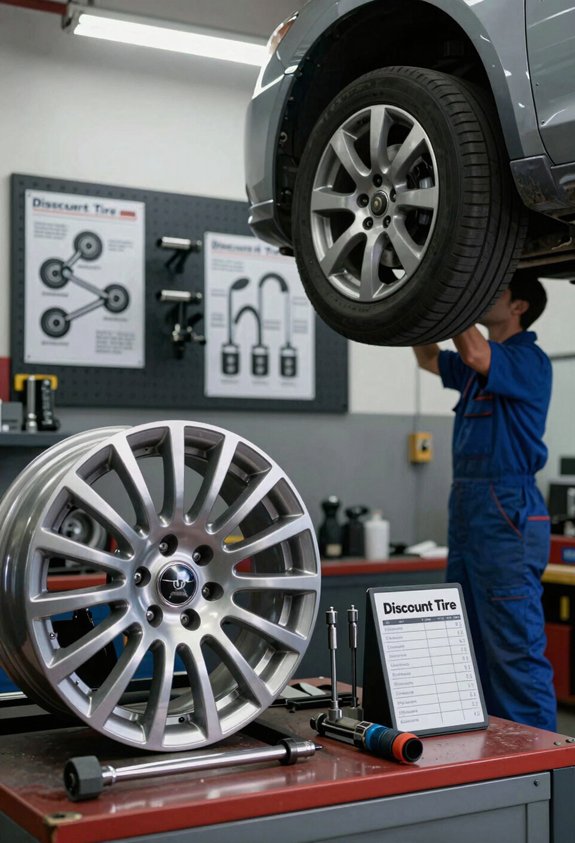
How frequently should you rotate your tires? I recommend scheduling rotation every 6,000 to 8,000 miles, which typically aligns with every other oil change, though you’ll want to adjust based on your driving conditions and observed wear patterns.
When I spot irregular or uneven tread wear during my visual inspections, I don’t wait; I rotate sooner to address those patterns before they compromise performance or safety. Monthly air pressure checks at the store help me track wear indicators that signal when rotation timing needs adjustment. For passenger cars and non-dually light trucks, rotation comes complimentary, while balance services remain available as optional paid additions when precision matters most.
| Mileage Interval | Visual Inspection Signs | Action Required |
|---|---|---|
| 6,000–8,000 miles | Even tread wear | Standard rotation schedule |
| 4,000–5,000 miles | Feathering or cupping | Accelerate rotation timing |
| 3,000 miles | Visible shoulder wear | Immediate rotation needed |
| Monthly checks | Pressure fluctuations | Monitor alongside rotation |
| Every oil change | Uneven wear between axles | Coordinate rotation service |
Do You Pay Extra for Tire Balancing?
Whether you’re scheduling routine maintenance or responding to vibration issues, I’ll clarify exactly what balancing costs when you visit my store.
Routine maintenance or vibration issues—I’ll clarify exactly what balancing costs when you visit my store.
At my location, rotation remains complimentary for every driver, regardless of where you originally purchased your tires, though balancing requires a separate fee if you elect this add-on during your service appointment. I’ve observed pricing variability; some members of our community report rotation fees near $15 depending on vehicle specifications and regional factors. I strongly recommend verifying your local store’s exact balancing charges when you book online.
Key Considerations for Balancing Fees
- Balancing is entirely optional, not automatic with rotation
- Passenger cars and non-dually light trucks qualify for these services
- Original purchase source never restricts your access
- Online scheduling optimizes your appointment process
- Local pricing consultations yield the most accurate balancing estimates
What Other Free Services Come With Rotation?
While I spend time rotating your tires, I’ll also evaluate additional maintenance needs you might not have scheduled, and this inspection period often reveals opportunities for complimentary services that extend your tire life and preserve your safety.
Complimentary Services During Rotation
I provide free air checks to verify proper inflation, plus free flat tire repair when conditions allow. This builds the confidence you deserve as part of our community.
Balancing Considerations
Your free rotation includes balancing if you purchased tires from us. Otherwise, I can add balancing during service for a separate fee; contact your local store for exact free service availability and add-on pricing.
Scheduling Your Visit
Book online anytime. Service availability varies by location, so I recommend confirming specific free offerings before arrival to avoid surprises.
How to Tell If Your Tires Need Rotation Early
I can spot early rotation needs by watching for three key warning signs: uneven tread wear patterns that develop when tires stay in one position too long, persistent vibration at highway speeds that often stems from uneven wear or imbalance, and subtle handling changes like pulling or reduced responsiveness that indicate the front and rear tires are wearing at different rates.
These symptoms typically appear well before the standard 6,000-8,000 mile interval, and catching them early prevents accelerated tread loss, possible safety compromises, and the cost of premature tire replacement. I’ll break down each indicator, explain what causes it, and show you how to inspect your tires systematically.
Uneven Tread Wear
Because uneven tread wear often develops gradually before becoming visibly severe, I’ve learned to inspect my tires monthly rather than waiting for obvious damage. This routine helps me spot early indicators that my rotation schedule needs adjustment, protecting my investment and keeping my ride smooth.
I watch for these warning signs:
- Cupping, scalloped dips across the tread surface indicating suspension or balance issues
- Feathering, angled ridges where tread blocks wear sharply on one edge
- Shoulder wear, accelerated degradation on outer edges from alignment problems
- Single-edge wear, one side wearing faster, signaling camber misalignment
- Cross-pattern differences, front versus rear tires showing unequal depths
When I notice uneven wear, I don’t delay my rotation. Moving tires between positions redistributes load and friction, extending their service life.
Sticking to 6,000–8,000 mile intervals prevents most irregular patterns from developing.
Vibration While Driving
How can you tell if your tires need rotation before your scheduled interval? I feel vibration in my steering wheel or seat, and that’s my signal something’s off.
| Vibration Location | Likely Cause | Recommended Action |
|---|---|---|
| Steering wheel | Front tire imbalance or uneven wear | Schedule rotation with balancing |
| Seat/floorboard | Rear tire issues | Prioritize rear rotation service |
| At specific speeds | Wheel imbalance | Balancing required post-rotation |
| During acceleration | Uneven tread wear patterns | Immediate rotation assessment |
| Constant at highway speeds | Combined wear and balance issues | Full rotation, balancing, alignment check |
That vibration you’re experiencing often stems from uneven wear creating weight distribution problems, which proper rotation and balancing can resolve. Don’t ignore it, I’m protecting my investment and safety by addressing these symptoms early, typically every 6,000–8,000 miles, though noticeable disturbance demands sooner attention.
Handling Issues
While vibration signals tire distress through tactile feedback, handling deficiencies reveal themselves through directional instability and steering response deterioration that demands equal vigilance. I notice you’re pulling to one side, fighting the wheel, or sensing sluggish cornering; each symptom indicates uneven tread wear patterns that rotation addresses before they compromise safety.
Watch for these warning signs your tires need rotation or balancing sooner than scheduled:
- Unexplained drifting during straight-line highway driving
- Delayed steering response, requiring excessive wheel input
- Uneven cornering confidence between left and right turns
- Nose-heavy plowing sensation during moderate braking
- Increased effort maintaining lane position in crosswinds
I recommend requesting rotation every 6,000–8,000 miles, with balancing performed simultaneously if vibrations accompany handling issues. Prompt attention preserves your vehicle’s stability and your peace of mind.
Is Tire Certificate Coverage Worth It?
When I evaluate whether tire certificate coverage makes financial sense, I examine three core components: the specific perils and conditions covered under the policy, the replacement benefits including treadwear allowances and prorated calculations, and my personalized value assessment based on driving habits, vehicle type, and local road hazards.
I’ll break down the coverage scope details first, since understanding exactly what constitutes a covered replacement versus an excluded repair determines whether you’re purchasing meaningful protection or limited reimbursement. From there, I’ll explain how replacement benefits actually function when you file a claim.
Then I’ll provide a structured guide to calculating whether the upfront certificate cost aligns with your risk profile and expected tire lifespan.
Coverage Scope Details
Where exactly does Tire Certificate coverage begin and end? I’m breaking down the boundaries so you know precisely what protection you’re buying into, beyond standard tire rotations.
- Duration: 3 years from purchase date, no exceptions
- Tread requirement: More than 3/32 inch remaining depth
- Hazards covered: Road damage and manufacturer defects
- Enrollment window: At purchase or within 30 days after
- Redemption ease: 5-Star rated by 8,000 customers who used it
I want you in our community of protected drivers. The Tire Certificate covers repair, replacement, or full refund, no prorating, no disqualifications. Nonrepairable damage gets your purchase price back entirely.
This isn’t extended warranty fluff; it’s risk mitigation with explicit terms. Add it early, understand the 3/32 threshold, and drive knowing you’re covered.
Replacement Benefits Explained
Now that you understand where Tire Certificate coverage begins and ends, I’ll walk you through what you’re actually getting when you need to use it, because knowing your boundaries means nothing if you don’t grasp the replacement mechanics when damage strikes.
Certificate Benefits
When road hazards or manufacturer defects strike, you’re protected against nonrepairable damage with no disqualifications, provided your tires carry more than 3/32-inch tread depth and fall within the three-year window from purchase. Here’s the critical advantage: unlike prorated warranties that diminish your coverage over time, you’ll receive a full refund of the purchase price or a complete replacement, no depreciation calculations, no hidden reductions.
You can add this protection at purchase or within 30 days, a small fee that translates to smooth replacement or repair. With 8,000 customers awarding 5-Star ratings post-redemption, the peer-validated peace of mind is substantial, your tire rotation and maintenance investments stay protected against unpredictable failures.
Value Assessment Guide
How much protection does your tire investment actually demand when unpredictable road hazards threaten your wallet? I believe we deserve clarity on whether tire certificates justify their cost, especially when complimentary rotation already preserves tread life.
Let’s break down what actually protects our investment:
Free rotation every 6,000–8,000 miles extends tire lifespan appreciably without added expense. Optional balancing addresses vibration issues, though it carries separate location-specific fees.
Directional patterns and staggered fits require specialized rotation methods our technicians must verify. Irregular wear demands immediate attention, not waiting for scheduled intervals.
Online or in-store appointment access varies by location, requiring confirmation of current policies.
I find the certificate’s value hinges on driving conditions and risk tolerance, not automatic enrollment. Combined with diligent rotation schedules and informed balancing decisions, we maximize protection while controlling costs.