
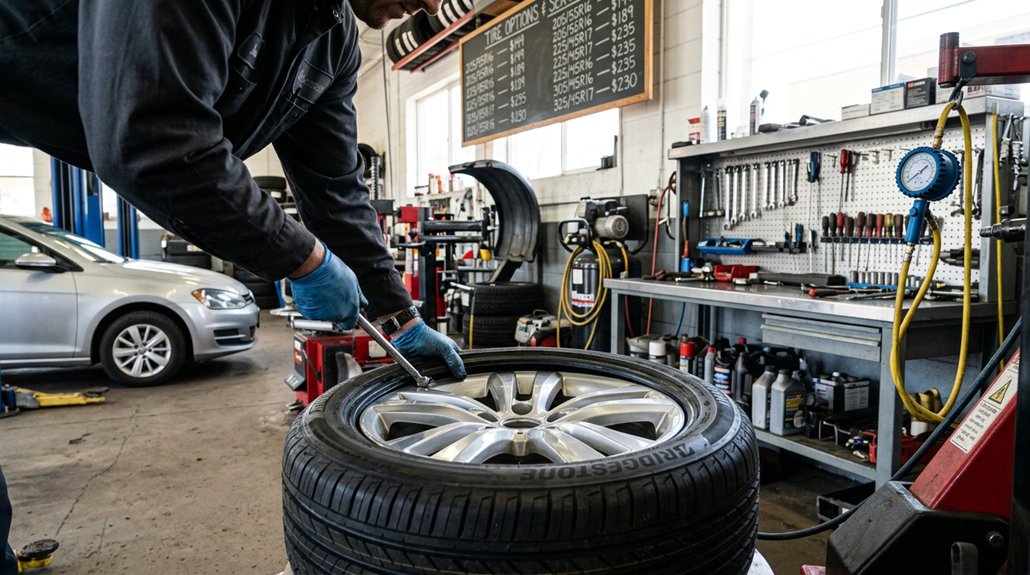
By 2026, tire replacement costs have climbed roughly 15% since 2023, with the average American driver now facing $600–$1,100 per set before installation fees even enter the equation.
What most vehicle owners don’t realize, and what could save or cost you hundreds, is how dramatically your specific choices in tire tier, vehicle class, and regional market conditions reshape that final invoice.
Tire Replacement Cost in 2026: What You’ll Actually Pay
Regional pricing creates significant disparities. Florida’s harsh sun and coastal humidity accelerate tire degradation, while Michigan’s freeze-thaw cycles and pothole-damaged roads increase replacement frequency. Both factors push local prices beyond national averages through elevated demand and supply-chain adjustments.
I always recommend requesting itemized quotes, documenting everything for warranty claims, and watching for hidden disposal fees that shops occasionally bury in final invoices.
SUV vs. Sedan vs. Truck: Tire Cost by Vehicle Type
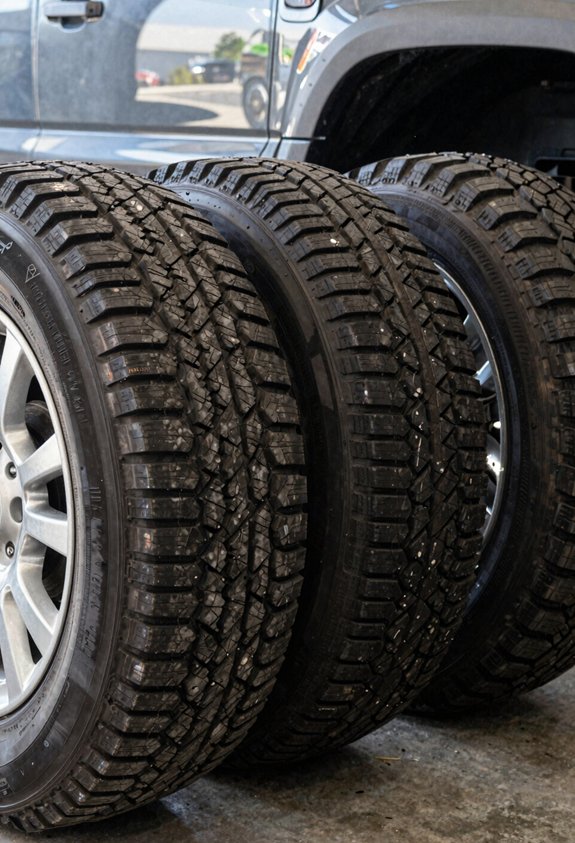
I’ll break down how tire costs shift across vehicle categories, since what you’ll pay for a sedan or compact car, typically $500–$900 per set installed, differs substantially from SUV and crossover tires, which usually run $700–$1,200, and truck or large SUV setups, where $900–$1,500+ is common.
These ranges aren’t arbitrary; they’re driven by tire size, load ratings, and whether you’re opting for premium or high-performance variants, which can push totals higher regardless of segment. Before you fixate on the vehicle type alone, remember that installation services, mounting, balancing, TPMS handling, and alignment, plus brand selection, will heavily influence your final invoice.
Vehicle Type Comparison
Your tire replacement costs will depend heavily on what you’re driving out of, or into, the shop, since vehicle type drives everything from tire size to load requirements and, ultimately, your final bill.
Sedans typically see installed tire costs ranging $500–$900, as their smaller tire sizes and standard load ratings keep expenses manageable. SUVs and crossovers demand more, generally $700–$1,200, owing to larger footprints, higher load capacities, and increasingly common low-profile or specialized fitments.
Trucks, whether light-duty or heavy-duty configurations, impose the steepest total installed cost at $900–$1,500+, reflecting substantial sidewall dimensions, E-load or higher ratings, and frequent all-terrain or commercial-grade selections.
Regardless of vehicle type, installation services, mounting, balancing, TPMS registration, alignment, and disposal, accumulate $15–$30 per tire, with regional factors like Michigan’s pothole-ravaged infrastructure potentially necessitating additional alignment intervention and elevating expenditures beyond baseline projections.
Price Per Category
These price ranges stretch $700–$1,200, as I’m paying for larger footprints, all-season compounds, and occasional TPMS resets.
Truck/Large SUV Tire Installation
I’m facing $900–$1,500+, driven by heavy-duty construction, reinforced sidewalls, and commercial-grade mounting demands.
—
Critical Cost Amplifiers
- Larger tire sizes escalate base prices proportionally
- Premium brands command 30–50% premiums
- Added services (alignment, balancing) compound totals
Regional Factors
I’m noting that regional factors, particularly Florida’s competitive market dynamics and varying shop labor rates, can compress or inflate these brackets substantially beyond national baselines, making local quotes essential.
Budget vs. Premium: Why Tire Quality Changes the Price
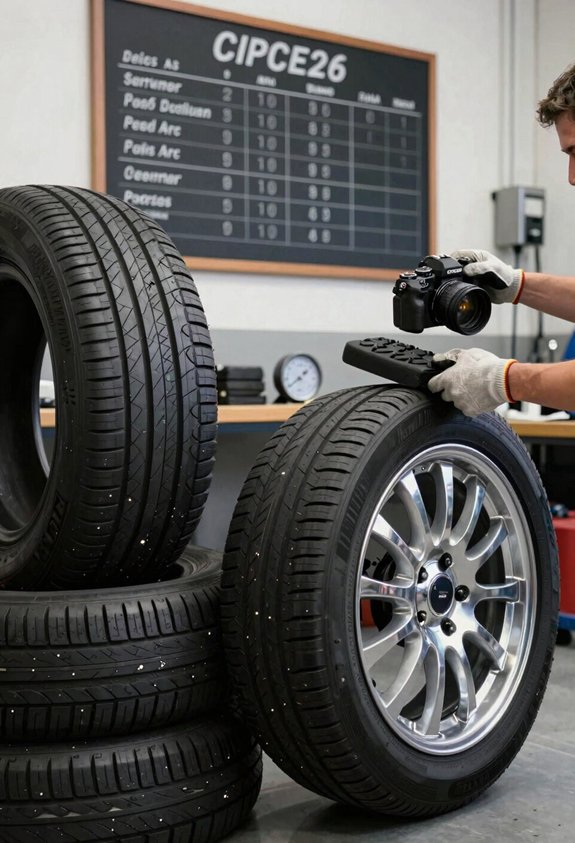
Why does a single tire range from under $100 to well over $300? Tire price spreads reflect fundamental differences in tire quality that directly impact installed tire costs and your driving experience. When I examine what separates budget from premium tiers, four critical factors emerge:
Tire prices reflect fundamental quality differences that directly impact your driving experience and long-term costs.
- Compound chemistry: Silica-heavy rubber delivers superior wet grip but costs more to formulate
- Tread complexity: Intricate patterns enhance performance while extending lifespan
- Speed ratings: Higher-rated tires require reinforced construction, raising prices significantly
- Internal engineering: Premium tires integrate advanced materials that justify their position
Budget options ($90–$130) meet basic safety standards, but premium tiers ($220–$350+) invest in longevity and performance that, when amortized over miles driven, often narrow the true cost gap, though installed tire costs for your specific vehicle, sedan, SUV, or truck, will ultimately frame this decision.
The Hidden Fees in Every Tire Installation
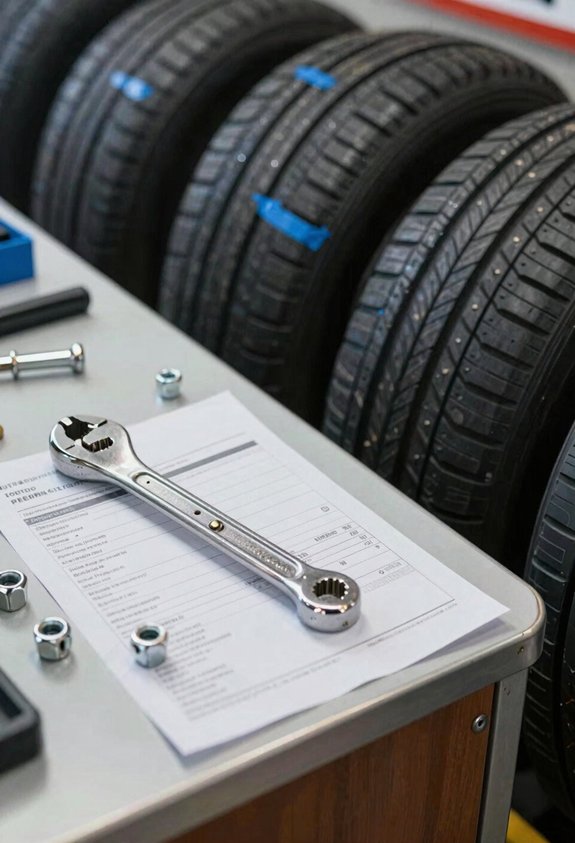
Core Installation Costs
Mounting and demounting, balancing, new valve stems, and TPMS service commonly inflate installation costs beyond the tire price itself.
Typical labor runs $20–$60 per tire; wheel alignment adds $90–$150.
Hidden Fees to Watch For
These hidden fees catch many of us off guard:
- Tire disposal: $3–$7 per tire
- Valve stems (often excluded from advertised prices)
- TPMS service
Regional Considerations
In Michigan, potholes and rough pavement increase alignment needs. Skipping this risks uneven wear and compromised handling.
Smart Strategies
Some retailers bundle promotions requiring in-store tire installation, affecting discount eligibility. I always ask for complete pricing upfront to avoid sticker shock at checkout.
Where to Shop for the Best Tire Deals in 2026
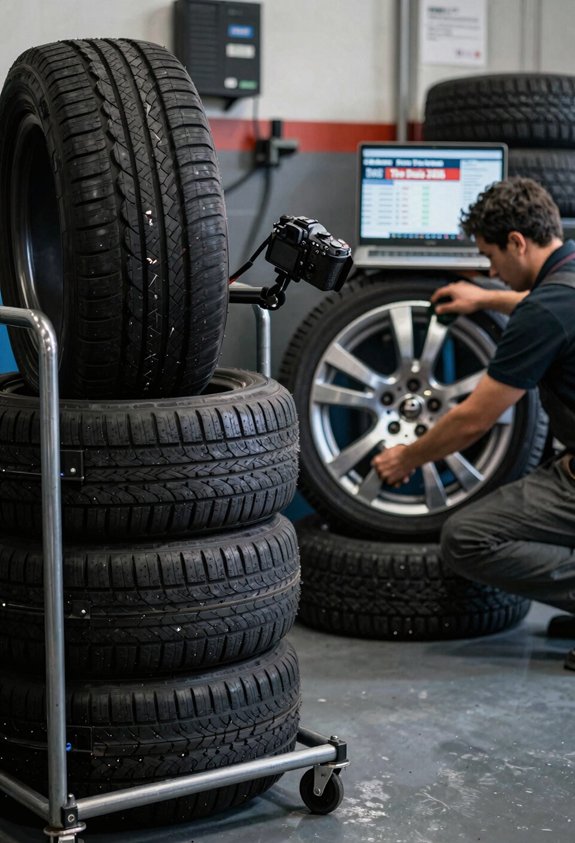
I recommend comparing three primary sourcing channels when seeking optimal tire value in 2026. National tire retailers (Discount Tire, Firestone, Goodyear) typically offer competitive pricing through volume purchasing and bundled installation packages. Local tire shops often provide personalized service with flexible negotiation room on mounting and alignment fees. Online tire marketplaces (Tire Rack, SimpleTire) deliver upfront cost transparency, though you’ll need to factor separate installation scheduling and potential shipping delays into your total expense calculation.
National Tire Retailers
Where you choose to purchase your tires in 2026 significantly impacts your total installed cost, available warranty coverage, and ongoing service relationships, which is why I’ll break down the major national retailers and what each offers beyond the sticker price. Discount Tire (also operating as America’s Tire in some regions) consistently ranks among the most competitive on price, with their 2026 installed bundles for sedans often landing in the $480–$750 range, though their TPMS service fees and road hazard warranties can add $60–$120 to your final bill if you don’t read the fine print. Costco and Sam’s Club provide members with substantial value through bundled installation packages, typically $15–$20 per tire including mounting, balancing, and valve stems, but their limited brand selection and strict appointment requirements mean you’re trading flexibility for savings, particularly if you need same-day service.
Walmart Auto Care Centers offer budget-conscious options with entry-level tire sets for sedans starting around $400 installed, yet their alignment services and road hazard coverage lag behind specialized retailers, creating potential long-term costs if uneven wear develops. Tire Rack, now with expanded mobile installation partnerships, bridges the gap between online pricing and local service, though their 2026 shipping delays on popular sizes and the variability of independent installer quality demand careful vetting of your assigned shop. Firestone Complete Auto Care and Goodyear Auto Service command premium pricing, often 15–25% above Discount Tire, but bundle thorough maintenance packages, nationwide warranty honoring, and factory-trained technicians that justify the cost for drivers prioritizing convenience and manufacturer-backed protection.
When evaluating national retailers, I focus on four critical elements that determine your true ownership cost:
- Tire prices vary dramatically between warehouse clubs and specialty chains, with entry-level sets at Walmart running 20–30% below premium dealer quotes for identical sizes.
- Installation costs at membership stores often exclude alignment services, which you’ll need separately at $90–$150, whereas full-service retailers bundle these into higher upfront totals.
- National retailers offer standardized pricing and warranty networks that protect you during interstate travel, a significant advantage over localized alternatives when roadside failures occur.
- Supply chain fluctuations in 2026 mean rotating stock levels differ by region, so I recommend calling ahead to confirm availability rather than relying solely on online inventory displays.
Local Tire Shops
While national chains offer standardized convenience, I’ve found that independent local tire shops frequently deliver competitive value through negotiated pricing, flexible service scheduling, and community-rooted customer relationships that corporate franchises struggle to replicate. I’ll break down what you need to know about where you belong in this market.
2026 Installed Cost Breakdown
| Vehicle Type | Typical Installed Cost Range |
|---|---|
| Sedans | $500–$900 |
| SUVs/Crossovers | $700–$1200 |
| Trucks | $900–$1500+ |
I’m seeing tire installation run $15–$30 per tire for mounting and balancing, plus disposal, TPMS service, and alignment fees. Price trends driven by supply chain pressures and raw material costs mean we’re all facing higher out-the-door numbers, even at hometown shops.
Watch for promotions. I’ve spotted 15% off with $250+ spend at participating retailers, which can substantially soften your final installed cost while supporting causes like the Wounded Warrior Project.
Online Tire Marketplaces
How do you cut through the noise when every online retailer claims to have the best tire prices? I’ve spent hours comparing online marketplaces, and here’s what I’ve learned about finding genuine value in 2026’s crowded digital landscape.
Understanding Installed Cost Transparency
Online marketplaces excel at aggregating tire prices across retailers, yet advertised rates frequently exclude mounting, balancing, TPMS service, and alignment; expenses that substantially inflate your final installed cost. I’ve watched too many shoppers discover this reality at checkout.
2026 Price Benchmarks
Current installed cost ranges reflect ongoing inflation pressures:
- Sedan/Compact: $500–$900 per set
- SUV/Crossover: $700–$1,200 per set
- Truck/Large SUV: $900–$1,500+ per set
- Hidden fees: installation, disposal, TPMS, alignment
Maximizing Your Savings
I recommend bundling four-tire purchases, monitoring seasonal promotions, and claiming manufacturer rebates; these strategies consistently reduce installed cost below standalone tire prices.
Best Months to Buy Tires for Maximum Savings
Even with discounted rubber, installation fees erode savings if you’re unprepared. Mounting, balancing, TPMS service, and alignment ($150–$270 total) stay constant regardless of seasonal sales.
I bundle these services during promotional windows, negotiating package rates that protect my investment against Michigan’s punishing potholes.
Why 2026 Tire Prices Reflect National Supply Chain Pressures
I want you to understand that 2026 tire prices aren’t arbitrary, they’re shaped by three interconnected national pressures that directly hit your wallet. Global Rubber Shortages have constrained natural rubber supply from Southeast Asia, pushing raw material costs upward across all tire categories. Tariff Impact Analysis reveals how ongoing trade disputes add 8–15% to imported tire prices, particularly affecting budget and mid-range options you might consider.
Freight Cost Surges, driven by fuel volatility and logistics bottlenecks, compound these expenses. That means the $500 sedan set or $1,200 truck replacement you’re budgeting for carries embedded transportation premiums you can’t negotiate away at the local shop.
Global Rubber Shortages
These shortages aren’t abstract. They’re hitting your wallet through four interconnected pressures:
- Weather-damaged harvests reducing raw material availability
- Shipping bottlenecks delaying rubber reaching manufacturers
- Higher processing costs that tire brands pass downstream
- Regional strain, like Florida’s distribution challenges amplifying national trends
When I analyze tire costs across vehicle classes, I’m finding these supply chain constraints create uniform upward pressure regardless of tire quality. You’re not imagining things: your replacement quote reflects real scarcity, not opportunistic pricing. Understanding this distinction helps you time purchases and budget realistically.
Tariff Impact Analysis
Tariffs enacted through 2025 and 2026 are reshaping what you’ll pay at the tire shop, bridging raw material scarcity to the final invoice you’ll sign.
How Import Costs Reach Your Wallet
I’ve watched tariffs drive up import costs on rubber, steel, and finished tires from major manufacturing regions. When governments impose these trade barriers, suppliers don’t absorb them; they pass price inflation straight to distributors, then to installers, and ultimately to you. Your $500–$900 sedan replacement or $900–$1,500+ truck set reflects layered duties, not just material scarcity alone.
What This Means for Your Decision
You’re facing compressed timelines: delaying replacement risks safety, but purchasing now locks in elevated baseline costs. I recommend comparing domestic-brand alternatives (Bridgestone, Goodyear, Michelin) against imports, calculating total lifecycle value rather than sticker shock alone.
Freight Cost Surges
- Raw material transport from overseas suppliers
- Factory-to-warehouse distribution legs
- Inbound delivery to your regional retailer
- Final-mile shop delivery plus surcharges on services
We’re all feeling this. Even Florida buyers, buffered slightly by local supply, can’t fully escape freight-driven inflation.
How Proper Maintenance Cuts Your Tire Costs in Half
Why watch your tire budget balloon when disciplined upkeep can slash replacement expenses by 50% or more? I’ve learned that proper maintenance transforms predictable tire costs into manageable, extended cycles. By rotating every 5,000–7,500 miles, maintaining manufacturer-recommended pressures, and addressing alignment promptly, especially critical given Michigan’s road conditions, you’re actively preventing uneven wear that forces premature installation.
Skipping maintenance accelerates degradation of $140–$200 mid-range options and $220–$350+ premium selections alike. I’ve seen diligent owners stretch 40,000-mile tires toward 60,000+ miles, effectively halving per-mile tire costs. Installation add-ons, mounting, balancing, TPMS service, alignment, still apply, but spreading that $100–$300 across extended intervals dramatically reduces annual outlay.
Your commitment to maintenance separates smart ownership from expensive neglect.
After an Accident: Proving Tire Replacement Costs to Insurers
When I’m staring at shredded rubber after a collision, I know the clock starts ticking on building an airtight claim. So I immediately gather every document that proves what my tires were worth before the impact. I secure original invoices showing tire replacement cost, installation fees, and every associated service: mounting, balancing, TPMS work, and alignment. This strengthens my insurance claim against lowball offers.
Here’s what I prioritize:
- Original purchase receipts proving tire tier (budget $90–$130, mid-range $140–$200, premium $220–$350+ each)
- Installation fee breakdowns ($15–$30 mounting/balancing per tire, $5–$10 TPMS, $90–$150 alignment)
- Vehicle-specific quotes (sedans $500–$900, SUVs $700–$1,200, trucks $900–$1,500+ for full sets)
- Local Florida shop estimates, since national data alone won’t capture my true replacement costs
How Delaying Replacement Costs More Later
Although I might feel tempted to squeeze extra miles out of tires that still hold air, I’ve learned that deferring replacement almost always multiplies my total expenditure through accelerated wear on suspension components, reduced fuel efficiency, and elevated blowout risk.
The Hidden Penalty of Waiting
When I delay replacement, I’m not just postponing tire replacement costs, I’m inviting collateral damage. Worn tread forces my suspension to absorb impacts unevenly, accelerating shock and strut degradation that costs $400–$800 to remedy.
My fuel economy drops 3–5% as rolling resistance increases, draining my wallet at every fill-up. In Michigan’s pothole-ridden winters, bald tires compound alignment issues, transforming a $120 service into $300+ when camber bolts seize.
Calculating True Long-Term Value
I’ve found that long-term value favors timely replacement. Premium tires ($220–$350 each) delivering 60,000+ miles outperform budget alternatives requiring earlier replacement, and bundled four-tire purchases often offset installation costs through rebates.
Factor in mounting/balancing ($15–$30 per tire), TPMS service, and alignment ($90–$150), and procrastination rarely pays.
Quick Tire Cost Calculator: Estimate Your Next Purchase
Understanding the true cost of procrastination sets the stage for accurate budgeting, so I’ve developed a straightforward method for estimating what I’ll actually pay before stepping into a shop. By breaking down tire costs, installation, and vehicle-specific price ranges, I can anticipate expenses without surprises.
Here’s my four-step calculation framework:
- Select your tire tier: Budget ($90–$130), mid-range ($140–$200), or premium ($220–$350+) per tire determines base material costs
- Factor vehicle requirements: Sedans run $500–$900 installed, SUVs/Crossovers $700–$1,200, trucks $900–$1,500+
- Add installation services: Mounting/balancing ($15–$30), TPMS ($5–$10), disposal ($3–$7), plus alignment ($90–$150) if needed
- Adjust for regional conditions: Harsh winters or poor roads may accelerate wear, requiring earlier replacement
Check seasonal promotions, like July 4th’s 15% discount on $250+ purchases, to reduce final out-of-pocket expenses.