
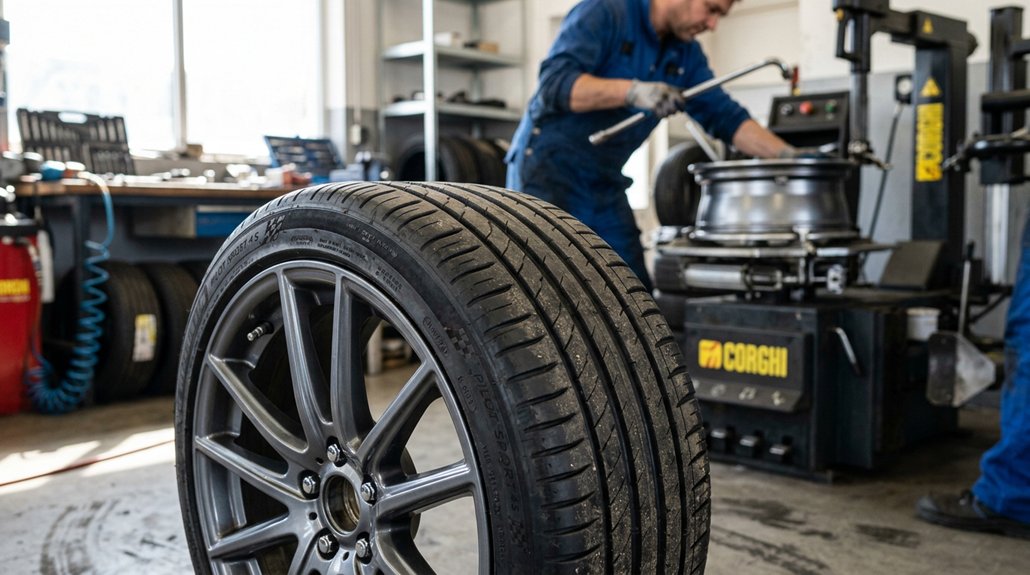
Most drivers don’t realize that a single 2026 tire quote can swing $260 between dealerships for the exact same model. I’ve seen too many people fixate on the sticker price while missing the installation trap.
I’ll show you why that $90 tire often costs $180 out-the-door, and what you must demand in writing before you agree to anything.
What New Tires Actually Cost in 2026 (By Vehicle Type)
Why does tire pricing vary so dramatically from one vehicle to another? I’ll break down what you’ll actually pay, so you can plan without surprises.
Tire costs swing wildly between vehicles—know what you’ll actually pay before you shop.
Cost by Category
Your vehicle type determines everything. I see sedans and compacts running $500–$900 installed for a full set, while SUVs and crossovers jump to $700–$1,200. Pickup trucks and large SUVs? Expect $900–$1,500+.
How Tire Grade Shapes Total Cost
Here’s where choices matter. Budget tires ($90–$130 each) keep initial outlay low, mid-range tires ($140–$200) balance longevity and price, and premium tires ($220–$350+) demand serious investment. Multiply by four, and you’ve got your base.
Installation Add-Ons Add Up
Don’t forget mounting, balancing, disposal, TPMS service, and alignment; these installation add-ons tack on $110–$250. Factor them in, or your total cost will shock you.
Cheap vs. Premium Tires: What the Extra Money Gets You
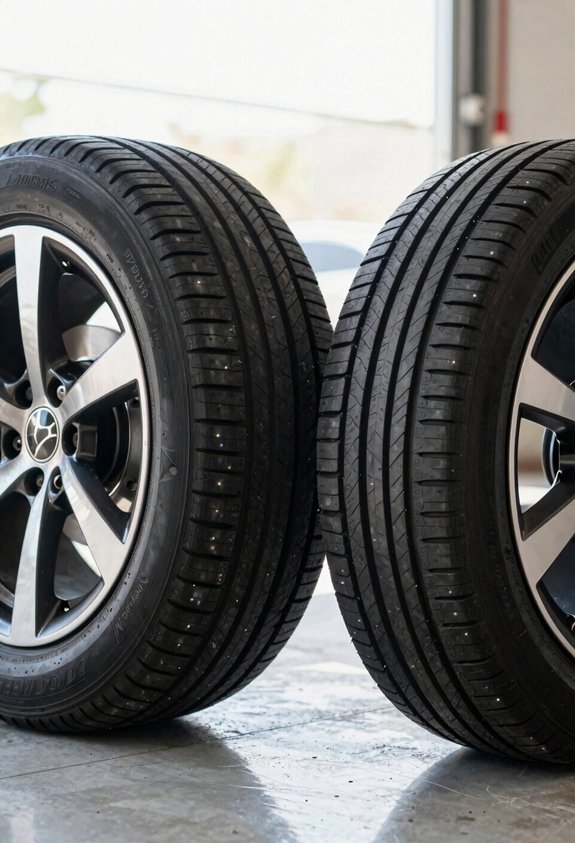
How exactly does an extra $100–$200 per tire translates into tangible benefits you’ll notice on the road? Let me break down what separates budget tires from premium tires, and why the price versus value calculation matters more than sticker shock alone.
Tire Prices and What You’re Actually Buying
Budget tires run $90–$130 each, while premium tires hit $220–$350+. That higher upfront investment stings, but here’s what you gain: superior handling performance, extended tread life, and thorough warranties. Budget tires save money now; premium tires often cost less per mile over time.
Installation Costs and Total Out-the-Door Cost
Installation costs add $100–$250 per set regardless of tier, meaning your total out-the-door cost gap narrows slightly. Factor in promotions and deals; spring and holiday sales especially, to soften that premium hit.
What’s Really in Your “Installed” Tire Quote
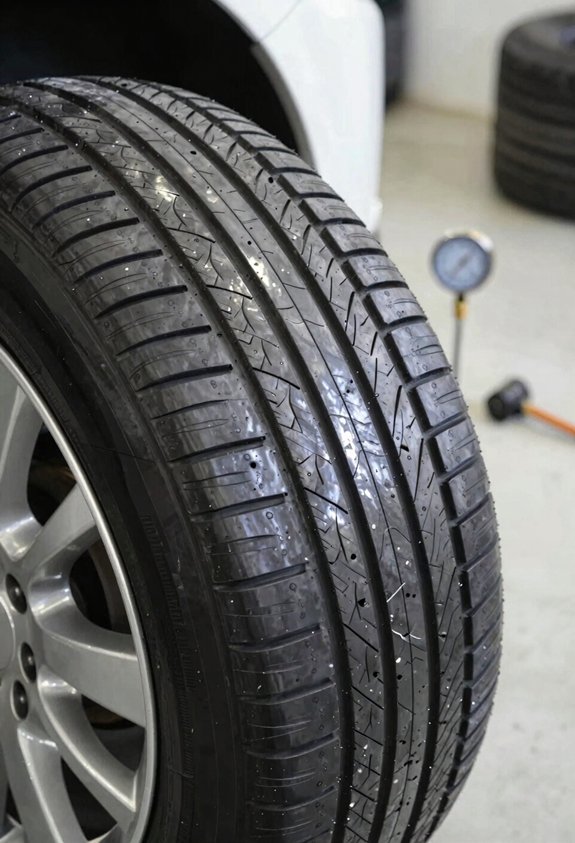
Understanding what separates budget from premium tires is only half the battle. I’m equally concerned with what you’re actually signing up for when you agree to an installed tire quote.
What’s Actually Included
That attractive tire price versus installation reality hits hard. Your out-the-door cost bundles mounting and balancing ($15–$30 and $10–$20 per tire), TPMS service ($5–$10), tire disposal ($2–$7), and often alignment ($80–$200).
Vehicle Type and Location Matter
Your vehicle type directly impacts these figures. Trucks need heavier-duty handling, while Michigan’s cratered roads practically mandate alignment, inflating installed tire costs before you’ve turned a wheel.
Finding Your True Number
Seasonal promotions and manufacturer rebates can slice meaningfully into totals, but first, know your baseline. A full set’s out-the-door cost? Typically $480–$1,200. I’ve watched too many drivers fixate on sticker shock while missing where their money actually goes.
Where to Find the Best Deals (and Red Flags to Avoid)
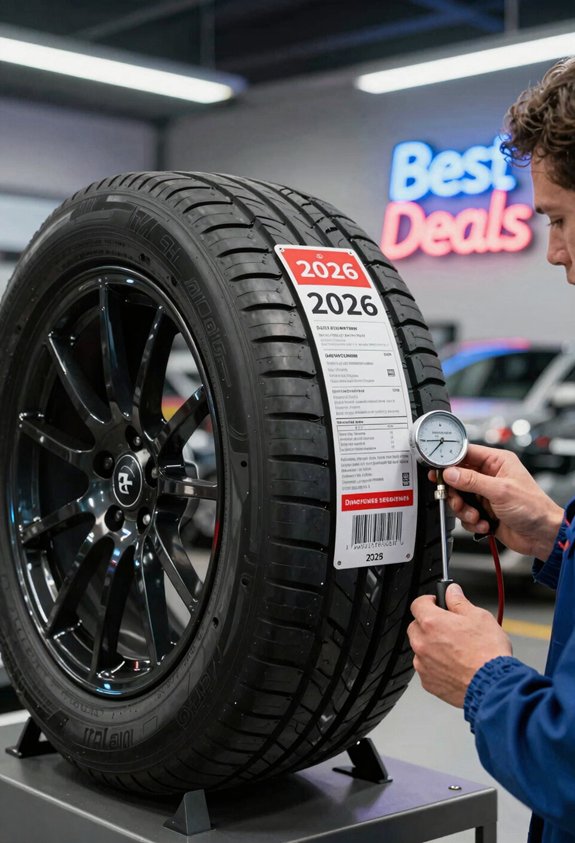
- Compare complete price structures, not just per-tire rates; factor installation, alignment, and TPMS fees ($5–$10 per tire) to avoid sticker shock at checkout.
- Evaluate budget vs premium realistically; $90–$130 tires suit light commuters, while harsh winters demand $220–$350+ options with superior tread compounds.
- Verify what’s included; the best deals bundle mounting, balancing, and road hazard protection without hidden surcharges.
Red flags include quotes lacking itemized breakdowns, pressure to buy immediately, or shops dismissing alignment needs after Michigan pothole damage.
How to Choose Tires That Won’t Drain Your Budget Long-Term
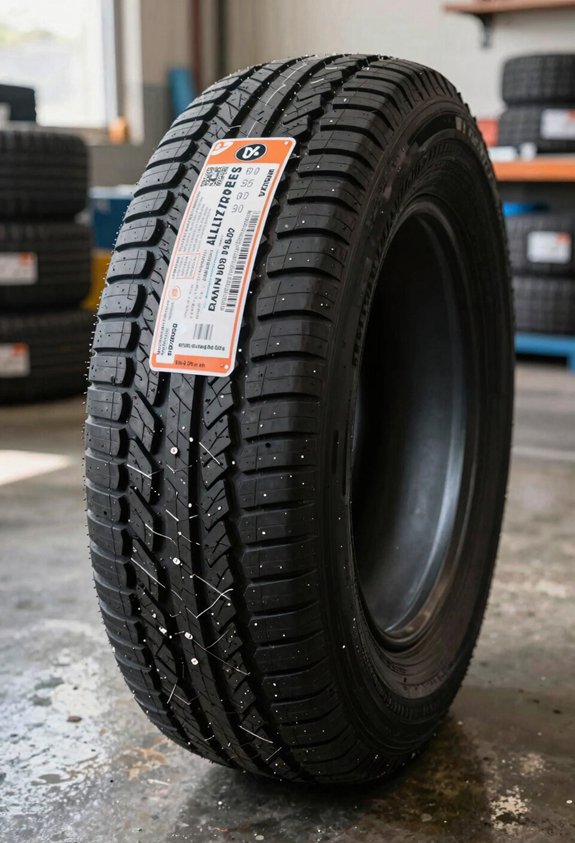
Why do so many drivers watch their tire investment crumble within two years? They ignore total cost of ownership, focusing only on sticker price rather than long-term value.
Understanding Tire Quality Levels and Price Ranges
I’ve learned that tire quality levels directly predict durability. Budget tiers ($90–$130 per tire) often sacrifice tread wear ratings, while mid-range ($140–$200) and premium ($220–$350+) options typically deliver superior longevity.
When I calculate my budget for new tires, I factor installation costs: mounting, balancing, TPMS service, and alignment, which add $140–$290 to any set.
Maximizing Value Through Strategic Timing
I watch for seasonal promotions (spring, fall, holidays) to reduce upfront tire cost. Ultimately, disciplined tire maintenance: rotation, pressure checks, alignment, protects my investment and prevents premature replacement.