
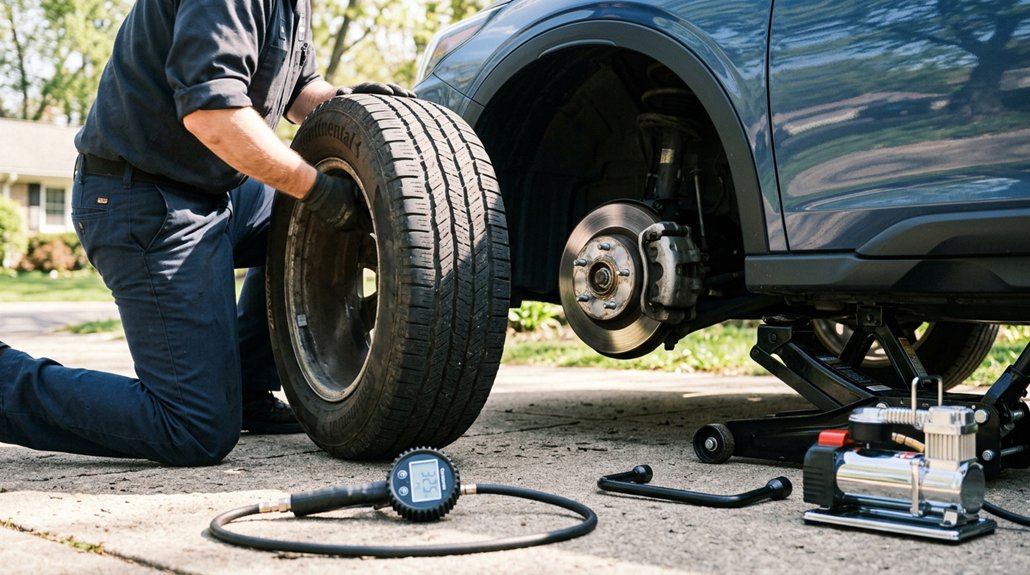
Like the iceberg that sank the *Titanic*, tire replacement costs conceal far more beneath the surface than most drivers anticipate. I’m walking you through the full financial picture, base prices, hidden fees, and the safety compromises you can’t afford to make.
What Tire Replacement Actually Costs (Including Hidden Fees)
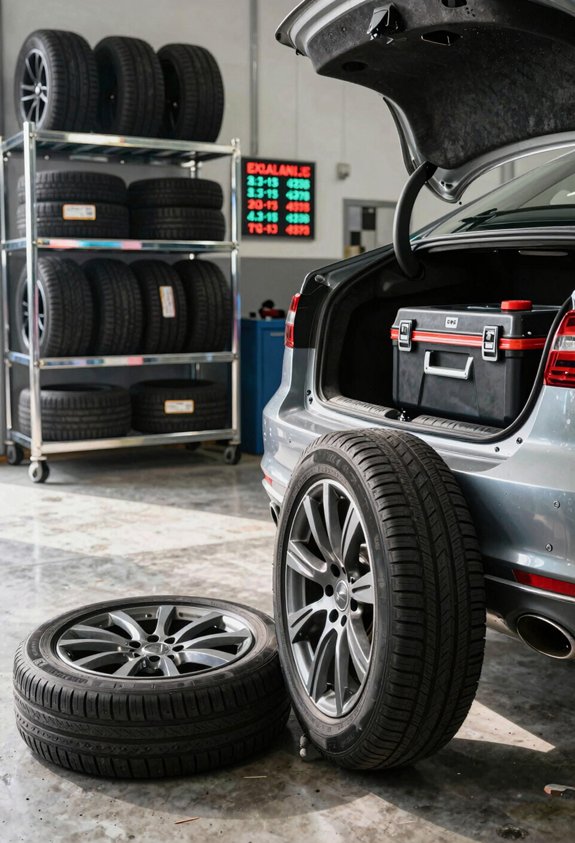
When I’m pricing out a tire replacement, I need to look beyond the sticker price on the rubber itself, because what you’ll actually pay involves several stacked services that can quickly shift your total from manageable to unexpectedly steep.
Tire Installation packages run $18 per tire, covering mounting, lifetime balance/rotation, and valve stems, though this applies only to Walmart-purchased tires. Mounting utility or trailer tires separately costs $11 each, excluding parts. Lifetime balance and rotation, normally $15 per tire, comes bundled in that package.
Road-hazard warranties add $10 per tire unless you’re a Walmart+ member, where they’re complimentary (state restrictions apply; unavailable in New York). Industry-wide, shop-installed replacements typically total $30–$60 per tire, meaning two tires run $60–$120 after labor. Watch for unbundled fees that inflate your final bill beyond the quoted rubber price.
Why Some Tires Cost 3x More Than Others
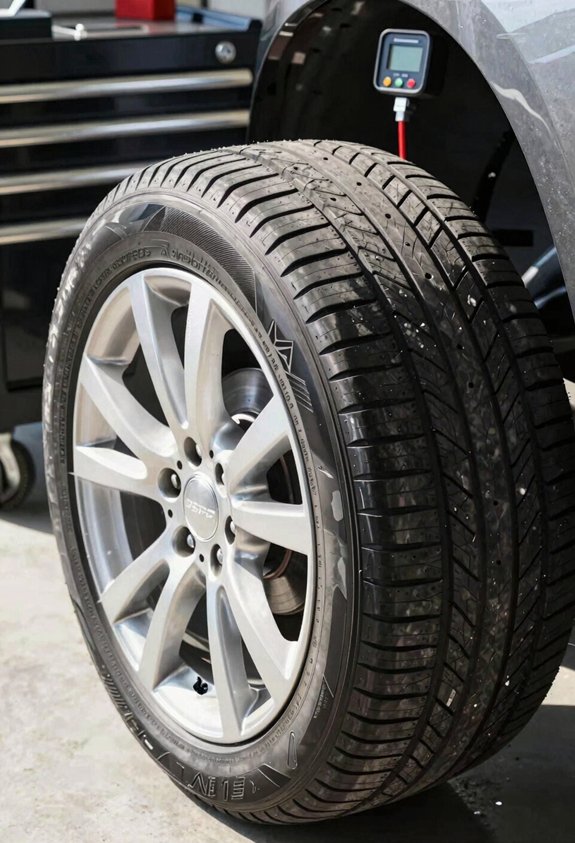
Sticker prices on tires swing wildly—from roughly $100 for a basic passenger tire to $300 or more for a single premium performance model. I’m careful to look past the rack and understand what drives that 3x multiplier before I commit to a purchase.
Advanced Compounds and Construction
Higher-end tires command premium pricing because manufacturers engineer specialized rubber formulations, reinforced sidewalls, and tread patterns optimized for specific performance metrics. These advanced materials extend tread life, improve wet-weather grip, and reduce rolling resistance. These are benefits I’m weighing against my driving habits and climate conditions.
Vehicle-Specific Requirements
My tire category and vehicle type fundamentally shape baseline costs. Road, mountain, and hybrid bicycle tires occupy distinct price tiers. Electric vehicles demand heavier-duty construction rated for increased weight and instant torque delivery, pushing prices toward the $300–$1,000 range.
Warranty Value and Long-Term Math
I’m calculating total ownership cost, not just sticker price. Road-hazard warranties ($10 per tire, occasionally complimentary with membership programs) and lifetime balance/rotation packages transform expensive tires into potentially smarter investments when I factor in tire installation cost and service longevity.
How Installation Fees Work (and Where You’re Overcharged)
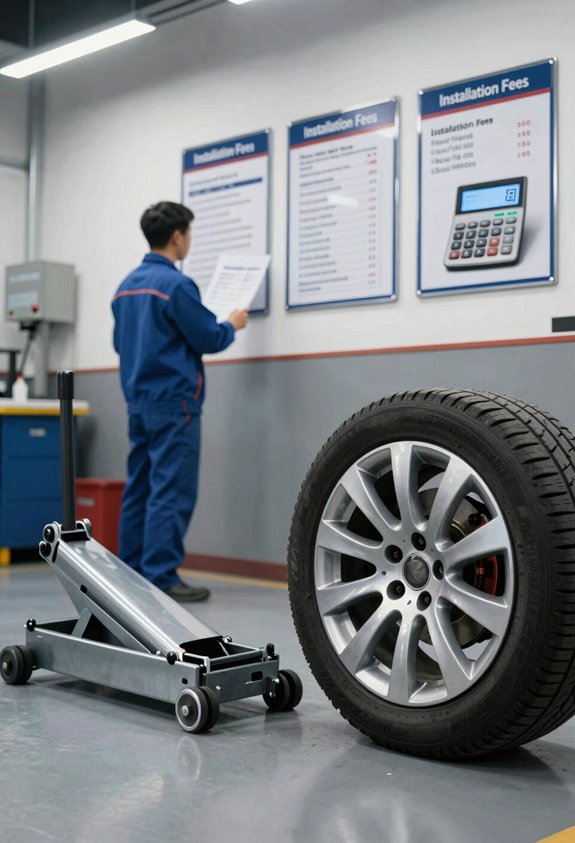
I’ll break down exactly how installation fees accumulate, where retailers obscure true costs within bundled packages, and which line-item charges you can negotiate or avoid entirely.
Fee Breakdown Explained
Beyond the base price of rubber and rim, tire installation fees stack up through layered service components that demand scrutiny before you sign off on any work order. I’ve broken down exactly what you’re paying for, so you can spot where shops pad their margins.
Tire Installation Package
The tire installation package runs $18 per tire and includes mounting, lifetime balance and rotation, a service pack, and valve stem replacement. If you’re buying Walmart tires, this bundles everything you’ll need.
Standalone Services
- Tire Mounting: $11 per tire for utility and trailer applications, parts excluded.
- Lifetime Balance & Rotation: $15 per tire when purchased separately.
- Road-Hazard Warranty: $10 per tire, though Walmart+ members get this free with new purchases (state restrictions apply; unavailable in New York).
Carry-in and non-Walmart tires also face $11 mounting fees without parts.
Hidden Cost Traps
Understanding the fee breakdown gives you a foundation, but I’ve watched too many drivers get blindsided by charges that aren’t obvious until you’re already at the register. Installation packages often bundle services that mask ongoing costs, and retailers structure pricing to obscure the true expense of mounting, balancing, and disposal fees that accumulate per tire.
Per-tire mounting fees ($11 each) multiply silently across a full set. Lifetime service perks disguise recurring maintenance charges you’ll pay later. Road-hazard warranties add $10-$15 per tire unless membership discounts apply. In-store bundles reduce perceived cost while omitting transparent online pricing.
Installation fees offset lifetime service costs, yet the structure rewards those who scrutinize itemized quotes before committing. Ask explicitly what each charge covers, compare online versus in-store transparency, and verify whether membership programs eliminate add-on fees in your state.
Why Trucks, EVs, and Sports Cars Pay Premium Prices
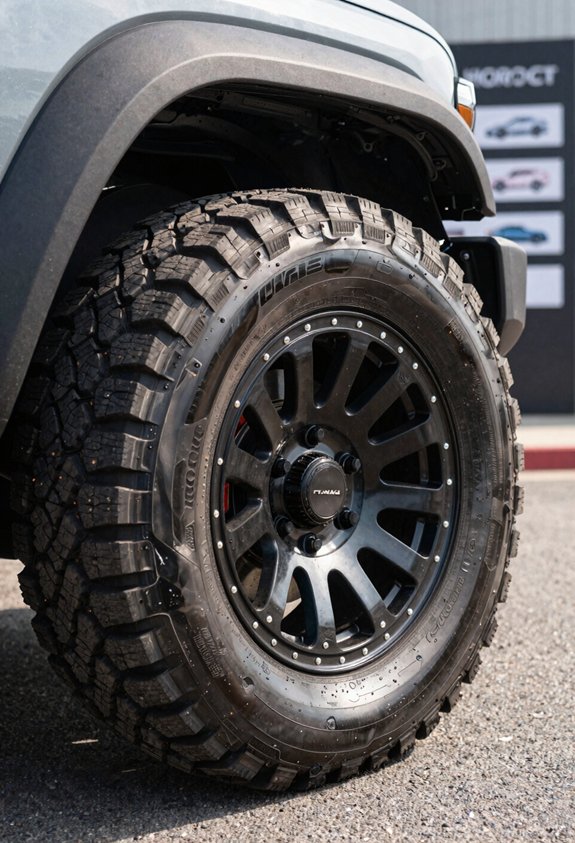
When you’re pricing tires for a truck, EV, or sports car, you’ll quickly notice that weight and load demands, performance engineering costs, and specialized tire features push prices well above standard passenger vehicle ranges. My experience comparing replacement quotes across vehicle categories shows that these three factors, structural reinforcement for heavier loads, advanced compounds for high-speed stability, and proprietary tread designs, create a pricing tier that reflects real engineering complexity rather than simple markup.
Understanding exactly how each element contributes to your final bill helps you evaluate whether premium options offer proportional value for your specific driving conditions and safety requirements.
Weight and Load Demands
Why do otherwise identical tire sizes command vastly different price tags depending on what vehicle they’re fitted to?
I’ve seen this puzzle confuse plenty of owners. The answer lies in tire load capacity requirements. When you’re shopping for replacements, you’re not just paying for rubber, you’re paying for engineering that handles real demands.
Trucks need reinforced sidewalls to manage payloads exceeding 3,000 pounds. EVs carry battery packs adding 800–1,200 pounds versus conventional vehicles. Sports cars require compounds maintaining grip under lateral forces exceeding 1g.
All three demand specialized construction I’ve learned costs 30–50% more than standard passenger tires.
Heavier vehicles concentrate stress on contact patches, accelerating heat buildup and structural fatigue. Manufacturers respond with denser ply ratings, advanced bead construction, and proprietary compounds, each element raising production costs you’ll encounter at checkout.
Performance Engineering Costs
How dramatically do engineering requirements inflate tire costs across vehicle categories? I’ve seen firsthand how specialized design demands reshape tire prices, transforming routine replacements into significant investments for trucks, EVs, and sports cars.
| Vehicle Category | Engineering Demands | Typical Tire Prices |
|---|---|---|
| EVs | Heavy load capacity, low rolling resistance compounds | $150–$350+ per tire |
| Sports Cars | High-speed grip, steering response, specialized treads | $300–$1,000+ per tire |
| Trucks/Heavy-Duty | Load ratings, durability, terrain adaptability | $200–$600+ per tire |
These elevated tire prices stem from weight-related stress, accelerated wear patterns, and compounds developed for extreme performance. You’re also facing premium installation requirements: alignment, balancing, and warranty packages, which add to replacement budgets beyond standard passenger vehicle economics.
Specialized Tire Features
Specialized tire features directly explain why trucks, EVs, and sports cars carry premium price tags, and I’ll break down exactly what you’re paying for when you step outside standard passenger vehicle specifications.
- EV tires handle heavier battery weight and reduced rolling resistance, commanding 20-30% premiums
- Sports car tires use advanced tread compounds for maximum grip and precise handling
- Truck tires feature reinforced sidewalls and all-terrain durability for demanding loads
- Tire warranties for specialized applications typically extend coverage but increase upfront costs
These engineering demands, unique weight distribution, performance thresholds, and construction tolerances, directly inflate replacement expenses. When you’re selecting specialized rubber, you’re investing in vehicle-specific optimization, not generic compatibility.
Factor tire warranties into your total ownership calculations, as premium protection plans often accompany these high-performance options.
The One-Tire vs. Two-Tire Cost Math (Safety Included)

The decision to replace one tire or two involves more than simple multiplication of the per-tire figures I’ve outlined above, particularly when I factor in the safety implications of mismatched wear patterns and traction characteristics.
| Scenario | Tire Installation Costs | Safety Consideration |
|---|---|---|
| One tire | $30–60 (labor included) | Potential handling imbalance, especially on AWD vehicles |
| Two tires | $60–120 (combined) | Maintained traction symmetry, recommended for axle pairs |
| DIY single | Save $10–25 | Requires expertise; improper mounting risks failure |
| Shop bundle | Often includes mounting, balancing, warranty | Professional alignment verification included |
I always recommend replacing tires in axle-matched pairs when tread depth differs significantly, since uneven diameters stress drivetrain components and compromise emergency braking performance. The seemingly higher upfront tire installation costs for dual replacement actually prevent costlier repairs down the road.
How to Find Tire Deals Without Buying Junk
- Verify manufacture dates (DOT codes) before purchase; tires older than 5-6 years degrade regardless of tread depth
- Compare tire installation prices across retailers: Walmart’s $18 package includes mounting, lifetime balance/rotation, and valve stems, while competitors often charge $15+ per service à la carte
- Confirm road-hazard warranty terms; some memberships eliminate this $10/tire cost entirely
- Inspect utility trailer mounting exclusions, as carry-in tires frequently trigger unexpected $11-per-tire surcharges without parts coverage