
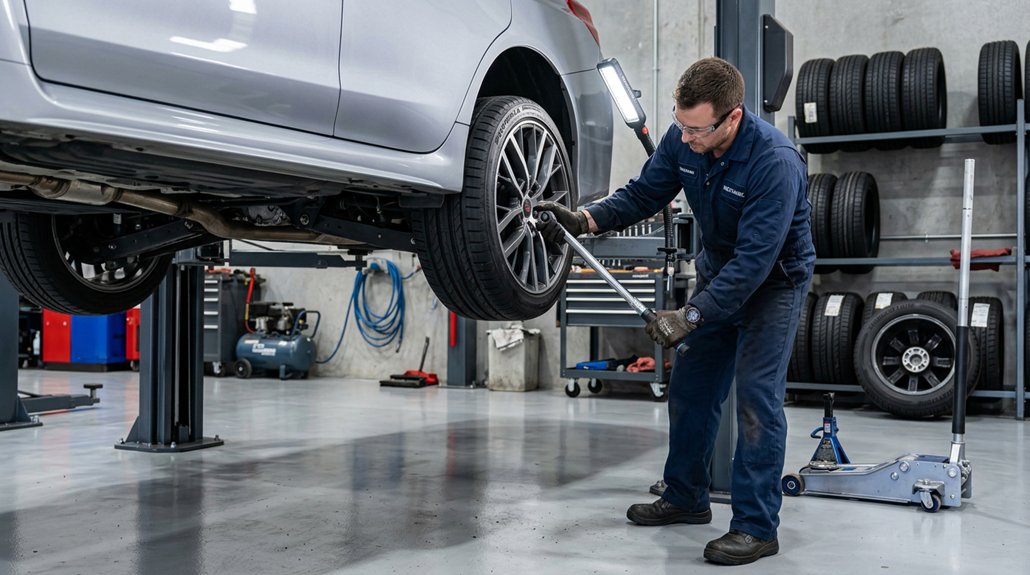
Most drivers underestimate how much variability hides behind a simple “tire change” estimate, and I’ve watched too many people block out thirty minutes on a Saturday only to lose their entire afternoon.
The truth is, you’re looking at anywhere from fifteen minutes to well over two hours depending on your vehicle, your equipment, and whether corrosion has seized your wheel studs.
I’ll break down exactly what drives those differences, and where you’re most likely to get caught off guard.
How Long Does a Tire Change Take? (30–45 Minutes for Most Cars)
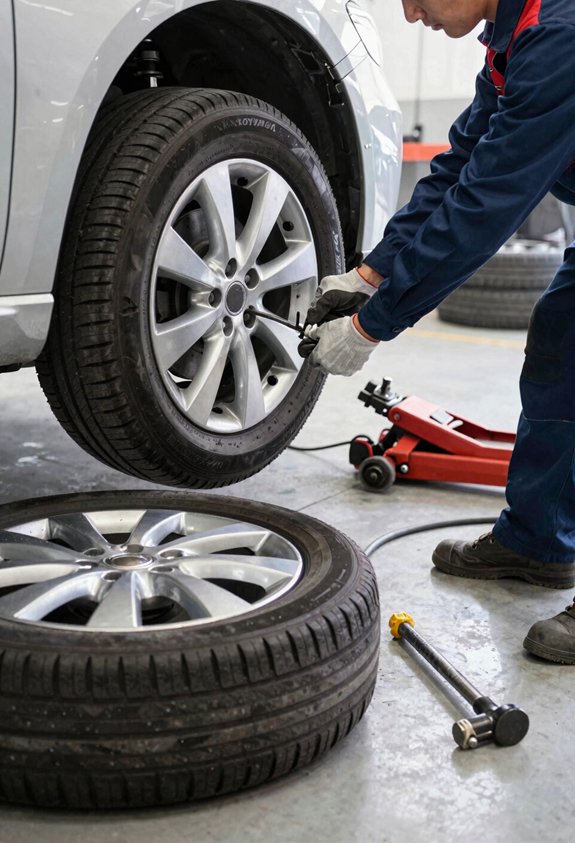
How quickly should you expect a tire change to actually take? Most cars typically require 30 to 45 minutes for a complete tire change, including mounting, balancing, and reinstalling at the axle. I’ve found this timeframe holds true whether you’re visiting professional tire services, where specialized equipment and technician experience streamline the process, or you’re an experienced amateur working efficiently at home.
However, DIY tire changes can exceed an hour per axle if you’re a beginner still mastering the workflow. Your actual time varies with wheel size, vehicle configuration, and whether additional services like TPMS recalibration become necessary. While contextual reports cite anecdotes ranging from 15 to 25 minutes to well over an hour, I recommend planning for that standard 30 to 45 minute window as your baseline expectation.
Why Your Tire Change Takes Longer in Trucks and SUVs
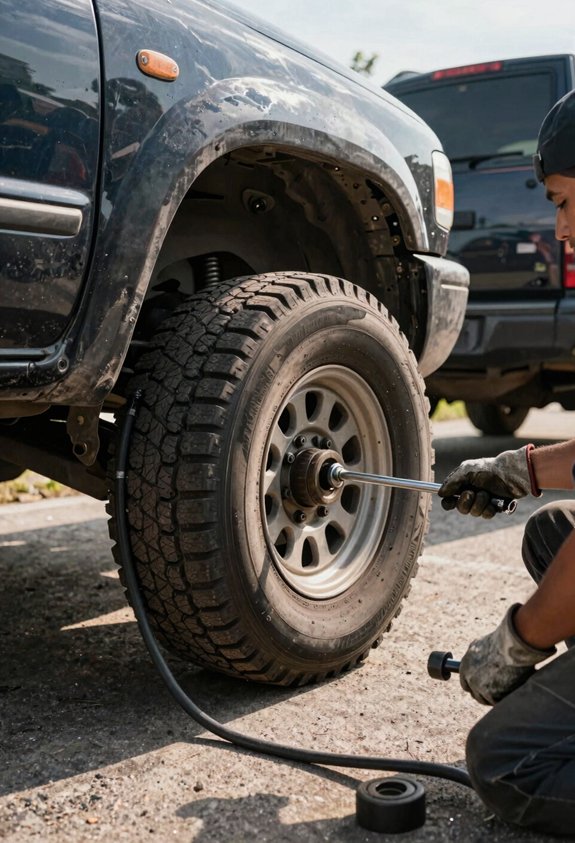
Why exactly do trucks and SUVs demand more of your time during a tire change? I’ve learned that heavier vehicle weight, larger wheel assemblies, and greater torque requirements slow every step. Jacking, lifting, and lug-nut removal all require more effort. A burly pickup might need about an hour for tire changes, compared to the 30–45 minutes typical for compact cars, simply because larger tires and heavier wheels demand careful maneuvering.
Chrome or heavy alloy wheels add handling time and damage risk during mounting and balancing. Additionally, SUVs and trucks often need more challenging balancing and potential alignment checks. Finally, specialized equipment, heavier-duty lifts, impact wrenches, torque tools, and technician experience determine whether your tire changes stay near an hour or stretch longer.
When Bad Tires and Rusted Parts Add an Hour
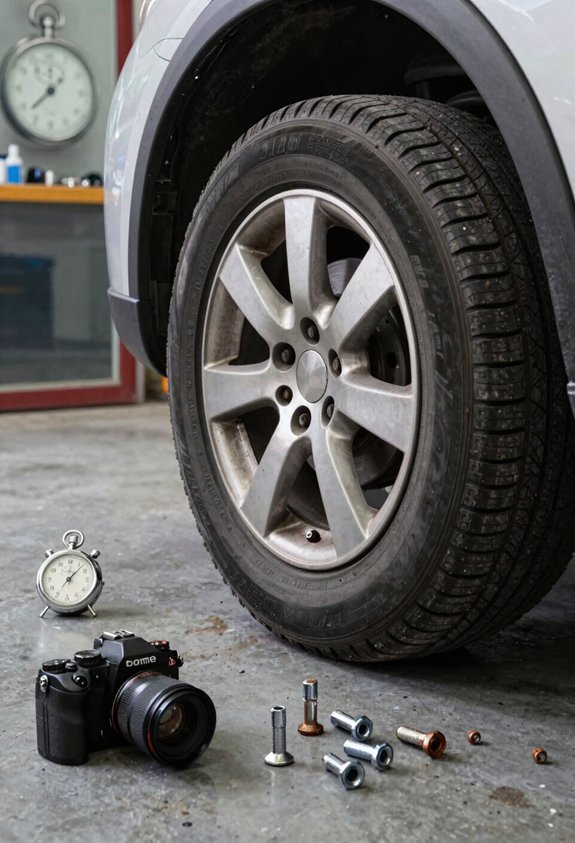
When lug nuts fuse to wheel studs, or hub assemblies crust over with oxidation, I reach for penetrating oil, mallets, and specialized extractors, tools absent from standard tire changes. Each seized fastener demands patience; forcing removal risks snapping studs or warping hubs, complications that multiply repair costs exponentially.
Deteriorated Tires Compound Problems
Aged, ragged rubber resists mounting and sealing, requiring additional prying and repositioning. The combination of rusted parts and degraded tires creates cascading delays: what begins as simple maintenance extends well beyond typical timeframes, testing both technician endurance and customer schedules alike.
DIY Tire Change Time vs. Professional Service
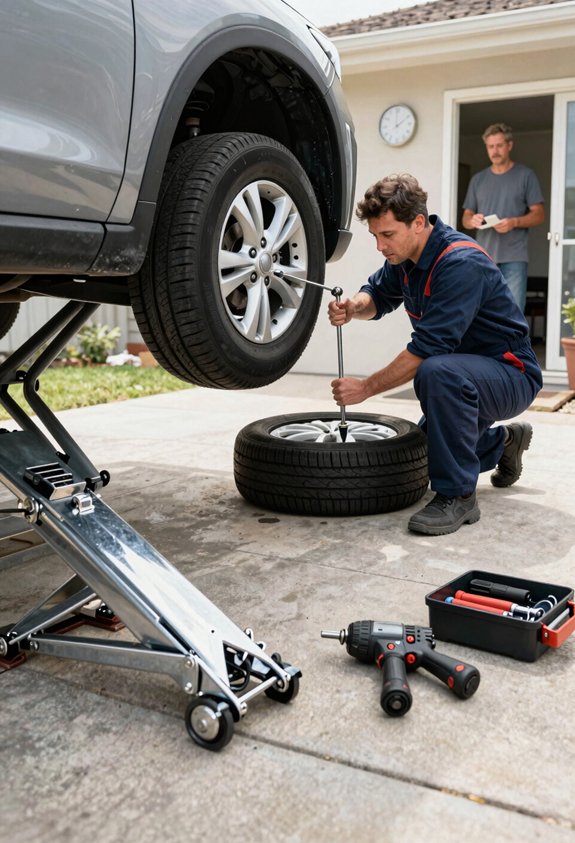
I’ve swapped my own tires enough times to know that DIY efforts stretch well past an hour per axle once you factor in mounting, balancing, and re-torquing, especially with run-flats, low-profile designs, or tires not already mounted on rims. Shops regularly cut that timeframe by half or more because they’re running hydraulic lifts, calibrated impact wrenches, and dynamic balancers I’ve priced but never justified buying for home use.
What I’m walking you through next breaks down the specific variables that widen or narrow this DIY-to-professional gap: wheel diameter, tire construction, available lubrication, and whether you’re hauling tires home from a separate retailer.
DIY Time Factors
How much longer does a tire change take when I’m doing it myself rather than relying on trained professionals? I’ve found that DIY tire change time typically stretches well beyond what shops deliver, often exceeding an hour per axle even when I’m experienced, whereas professionals wrap up full replacements in 30–45 minutes.
| DIY Scenario | Typical Duration |
|---|---|
| Ideal conditions, proper tools | 15–20 minutes per wheel |
| Rust-seized components, stubborn tires | 60+ minutes per axle |
| Full replacement with balancing (reported range) | 1 hour 45 minutes down to 20–25 minutes |
My pace swings wildly depending on wheel size, tire type, and technique. Rust, stuck beads, and lubrication needs derail me. Quality gear; hydraulic lifts, impact wrenches, torque tools; helps, yet I still lag behind shop efficiency.
You’re not alone in this struggle; we’ve all battled the same variables.
Professional Speed Advantages
- Hydraulic lifts eliminate crawling beneath vehicles
- High-speed wheel balancers shave minutes per wheel
- Torque-limiting tools prevent re-dos from uneven tightening
DIY attempts vary wildly; some boast 15–25 minutes, others surrender after nearly two hours. For me, joining the crowd who delegates this task makes sense: standardized procedures (secure lift, TPMS calibration, precise torquing) deliver speed and safety I’d rather not gamble with.
Why Do Some Tire Changes Take 2 Hours? (Common Bottlenecks)

Why might a straightforward tire change stretch to two hours when professionals often quote thirty to forty-five minutes? Tire removal faces severe delays when rusted or seized wheel studs bind against aluminum alloys, requiring penetrating lubricants, impact hammering, or torch heating that professionals skip on maintained vehicles. I’ve watched bulky trucks and chrome wheels demand extra muscle and mounting precision, often pushing single-axle work beyond sixty minutes.
Your DIY setup compounds this: manual jacks lift slowly, battery impacts lack torque, and absent high-speed balancers force tedious manual balancing. TPMS recalibration creates hidden bottlenecks; damaged sensors or unresponsive modules demand diagnostic resets. Meanwhile, shop congestion, insurance paperwork, or understaffed stores leave you waiting while “store guys started on tires” runs behind schedule. These friction points, invisible in professional quotes, swallow hours.
How to Speed Up Your Next Tire Change
I’ll show you how to cut your tire change time notably by focusing on three critical areas: Prepare Your Tools (making sure your hydraulic jack, impact wrench, and torque wrench are calibrated and within reach before you start), Choose Proper Equipment (matching your lift capacity to your vehicle’s GVWR and selecting impact-rated sockets that won’t round off lug nuts), and Maintain Your Vehicle (keeping threads lubricated, valves intact, and TPMS sensors functional to prevent mid-job delays).
When I prepare thoroughly, I’ve seen my changes drop from 90-minute ordeals to streamlined 45-minute operations, even on larger trucks with stubborn alloy wheels. Skip any of these steps, and you’ll likely face the same bottlenecks that plague two-hour amateur jobs: rounded fasteners, stuck rims, or worse, an imbalanced, unsafe assembly that demands complete rework.
Prepare Your Tools
A tire change that drags on for forty minutes or more often stems not from the task itself, but from fumbling with inadequate equipment or discovering a missing tool mid-job. I’ve learned that preparation defines efficiency.
Essential Preparations
I verify my hydraulic lift, impact wrench, and torque tools before starting; quality equipment transforms tire installation from a forty-minute struggle into a fifteen-minute routine. I inspect lug nuts, valve stems, and wheel surfaces beforehand; catching damage early prevents frustrating pauses.
Sequential Organization
I arrange teardown and installation steps in fixed order, eliminating wasted motion. Proper lubrication and correct torque settings prevent stuck wheels and costly rework. When I employ professional-grade balancing equipment with appropriate weights, I avoid vibration-related delays that extend the job.
Preparation doesn’t just speed me up; it makes me belong among competent, efficient technicians.
Choose Proper Equipment
Three core tool categories, lifting systems, power fastening equipment, and precision finishing devices, determine whether your tire change stretches past forty minutes or concludes in under fifteen.
Lifting Systems
I’ll always choose a hydraulic lift over a manual jack. It gives me quicker vehicle access and stable lifting, cutting critical minutes from my setup time.
Power Fastening Equipment
My impact wrench transforms lug-nut removal, especially across multiple wheels, where manual wrenches simply cannot compete. This single tool accelerates my workflow dramatically.
Precision Finishing Devices
I rely on high-speed wheel balancers and calibrated torque tools to finalize mounting efficiently, accurately, and without costly rework.
Supporting Essentials
Quality tire cribs, protective wheel covers, and properly maintained torque wrenches prevent damage delays. Professional-grade, calibrated tire change equipment doesn’t just speed things up; it maintains consistent, repeatable results that keep me in control of every change.
Maintain Your Vehicle
The right equipment gets you only so far; your vehicle’s condition determines whether that investment pays off in minutes saved or lost to stubborn, rust-welded components I’ve fought against too many times.
Prevent Seized Components
I inspect my lug nuts, valve stems, and wheel hubs every season, applying anti-seize compound where appropriate. Neglected hardware can transform a 30-minute professional tire change duration into an hour-long struggle with snapped studs.
Pre-Set Your Systems
I verify TPMS calibration before lifting the vehicle; post-install programming delays completion and frustrates technicians who’d otherwise finish within that 30–45 minute window.
Tire Condition Matters
I replace tires before they degrade to ragged, stuck-on states. Proper tire condition reduces mounting resistance, compatible wheel sizing eliminates fitment delays, and inspection-cleared components prevent rework.
When I maintain my vehicle proactively, I match professional efficiency. When I don’t, even hydraulic lifts and impact wrenches can’t rescue my tire change duration from preventable delays.
When to Pay for a Professional Tire Change (and Shop Red Flags)
Why risk your safety when a professional tire change typically wraps up in 30–45 minutes? I’ve learned that knowing when to pay for expertise, and recognizing shop red flags, keeps all of us protected on the road.
When Professional Service Fits Our Needs
I choose professional shops when specialized equipment matters: hydraulic lifts, impact wrenches, and torque tools most of us don’t own. Professionals also handle tire rotations efficiently, integrating them with balancing and TPMS recalibration.
Shops bundling these services signal reliability.
Red Flags I Watch For
- Repeated delays exceeding 1 hour 45 minutes without communication
- Sudden price jumps lacking transparent labor breakdowns
- Missing warranty details or torque-lug-nut guarantees
- Technicians citing improper lug-nut seating without clear solutions
I trust shops offering high-speed balancing and recalibration standards. When temporary hold-ups mask damaged components, I proceed elsewhere; my safety, and yours, depends on informed choices.