

I picture your tires gripping the asphalt at slightly opposing angles, fighting each other with every rotation while your steering wheel pulls persistently left. That is what misalignment costs you, in premature tread wear, compromised handling, and fuel efficiency that quietly drains your wallet mile after mile.
But here is what you are really wondering: how long will you surrender your vehicle to the shop?
The answer is not fixed, because alignment duration hinges on variables most drivers never consider.
How Long Does a Wheel Alignment Take?
Precisely how much time should you reserve for this service?
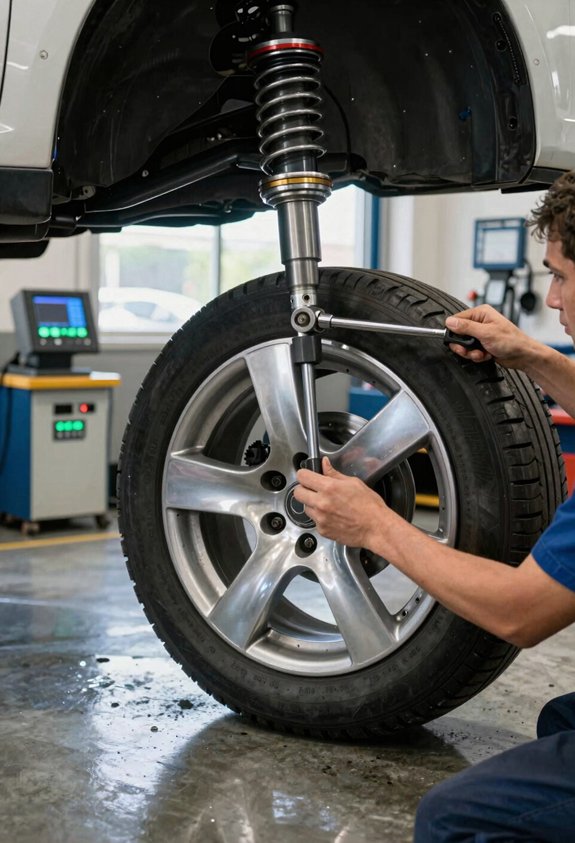
Tire alignment duration depends on the service type you’re receiving. A two-wheel alignment typically requires 30–60 minutes, while a full four-wheel alignment demands 60–90 minutes of your schedule.
I want you to understand what happens during this window. Your wheel alignment begins with a thorough inspection and test drive, where technicians identify pulling, off-center steering, or uneven wear patterns. This diagnostic phase makes certain we’re addressing root causes, not just symptoms.
However, you should prepare for variables that extend these estimates. Worn suspension components, ball joints, control arms, bushings, may require replacement before alignment becomes possible. Advanced steering systems, adaptive suspensions, or electronic assists also increase labor complexity.
When scheduling, reserve the upper end of these ranges. Rushing compromises precision, and improper alignment accelerates tire wear, degrades handling, and compromises safety.
Why Two-Wheel and Four-Wheel Alignments Differ in Time
Scope of Adjustment and Rear Wheel Complexity
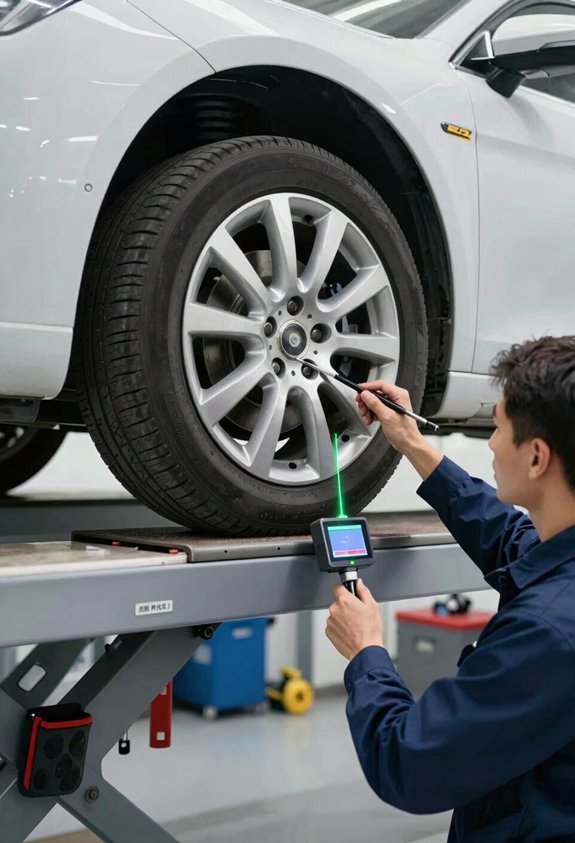
A two-wheel alignment, which addresses only your front wheels’ camber, caster, and toe settings, typically requires 30–60 minutes, whereas a four-wheel alignment demands 60–90 minutes because it incorporates rear wheel adjustments; specifically, thrust angle correction ensures your rear axle tracks properly with the frame. The additional rear wheel complexity involves verifying that your rear wheels align perpendicular to the vehicle centerline and parallel to the front axle, a process requiring extra measurement points, shim adjustments (or cam bolt rotations on adjustable suspensions), and computational verification against manufacturer specifications.
Without this rear wheel integration, your vehicle may develop dog-tracking, where the body appears angled relative to the direction of travel, or accelerated tire wear patterns that appear within 2,000–5,000 miles, particularly on vehicles with independent rear suspensions or those that have sustained curb impacts, pothole damage, or suspension component wear.
Scope of Adjustment
Your alignment may exceed standard timeframes when I encounter worn suspension bushings, advanced steer-by-wire systems, or pre-existing uneven tire wear requiring diagnostic attention before final adjustments commence.
Rear Wheel Complexity
A two-wheel alignment runs 30–60 minutes, but four-wheel procedures stretch to 60–90 minutes, with complex suspension systems (multi-link rear setups, adaptive dampers) pushing longer. I’m accounting for diagnostics, component accessibility, and final verification across all four contact patches, making sure you’re tracking true, not just steering straight.
How Your Car’s Suspension Type Affects Alignment Duration
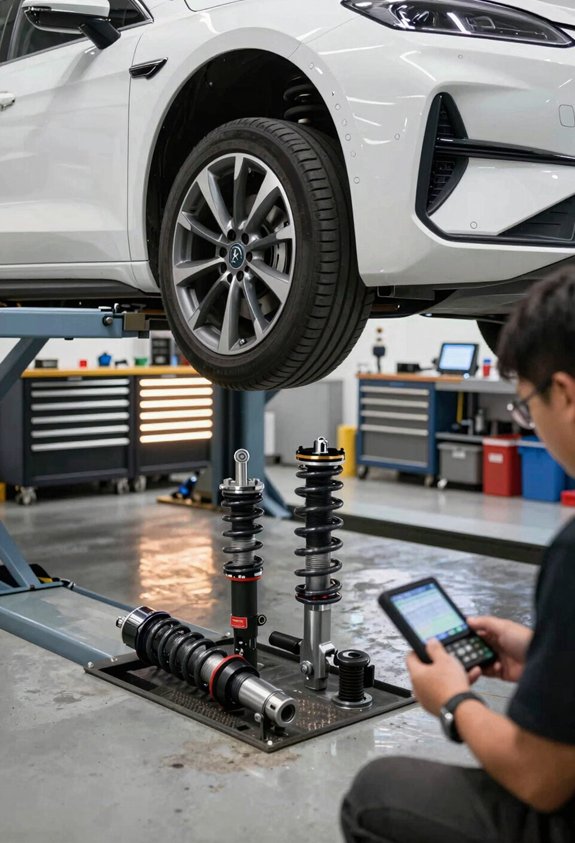
Your suspension’s complexity directly dictates how long I’ll spend adjusting it, since a simple MacPherson strut setup aligns faster than multi-link or adaptive systems with individually controlled dampers. Your vehicle’s drive layout, whether front-wheel, rear-wheel, or all-wheel, determines if I’m checking two wheels or performing the more involved four-wheel thrust angle verification that pushes the job past 60 minutes.
I’ll also warn you that rusted ball joints, seized control arms, or worn bushings on older vehicles can extend my work well beyond standard timeframes, especially when I’m fighting corrosion just to reach adjustment points. When you bring me a car with advanced air suspension or four-wheel steering, expect the process to exceed typical 60–90 minute ranges, since these systems demand precise recalibration of multiple interconnected components rather than basic toe and camber corrections.
Suspension Complexity Differences
The suspension beneath your vehicle fundamentally dictates how long I’ll spend bringing everything back into specification, and not all setups demand equal attention. Understanding suspension complexity differences helps you anticipate realistic timelines when booking service.
Suspension complexity directly shapes wheel alignment duration across vehicle categories. Consider these alignment time factors:
- Standard passenger cars with basic steering/suspension systems typically require 30–60 minutes for front-end service, while four-wheel alignment extends to 60–90 minutes.
- Performance and luxury vehicles carry intricate multi-link configurations, adaptive dampers, and active components that substantially prolong adjustment procedures.
- Classic automobiles with shim-based or bespoke setups demand extensive custom tuning, and rusted fasteners or damaged components may necessitate repairs before alignment can proceed.
Recognizing your vehicle’s suspension complexity prevents scheduling surprises and helps with proper allocation of shop resources.
Drive Layout Impact
Performance vehicles with complex suspension systems, think adaptive dampers or active stabilizers, require additional diagnostics, calibration, and precision checks. Understanding your specific drive layout helps set realistic expectations for scheduling and shop time.
When Rust and Wear Add Unexpected Time to Your Alignment
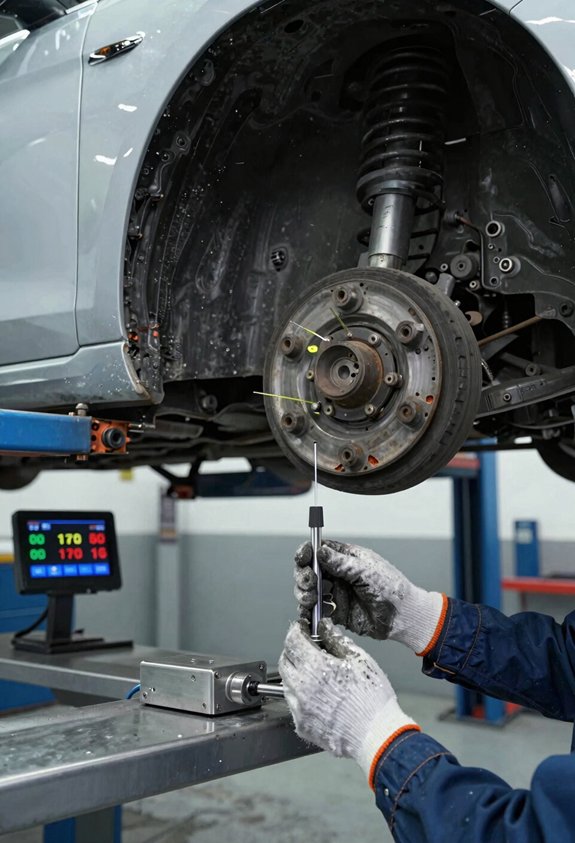
- Corroded suspension components may need replacement rather than adjustment
- Rusted fasteners require patient, careful loosening techniques that add 30–60 minutes
- Damaged control arms or mounts necessitate part replacement before alignment becomes possible
In high-wear conditions, I must inspect every joint thoroughly, since accelerated corrosion creates safety risks that cannot be ignored, regardless of your schedule pressures.
Does Combining Tire and Alignment Service Slow Things Down?
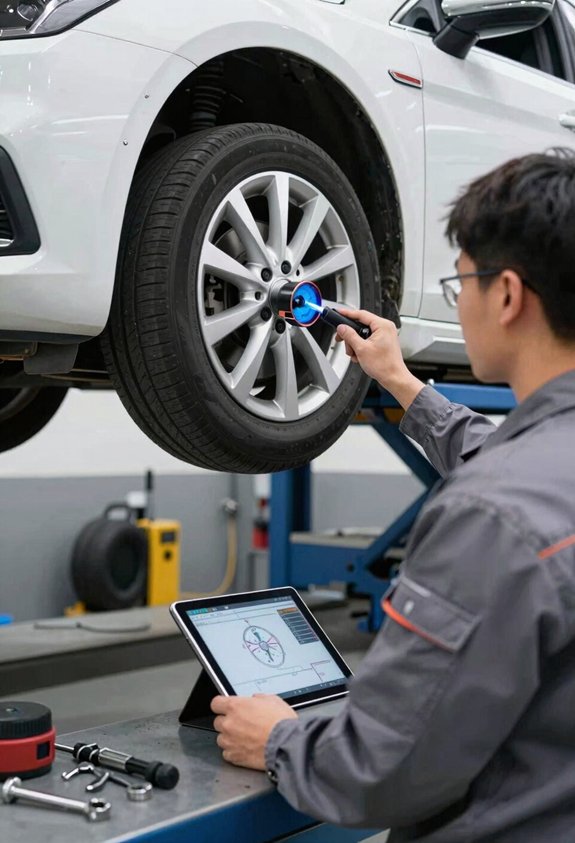
While rust and wear create mechanical delays that I cannot control, you might wonder whether bundling services creates scheduling delays of a different sort. I’ll break down what combining work actually means for your schedule.
Alignment Basics
- Two-wheel alignment: 30–60 minutes
- Four-wheel alignment: 60–90 minutes (includes rear axle and thrust angle verification)
Adding Tire Changeover
Pairing tire changeover with alignment extends typical appointment duration to roughly two hours total. You’re not waiting for separate visits, though; shops often streamline these together.
When Timing Stretches
Pre-existing suspension wear demands repairs before proper alignment, adding unpredictable delays. I always inspect first, because masking damage wastes your money.
Scheduling Strategy
Many shops prioritize bundled services, offering same-day completion. Ask about workflow integration; I’ve found coordinated bookings frequently outperform disjointed appointments once factors align properly.
What Shop Equipment Gets You Out Faster
- Digital alignment machines slash setup time for both two-wheel alignment and four-wheel alignment procedures
- Integrated tire service bays streamline tire changeover when paired with alignment, preventing separate appointments
- Computerized suspension analyzers accelerate suspension checks, identifying worn ball joints or control arms before they extend my visit
Without this equipment, even routine four-wheel alignment tasks stretch past standard 60–90 minute windows. Complex suspension systems demand additional labor that modern tools mitigate.
Warning Signs Your Alignment Will Take Extra Time
Because certain symptoms signal deeper mechanical problems beneath the surface, I’ve learned to recognize when my alignment appointment will likely exceed standard timeframes.
Observable Symptoms Indicating Extended Service
When I notice my vehicle pull to one side during highway driving, or my steering wheel off-center while traveling straight, I’m witnessing classic misalignment indicators. These symptoms often mask underlying structural issues requiring thorough diagnosis.
Mechanical Red Flags
- Front-end shimmy after hitting bumps suggests compromised suspension geometry
- Uneven tire wear patterns (feathering, camber wear) indicate prolonged misalignment damage
- Worn suspension components, including bushings, ball joints, and tie rods, must precede alignment adjustments
Diagnostic Complexity
Modern vehicles with independent rear suspensions frequently demand four-wheel alignment rather than simple front-end service. Previous curb strikes, pothole impacts, or corroded adjustment hardware transform routine procedures into multi-hour repairs requiring component replacement before calibration begins.
Why a Longer Alignment Still Saves You Money
Spending 60–90 minutes on a four-wheel alignment rather than settling for a quicker front-end service might seem inconvenient when I’m watching the clock, but I’ve learned that this additional time investment consistently protects my wallet over the long haul.
Here’s why I prioritize this longer alignment:
- Full camber and toe adjustments for all four wheels prevent uneven tire wear that forces premature replacement.
- Extended diagnostic time reveals worn suspension components before they cascade into costlier failures.
- Proper thrust angle alignment maximizes fuel efficiency by reducing rolling resistance.
I’ve found that skipping rear-wheel alignment creates invisible drag, while thorough service addresses chassis geometry completely. The 30 extra minutes upfront eliminates hidden costs that accumulate silently, making this one maintenance decision where patience directly converts to saved dollars.