
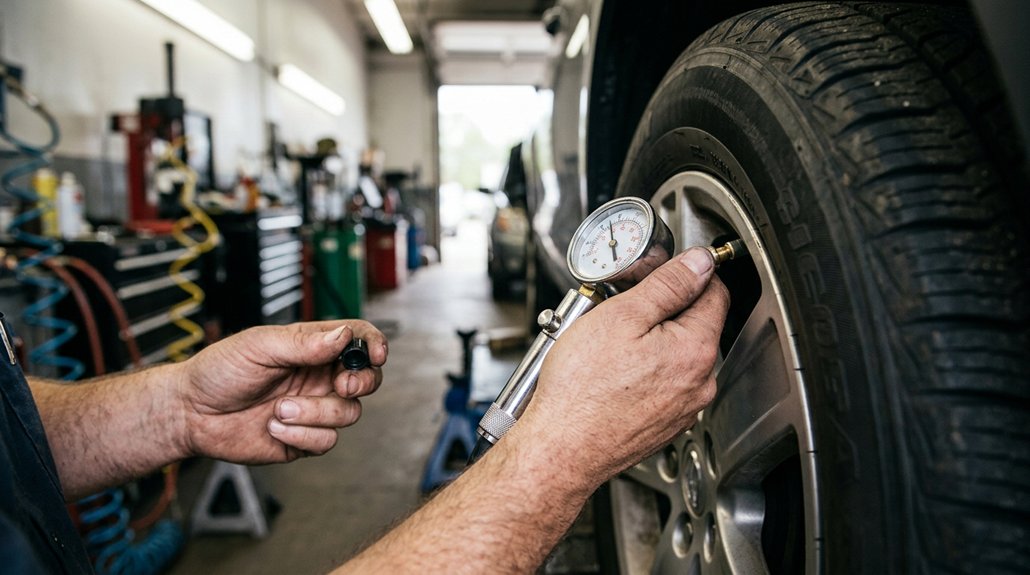
I learned the hard way when my fuel efficiency dropped 15% before discovering I’d been driving on tires averaging 8 PSI below specification. Proper inflation isn’t merely a maintenance checkbox; it’s critical to safety, handling, and tire longevity.
I’ll walk you through the precise, five-step methodology I’ve refined over years of working with analog dial gauges, digital sensors, and pencil-style gauges across multiple vehicle platforms.
Find Your Target PSI: Check the Door Jamb or Manual
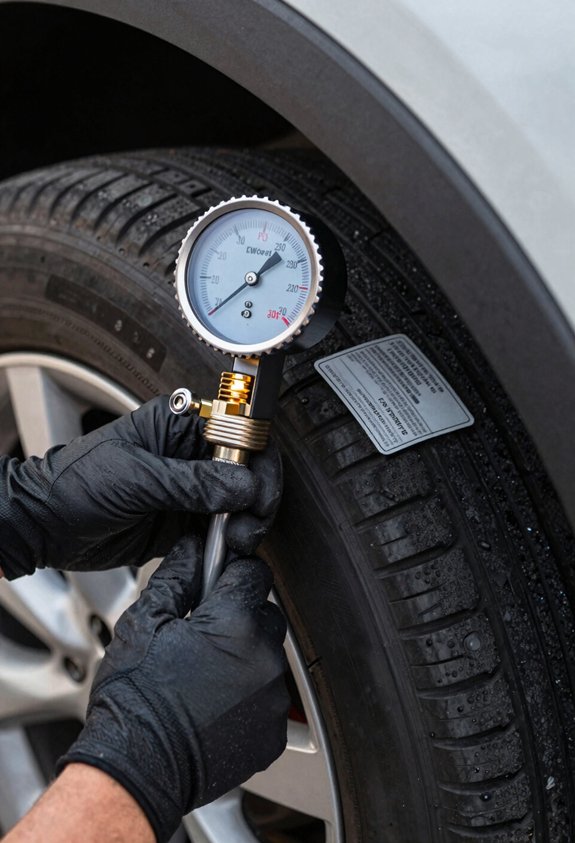
You need to double-check whether your front and rear tires require different pressures, as many vehicles specify unequal values for each axle. If the door jamb sticker’s missing, faded, or otherwise unreadable, I’ll consult the owner’s manual, which contains identical specifications, or contact my dealer.
I record the exact cold PSI for each position because I can’t rely on memory once I reach the tires. Remember, these figures represent cold measurements, meaning I’ll check before driving, since friction and road heat raise internal pressure markedly.
Gather Your Tools: What You’ll Need to Check Tire Pressure
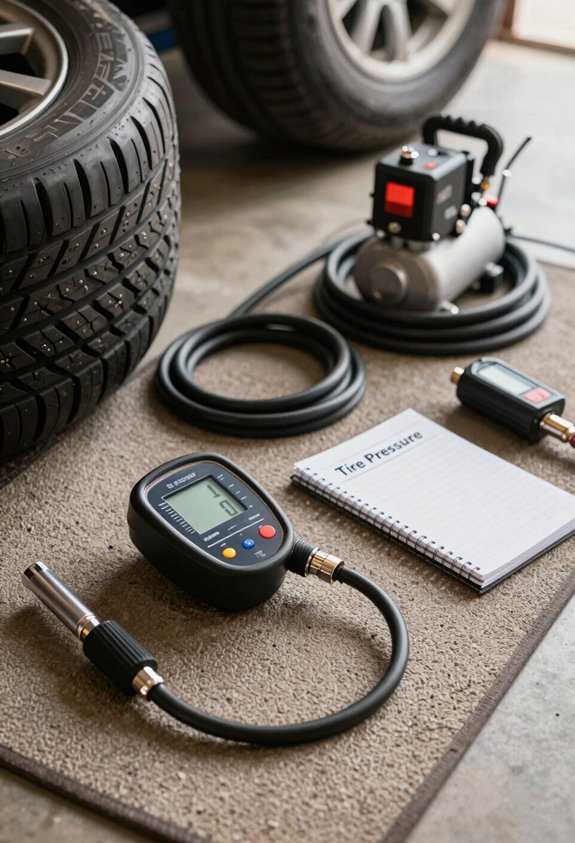
Don’t forget the owner’s manual showing my cold tires PSI specifications, front and rear, which I’ve already noted from the door jamb. A pen and paper track each tire’s reading, preventing mix-ups between positions.
Finally, I’ll remove and safely store those valve caps beforehand. Losing them means debris in the valve stem, corrupting future seals and readings.
Check Cold Tires: The 3-Hour Rule for Accurate Readings
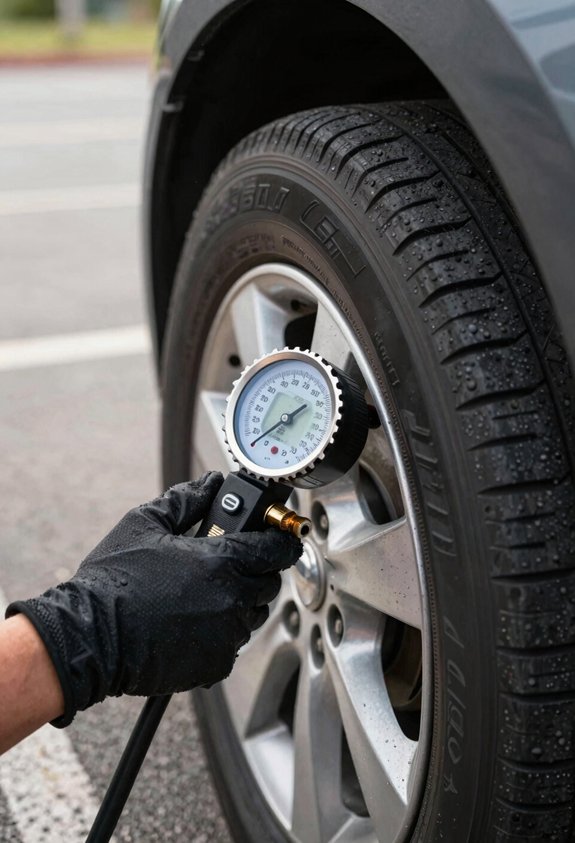
Why does timing matter so much when checking tire pressure? Because I want your PSI readings to mean something, and that only happens with cold tires. Let me break this down.
The 3-Hour Rule Defined
Cold tires are tires that have been parked for three hours or more, or driven less than one mile at moderate speed since their last cooling period. This isn’t arbitrary: manufacturer specifications assume cold tires, and I need you to understand why.
Heat Distorts Everything
Driving generates friction, friction generates heat, and heat increases pressure. A tire checked immediately after highway driving can read several PSI higher than its actual cold pressure.
I’m talking about a reading that lies to you, that suggests your tires are properly inflated when they might be dangerously underinflated once they cool.
Practical Application
I follow this rule: check tire pressure before driving, not after. Set your baseline when tires are cold, then depend on those PSI readings for seasonal adjustments and routine maintenance. Getting this right means you’re part of the group that keeps their vehicles safe and efficient, not guessing in the dark.
Use Your Tire Pressure Gauge: Step-by-Step Technique
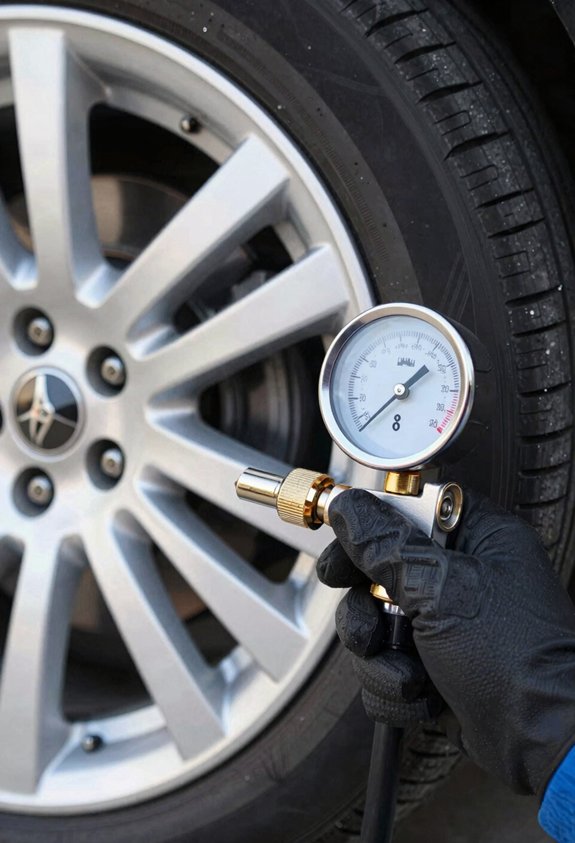
Now that your tires have rested the full three hours (or you’ve driven less than a mile since their last cooling period), I’m going to walk you through exactly how I get a clean, reliable PSI reading without second-guessing myself.
Start with cold tires—three hours of rest or less than a mile driven—to guarantee a clean, reliable PSI reading you can trust.
Preparing the Valve Stem
I unscrew the metal valve cap, setting it somewhere I won’t kick it, and I inspect the valve stem for any visible damage or debris that could compromise the seal.
Applying the Tire Pressure Gauge
I place the gauge nozzle straight onto the valve stem, pressing firmly until I hear a brief hiss: this tells me the seal is tight, and I’m getting an undiluted measurement.
Recording Your PSI Readings
I note the number from my digital display (or dial), then I repeat this process for all four tires, plus my spare if I’m checking it for consistency, building my complete data set before any adjustments.
Adjust and Finish: Inflate, Deflate, and Recheck
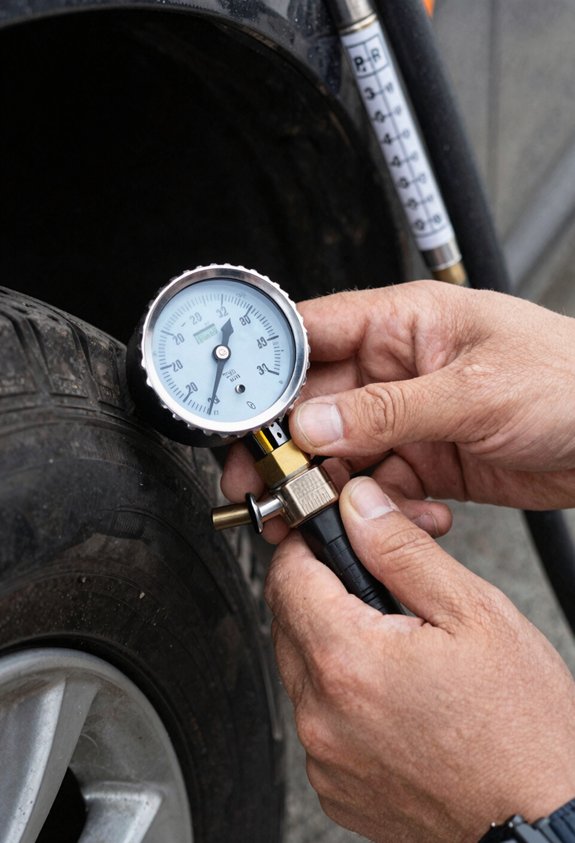
The precision of a tire pressure reading demands an equally methodical approach to adjustment, whether you’re adding air to an under-inflated tire or bleeding excess pressure from one that’s over-inflated. I inflate under-inflated tires with a compressor or gas station hose, adding air in short bursts and stopping frequently until I reach the manufacturer’s recommended cold PSI, typically found on your door jamb or owner’s manual, then I recheck immediately, as temperature fluctuations and gauge variances can mislead.
For over-inflation, I press the valve stem’s center pin, releasing air in controlled increments, never rushing this delicate balance that affects handling, fuel economy, and tread wear. Once adjusted, I recheck each tire, including the spare, because uniformity matters for stability and safety.
- Add air in small increments, stopping to recheck frequently rather than guessing
- Release excess pressure gently by pressing the valve pin, monitoring constantly
- Record final readings for all tires and replace valve caps to prevent contamination