
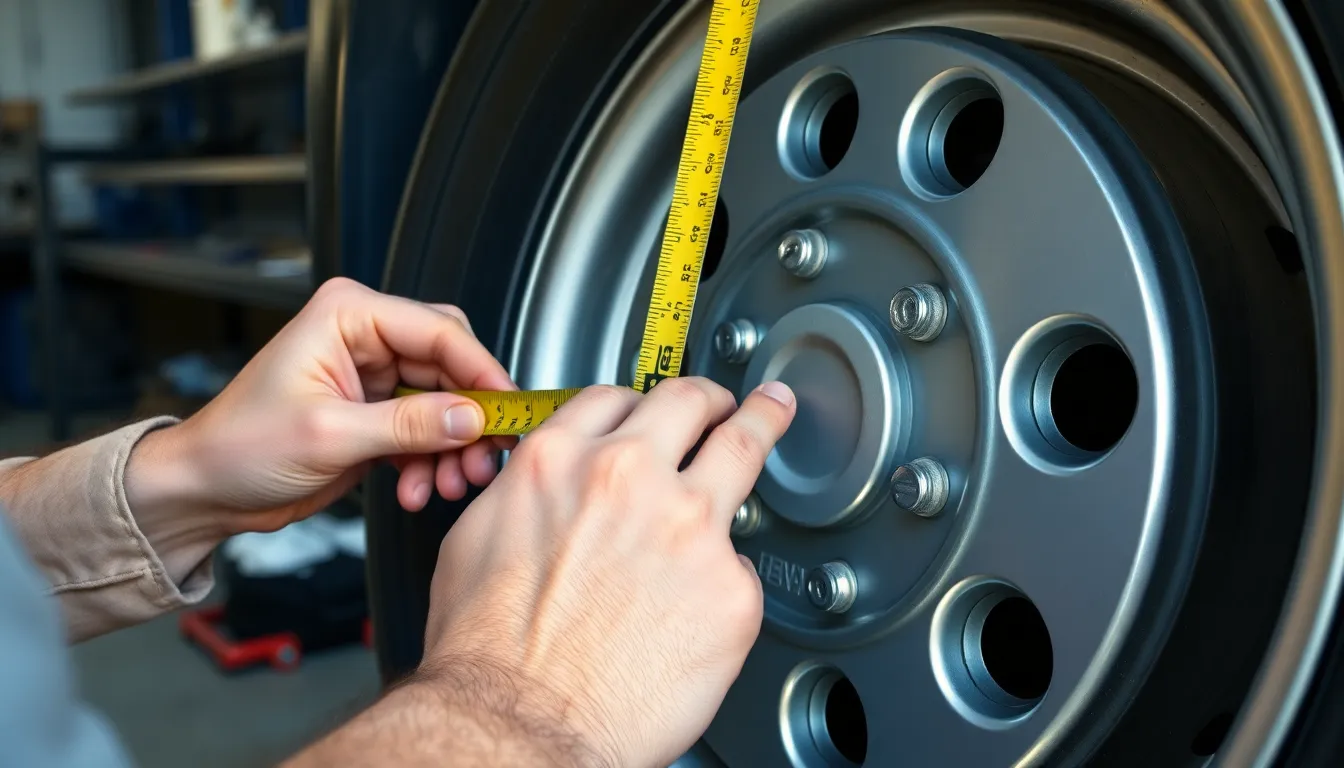
We’ve all been there – standing in front of a wall of wheels wondering if they’ll actually fit our vehicle. Getting the wrong lug pattern means you’re stuck with expensive paperweights instead of the perfect wheels you envisioned. That’s why knowing how to measure your wheel lug pattern is absolutely crucial before making any purchase.
Measuring your lug pattern isn’t rocket science, but it does require precision and the right technique. Whether you’re dealing with 4-lug, 5-lug, 6-lug, or 8-lug patterns, we’ll show you exactly how to get accurate measurements every time. No more guessing games or costly mistakes.
The good news? You don’t need expensive tools or professional equipment to measure your lug pattern correctly. With just a ruler or measuring tape and our step-by-step guide, you’ll have the confidence to shop for wheels knowing they’ll fit perfectly on your ride.
What Is Wheel Lug Pattern and Why It Matters
Wheel lug pattern represents the exact arrangement of bolt holes on your vehicle’s hub that secure the wheel to the axle. This measurement system consists of two critical components: the number of bolt holes and the diameter of the circle that passes through the center of each hole.
The bolt pattern determines which aftermarket wheels fit your vehicle without requiring modifications or adapters. Manufacturers design each vehicle with a exact lug pattern that matches the structural requirements and weight distribution needs of that particular model.
Common lug patterns include:
- 4x100mm (common on compact cars like Honda Civic)
- 5×114.3mm (standard for many sedans and SUVs)
- 6×139.7mm (typical for full size trucks)
- 8×165.1mm (found on heavy duty commercial vehicles)
Using an incorrect lug pattern creates serious safety hazards including wheel detachment while driving. The bolts may appear to fit initially but won’t properly distribute the vehicle’s weight across the hub surface.
Professional wheel shops charge $50 to $150 for mounting wheels with incorrect bolt patterns using adapters. These adapters add weight to your vehicle and can reduce performance while increasing the risk of mechanical failure.
Measuring your current lug pattern before purchasing new wheels saves both money and potential safety issues. Most vehicle owners can complete this measurement process in under 10 minutes using standard household tools.
The lug pattern also affects your wheel selection options since manufacturers produce different quantities of wheels for various bolt patterns. Popular patterns like 5×114.3mm offer hundreds of wheel choices while less common patterns like 8x170mm limit your selection significantly.

PCD specifications fit most 4, 5, 6, 8 lugs wheel
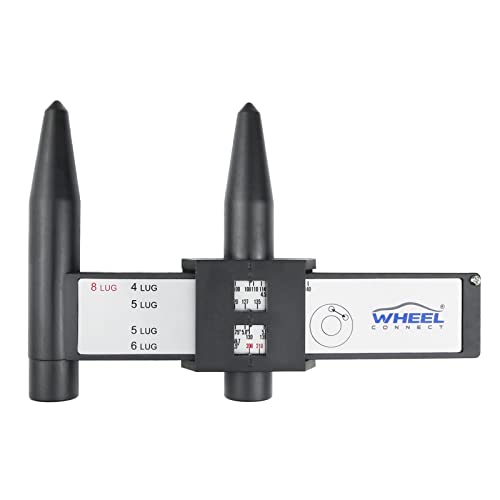
[WHAT IS IT FOR?] Wheel / Rim PCD gauge is a handy tool for measuring the PCD data of the car and wheel. Simply slide the caliper to match the wheel lug holes or wheel hub holes, you will read the data in Metric or Imperial.

【High Quality Material】: Our products are made of ABS. ABS material has high impact strength and toughness, which means that PCD calipers maintain good structural integrity and are not easily damaged by accidental impacts or stresses encountered during the measurement process. ABS has good stability and is not prone to deformation that could affect the accuracy of the measurement.
Tools You Need to Measure Lug Pattern
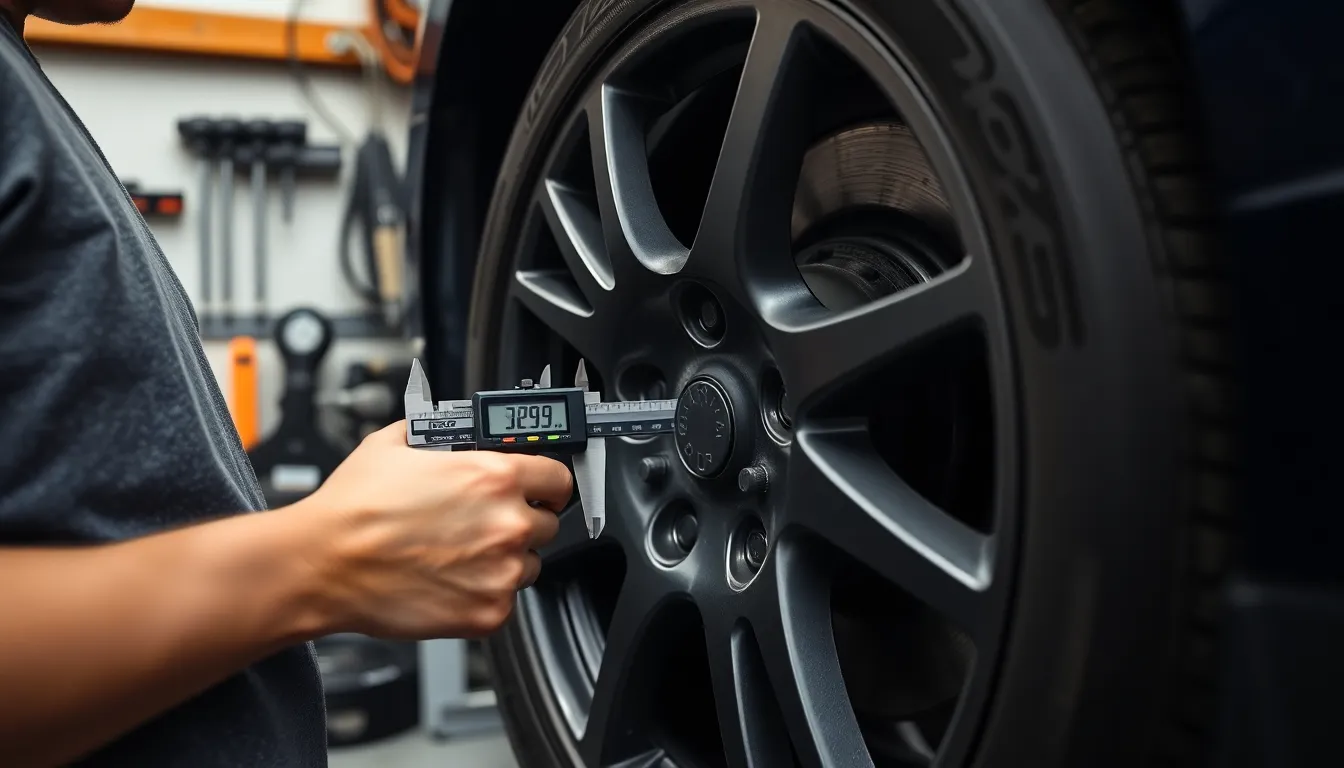
Measuring tape or calipers serve as the primary tools for accurately determining your wheel’s lug pattern dimensions. We recommend using a measuring tape with millimeter markings since most lug patterns use metric measurements like 100mm, 114.3mm, or 120mm.
Digital calipers provide the most precise measurements when working with smaller bolt circles or when exact measurements matter for aftermarket wheel selection. These instruments measure distances down to hundredths of a millimeter, which becomes important for patterns like 5×114.3mm where precision prevents fitment issues.
A standard ruler works for basic measurements, though it offers less accuracy than measuring tape or calipers. We suggest avoiding rulers for 5-lug patterns since these require measuring to the outer edge of opposing holes rather than center to center.
Your vehicle’s wheel or hub provides the measurement surface where you’ll count lug holes and take distance measurements. Clean wheels give more accurate readings since dirt and debris can obscure hole centers and affect measurement precision.
A pen and paper help record measurements as you work, particularly when checking multiple wheels or comparing measurements across different vehicles. Write down the number of lug holes first, then record the distance measurement in millimeters.
Good lighting ensures you can clearly see lug hole centers and read measurement markings accurately. We find that natural daylight or a bright flashlight eliminates shadows that might cause measurement errors.
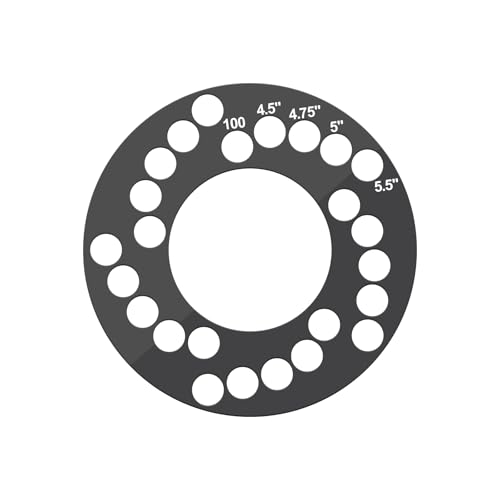
【5 precise hole position markings, no more guesswork】: Provides five professional hole position scales of 100mm/4.5"/4.75"/5"/5.5", accurately matching mainstream wheel specifications. Align with the bolt hole or slide the template to read instantly, without complicated measurement and calculation, completely eliminating the risk of installation error.

Precise Measurements With Wheel Bolt Pattern Measuring Tool Set: Our templates accurately determine Pitch Circle Diameter (PCD) and wheel bolt patterns (4/5/6 lug) with SAE & Metric dual scales, ensuring proper fit for wheels and tires. Eliminates guesswork for perfect wheel fitment every time—no more mismatched hubs or incorrect replacements
Precise Dual-Scale Measurement for Perfect Fit:This Lug Bolt Pattern Tool features SAE & Metric dual scales for precise PCD and 4/5/6 lug pattern measurements. Eliminate guesswork, avoid mismatched hubs, and ensure perfect wheel-tire fitment every time.
How to Identify Your Lug Pattern Configuration

Identifying your lug pattern configuration starts with examining the arrangement of bolt holes on your wheel hub. This process determines whether you’ll use an even or odd number measurement technique.
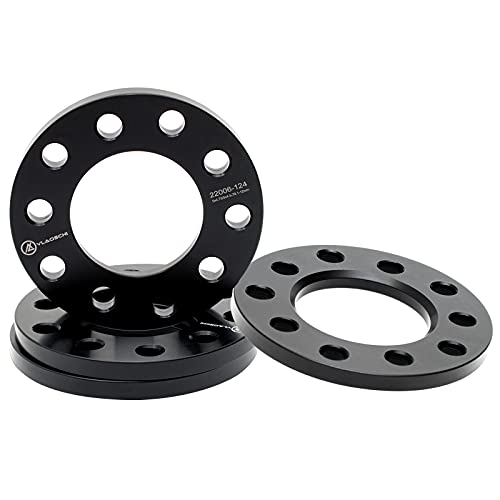
【Benefits】These wheel spacers are designed to move the wheel further out from the hub, give your vehicle a more aggressive stance, allow for better handling characteristics & increases driving stability; Mount larger wheel or tires, eliminate wheel/tire rubbing instantly.
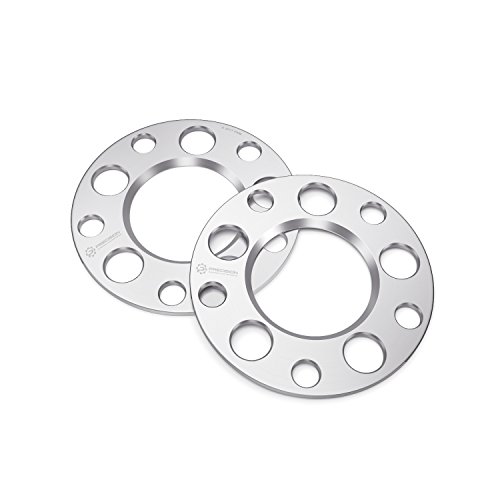
StanceMagic Hubcentric Wheel Spacers - Fits vehicles with 5/114.3 (5/4.5") bolt pattern and 60.1mm Centerbore. Compatible with Scion 2011-2016 tC, 2008-2015 xB. Compatible with Toyota Avalon, Camry, RAV4, MR2, Solara, Supra, Tacoma. Compatible with Lexus ES300h ES330 ES350 GS300 GS350 GS400 GS430 IS250 IS300 IS300 IS350. Also compatible with Lexus LS400 LS430 NX200t NX300 NX300h SC300 SC400 SC430. Check Year/Make/Model in Description.

Basic Info: Wheel Spacers Compatible with Honda Accord Civic CR-V Crosstour Element HR-V Odyssey Pilot Prelude S2000, CL CSX ILX MDX RDX RL RSX TL TLX TSX. Please check detail fitting info from pics or detail page. 12 months warranty and lifetime after-sales service are furnished after bought our products. Please choose a suitable one with confidence
Counting the Number of Lug Holes
Start by locating all the bolt holes around your wheel hub’s circumference. Most vehicles feature 4, 5, 6, or 8 lug holes arranged in a circular pattern.
Count each hole systematically by starting at the top position and working clockwise around the hub. Mark your starting point mentally or physically to avoid double counting holes during the process.
Verify your count by going around the hub a second time in the opposite direction. Double checking ensures accuracy since miscounting leads to selecting incorrect wheels for your vehicle.
Document the total number of holes you’ve identified since this figure becomes the first number in your lug pattern specification. Common configurations include 4 lug holes on compact cars, 5 lug holes on sedans and SUVs, 6 lug holes on larger trucks, and 8 lug holes on heavy duty vehicles.
Determining if You Have an Even or Odd Number of Lugs
Categorize your lug count as either even (4, 6, 8) or odd (5) since each category requires different measurement approaches. Even numbered patterns allow direct measurement between opposite holes while odd numbered patterns require specialized measurement techniques.
Even lug patterns include 4×100, 6×139.7, and 8×165.1 configurations where you can measure straight across from one hole’s center to the opposite hole’s center. This direct measurement method provides the bolt circle diameter immediately.
Odd lug patterns like 5×114.3 configurations cannot use the direct measurement approach since no hole sits directly opposite another hole. These patterns require measuring from one hole’s center to the outer edge of the hole positioned across the circle.
Recognize that 5 lug patterns represent the most common odd configuration found on passenger vehicles. The measurement technique for 5 lug patterns involves selecting any starting hole and measuring to the furthest point of the pattern rather than to another hole’s center.
Measuring 4 and 6 Lug Patterns
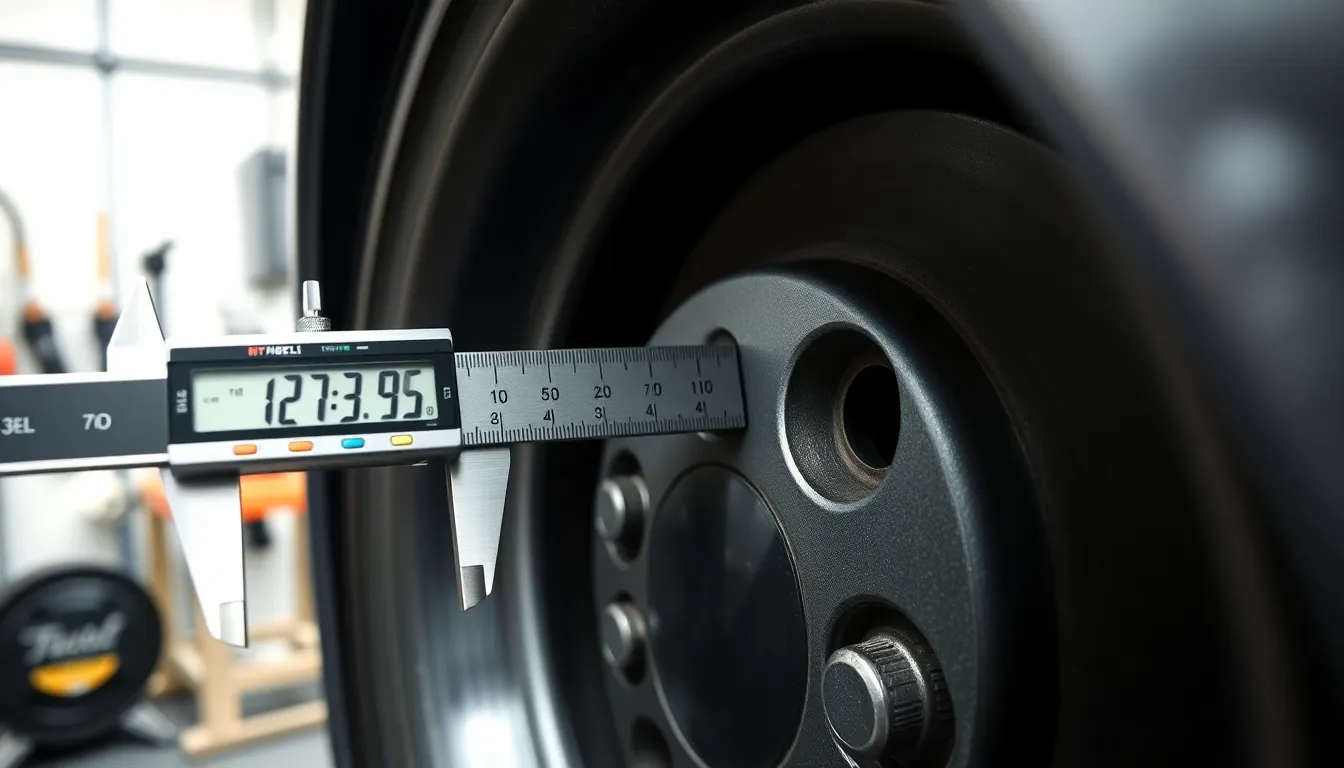
Even numbered lug patterns offer the most straightforward measurement approach since opposing bolt holes create a direct diameter line. We can measure these configurations with standard tools and achieve accurate results every time.

EXACT FACTORY SPECIFICATIONS: Includes 4 Pcs 2.00 Inch Thick | Forged 6061 T6 Aluminum | 6x5.5 6x139.7mm Wheel Bolt Pattern | 6x5.5 6x139.7mm Vehicle Bolt Pattern | 78.1mm ID (Vehicle Hub OD) | 78.1mm Wheel ID | Thread: M14x1.5 14x1.5 | Black | 4 Pcs

Aggressive Off-Road Style: Stand out with Rough Country’s 10-slot D-window design and high-gloss black powder coat finish that adds bold race-inspired styling to your truck or Jeeps.

➤KAX Wheel Adapters Parameter : Changes Bolt Pattern || Vehicle Must Be 6x139.7mm(6x5.5") || Wheels Must Be 6x135mm || M14x1.5 Threaded Studs/Nuts || 1.5 inch(38mm) Thick || 108mm Center Bore with NO lip || Recommended torque:85-90 ft/lbs. Package includes 4pcs wheel adapter, 12.9 class split nuts and professional instruction manual
Center-to-Center Measurement Method
Identifying the two lug holes positioned directly across from each other forms the foundation of this measurement technique. Position your measuring tape or ruler at the exact center of one lug hole and extend it to the center of the opposing hole.
4-Lug Measurement Process: Locate any lug hole and find its direct opposite across the wheel hub. Measure the distance between these center points to determine your bolt circle diameter. A measurement of 100 millimeters indicates a 4x100mm bolt pattern.
6-Lug Measurement Process: Choose any lug hole and identify the hole positioned exactly opposite to it. Apply the same center-to-center measurement technique used for 4-lug patterns. A distance of 4.5 inches (114.3 mm) confirms a 6×4.5 or 6×114.3mm bolt pattern.
Ensuring precise positioning at each lug hole center prevents measurement errors that could lead to incorrect wheel purchases. Mark the center points with a pen if the holes appear difficult to identify during measurement.
Using Calipers for Precision
Digital calipers deliver superior accuracy compared to measuring tapes when determining bolt hole spacing and diameters. These instruments eliminate guesswork and provide measurements accurate to 0.1 millimeters.
Caliper Positioning Technique: Place the caliper jaws at the exact center of each opposing lug hole to capture the true bolt circle diameter. Verify that both caliper points rest firmly against the hole centers before recording your measurement.
Measurement Verification: Take multiple readings from different opposing hole pairs to confirm consistency across your measurements. Record each measurement and calculate the average if slight variations occur between readings.
Professional wheel shops rely on calipers for bolt pattern verification because these tools provide the precision necessary for perfect wheel fitment. Investing in quality calipers pays dividends when measuring multiple vehicles or checking various wheel sets.
Measuring 5 Lug Patterns

Measuring a 5-lug pattern requires a different approach since opposite lugs don’t align directly across from each other. We measure from the center of one lug to the outer edge of the approximately opposite lug to determine the bolt circle diameter.

Custom Fit 8 Lug Wheel Adapters: The spacers for car---Compatible with Chevrolet: C2500 (models with C6P) 1988-2000, C3500 K2500 K3500 1988-2000, Express 2500 2003-2022, Express 3500 1996-2021, Silverado 2500 1999-2010, Silverado 3500 2001-2010, Avalanche 2500 2002-2006, Suburban 2500 2000-2013, Silverado 1500 HD 2001-2003 and 2005-2006, Silverado 2500 HD 2001-2010, Silverado 3500 HD 2007-2010
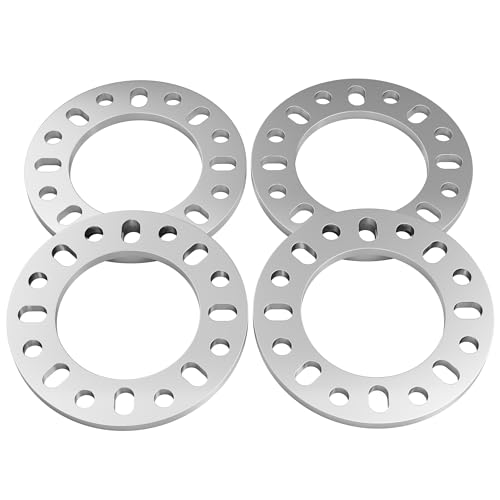
【8 LUG UNIVERSAL WHEEL SPACERS】Designed to fit a wide range of 8-lug bolt patterns,including 8x6.5" (8x165.1mm), 8x170mm, and 8x180mm. Compatible with vehicles Ford F250/F350/E350(NOT fit 1997-1999 F-250 X with 7x150,Not fit 2005-2025 F-350 DUALLY with 8x200), Ram 2500/3500(Not fit 2019-2025 RAM 3500 DUALLY with 8x200 ), Chevy Silverado 2500HD/3500HD(Not fit 2011-2025 3500 Dually with 8x210) , GMC Sierra 2500HD/3500HD(Not fit 2014-2025 3500 Dually with 8x210), Nissan NV2500, and Hummer H2

【Benefits】These wheel adapters change bolt pattern, allow for installing 8 lug rims onto a 5 lug vehicle, are designed to move the wheel further out from the hub, give your vehicle a more aggressive stance, allow for better handling characteristics & increases driving stability; Mount larger wheel or tires, eliminate wheel/tire rubbing instantly.
The Bolt Circle Diameter Formula
Geometric principles guide our measurement technique for 5-lug patterns where we select a starting lug as our reference point. We identify the lug positioned approximately opposite to our chosen starting point and measure the diameter carefully. The bolt circle diameter represents the distance from the center of the starting lug to the outer edge of the opposite lug across the circular pattern.
This measurement method accounts for the odd number configuration where lugs don’t align in perfect pairs. Mathematical precision comes from understanding that we’re measuring across the circle’s diameter rather than between directly opposing points. Our measurement captures the true bolt circle diameter even without perfectly aligned reference points.
Alternative Measurement Techniques
Lug pattern gauges provide specialized accuracy by fitting directly over the lugs and delivering precise bolt circle diameter measurements. These tools eliminate guesswork and reduce measurement errors common with manual techniques. Professional mechanics rely on these gauges for consistent results across different wheel configurations.
Direct measurement with a ruler works effectively for even-numbered lug patterns where we measure from the center of one lug to the center of the directly opposite lug. Even patterns include 4, 6, and 8-lug configurations that offer straight-line measurement opportunities. Converting between measurement systems requires remembering that 1 inch equals 25.4 millimeters for accurate calculations.
Digital calipers offer enhanced precision when measuring from lug centers requires exact positioning. We position the caliper tips at the center points of our reference lugs and record the measurement for verification. Taking multiple readings from different lug combinations confirms our bolt circle diameter accuracy and eliminates potential measurement variations.
Measuring 8 Lug Patterns
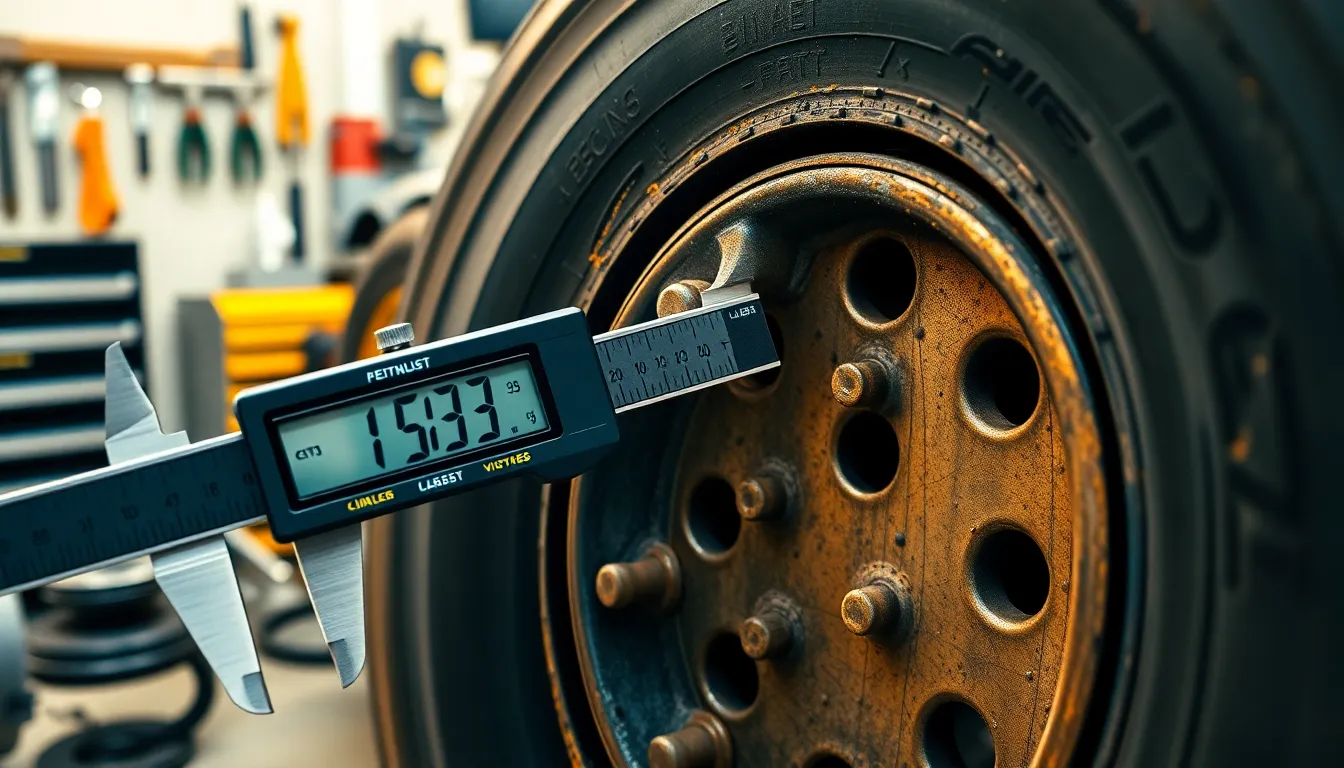
Measuring 8 lug patterns follows a exact technique that differs from both 4 and 6 lug configurations. We position our measuring tool from the center of one lug hole to the center of the third lug hole while skipping two holes in between.
Eight lug patterns commonly appear on heavy-duty trucks, commercial vehicles, and some large SUVs. Commercial applications often use 8×6.5 inch (8×165.1mm) or 8x170mm bolt patterns for enhanced load capacity and stability.
Digital calipers provide the most accurate measurements for 8 lug patterns due to their larger bolt circle diameters. We extend the caliper jaws from one lug center to the designated third lug center while maintaining perpendicular alignment to the wheel face.
| Lug Count | Measurement Method | Skip Pattern |
|---|---|---|
| 8 | Center to center | Skip 2 holes |
| 6 | Center to center | Skip 2 holes |
| 4 | Center to center | Direct opposite |
Verification becomes critical with 8 lug patterns since measurement errors amplify across the larger bolt circle. We take multiple readings from different starting positions to confirm our initial measurement accuracy.
Heavy duty vehicles often feature bolt circles exceeding 6 inches in diameter, making precise tool positioning essential. Standard measuring tape works adequately for 8 lug patterns if we maintain consistent center point identification across all lug holes.
Professional wheel shops use specialized bolt pattern gauges for 8 lug configurations to eliminate measurement uncertainty. These gauges feature preset templates that align with common 8 lug patterns found on commercial and recreational vehicles.
Recording measurements in both metric and imperial units helps when cross-referencing wheel specifications from different manufacturers. Most 8 lug patterns use imperial measurements in North American markets while European specifications typically use metric values.

What You Will Receive: two Wheel PCD Gauges are included, so you can always use them when you need to replace your wheels; The sufficient quantity allows you to avoid frequent purchases and the trouble of running to the repair shop; Whether it is daily use or emergency situations, this measuring tool can provide you with reliable support and help you easily cope with various tire and wheel measurement needs

【High-Quality Materials】:Automotive rim bolt measurement tools are made of high-quality plastic materials, lightweight and sturdy, stable structure, accurate measurement, and can be used for a long time.

【Premium Material】: Manufactured from high-quality plastic material, this wheel bolt pattern measuring tool is durable and long-lasting. The use of this material not only makes the rulers resistant to wear and tear but also provides a smooth surface and neat interfaces.
Common Lug Pattern Sizes by Vehicle Type
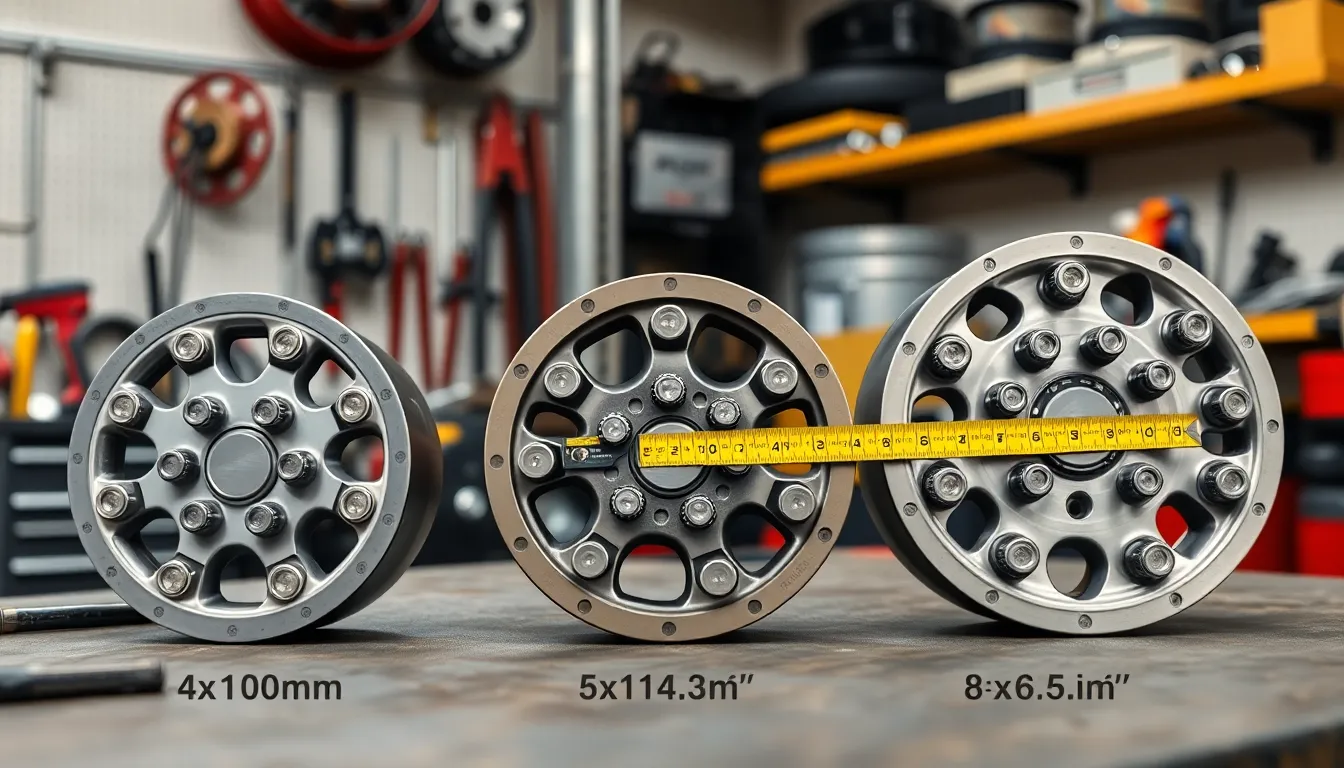
Understanding which lug patterns correspond to exact vehicle categories helps streamline the measurement process and provides a reference point for verification. Different vehicle types consistently use particular lug pattern configurations based on their weight requirements and engineering specifications.

5 Precise Hole Position Scales:Features 4-1/4″,4-1/2",4-3/4",5",5-1/2" standard scales, perfectly matches most mainstream wheel bolt patterns, eliminates installation guesswork and errors

5 Precise Hole Position Scales:Features 4-1/4″,4-1/2",4-3/4",5",5-1/2" standard scales, perfectly matches most mainstream wheel bolt patterns, eliminates installation guesswork and errors
【4/5/6 Lug Universal Compatibility】Covers 4-lug, 5-lug, and 6-lug vehicle wheel bolt patterns. Perfect for cars, trucks, SUVs, trailers, and ATVs – no need for multiple tools to measure different bolt configurations
Passenger Cars and Light Trucks
Passenger cars typically use 4 or 5 lug patterns that accommodate their lighter weight and standard performance requirements. Compact cars frequently feature 4x100mm patterns, while many sedans and crossover vehicles employ 5×114.3mm configurations. European manufacturers often specify 4x108mm or 5x112mm patterns for their vehicles.
Light trucks and SUVs commonly use 5×114.3mm patterns, though larger models may require 6×139.7mm configurations. Toyota and Nissan trucks frequently use 6×139.7mm patterns, while Ford light trucks often feature 5x135mm specifications. Japanese manufacturers consistently apply 5×114.3mm patterns across their sedan and SUV lineups.
Popular aftermarket wheel manufacturers design their products around these common patterns, making replacement options readily available. Wheel shops stock more inventory for 4x100mm, 5×114.3mm, and 5x120mm patterns due to their widespread usage across multiple vehicle brands.
Heavy-Duty Trucks and Commercial Vehicles
Heavy duty trucks require larger lug patterns to handle increased weight loads and towing demands. Commercial vehicles typically use 8 lug configurations, with 8×6.5 inches (8×165.1mm) being standard for many Chevrolet and GMC trucks. Ford heavy duty trucks commonly feature 8x170mm patterns for their F-250 and F-350 models.
Diesel trucks often employ 8x180mm patterns to accommodate their substantial weight and torque requirements. Commercial delivery vehicles and work trucks frequently use 6×139.7mm patterns when operating in medium duty applications. Some European commercial vehicles use 6x205mm patterns for specialized applications.
Fleet managers typically standardize on exact lug patterns to simplify maintenance and parts inventory. Professional tire shops maintain specialized equipment for measuring and mounting wheels on these larger bolt patterns due to their precision requirements.
Troubleshooting Measurement Issues

Accurate measurements can become challenging when encountering damaged wheels or complex patterns. We’ll address common obstacles that interfere with precise lug pattern determination and provide answers for each scenario.

Conversion Adapters: Only used for 5x5"(5x127mm) Wheels on a 5x4.5"(5x114.3mm) Vehicle

Vehicle Compatibility: Designed to fit Honda Civic 2017, 2018, 2019, 2020 and 2021. Please verify wheel size, bolt pattern, offset, and hub bore before purchase. Wheel Size: 18x8 inches, Bolt Pattern: 5x114.3, Offset: ET50, Hub Bore: 64.1mm. Engineered for proper clearance and stable installation.

StanceMagic Hubcentric Wheel Spacers - Fits vehicles with 5/114.3 (5/4.5") bolt pattern and 66.1mm Centerbore. Compatible with Nissan 95-98 240SX (non Base Model), 300ZX, 350Z, 370Z, 02-21 Altima, 89-21 Maxima, 03-19 Murano, 08-21 Rogue, 12-21 Sentra. Compatible with Infiniti FX35 FX45 FX50 G35 G37 I30 I35 J30 M45. Compatible with Infiniti Q45 Q50 Q60 Q70 QX60 QX70. Check Year/Make/Model in Description. May fit others, verify using spacer specifications.
Dealing with Worn or Damaged Lug Holes
Worn lug holes create measurement inaccuracies that compromise wheel fitment calculations. Corrosion around the hole edges makes it difficult to identify the true center point for measurement. Digital calipers offer better precision than measuring tape when dealing with irregular hole shapes caused by wear.
Damaged threads or enlarged holes from over-torquing affect the hole’s original diameter and position. We recommend measuring from the cleanest sections of each hole to maintain consistency across all readings. Multiple measurements from different angles help verify accuracy when hole edges appear uneven.
Hub damage extends beyond individual lug holes to affect the entire bolt circle geometry. Bent hubs or wheels alter the spacing between holes, making standard measurement techniques unreliable. Comparing measurements with manufacturer specifications provides a reference point when hole conditions make direct measurement questionable.
When Professional Help Is Needed
Complex wheel damage requires specialized equipment that most DIY enthusiasts don’t possess. Professional tire shops use bolt pattern gauges that accommodate irregular hole conditions and provide precise readings regardless of wear patterns. These tools measure the true bolt circle diameter even when individual holes show important damage.
Non-standard or modified lug patterns exceed the scope of basic measurement techniques. Custom wheels, aftermarket modifications, or rare vehicle applications often feature unique bolt configurations that require professional identification. Wheel specialists maintain databases of uncommon patterns and can cross-reference measurements with manufacturer specifications.
Safety concerns arise when measurements appear inconsistent or when wheel integrity seems compromised. Cracked hubs, severely worn holes, or wheels with structural damage need professional evaluation before determining compatibility. Professional assessment prevents dangerous wheel failures that could result from improper fitment decisions based on inaccurate measurements.
Conclusion
Measuring your wheel lug pattern accurately is a skill that’ll serve you well throughout your vehicle ownership journey. With the right tools and techniques we’ve covered you can confidently determine your bolt pattern and make informed wheel purchasing decisions.
Remember that taking multiple measurements and double-checking your results will save you from costly mistakes and potential safety hazards. Whether you’re dealing with a straightforward 4-lug pattern or a complex 8-lug configuration the methods we’ve outlined will help you get precise measurements every time.
Don’t hesitate to seek professional help when you encounter damaged wheels or inconsistent readings. Your safety on the road depends on proper wheel fitment and it’s always better to invest in professional verification than risk wheel failure.

[Specification]: Thickness:1.5",Hub Bore:108mm,Vehicle bolt pattern(PCD):6x139.7mm to 6x135mm,Nuts/Studs Thread Pitch:M14x1.5, Set of 4PC

Conversion Adapters 5x4.5 to 6x5.5 SPECS: (shown as second photo) Vehicle Bolt Pattern 5x4.5 (5x114.3mm). Wheel Bolt Pattern 6x5.5 (6x139.7mm). Hub Bore: 73.1mm. Wheel Bore:78mm.Thickness: 2 inch (50.8mm), Thread Pitch: 14x1.5 Threaded Studs. NOTE: ONLY WORKS with 6x5.5"(6x139.7mm) WHEELS on a 5x4.5"(5x114.3mm) Vehicle! NOT Fit 5x4.5"(5x114.3mm) WHEELS!

Crafted for Chevy and GMC Trucks. These 18 inch wheels are engineered with 6x139.7 6x5.5 bolt pattern to ensure a perfect fit for Chevy Colorado (2023-2026), Silverado 1500 (1999-2026). Also a perfect fit for GMC Canyon (2023-2026), Sierra 1500 (1999-2026).
Frequently Asked Questions

【FITMENTS INCLUDE】2" Wheel Adapters 6x5.5 to 8x6.5 Only works with 8x165.1 (8x6.5") Wheels for 1500 2019-2023 for Avalanche 2007-2013 for Avalanche 1500 2002-2006 for Blazer 1992-1994 for C2500 1988-2000 for Escalade 1999 2000 2002-2023 for Escalade ESV 2023 for Express 1500 2003-2014 for Express 2500 2002-2019 for K1500 1988-1999 for K1500 Suburban 1992-1999 for K2500 1988-2000 for Savana 1500 2003-2014 for Sierra 1500 1999-2023 for Silverado 1500 1999-2023
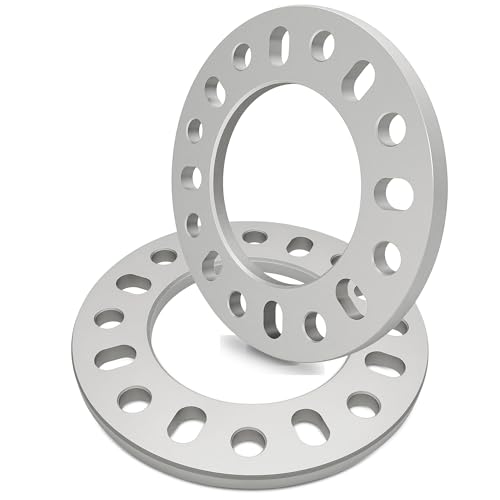
SAFETY INSTALLATION NOTE: All spacers require longer lug studs or extended thread / extra thread lug nuts to ensure proper thread engagement.This kit is not Wheel Adapters, it only widens the wheels and does not change bolt pattern.Important: These spacers are NOT hub-centric.Please measure your OEM stud length and spacer thickness before purchase. Contact us for expert support.

8x6.5" (8x165.1) Wheel Spacers – 2-Pack (1 Inch / 25mm): Compatible with 8-lug Chevy and GMC trucks that use 8x6.5" bolt pattern, 126mm hub bore, and M14x1.5 studs. Trimming factory studs may be necessary for installation.
What is a wheel lug pattern and why does it matter?
A wheel lug pattern represents the arrangement of bolt holes on your vehicle’s hub, consisting of the number of bolt holes and the diameter of the circle passing through their centers. It matters because using an incorrect lug pattern can lead to serious safety issues, including wheel detachment while driving, and may require costly adapters from professional wheel shops.
How long does it take to measure a lug pattern?
Most vehicle owners can complete the lug pattern measurement process in under 10 minutes using standard household tools like measuring tape or a ruler. The process is straightforward and doesn’t require special automotive knowledge or expensive equipment.
What tools do I need to measure my lug pattern accurately?
You’ll need measuring tape with millimeter markings (since most lug patterns use metric measurements) or digital calipers for enhanced precision. A standard ruler works but is less accurate, especially for 5-lug patterns. Ensure you have good lighting and clean wheels for the most accurate readings.
How do I measure even-numbered lug patterns (4, 6, 8 lugs)?
For even-numbered patterns, measure directly from the center of one lug hole to the center of the opposite hole across the circle. This center-to-center measurement gives you the bolt circle diameter. For 8-lug patterns specifically, measure from one hole’s center to the third hole’s center, skipping two holes in between.
How do I measure 5-lug patterns since there’s no direct opposite hole?
For 5-lug patterns, measure from the center of one lug hole to the outer edge of the hole that’s approximately opposite (about 2.5 holes away). This measurement technique accounts for the odd number of holes where no direct opposite alignment exists.
What are the most common lug patterns for different vehicle types?
Compact cars typically use 4x100mm, many sedans and SUVs use 5×114.3mm, and heavy-duty trucks often use 8×6.5 inches or 8x170mm patterns. Understanding these common patterns helps streamline the measurement process and verify compatibility with your vehicle type.
When should I seek professional help for measuring lug patterns?
Seek professional help when dealing with damaged or worn lug holes, when measurements appear inconsistent, or when wheel integrity is compromised. Professional shops have specialized bolt pattern gauges that provide precise readings even with irregular hole conditions, ensuring safety and proper fitment.
Can I use imperial measurements instead of metric for lug patterns?
While you can use imperial measurements, most lug patterns are specified in metric units (millimeters). It’s recommended to record measurements in both metric and imperial units for cross-referencing with different manufacturers, but metric measurements are generally more accurate and widely used.